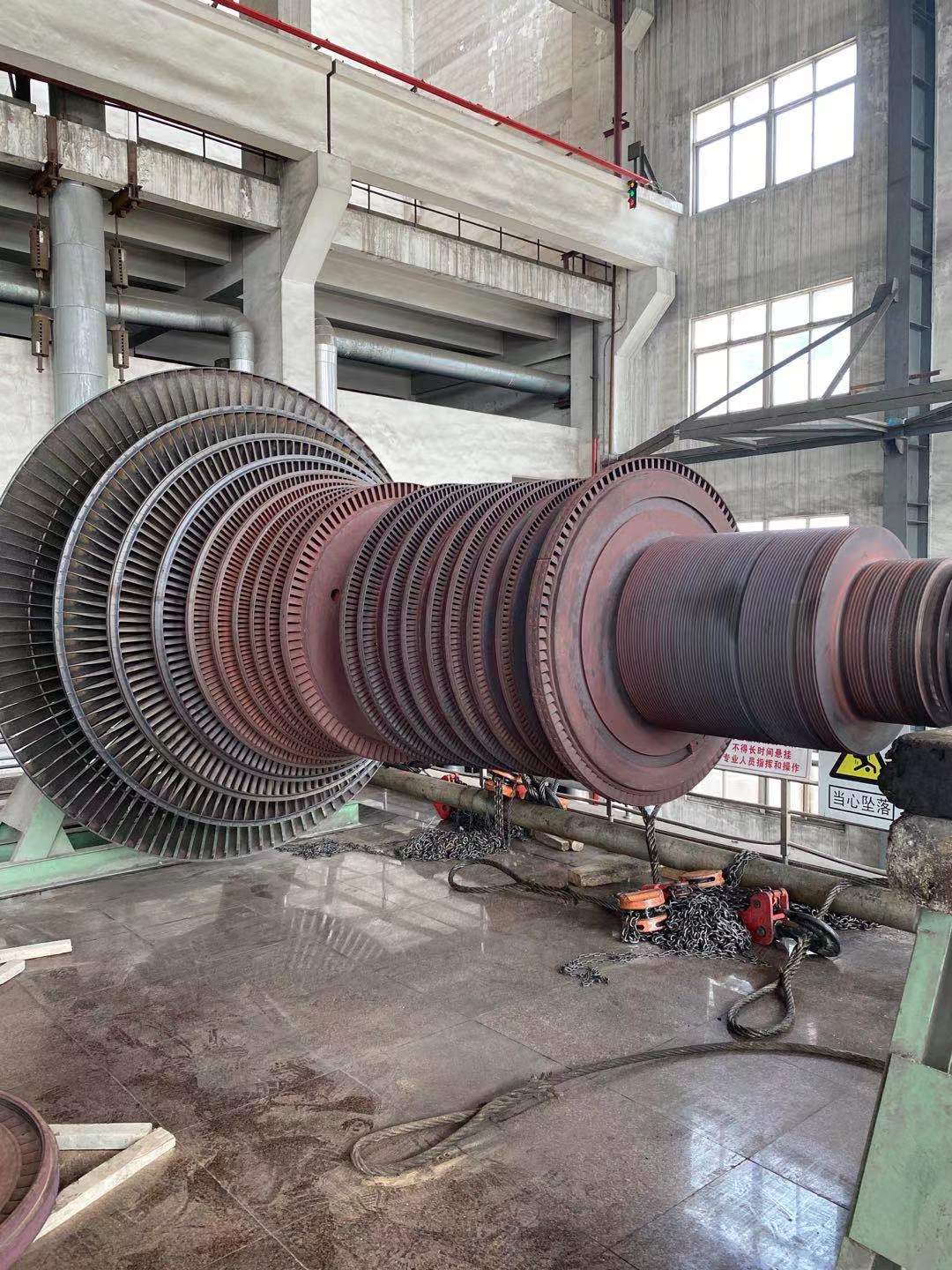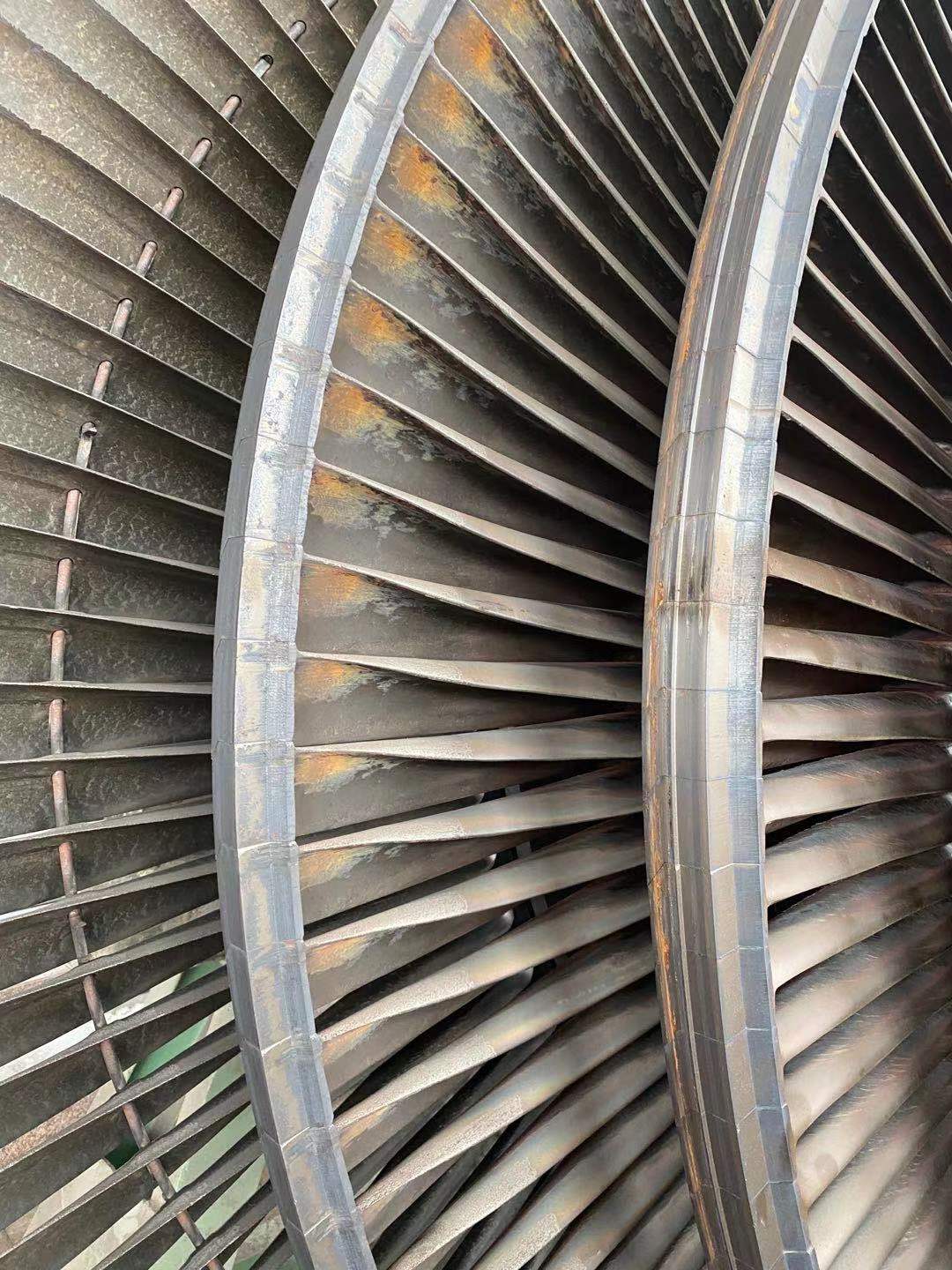


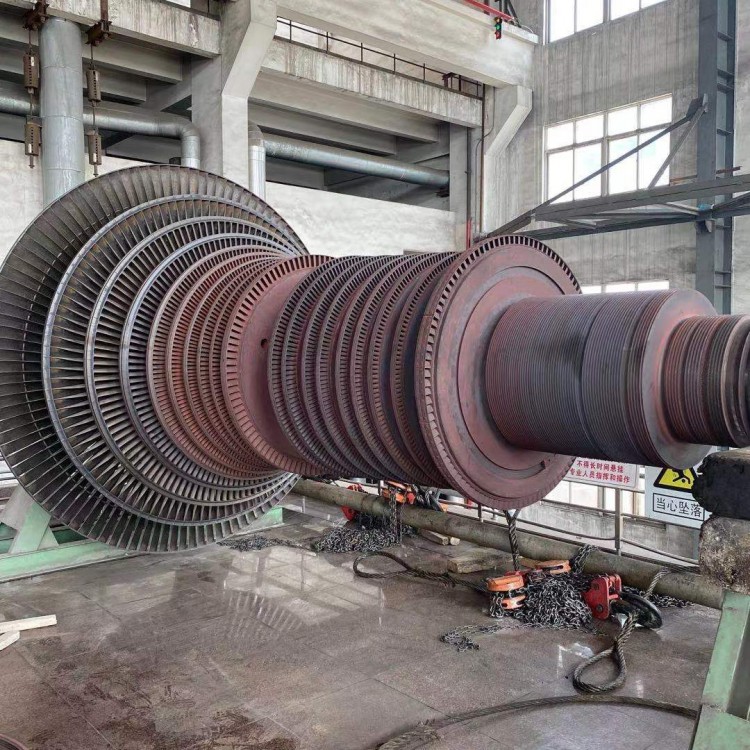
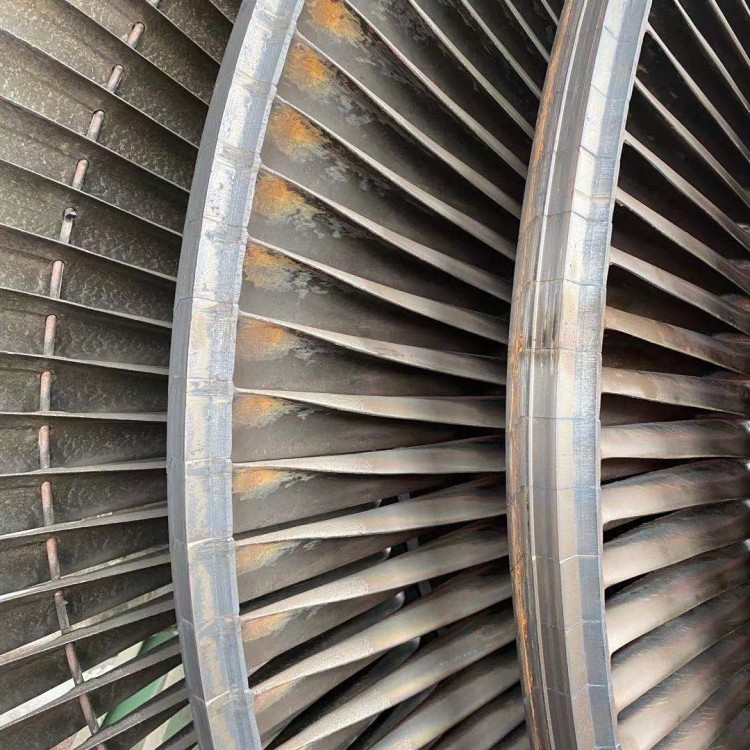
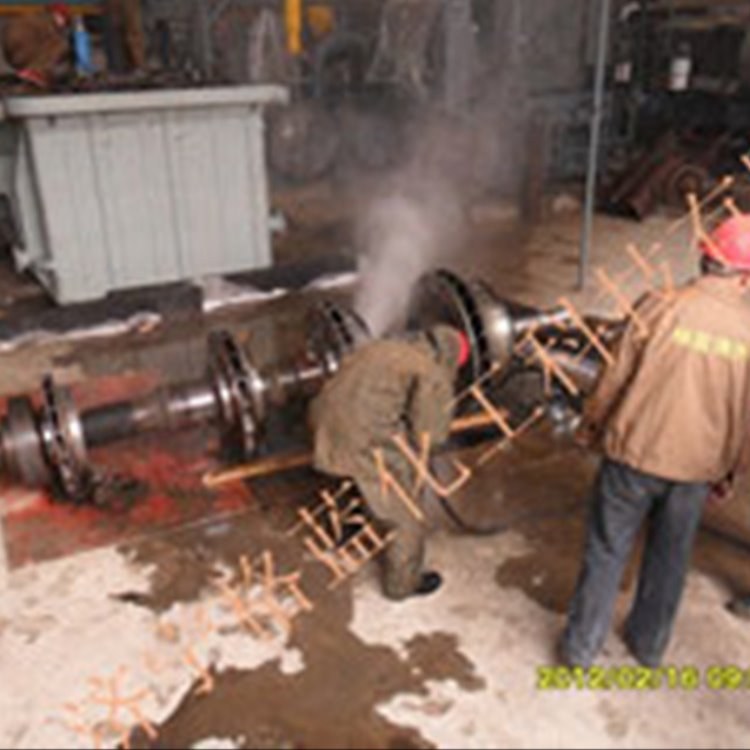








The combination of all rotating components in a steam turbine is called the rotor. It consists of rotating parts such as the main shaft, impeller or turbine drum, moving blades, and couplings. The rotor's function is to bear the rotational force exerted by steam on all working blades, and to drive the generator rotor, main oil pump, and speed regulator. High and medium-pressure rotors are machined from solid alloy steel forgings with high creep fracture strength. At the high-pressure end, an independent short shaft is connected, fitted with a thrust disc, main oil pump impeller, and overspeed tripping device. The low-pressure rotor is also made from solid alloy steel forgings with high tensile strength and good ductility. In actual operation, after reasonably selecting the design of the rotor diameter and bearing span, the critical speed of the rotor is kept away from the operating speed to maintain good mechanical properties. Similarly, the geometric structure of the rotor surface is designed in detail to minimize the stress concentration of the instantaneous thermal stress and bending stress.In the production of thermal power plants, the steam provided by the boiler must meet certain quality standards. Otherwise, the salt content carried by the steam entering the steam turbine will gradually precipitate and deposit in the flow passages of the turbine as the steam pressure and temperature drop. Scale formation in the turbine not only increases the flow losses in the static and dynamic blades, reducing the efficiency of the unit, but also decreases the flow area, limiting the output of the unit. In severe cases, it can worsen operating parameters, affecting the safety of the unit's operation.