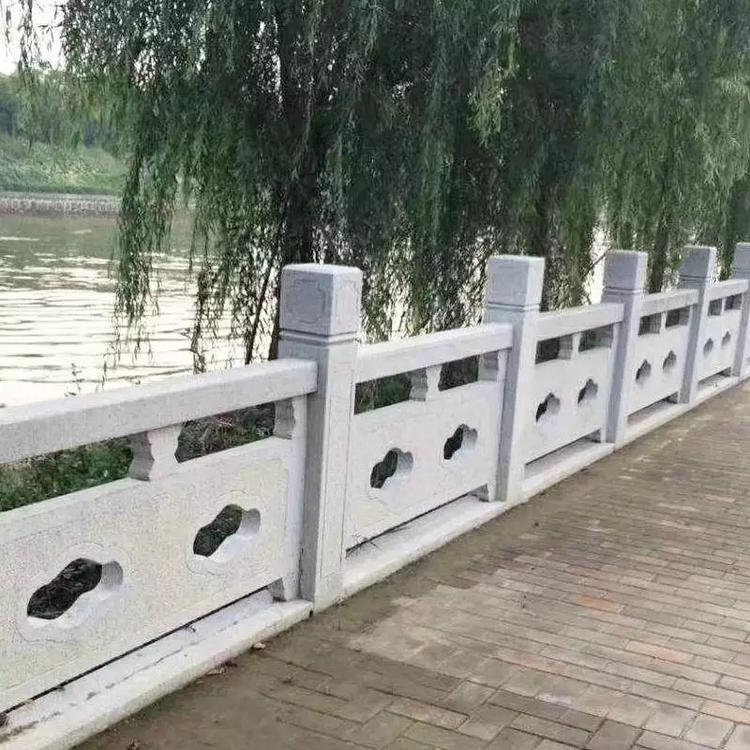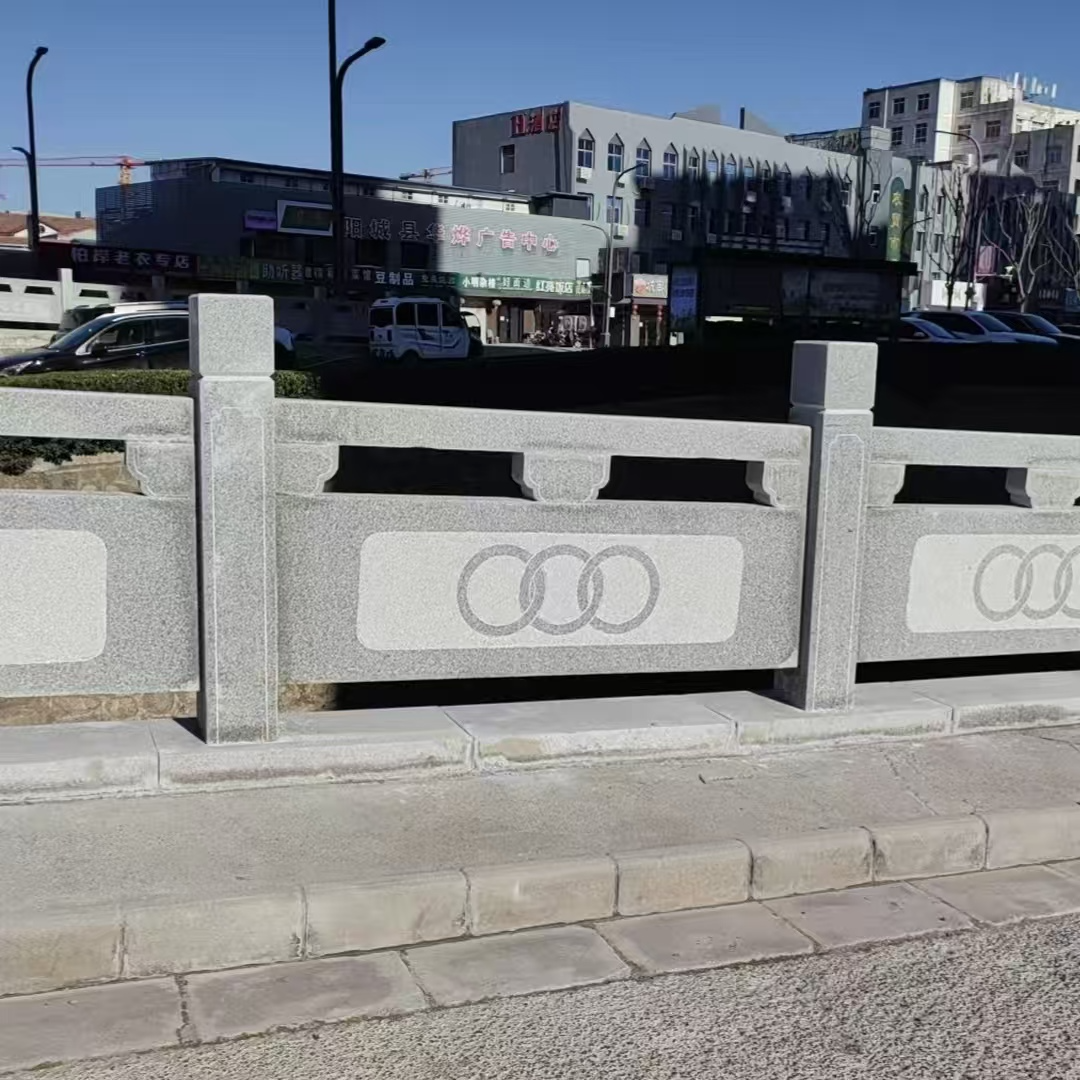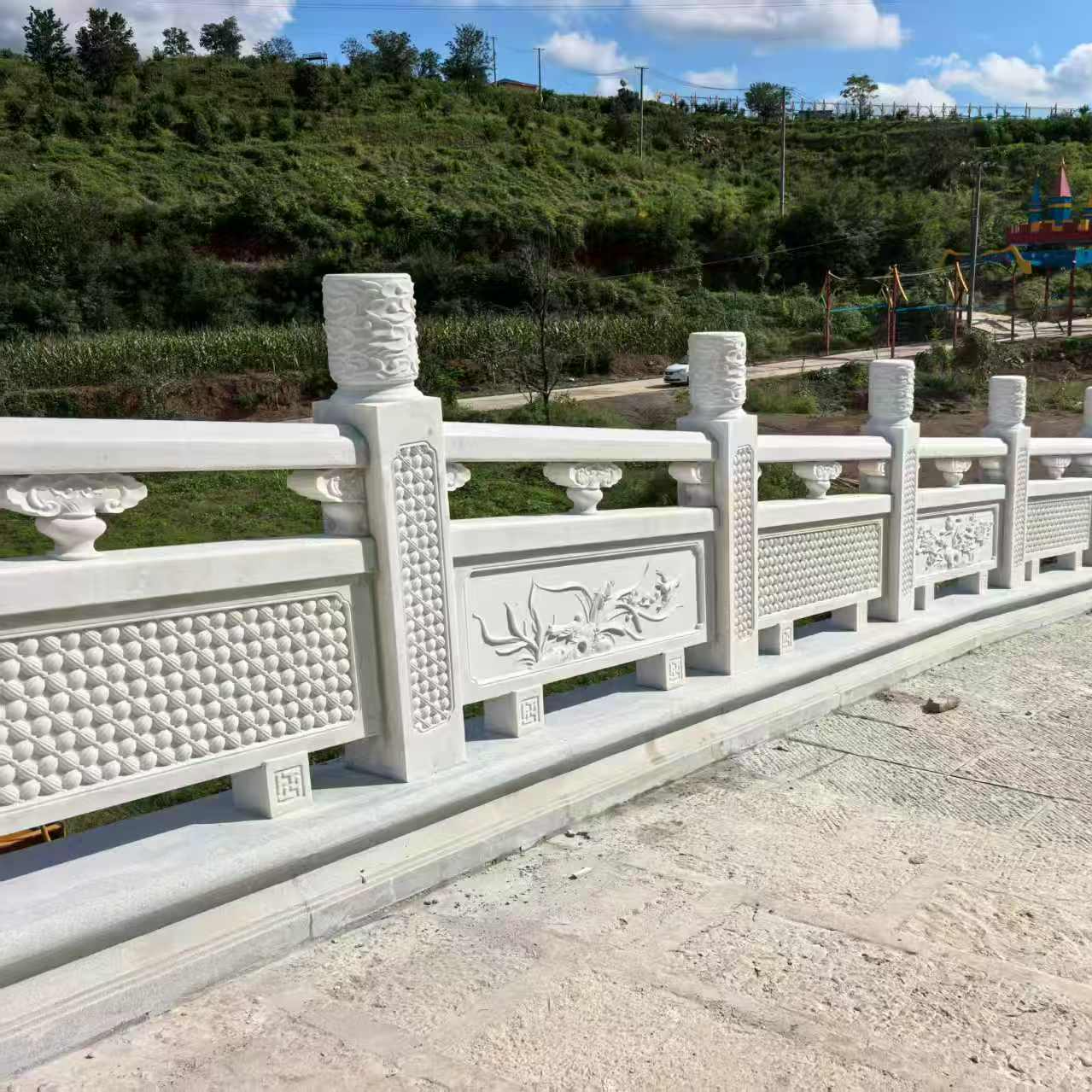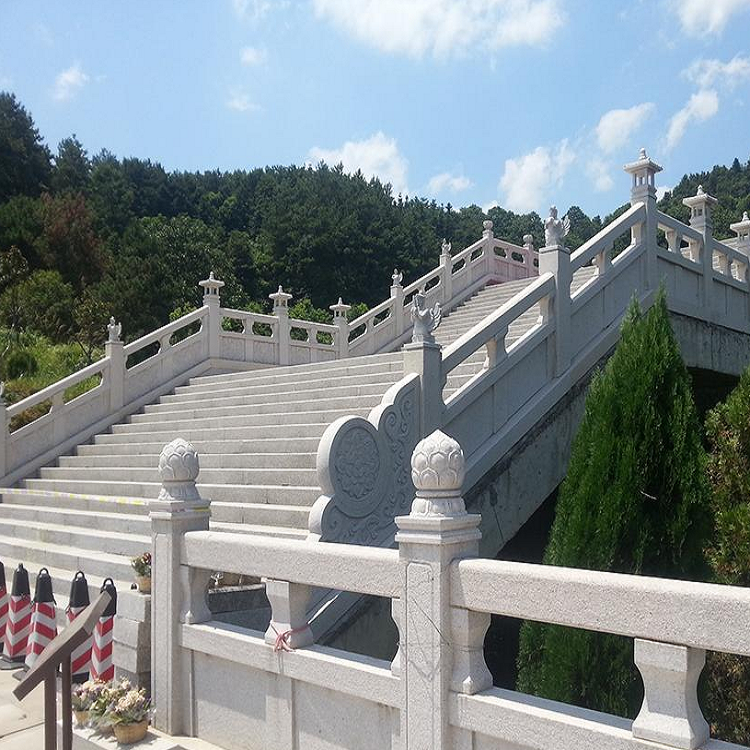

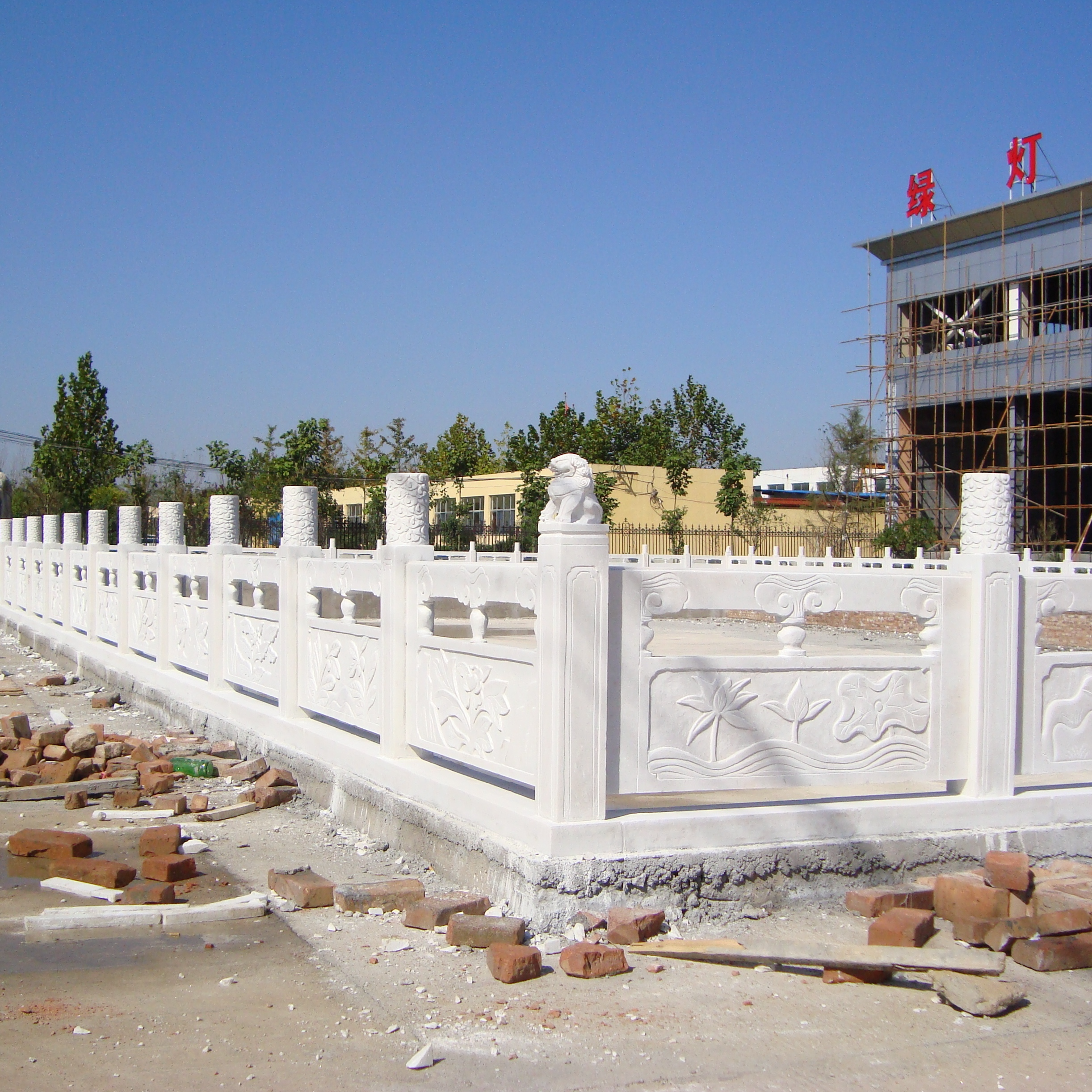


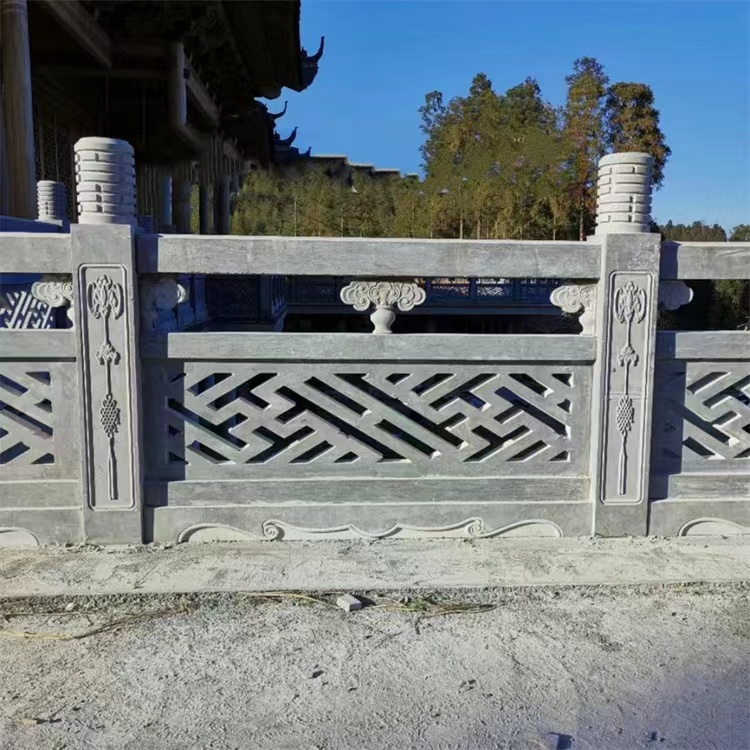


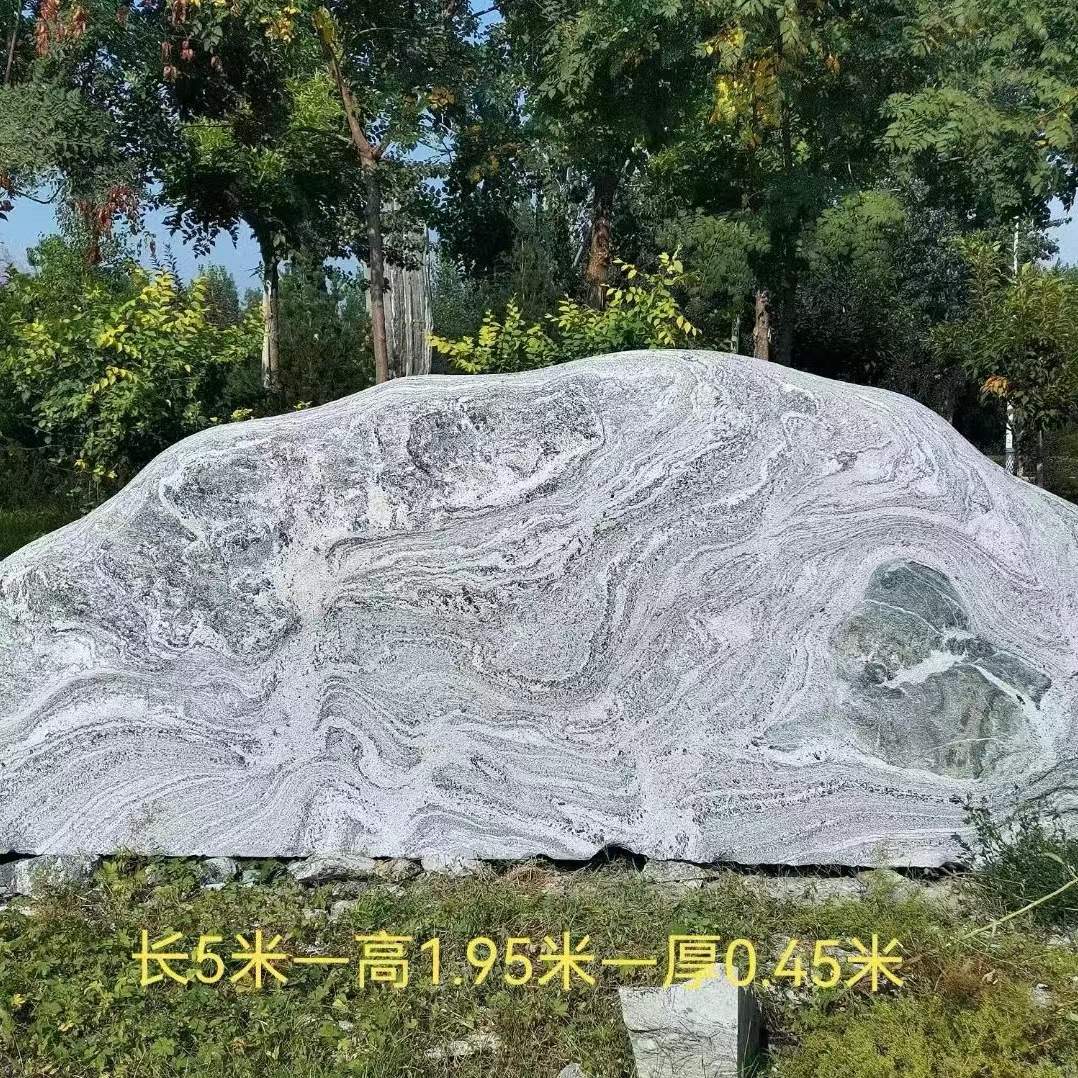
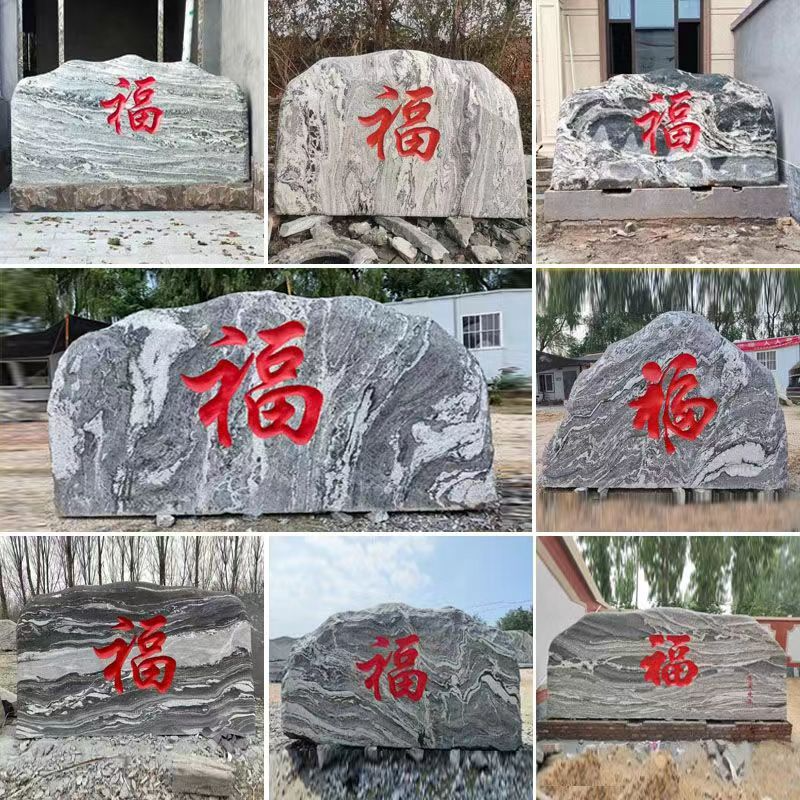







Stone balustrades are traditional architectural components that combine practical functionality with cultural charm, embodying the aesthetic genes of Chinese architecture. They are often adorned with bas-reliefs, line carvings, and other techniques depicting dragons and phoenixes, flowers and birds, landscapes, or auspicious patterns, skillfully integrating sculpture art with architectural function, and exuding a simple and elegant style. In terms of structure and material, they come in various styles such as single and double balusters, with flexible combinations of components like panels, posts, and handrails. Commonly used stones include green stone, granite, and marble, with green stone being tough for fine carving, granite being wear-resistant and suitable for outdoor environments, and marble being smooth, white, and highlighting a high-end texture. The production process involves design planning, stone processing, and assembly, with the design phase determining dimensions and patterns based on the usage scenario and overall architectural style. Stone processing involves cutting into shape first and then hand-carving the details, while assembly is secured through mortise and tenon joints or metal reinforcement. Their applications are extensive, from garden landscapes surrounding ponds and walkways, where they can both divide space and enhance scenery; to the restoration of ancient buildings, complementing pavilions, towers, and pagodas to restore historical features; to bridge sides, ensuring safety while enhancing the bridge's aesthetics; and even to courtyard boundaries, defining areas and creating an elegant atmosphere. Moreover, with the superior characteristics of high-quality stone and rigorous production techniques, stone balustrades offer advantages such as resistance to weathering, erosion resistance, and long service life. They not only meet the core needs of safety protection but also inject a profound cultural heritage into the environment, making them a classic architectural element that combines traditional aesthetics and practical value.
WeChat Official Account

Scan to follow Official Account