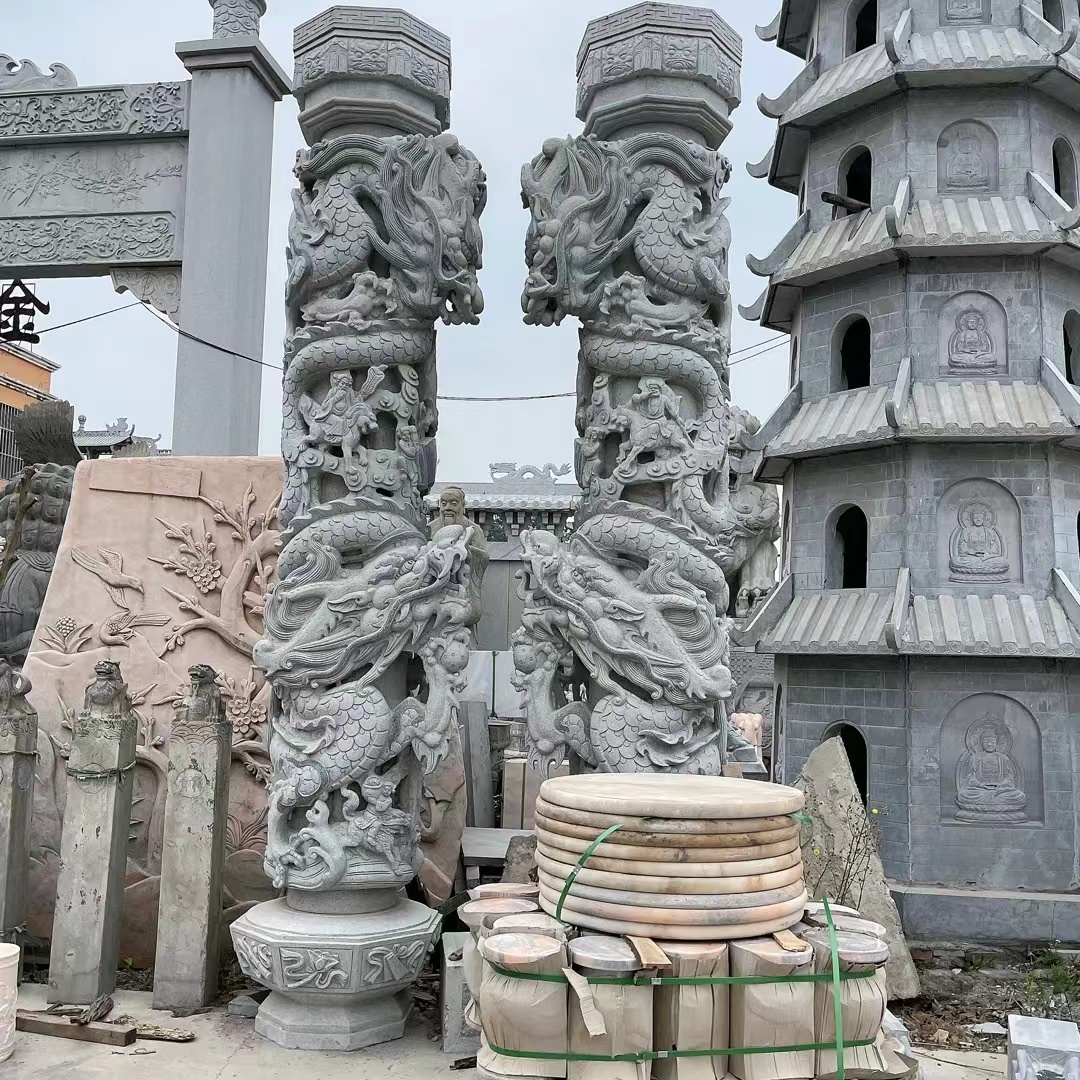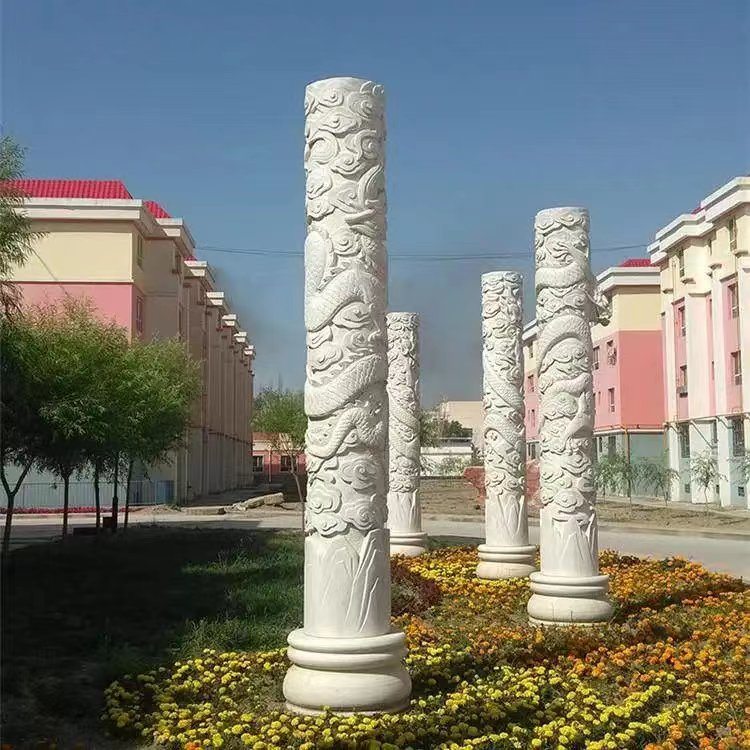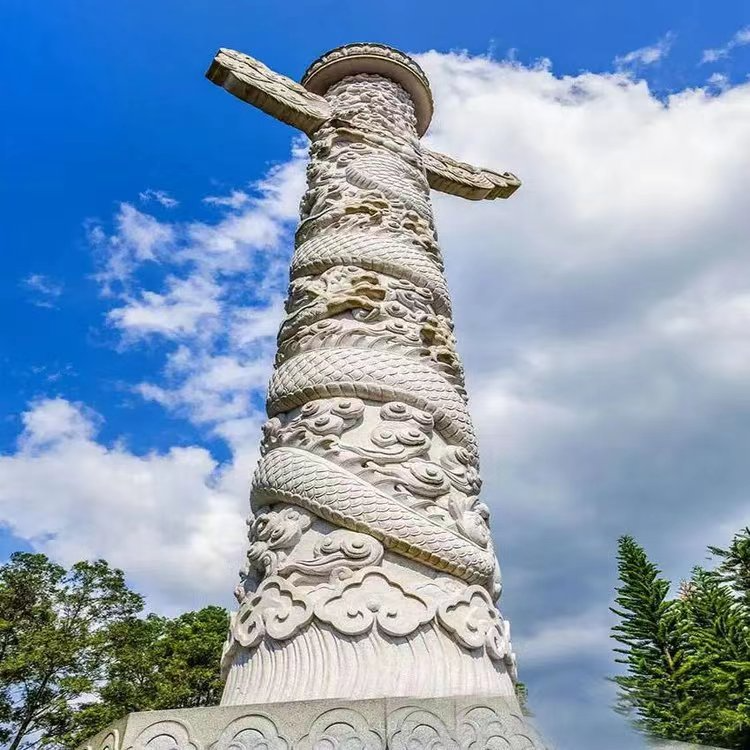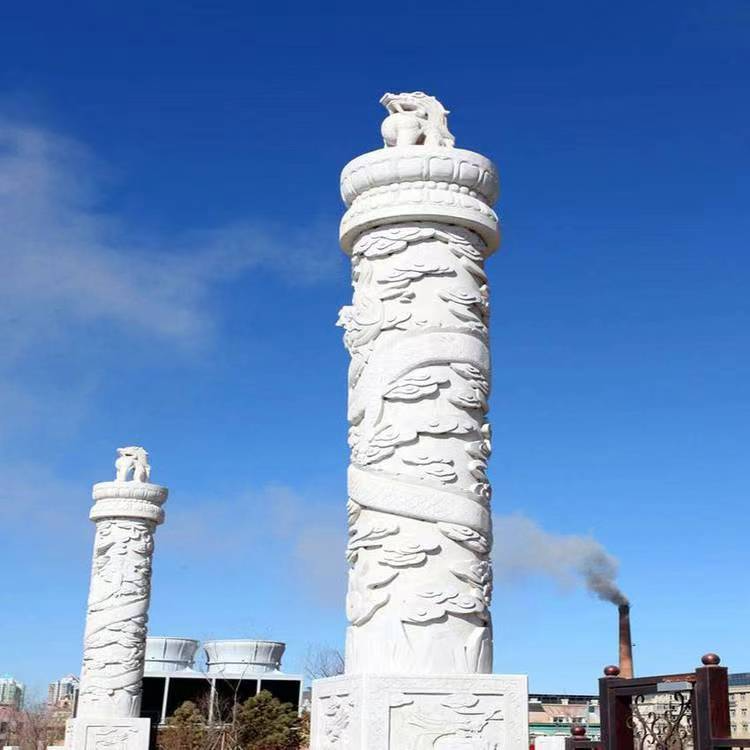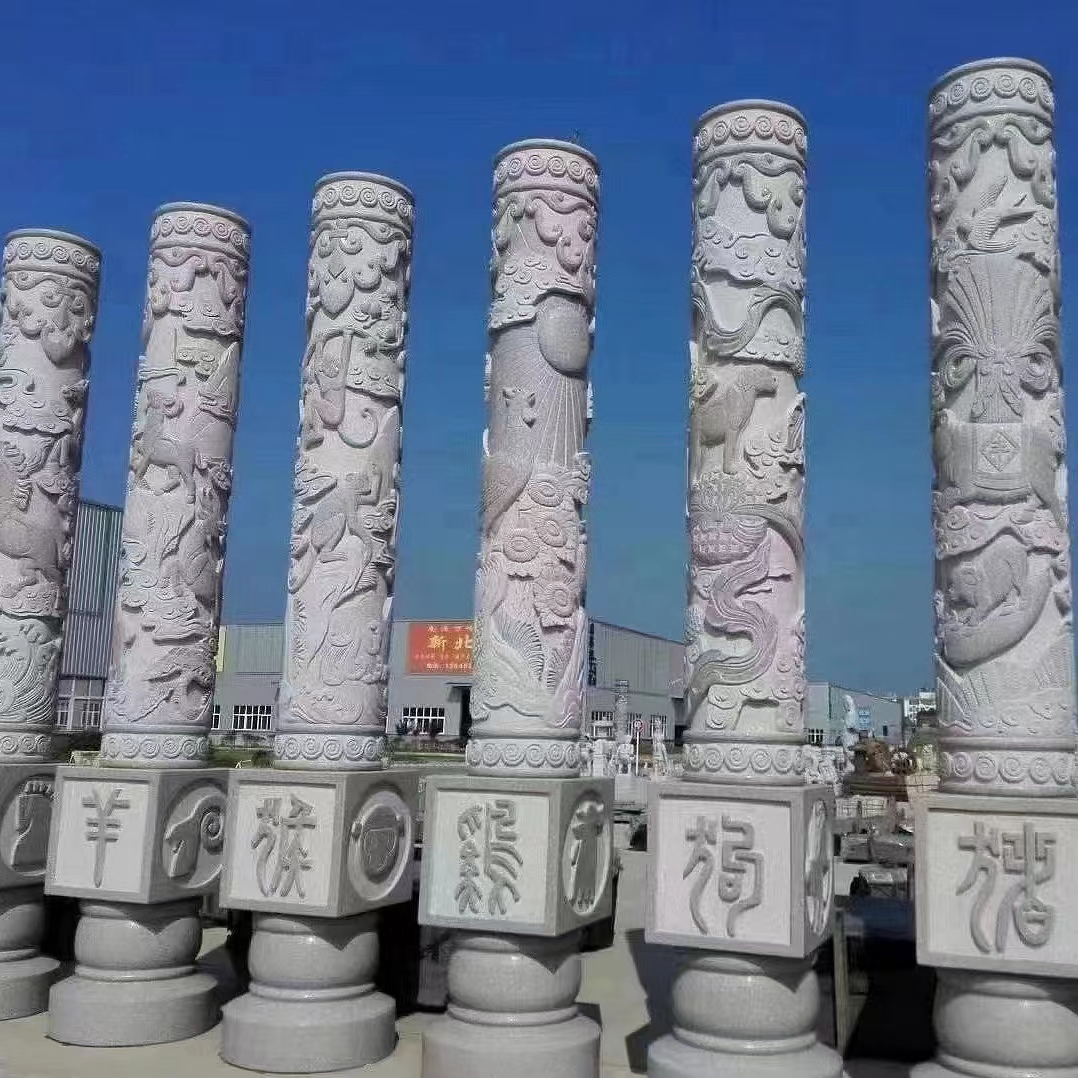

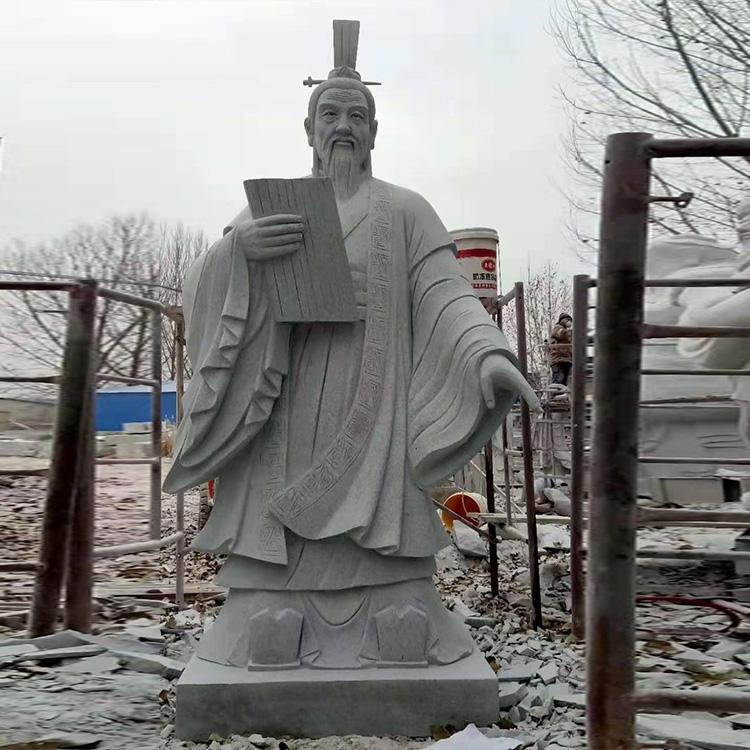


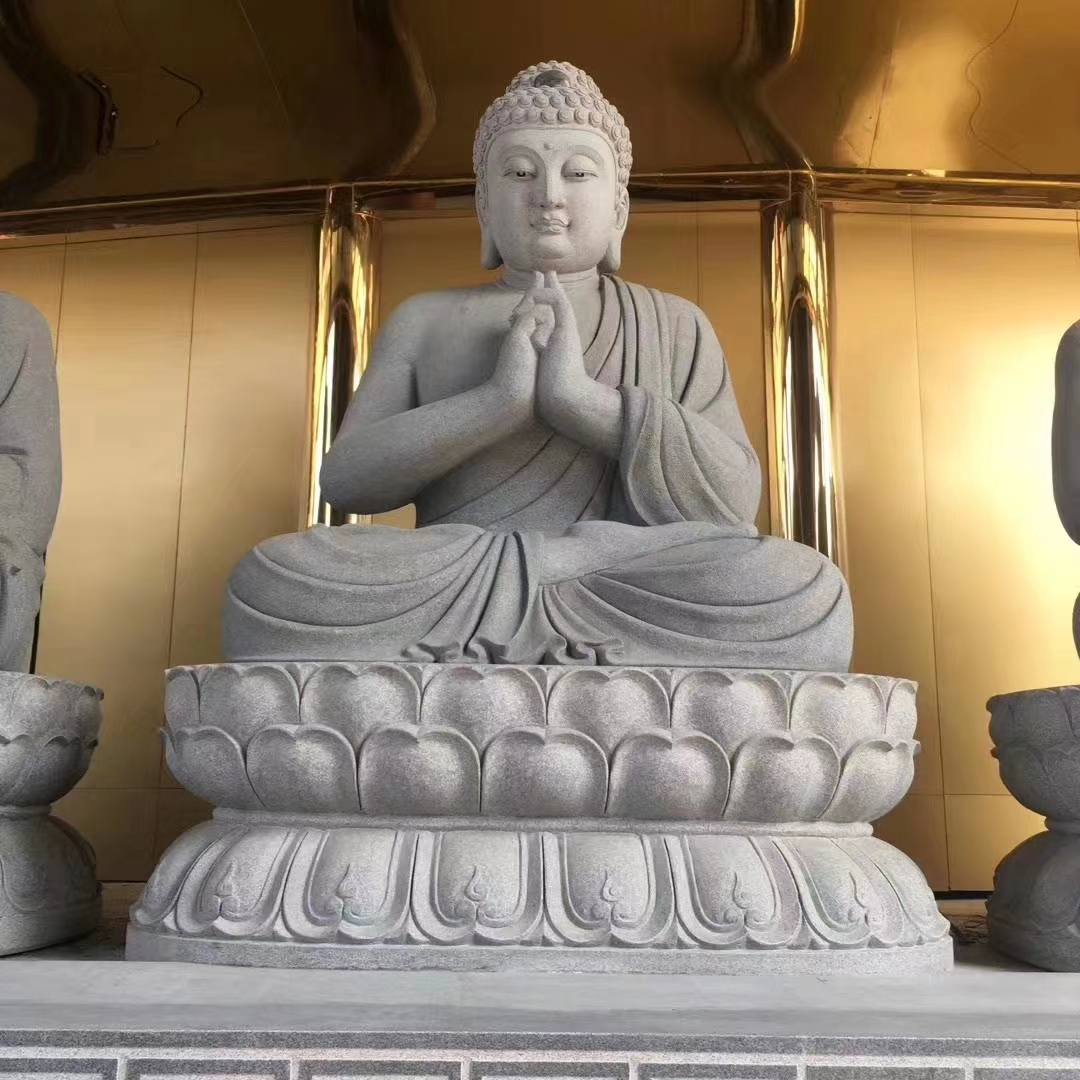
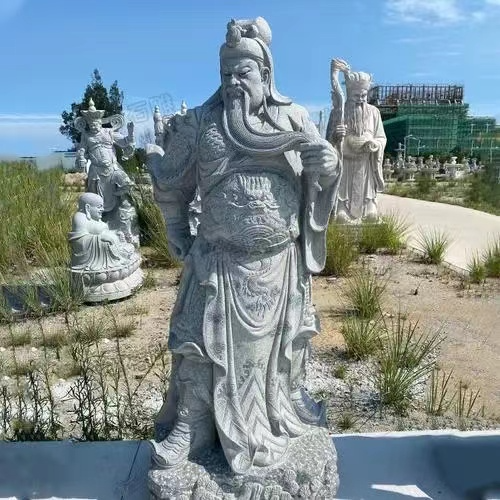
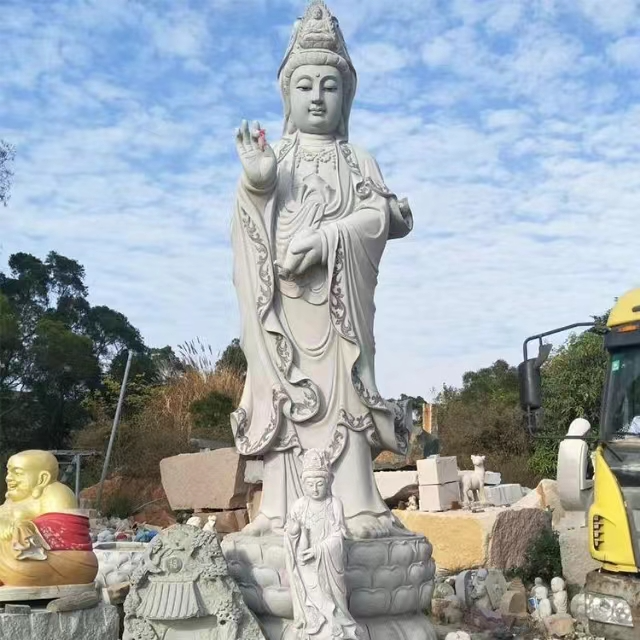
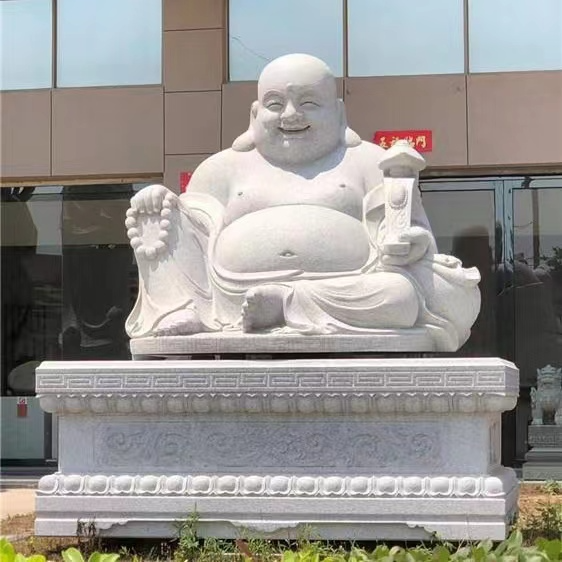





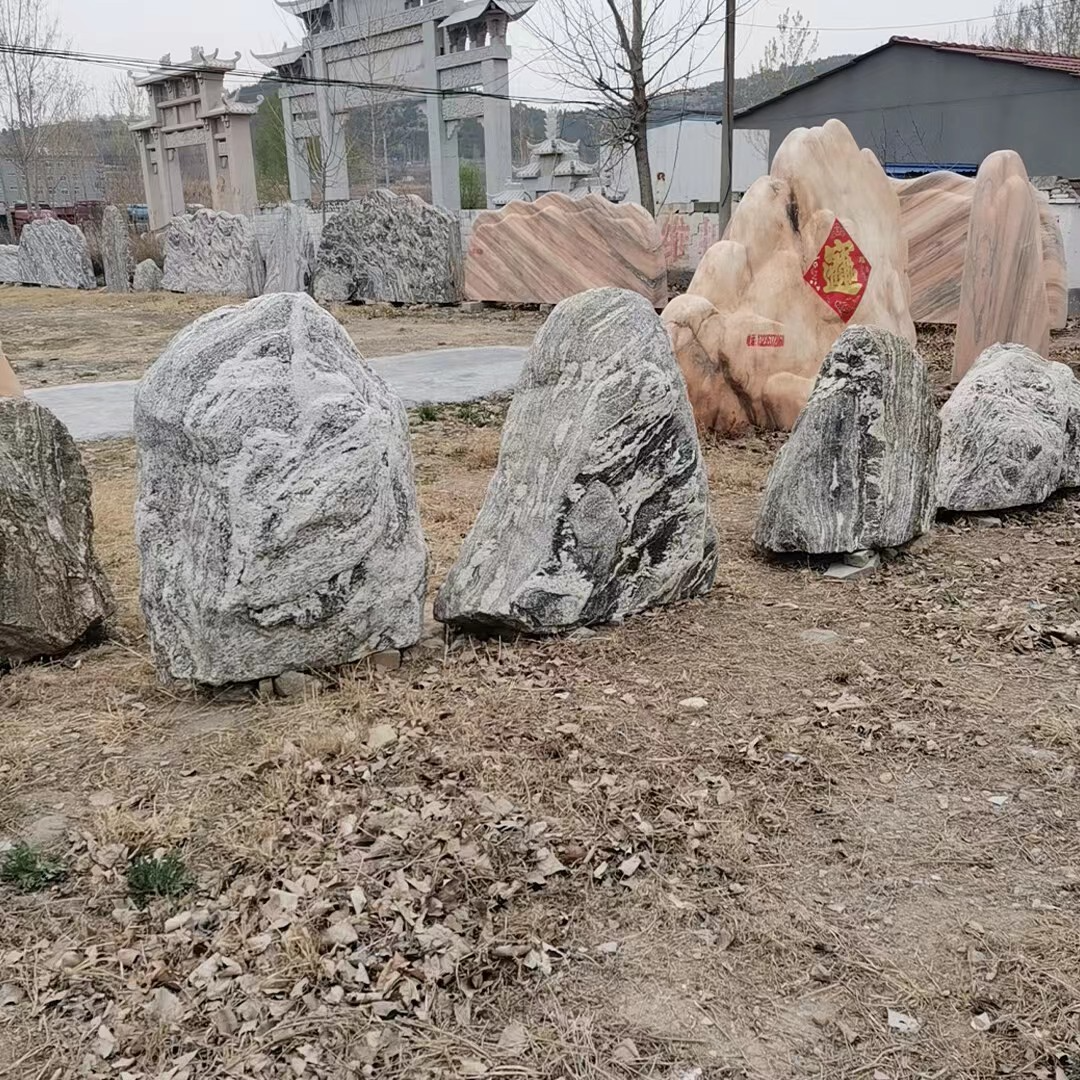
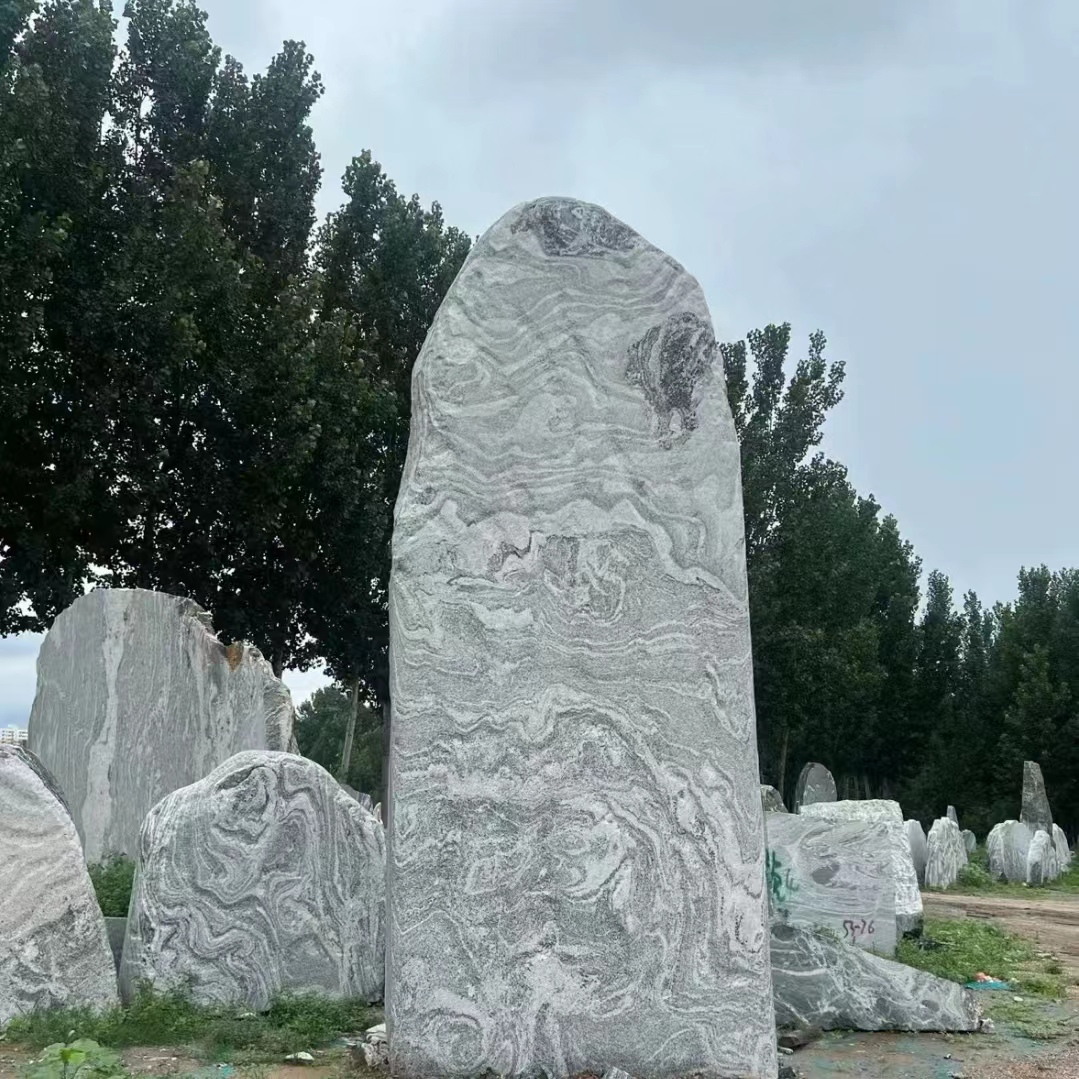
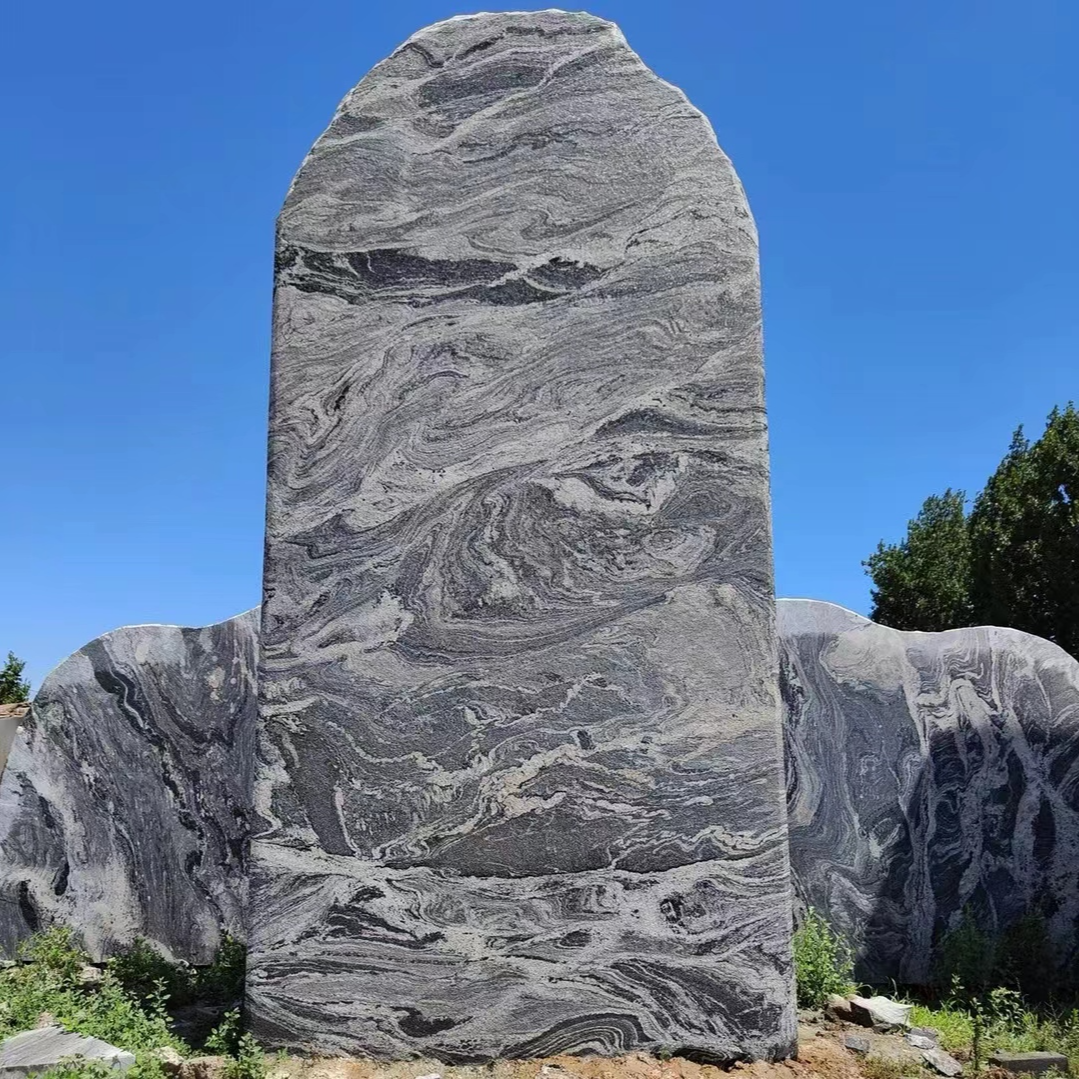
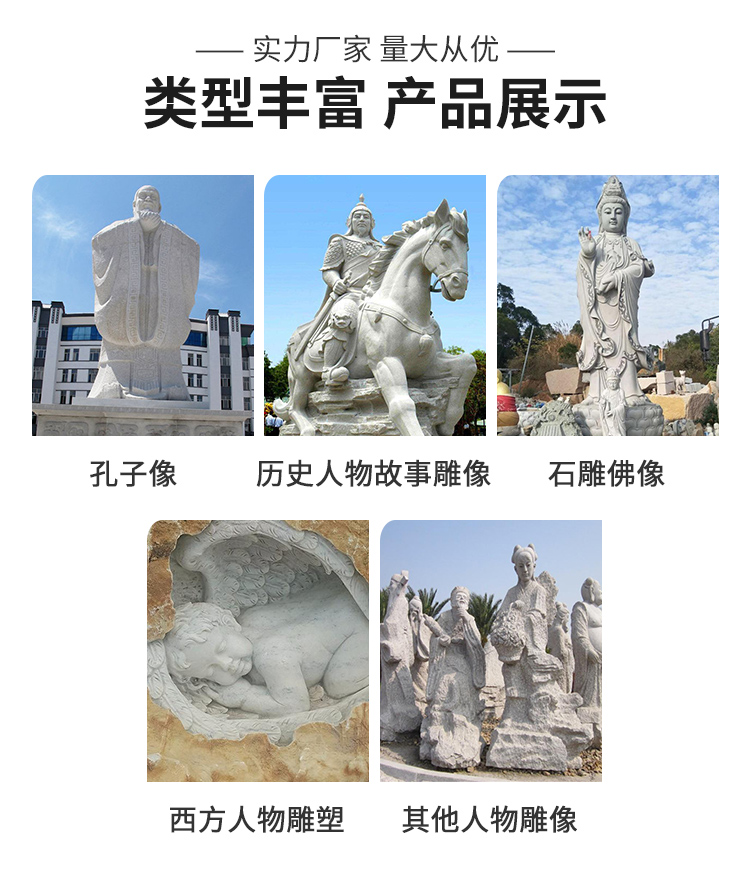
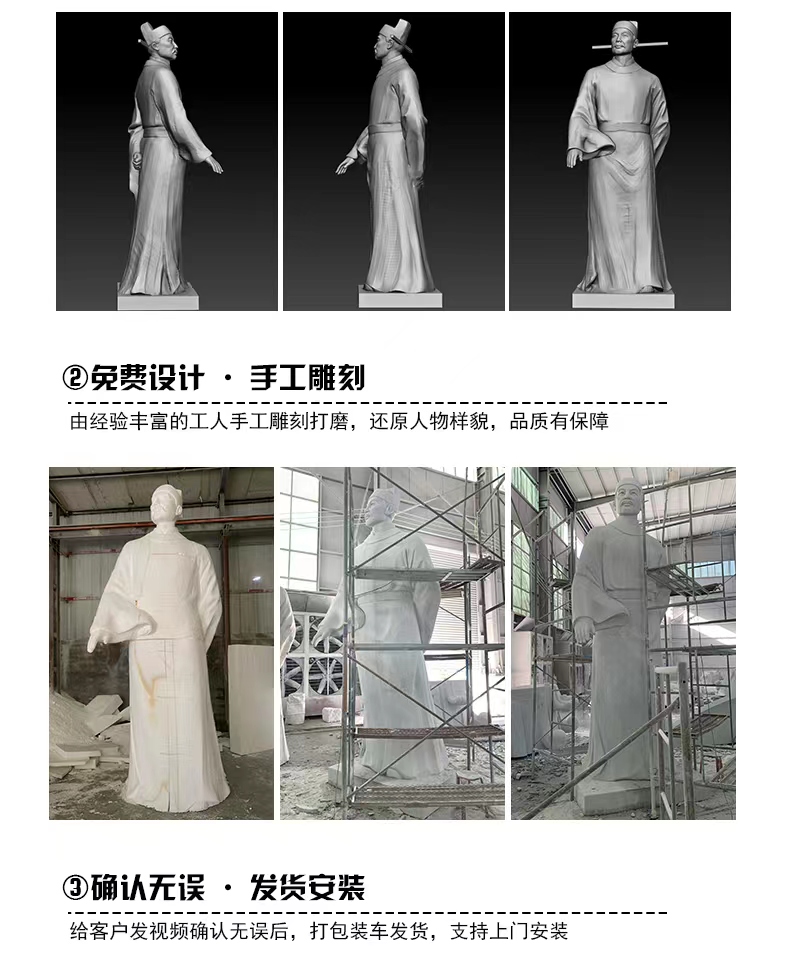
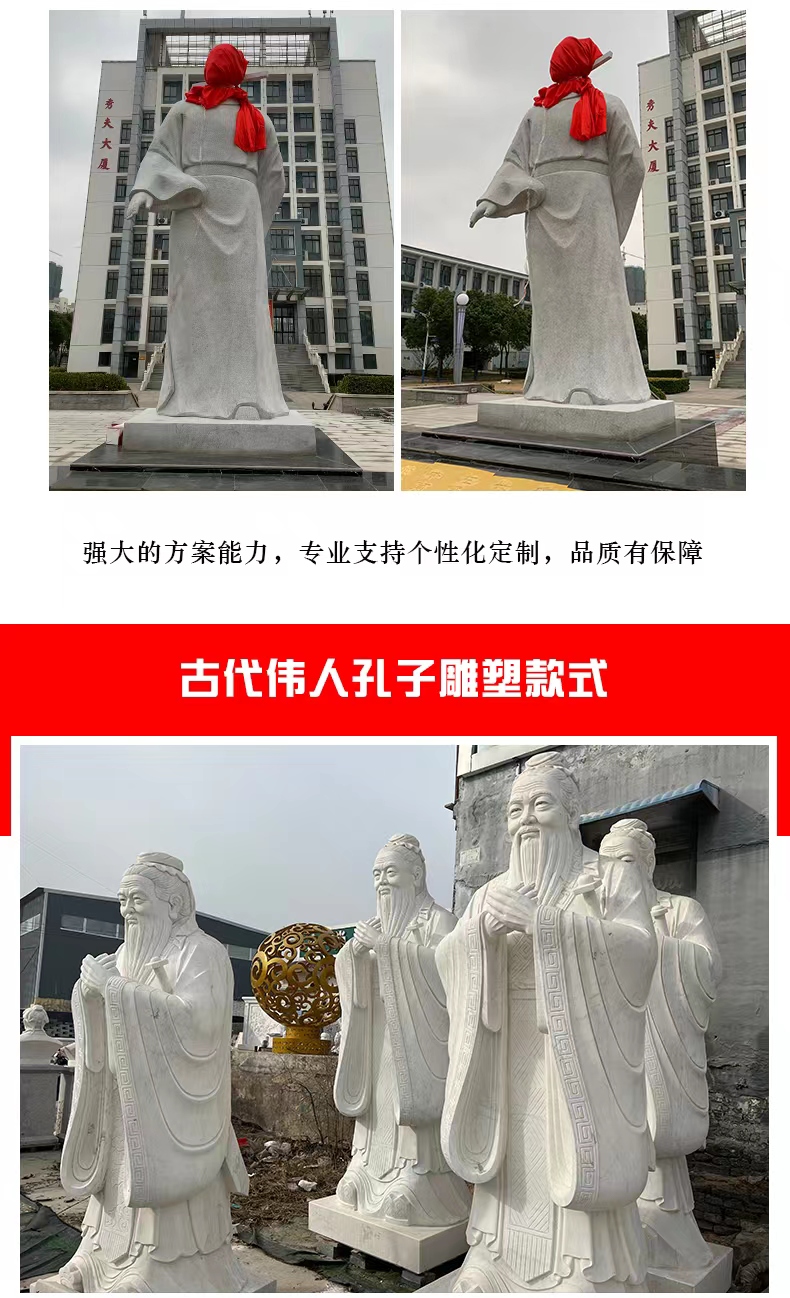
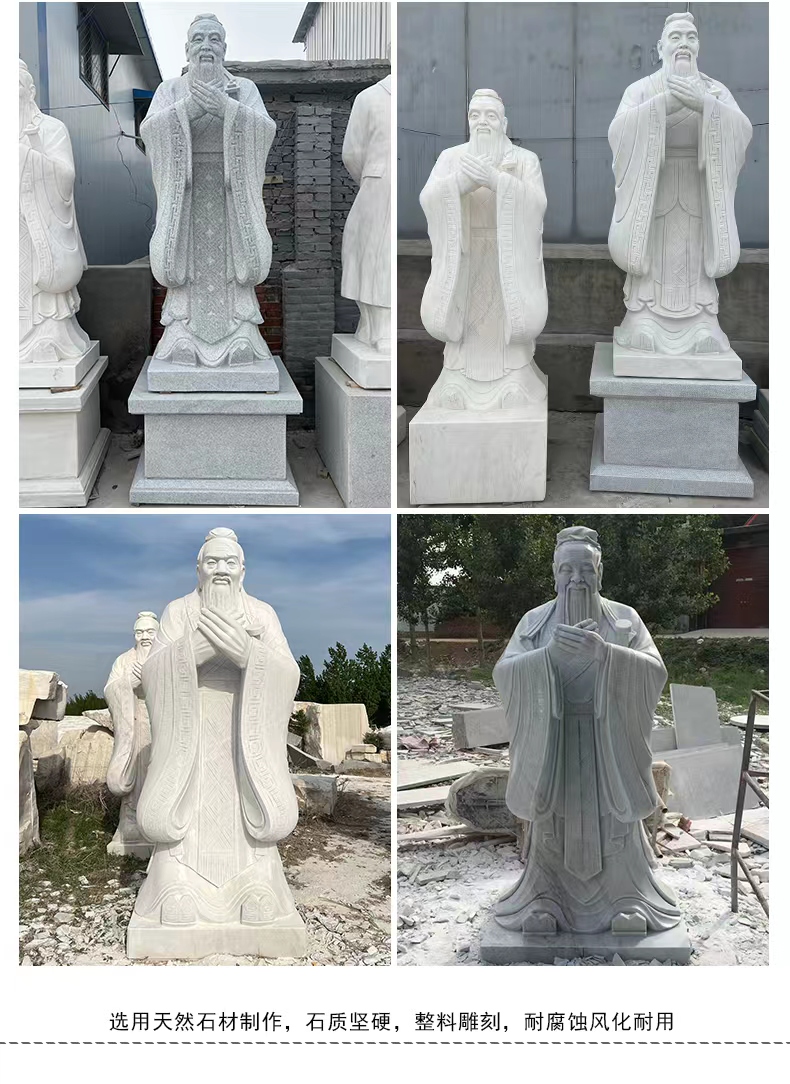
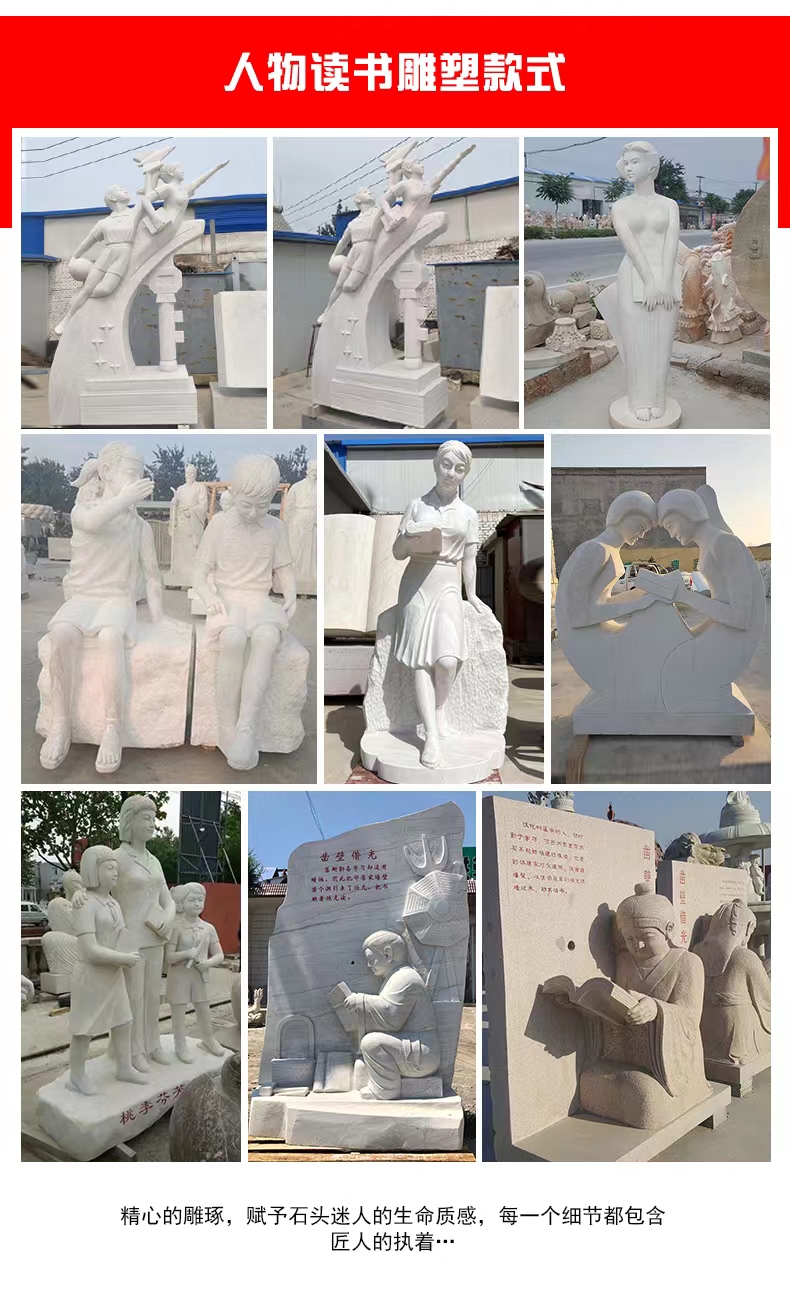
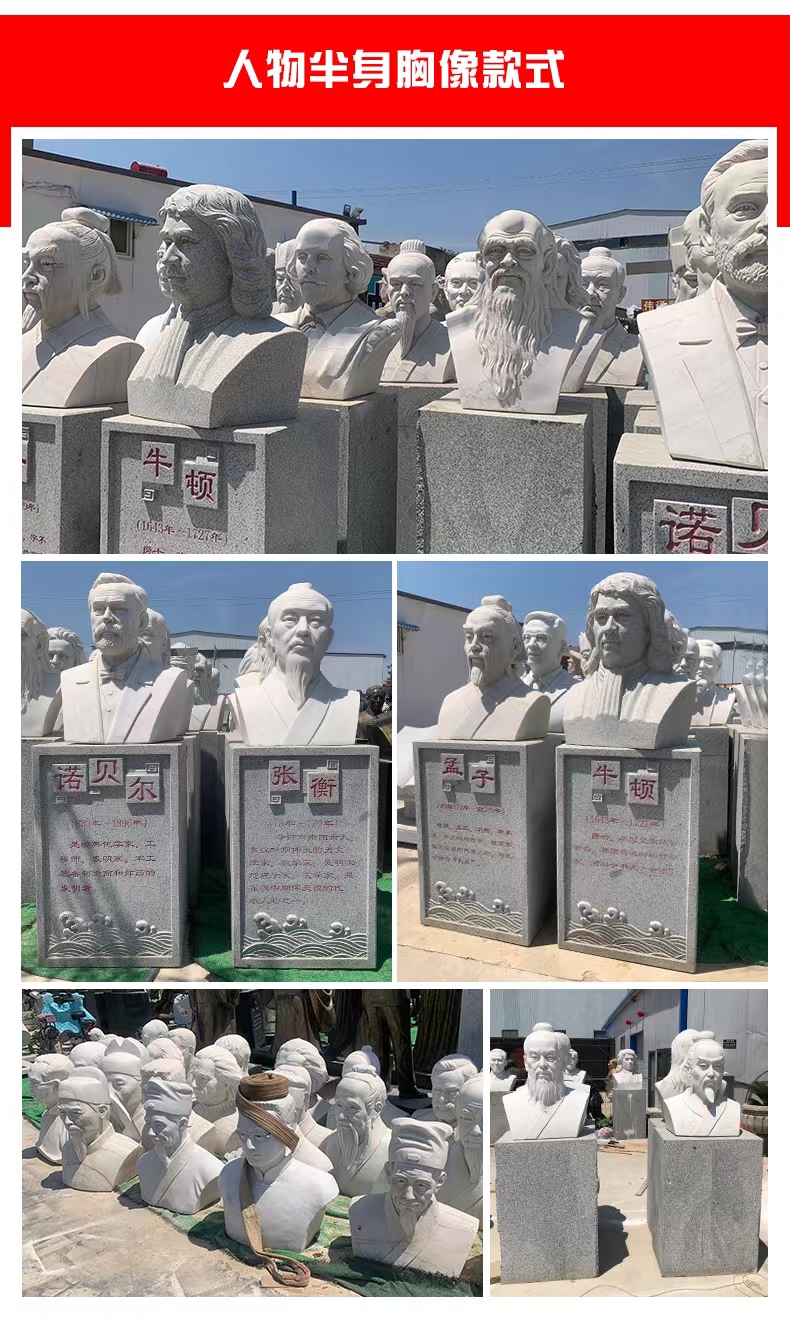
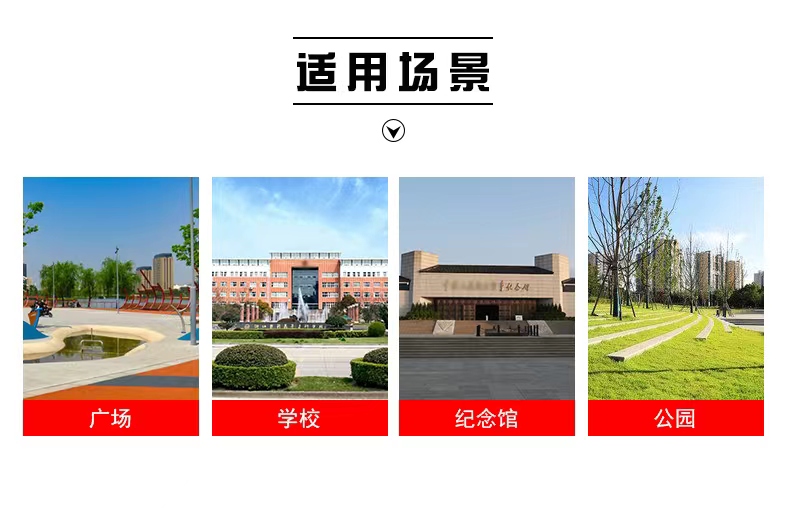
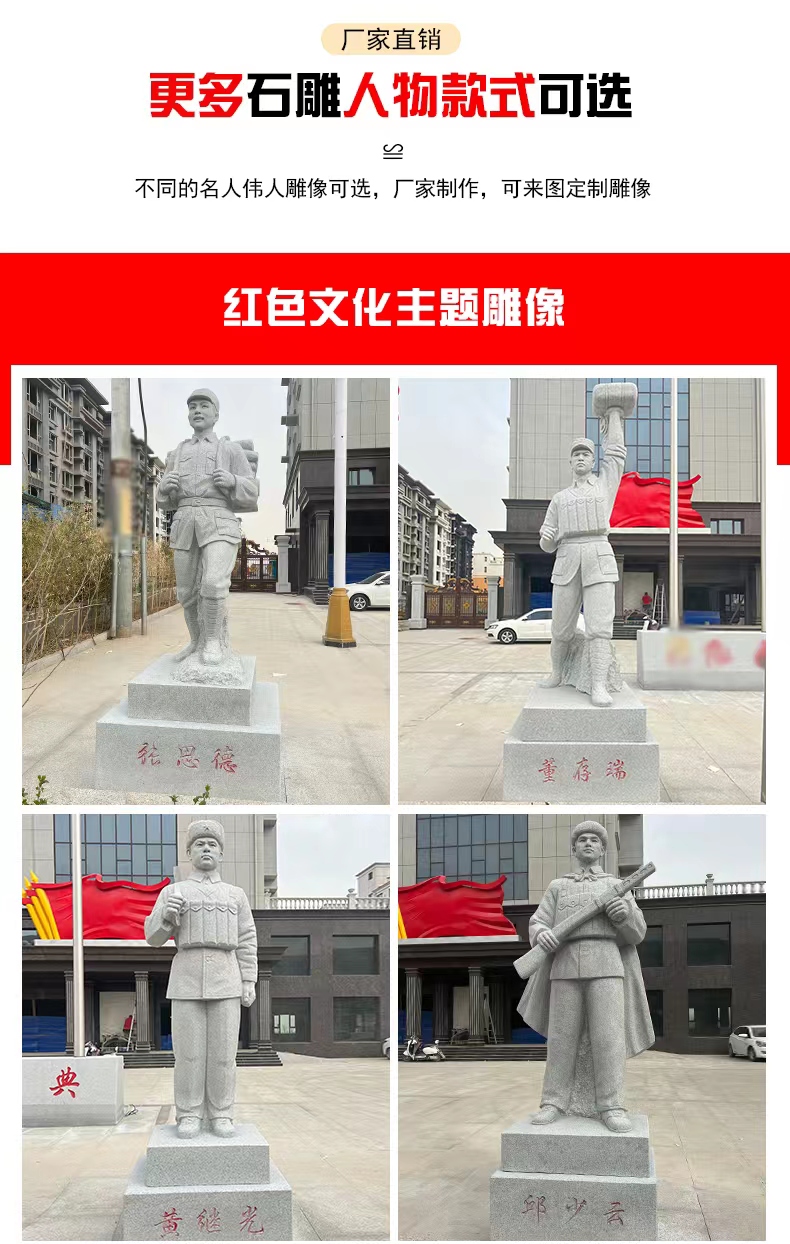
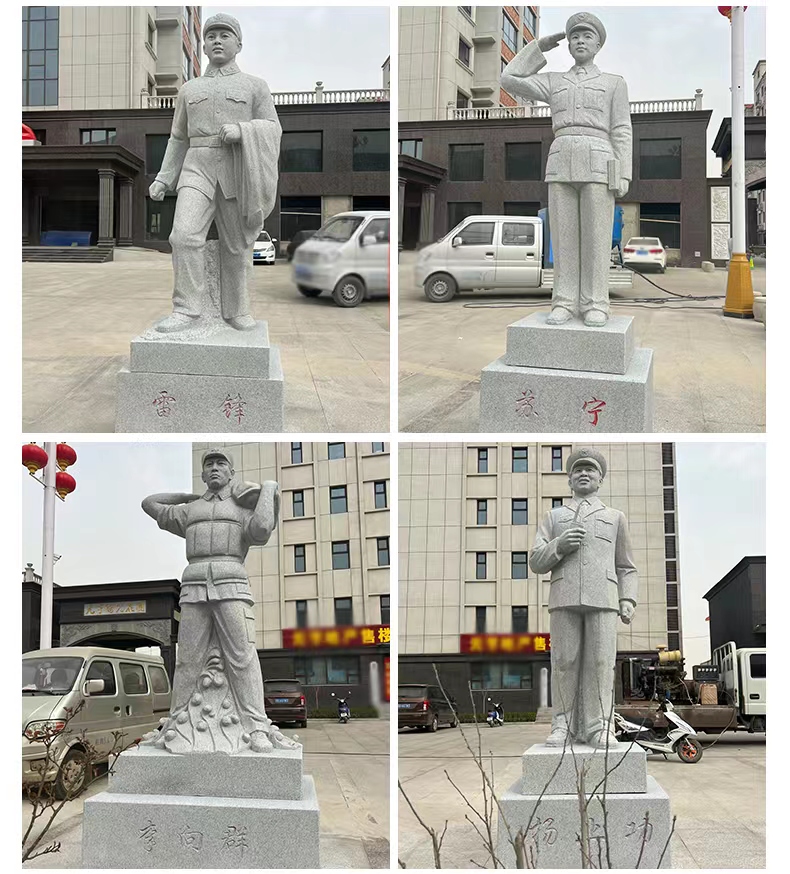
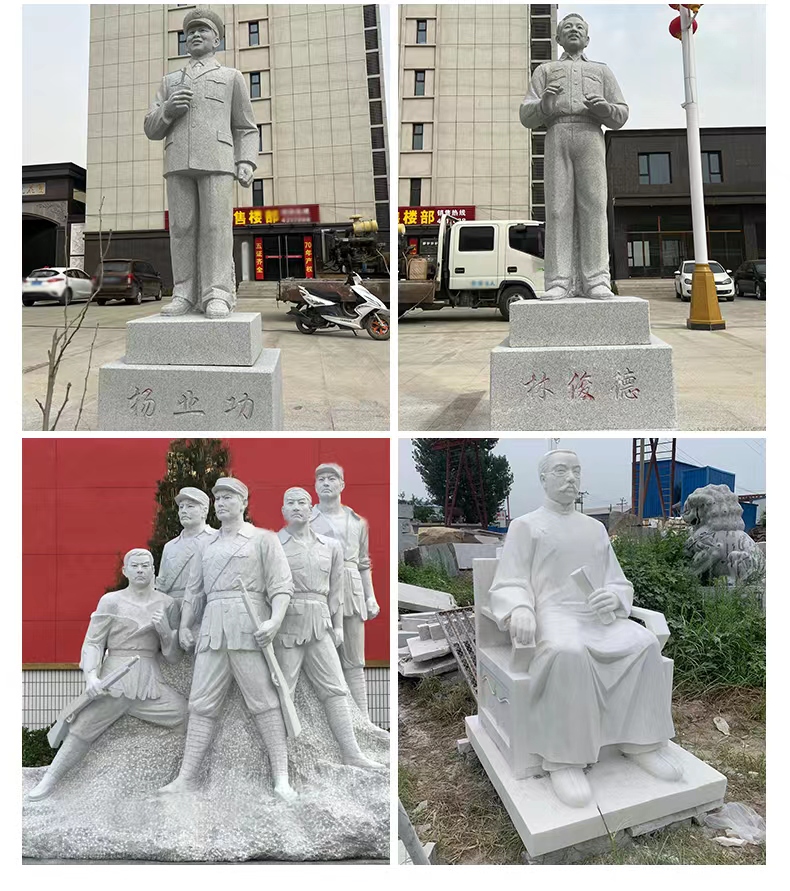
Figurine sculptures are artistic products that combine expressive artistry with cultural significance, capable of restoring the appearance of historical figures, conveying the spirit of the times, shaping folk images, and expressing emotional attachments. They often showcase the characters' expressions, actions, and details through techniques like round relief, bas-relief, and openwork, deeply integrating sculpture skills with humanistic connotations, and offering both aesthetic and intellectual appeal. In terms of material choice, they predominantly use materials like grey stone, granite, white marble, and bronze. Grey stone is suitable for presenting an ancient texture and fine carving, granite is hard and resistant to outdoor environmental erosion, white marble has a pure color that highlights the subtle texture of the figures, and bronze naturally carries a sense of heavy history and exhibits a unique metallic texture. The production process involves conceptualization, character design, model making, stone or metal processing, fine carving, and surface treatment, with artisans adjusting techniques based on the character's features and material properties to ensure lively and three-dimensional figures with precise emotional expression. Their applications are vast, from urban squares to create monumental figures that embody the city's spirit, to scenic spots to enrich the tour experience with natural and cultural landscapes, to school environments to showcase the风采 of famous figures and inspire student growth, and even to courtyards and museums to add cultural ambiance and artistic flair. Thanks to their high-quality materials and exquisite craftsmanship, figurine sculptures offer the advantages of resistance to weathering, wear, and long lifespan. They can serve as cultural symbols to pass on history and spirit, as well as artistic decorations to elevate spatial elegance, making them classic products that combine artistic and practical value.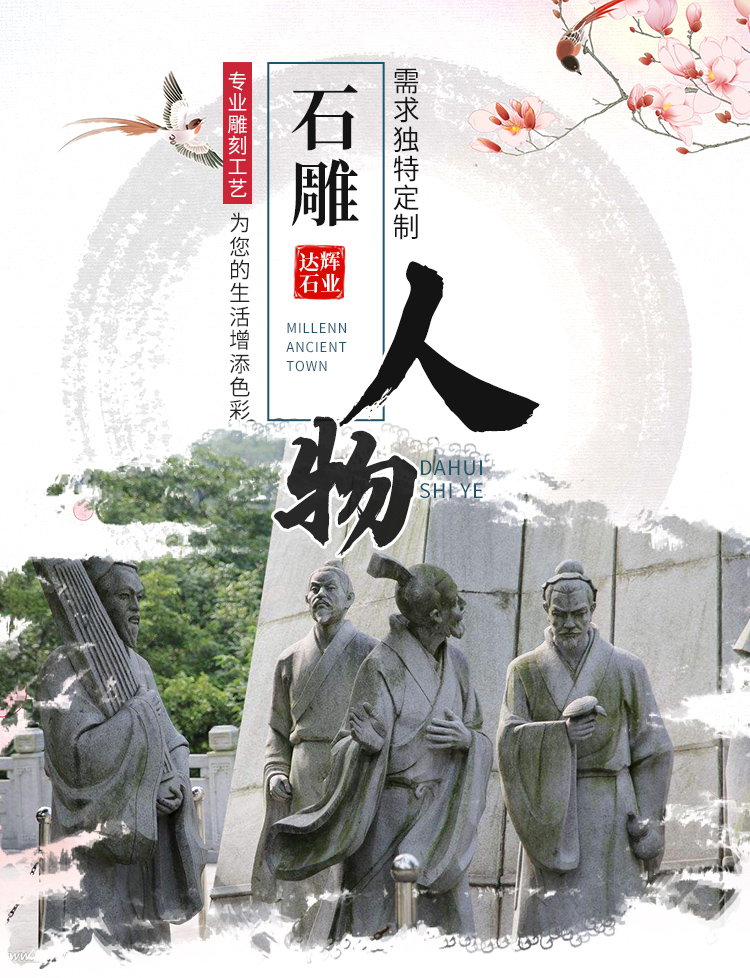
WeChat Official Account

Scan to follow Official Account