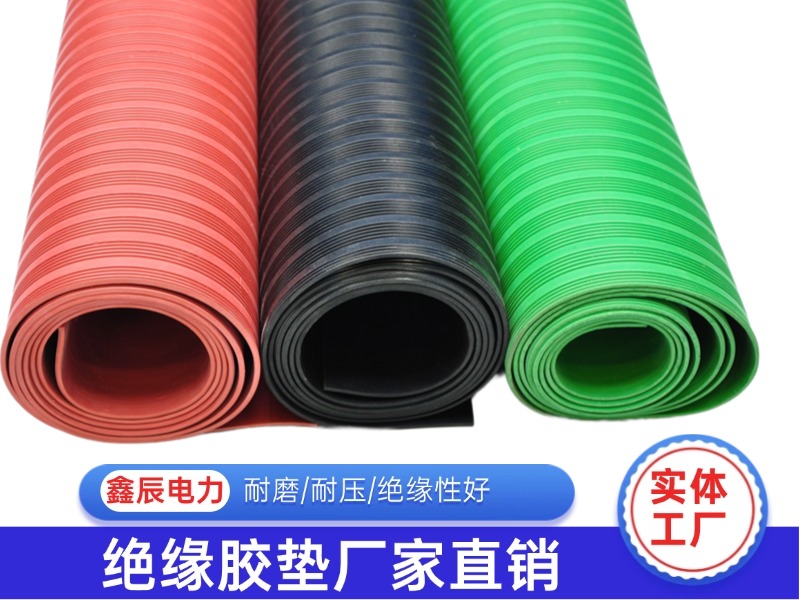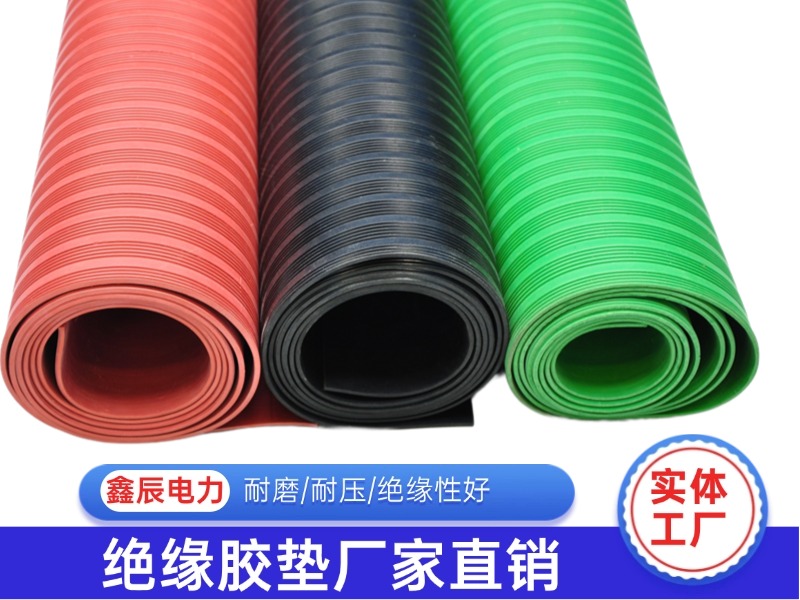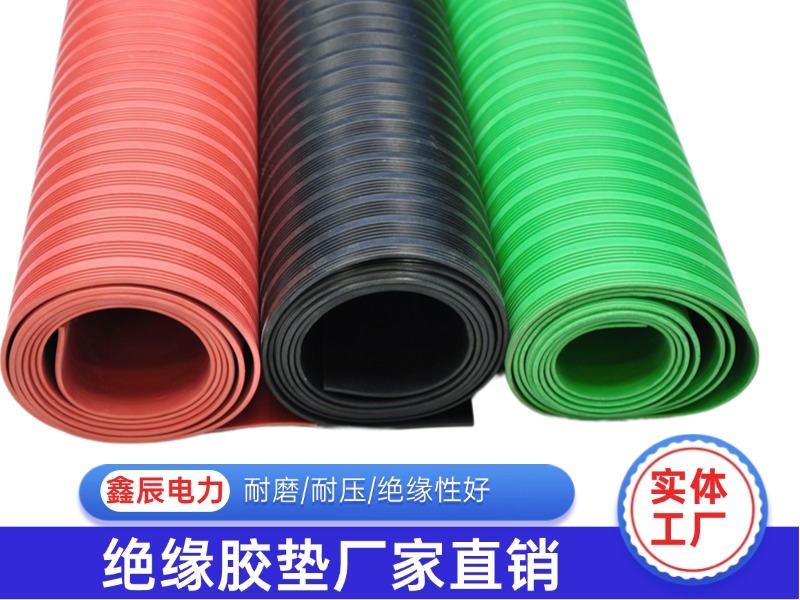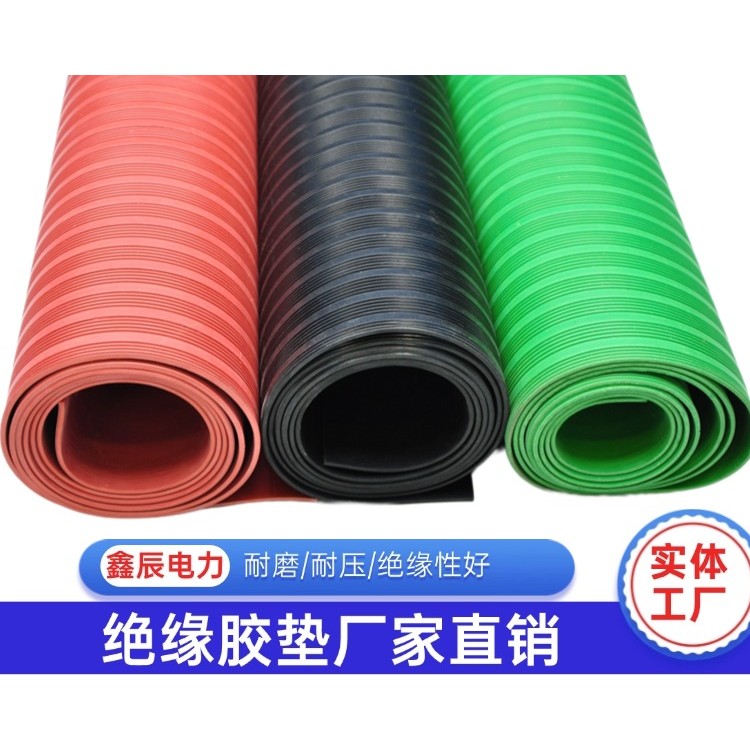

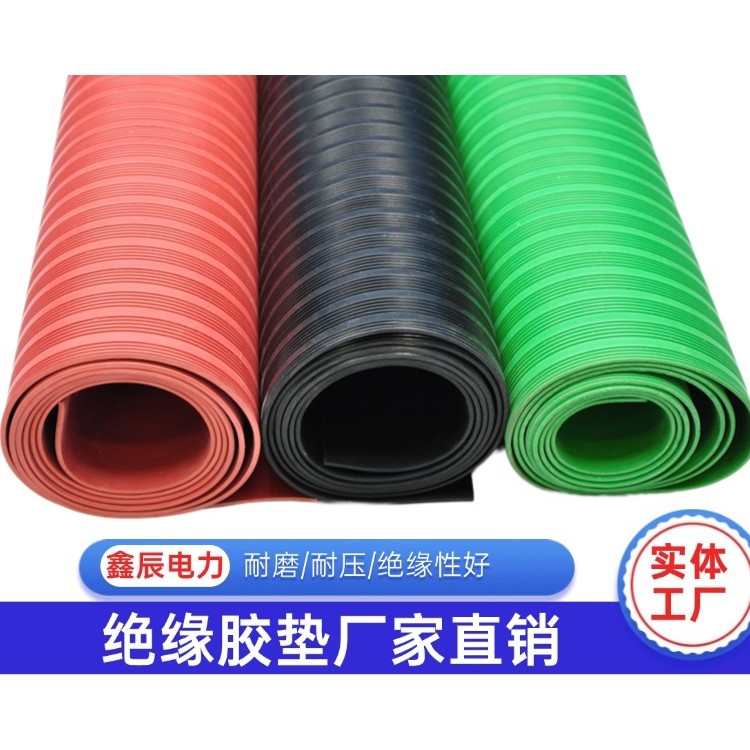













Insulating mats, also known as insulating carpets, pads, rubber sheets, rubber mats, floor insulations, rubber linings, and insulating shims, are large-volume resistivity and electrical breakdown-resistant mats. They are used as surface or flooring insulating materials for electrical distribution and other work environments.
Structure
1. Insulating rubber mat composition:
Insulating rubber mats are primarily made from insulating rubber materials, utilizing non-polar rubbers with excellent insulating properties such as NR, SBR, and IIR.
2. Insulating rubber mat characteristics:
The upper and lower surfaces of the insulating mat should not have any harmful irregularities.
Harmful irregularities refer to one of the following characteristics, which include defects that disrupt uniformity and damage the smooth outline of the surface, such as small holes, cracks, local bulges, cuts, foreign conductive particles, creases, gaps, wavy contours, and casting marks, etc.
Harmless irregularities refer to surface irregularities formed during the production process. High-quality insulating pads have no odor, no bubbles, no dents, and a smooth, clean, and tidy surface.
3. Insulating rubber mat thickness measurement:
Select at least five different points across the entire insulating mat for thickness measurement and inspection. Use a micrometer or an instrument of similar precision for measurement. The micrometer's accuracy should be within 0.02mm, measuring a drill diameter of 6mm, and a flat pressure foot diameter of (3.17±0.25)mm. The pressure foot should be able to apply a force of (0.83±0.03)N. The insulating mat should be laid flat to ensure a smooth measurement between the micrometer readings.
The upper and lower surfaces of the insulating rubber mat should not have any harmful irregularities. Harmful irregularities of the insulating rubber mat refer to one of the following characteristics, i.e., defects that disrupt uniformity or damage the smooth contour of the surface, such as small holes, cracks, localized bulges, cuts, foreign conductive particles, creases, wavy ridges, and casting marks, etc.