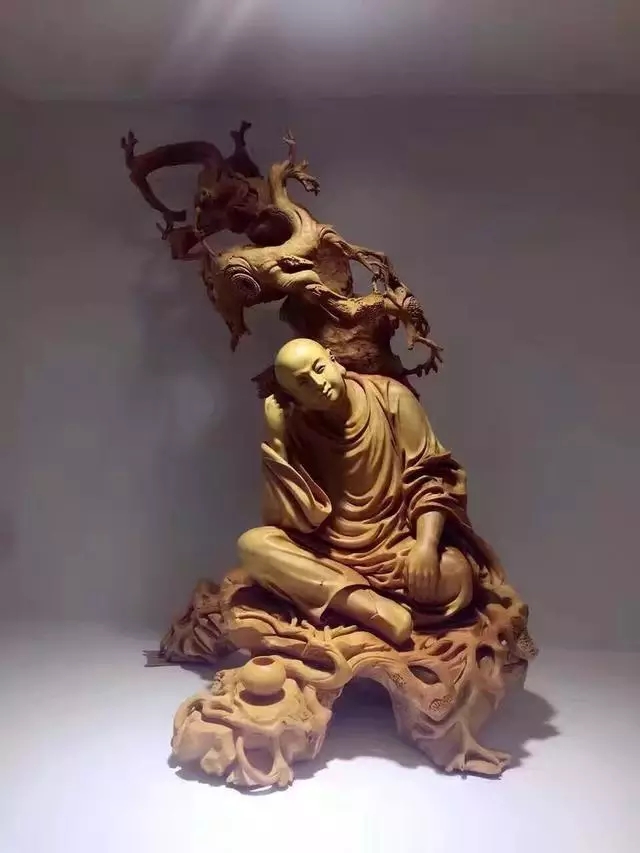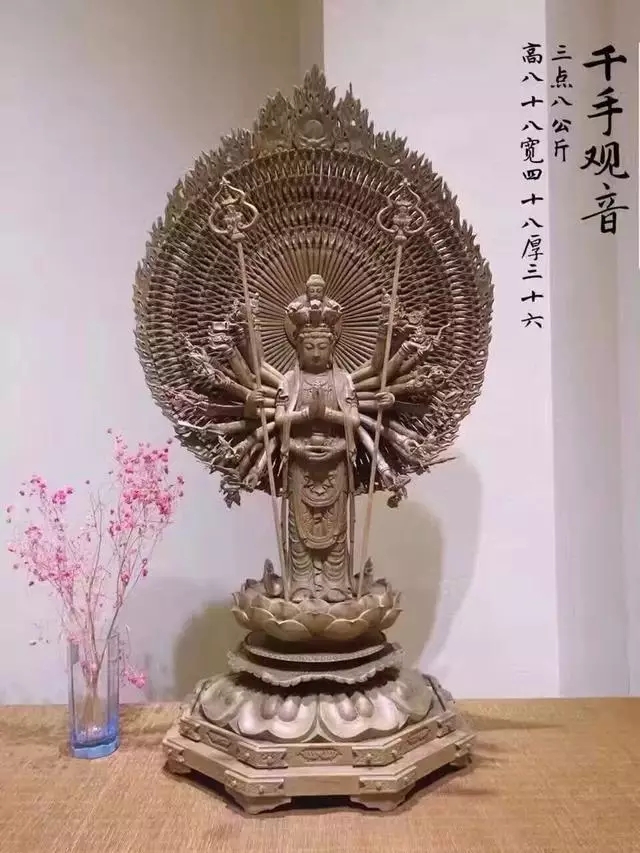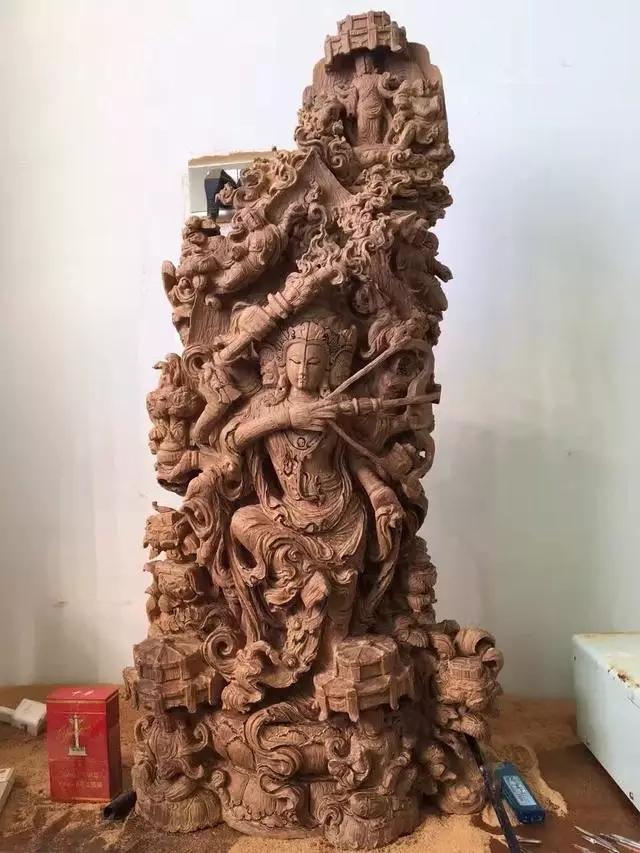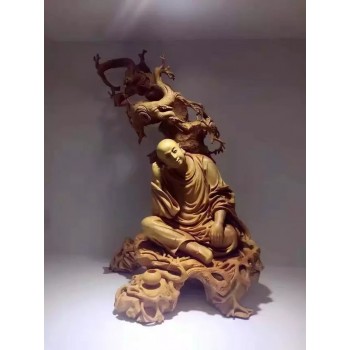













Worldwide, machine-produced mass products are boasting so-called master craftsmanship, flying around and deceiving those who are unaware! It truly chills the heart! Give traditional artisans a bit of dignity, please! The editor will introduce the differences between the carving process and machine-made products. Craftsmanship varies from large to small, from display pieces to handles, pendants, with themes changing endlessly! So, what level of appreciation have you reached for carved works? Are you a beginner or an expert?
Mass-produced machine-carved pieces can only be termed as "merchandise," whereas works meticulously crafted by skilled artisans are truly "artworks." Under the factory's assembly line production model, each craft piece undergoes various mechanical processing steps, following a fixed template for mass production, and is then polished and processed for market release. In contrast, hand-carved works are entirely crafted by artisans from start to finish, embodying the artisans' thoughts, efforts, and emotions in the crafted pieces.
Handicraft and machine work each have their own pros and cons. However, it's not fitting to label machines as masters. If you can identify machine-made goods, when encountering dishonest merchants, please ask them what model their master is! Because of the advanced technology, high output, and low cost of machines, many products are passed off as masterpieces, greatly harming the reputation of handcrafters and also deceiving buyers.
Traditional carving is generally divided into three steps.
1. Blanking (Very Important)
Initial casting required, usually one mold. Some products need illustration assistance. It's crucial for large items to cast properly. Simply put, it's design. It determines the taste, atmosphere, and style of the piece.
The design must have a sense of spatial depth, allowing for layout control; otherwise, the finished product will be rigid.
2: Trimming (Very Important)
In simple terms, it's about refining specific lines and shapes, trimming, enriching, and perfecting them to achieve a delicate finish. When done well, it becomes lively; when not, it loses its beauty, turning into a stagnant pool!
The design direction of the blank should be combined to make the work dynamic, and aesthetics are crucial.
3: Polishing (Very Important)
The process of smoothing to enhance the flatness and luster of the workpiece's surface can be understood as polishing. This is referred to as buffing.
Polishing brings out the luster, smoothness! It makes the product appear cleaner. Removes burrs and roughness from the workpiece surface.
If polishing is not controlled, it can wear off the texture of the previous stage, such as smoothing out the facial hair, hair, and muscles of a person, turning them into a flat surface.
Then, the carving tools
Carving knives, as the name implies, are specialized tools frequently used by artisans to craft intricate artworks. They are the most direct assistants and companions for sculptors in their creative endeavors.
A skilled craftsman must be proficient with his carving tools and possess exceptional techniques. The handling of the chisel is refined and free, clear and smooth, enhancing the artistic expression of the work. There are also power-driven tools like cranes, etc., and their skilled coordination can significantly improve efficiency.
How to Distinguish Machine Workers?
Machine-carved items tend to be rigid, with unclear details and often missing corners. Now, some brands achieve a very refined look by roughing out with machines and then finishing by hand, but it still lacks a certain charm. No matter how meticulously refined, it's only the level of detail. It lacks the aesthetic beauty the creator has imparted!
Handmade goods
The technique of hand-carved bas-relief is quite flexible, with lines that rise and fall gracefully, giving a textured feel with varying depths and uneven surfaces. The overall image is full of a sense of three-dimensionality, especially evident in carving irregularly shaped objects. Moreover, some free-standing three-dimensional carved figures that are not confined to a plane can only be achieved through hand carving, which cannot be simulated by the mechanical carving technology limited to computer-generated "patterns." Therefore, hand carving is more exquisite and creative, with lines that are not guaranteed to be uniform, bringing to life a vivid, tension-filled, dynamic, and full-of-life feel.
The machine-carved effects are perfectly straight and even in depth, appearing very orderly, but lack the delicate and raised feel. Since machine-carved products are first drawn on computer graphic software and then output by an automatic carving machine, the details are neat and uniform, with consistent sizes, appearing indistinguishable. Moreover, machine carving technology is only suitable for flat, limited-relief and openwork carvings with limited precision, unable to achieve three-dimensional round sculptures or multi-layer openwork carvings, which makes the image look rigid and lacking vitality.
To correctly identify whether a machine is a worker, players need patience, to observe and learn more related knowledge, and not to rush into盲目 purchases. Feel free to ask questions and engage in more discussions.