
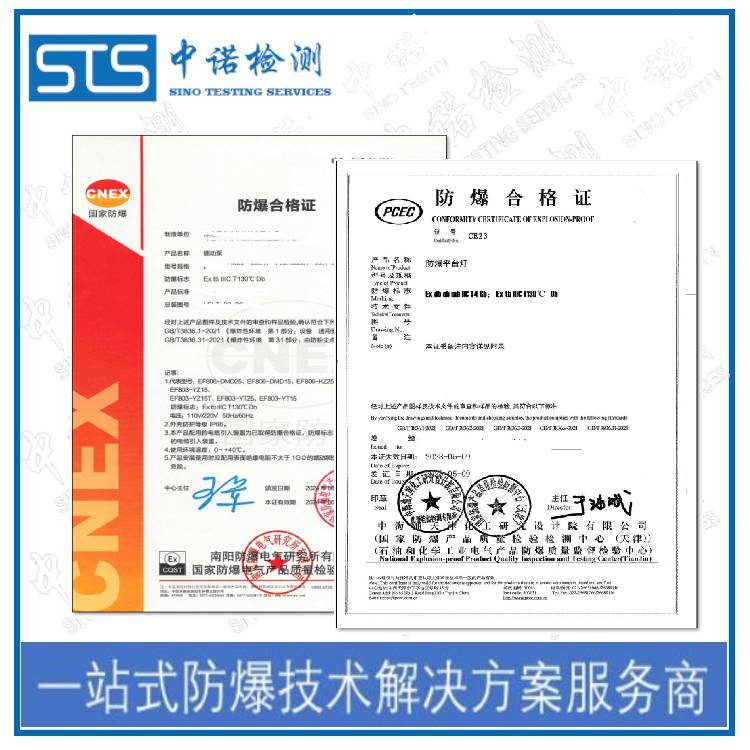










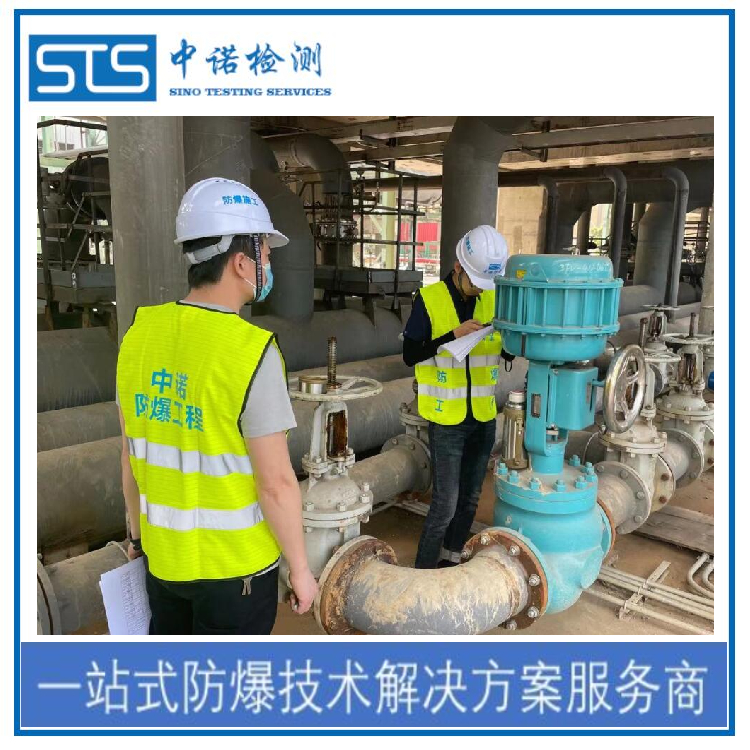
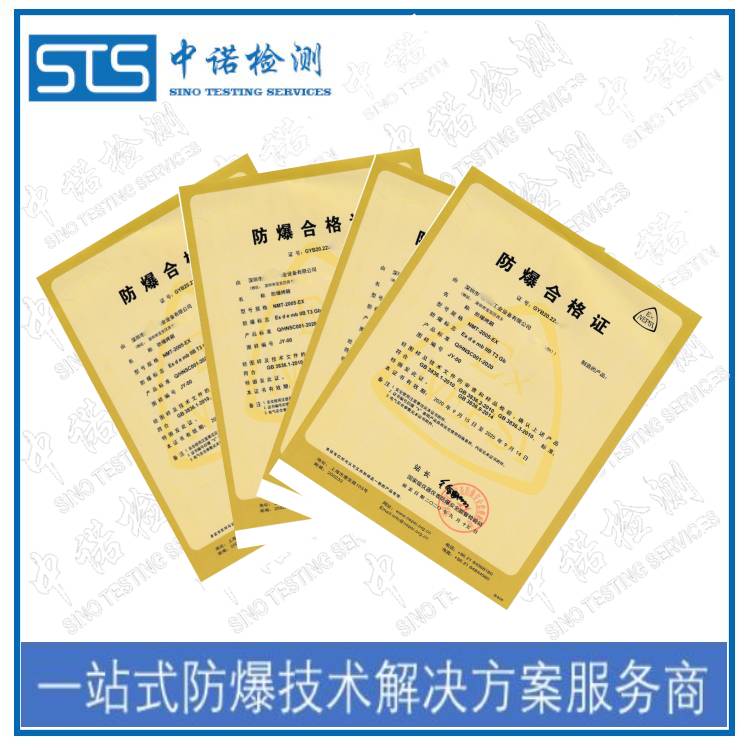
Shenzhen Zhongnuo Testing Technology Co., Ltd. is based in South China and specializes in explosion-proof certification and coal safety certification application consulting services, offering one-stop explosion-proof technology consulting services.
The explosion-proof certification classes IIB and IIC categorize explosion-proof electrical equipment in environments with flammable and explosive gases, and there are some key distinctions between them.
Firstly, both IIB and IIC are classified as Class II explosion-proof equipment. These are suitable for environments with flammable and explosive gases, excluding coal mines, such as in the petrochemical, gas, and other industries, where combustible gases and steam are commonly found. For these devices, they are further subdivided into different groups based on the characteristics of the flammable and explosive gases, such as IIA, IIB, IIC, and so on.
In these environments, the characteristics of flammable and explosive gases dictate the grade of explosion-proof equipment required.
Specifically, the differences between IIB and IIC lie mainly in the gas environments they are suitable for. The gases in the IIC category are generally more hazardous, with lower ignition energy and a wider limit range; the representative gas is hydrogen. In IIC gas environments, explosion-proof equipment must have higher explosion-proof performance to prevent accidents. In contrast, the gases in the IIB category are relatively stable in terms of ignition energy and limit range, so the performance requirements for explosion-proof equipment are relatively lower; the representative gas is ethylene.
In addition, when selecting explosion-proof equipment, factors such as temperature groups and equipment protection levels must be considered to ensure safe operation in hazardous environments.
In summary, IIB and IIC are different classification levels for explosion-proof electrical equipment in environments with flammable and explosive gases. Their differences mainly lie in the specific gas environments they are applicable to and the explosion-proof performance requirements. For more detailed information or to consult on explosion-proof certification issues, please feel free to contact Shenzhen Zhongnuo Inspection Technology Co., Ltd.
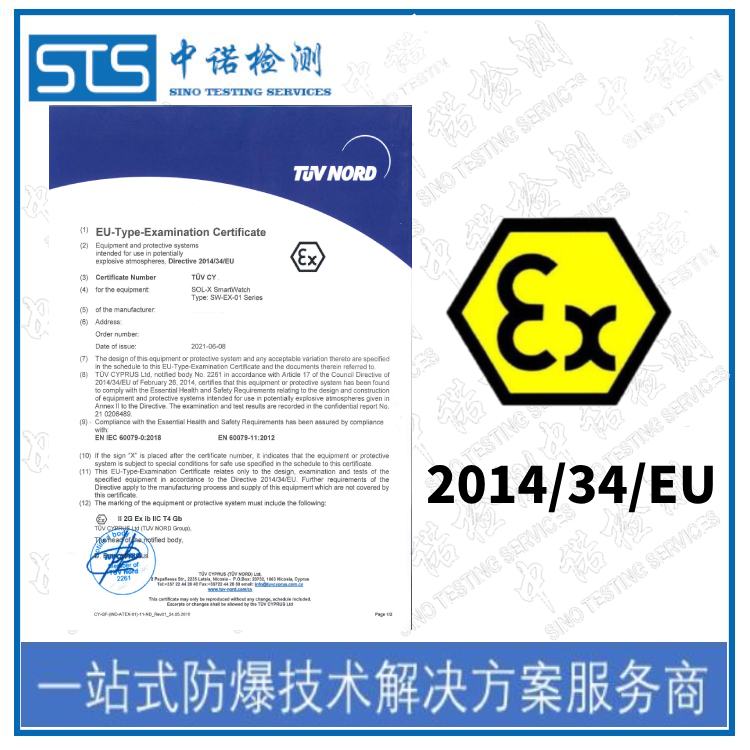
What is an ATEX certification of conformity? What are the requirements for applying for an ATEX certification of conformity?
Intrinsically safe equipment primarily meets explosion-proof requirements by controlling the electrical parameters of the device circuit and limiting the total circuit energy.
Key measures include reducing voltage and current, and controlling the parameters of energy storage components such as inductors and capacitors.
Product design reference standards are GB/T3836.1 and GB/T3836.4.
Customers applying for the explosion-proof certification of safety equipment need to provide electrical schematics, block diagrams, PCB layouts, and tag number diagrams.
Product assembly diagram, manual, corporate standards, and other documentation.
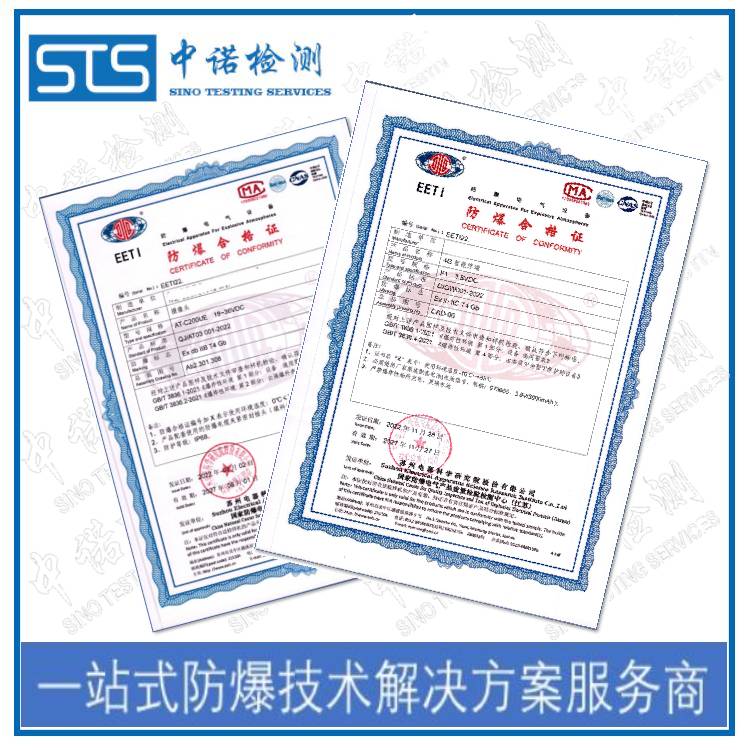
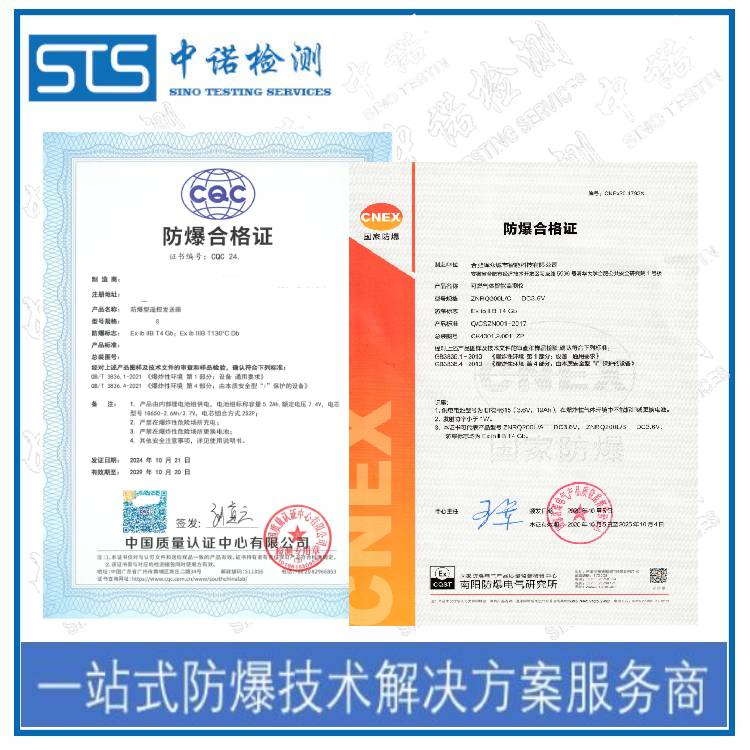
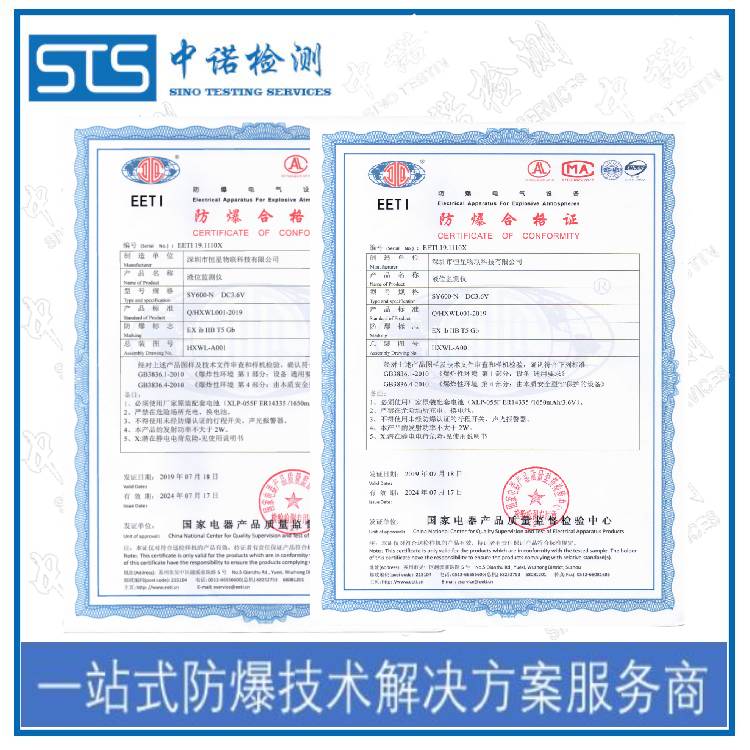
Recently obtained for our clients by CNOR Testing: temperature vibration sensors, remote transmitters, monitoring devices, Bluetooth beacons.
The explosion-proof certificates for walkie-talkies and other products are all of intrinsic safety type explosion-proof design.
If you also have products that need explosion-proof certification, feel free to message us!
Do you need to do an explosion-proof design before applying for the explosion-proof certification of the product?
That's a given.
The process of obtaining a防爆 certification for products is to pass the relevant test items of the explosion-proof standards and acquire an explosion-proof qualification certificate.
To ensure the product passes the explosion-proof standard test items, it is necessary to design the product according to the test requirements, which is to say, to implement explosion-proof design.
For explosion-proof requirements, refer to GB/T3836.1 and GB/T3836.2; for intrinsic safety design, consult GB/T3836.1 and GB/T3836.4; and for positive pressure design, refer to GB/T3836.1 and GB/T3836.5.
If your equipment is looking to apply for explosion-proof certification and enter the explosion-proof market, reach out to us via private message right away! ZhongNuo Inspection has been deeply involved in the explosion-proof field for many years, well-versed in the technical requirements of GB/T3836 and EN/IEC60079 explosion-proof standards, offering explosion-proof product modification and design guidance, as well as a one-stop explosion-proof technical solution.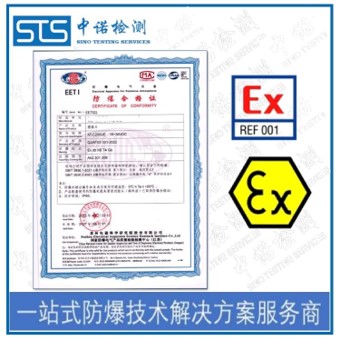
Intrinsically Safe Certification, also known as Intrinsically Safe Explosion Proof Certification. Below is a detailed introduction to Intrinsically Safe Certification:
The basic definition of intrinsic safety:
intrinsic safety refers to a type of explosion-proof design that limits the circuit energy of electrical equipment, ensuring that under normal operation or specified fault conditions, the electrical sparks or thermal effects produced cannot ignite the surrounding flammable or explosive environment. This type of explosion-proofing primarily focuses on restricting the energy in the circuit, reducing the potential spark energy to below the energy required to ignite the specified gas mixture, and keeping the surface temperature of the wires and components below the ignition temperature of the gas mixture, thereby achieving intrinsic safety.
Application Scope of Intrinsically Safe:
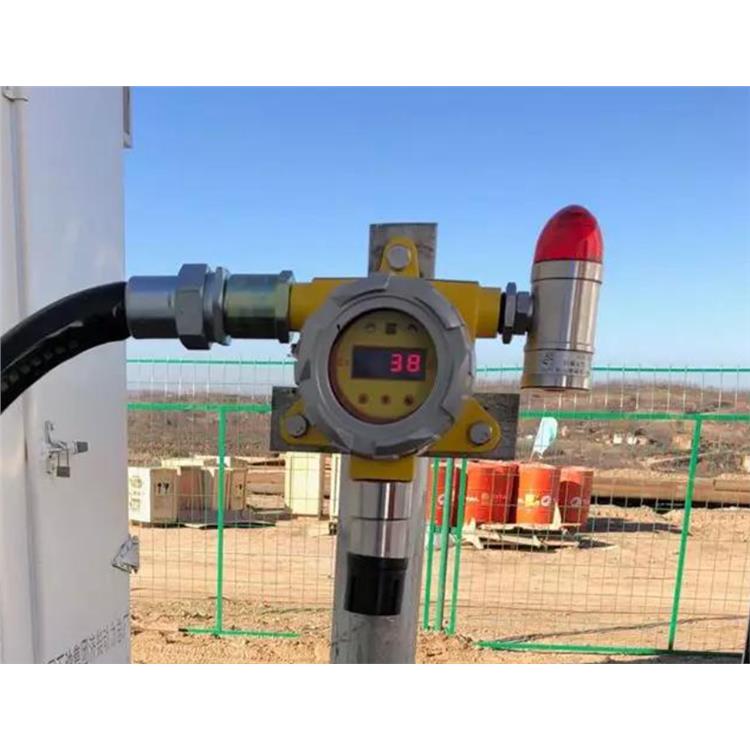
The intrinsic safety certification is widely applied to low-power, low-energy instruments, handheld terminal products, and more. Due to the relatively low energy produced by these devices, it is easy to control them within a manageable range through technical means, thus meeting intrinsic safety requirements. Products such as temperature vibration sensors, remote transmitters, monitoring devices, Bluetooth beacons, and walkie-talkies can all undergo intrinsic safety certification.
Intrinsic Safety Certification Standards:
Domestic intrinsic safety certification standards mainly include GB/T3836.1 and GB/T3836.4, etc. The international IECEx certification standards are IEC60079-0 and IEC60079-11. These standards provide detailed regulations on the technical requirements, testing methods, and inspection rules for intrinsic safety electrical equipment, ensuring the equipment's intrinsic safety performance.
Required documents for obtaining the ATEX certification:
Including product manuals, corporate standards, electrical schematics, block diagrams, PCB layouts, assembly drawings, battery specifications, potting process documents, wireless transmission power reports, and material reports for the shell.
The Significance of ATEX Certification:
Equipment certified with the intrinsic safety standard can significantly reduce the risk of accidents in flammable and explosive hazardous environments, thereby safeguarding personnel and property from damage. Additionally, obtaining the intrinsic safety certification is one of the key prerequisites for a company's products to enter relevant markets, which aids in enhancing the market competitiveness of the products.
Explosion-proof Certification Application Consulting Services - Shenzhen ZhongNuo Testing Technology Co., Ltd.
WeChat Official Account

Scan to follow Official Account