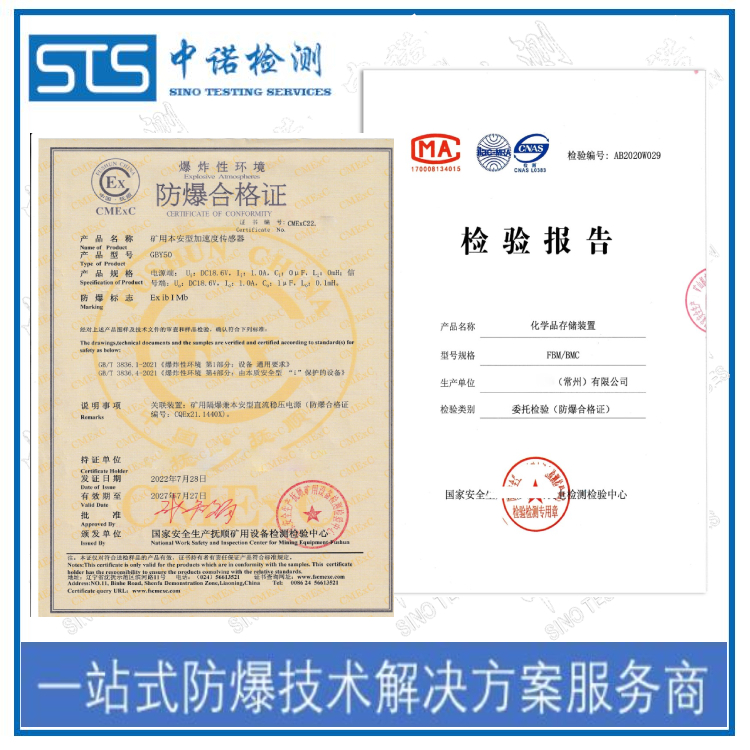

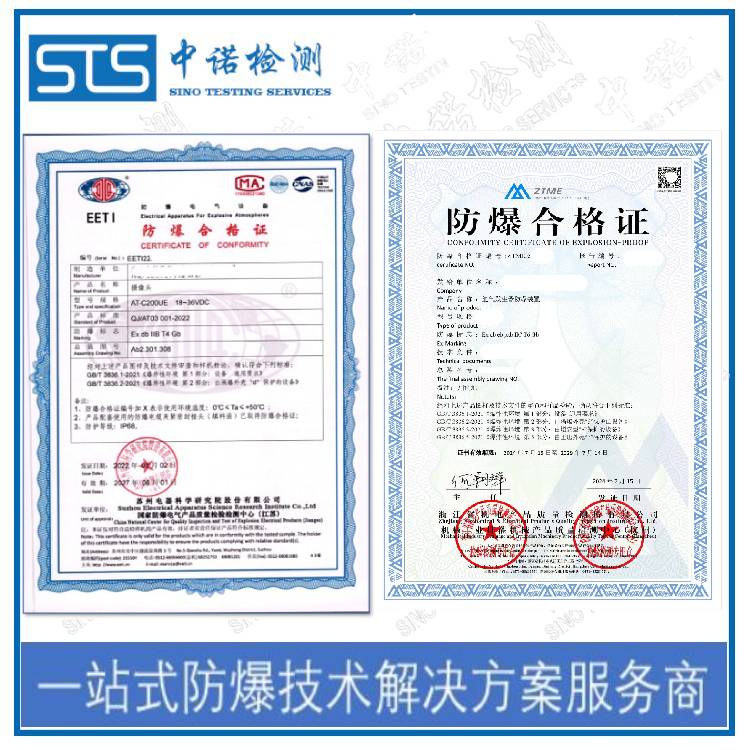
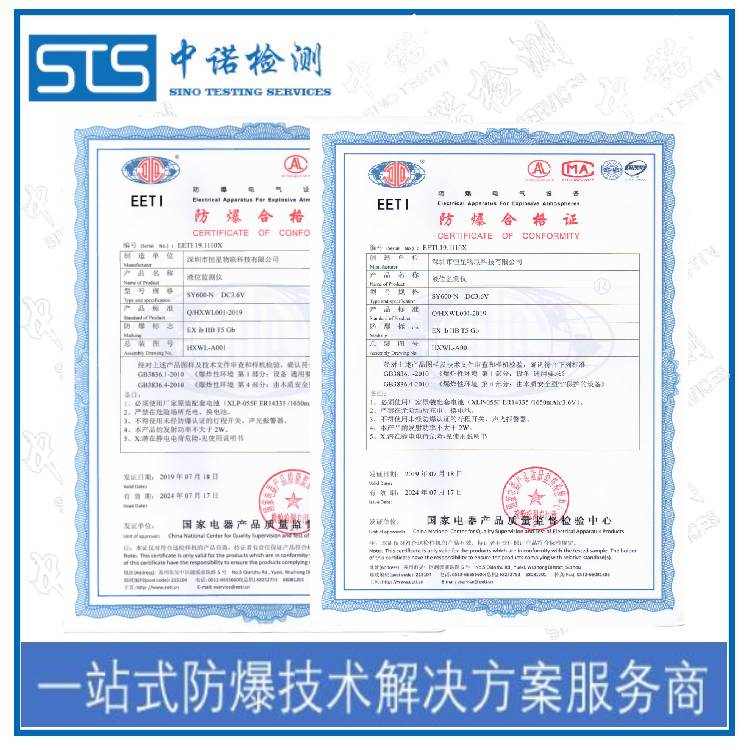











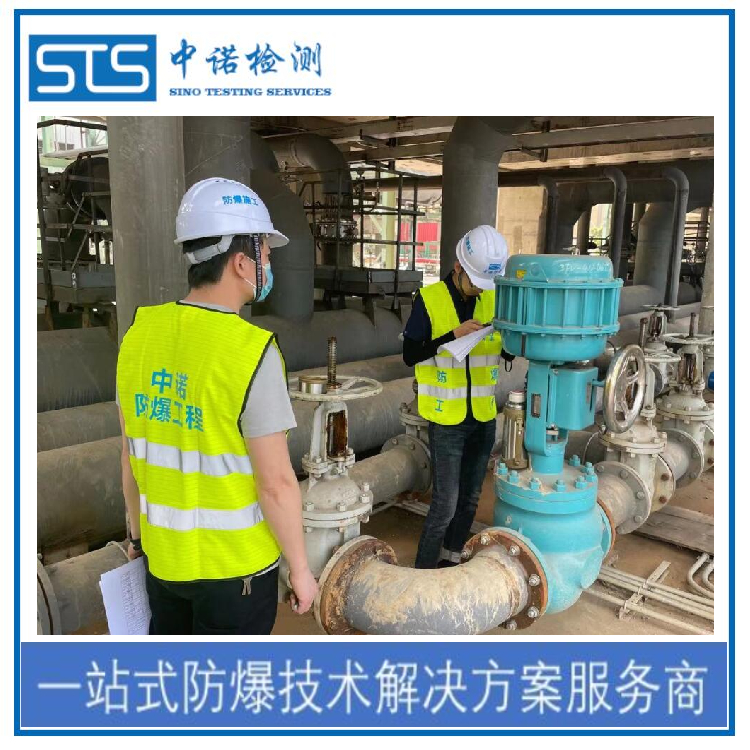
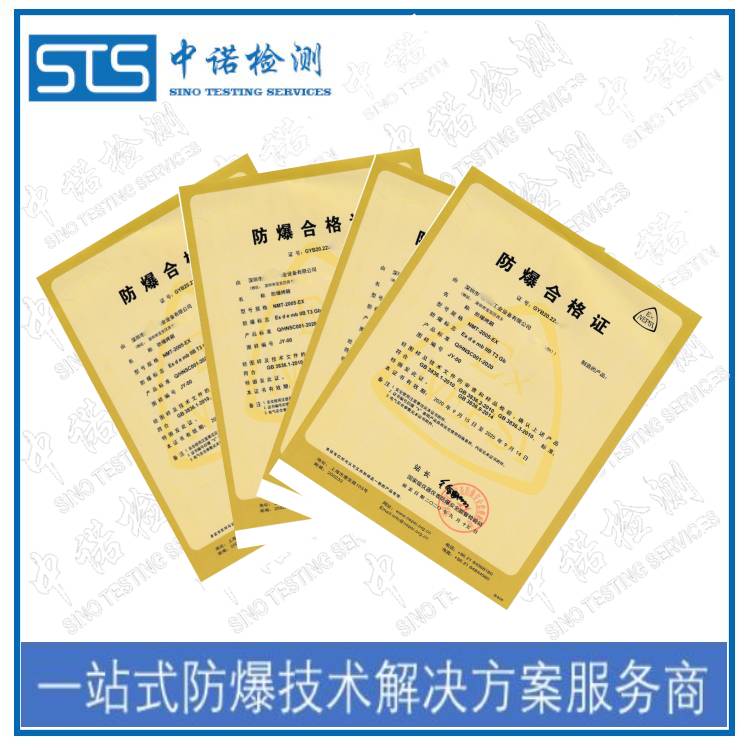
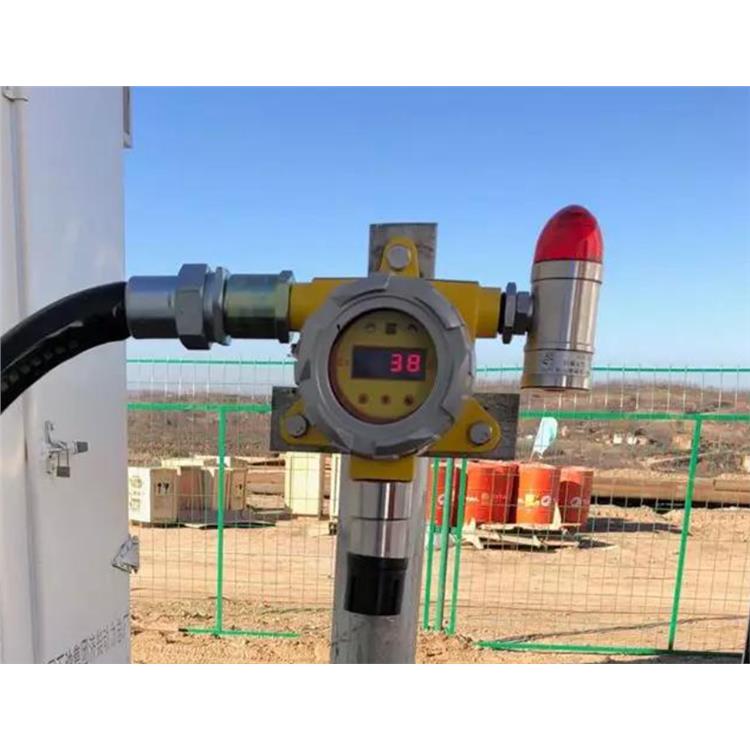
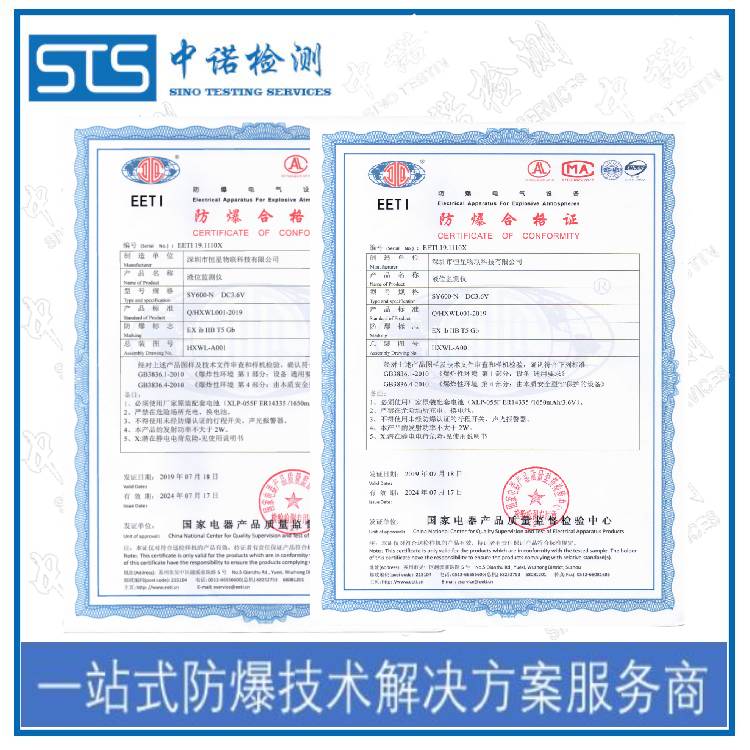
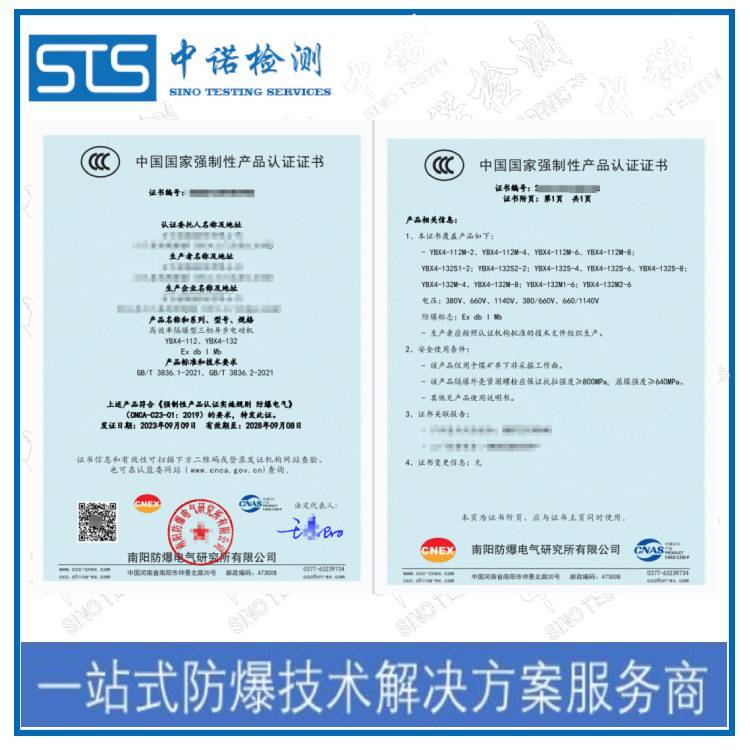
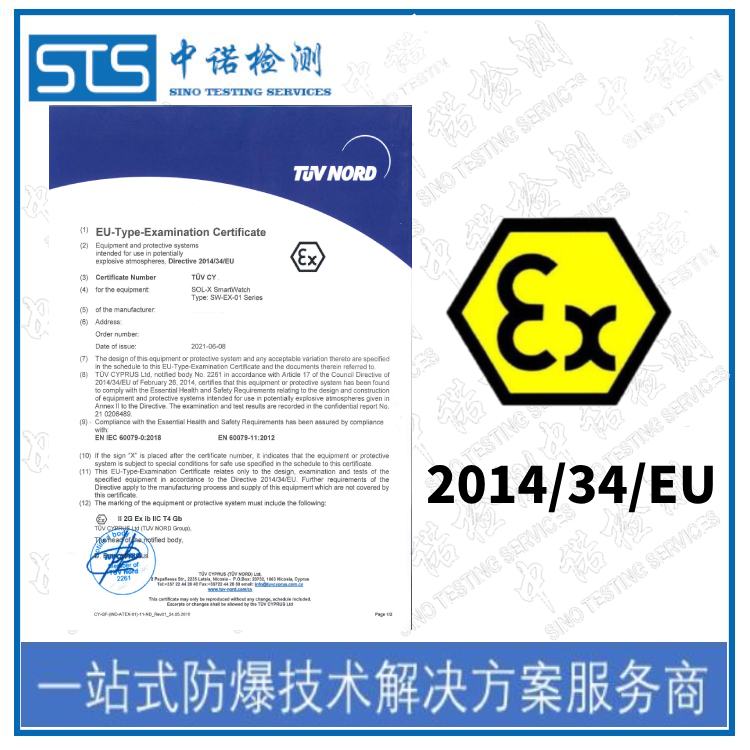
Shenzhen Zhongnuo Testing Technology Co., Ltd. is based in South China and specializes in explosion-proof certification and coal safety certification application consulting services, offering one-stop explosion-proof technology consulting services.
What are the requirements and documents needed to apply for an explosion-proof certification?
The explosion-proof certificate is a safety certification for equipment and products used in environments with explosive gases or combustible dust.
Certificates are available for Ex equipment and Ex components.
Products require a防爆 certification, and a防爆 standard test must be conducted on the product, along with providing technical drawings and documents that meet the防爆 standards.
The technical documentation here includes product manuals, corporate standards, electrical schematics, PCB layouts, assembly diagrams, and exploded views.
Battery Testing Report and Specifications, Potting Process Documents, Wireless Transmission Power Report, Shell Material Report, etc.
Of course, not all of this information is required; it needs to be further assessed based on the product structure and explosion-proof type.
ZhongNuo Inspection has years of experience in explosion-proof product certification and compliance services, offering consultation on explosion-proof design, drafting, circuit, and structural modifications.
Full-process agency for explosion-proof certification application, welcome to inquire at any time!
What is the AQ 3009-2007 "Electrical Explosion Protection Standard for Hazardous Areas" standard?
AQ 3009-2007 is the "Electrical Explosion-Proof Code for Hazardous Locations," a production industry standard. This standard applies to the explosion-proof safety requirements of electrical equipment in hazardous locations, aiming to ensure the safe operation of these equipment in flammable and explosive environments.
Scope of Application:
1. Suitable for hazardous areas with flammable and explosive gases, vapors, or dust, such as oil, chemical, and coal mines.
2. Covers the design, selection, installation, operation, maintenance, and repair of electrical equipment.
II. Main Content:
1. Hazardous Area Classification: Divide hazardous areas into different zones based on the likelihood of the environment.
2. Explosion-proof electrical equipment selection: Choose appropriate explosion-proof electrical equipment based on the classification of the location.
3. Installation Requirements: Specify the installation location, spacing, and grounding requirements for explosion-proof electrical equipment.
4. Usage and Maintenance: Clearly define the equipment's usage, inspection, and maintenance requirements to ensure its explosion-proof performance.
5. Maintenance Requirements: Outline maintenance procedures and precautions to ensure that the equipment complies with explosion-proof requirements after maintenance.
III. Technical Requirements:
1. Explosion-Proof Marking: Equipment must be labeled with explosion-proof marking and certification information.
2. Electrical Safety: Circuit design and component selection must comply with explosion-proof requirements to prevent accidents caused by electric sparks or high temperatures.
3. Material Selection: The outer shell and internal materials should possess anti-static, corrosion-resistant, and high-temperature resistance properties.
IV. Relationship with Other Standards
1. Relationship with the GB/T 3836 series standards: AQ 3009-2007 complements the GB/T 3836 series standards. The GB/T 3836 series focuses more on the explosion-proof technical requirements of electrical equipment, whereas AQ 3009-2007 emphasizes the safe application of explosion-proof electrical equipment in hazardous areas.
2. Relationship with IEC Standards: AQ 3009-2007 refers to the IEC 60079 series standards and makes adjustments in line with China's actual conditions.
V. Summary
AQ 3009-2007 is a crucial electrical explosion-proof regulation for hazardous areas, applicable to industries such as oil, chemicals, and dust. It outlines requirements for the design, selection, installation, use, maintenance, and inspection of explosion-proof electrical equipment, ensuring safe operation in flammable and explosive environments. Companies must adhere to this standard when designing and utilizing explosion-proof electrical equipment.
The differences between explosion-proof ratings IIB and IIC
Certification levels IIB and IIC are classifications for explosion-proof electrical equipment in environments with flammable and explosive gases, and there are some key distinctions between them.
Firstly, both IIB and IIC are classified as II-type explosion-proof equipment, suitable for environments with flammable and explosive gases, excluding coal mines, such as the combustible gases and steam environments commonly found in the petrochemical, gas, and other industries. For such equipment, it is further divided into different groups based on the characteristics of flammable and explosive gases, such as IIA, IIB, IIC, etc.
In these environments, the characteristics of flammable and explosive gases dictate the level of explosion-proof equipment required.
Specifically, the distinction between IIB and IIC lies in the gas environments they are applicable to. Gases in the IIC category are generally more hazardous, with lower ignition energies and wider limits; the representative gas is hydrogen. In IIC gas environments, explosion-proof equipment must have higher explosion-proof performance to prevent accidents. In contrast, gases in the IIB category are relatively stable in terms of ignition energy and limits, so the required performance of explosion-proof equipment is relatively lower; ethylene is a representative gas.
Additionally, when selecting explosion-proof equipment, factors such as temperature classes and equipment protection levels must be considered to ensure safe operation in hazardous environments.
In summary, IIB and IIC are different classification levels for explosion-proof electrical equipment in flammable and explosive gas environments, with the main differences lying in the applicable gas environments and the requirements for explosion-proof performance. For more detailed information or consultation on explosion-proof certification issues, please feel free to contact Shenzhen ZhongNuo Testing Technology Co., Ltd.
How to differentiate between gas explosion-proof certification and dust explosion-proof certification?
Gas explosion-proof certification and dust explosion-proof certification, which we often refer to, are categorized based on the applicable locations of the equipment.
Explosion-proof equipment for various hazardous gas environments undergoes gas explosion-proof certification, while equipment for places with combustible dust is subject to dust explosion-proof certification.
In explosion-proof certification, gases are categorized as IIA, IIB, and IIC, while dusts are classified as IIIA, IIIB, and IIIC. Their characteristics and environments vary, necessitating different explosion-proof protection measures for equipment, and they should not be interchanged. Naturally, certain products that meet both gas and dust explosion-proof standards during certification can be used in both gas and dust environments. The explosion-proof certificate also indicates whether it's for gas or dust explosion-proof certification through the explosion-proof symbol.
Learn more about explosion-proof information, feel free to contact us anytime!
Shenzhen ZhongNuo Testing Technology Co., Ltd. has long focused on the explosion-proof field, boasting extensive evidence collection experience and a skilled technical team in the current explosion-proof certification domain. We have experienced explosion-proof electronic engineers who can provide services such as explosion-proof design, reverse engineering, circuit evaluation, and rectification. Our services help avoid pitfalls for businesses and facilitate their explosion-proof certification process.
Explosion-proof Certification Application Consulting Services - Shenzhen Zhongnuo Testing Technology Co., Ltd.
WeChat Official Account

Scan to follow Official Account