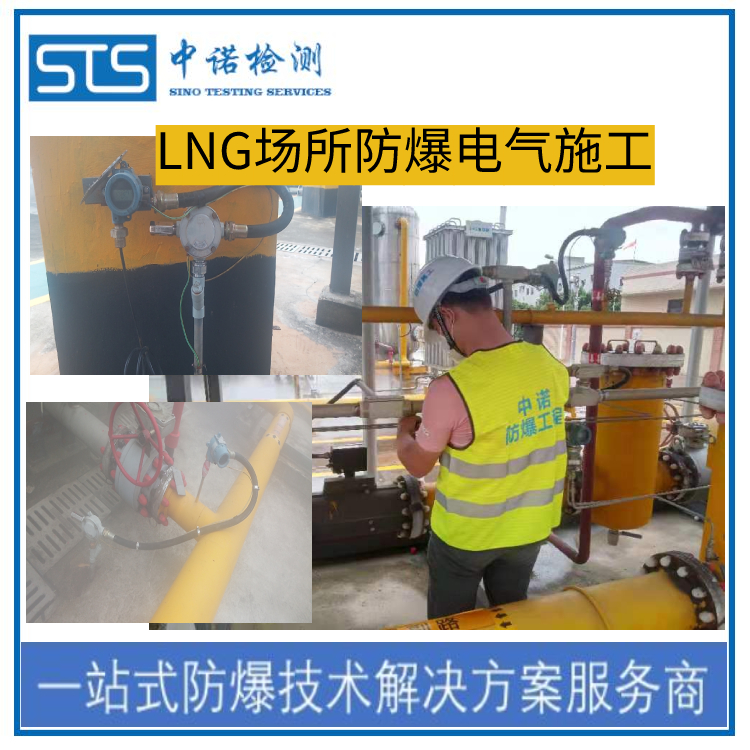
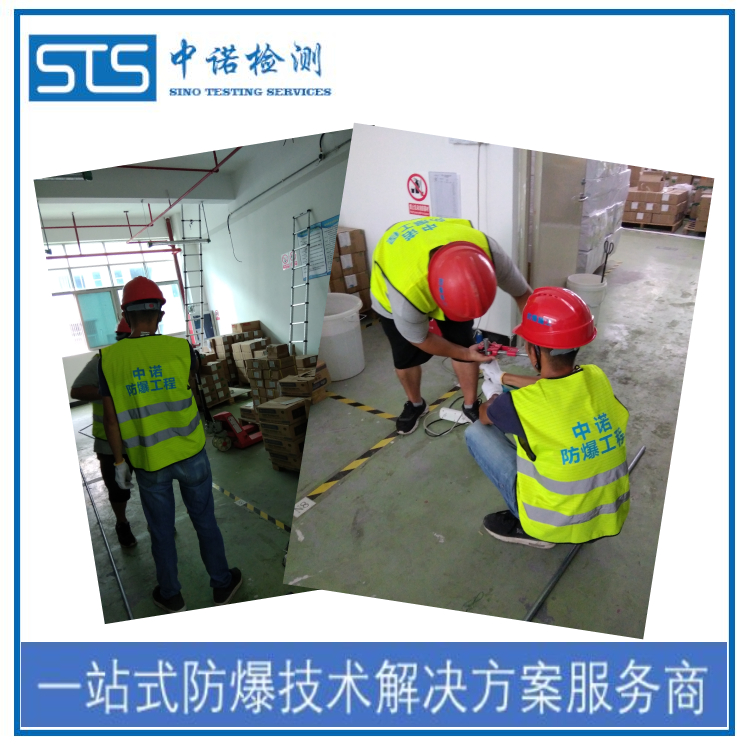










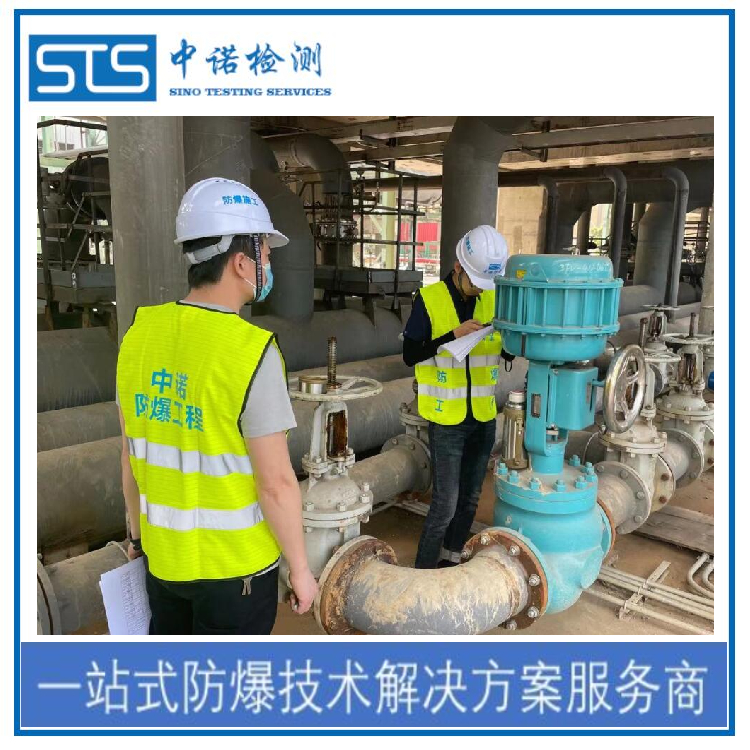
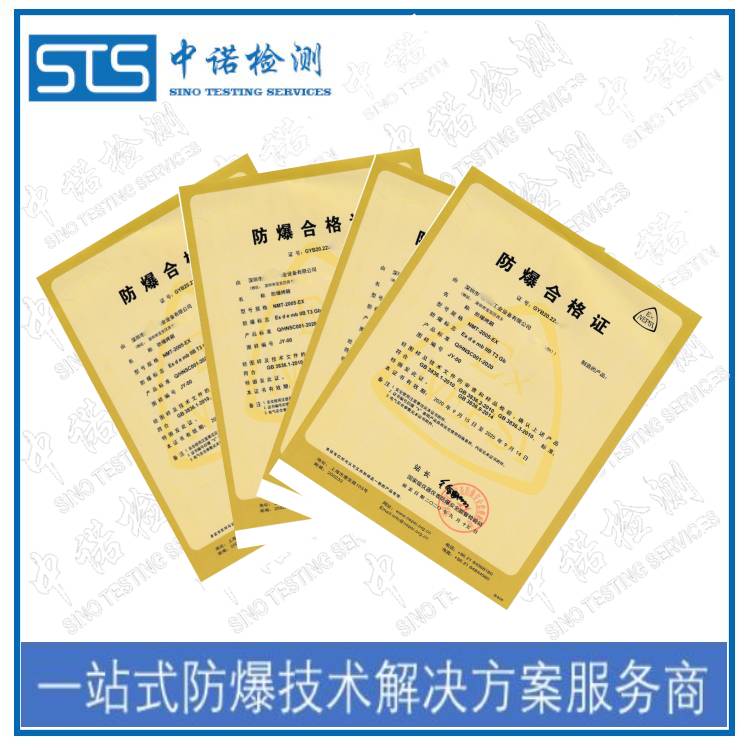
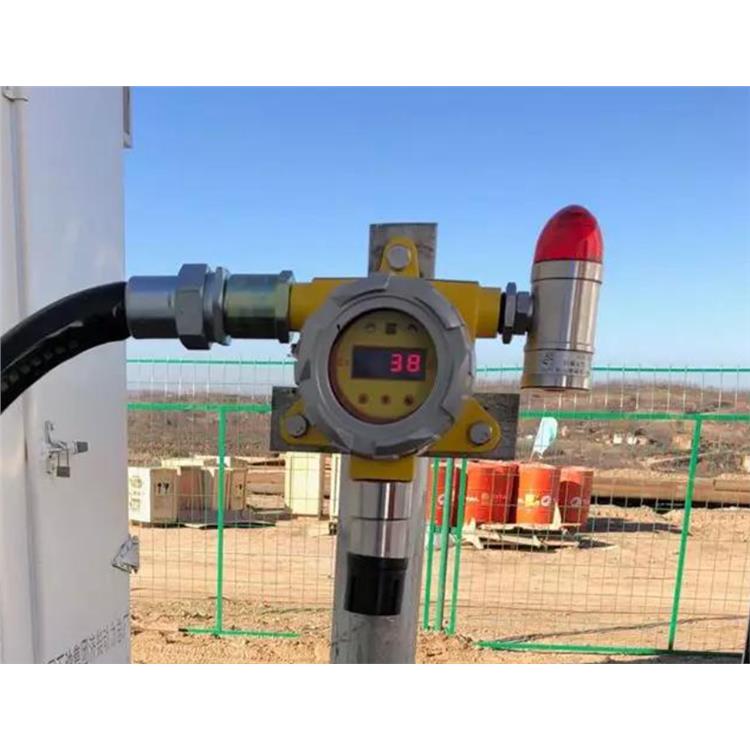
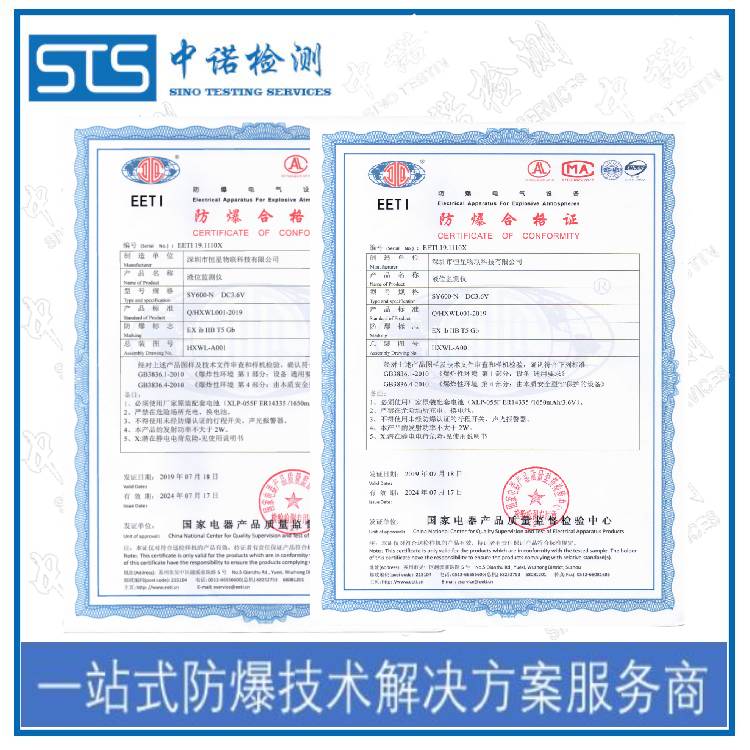
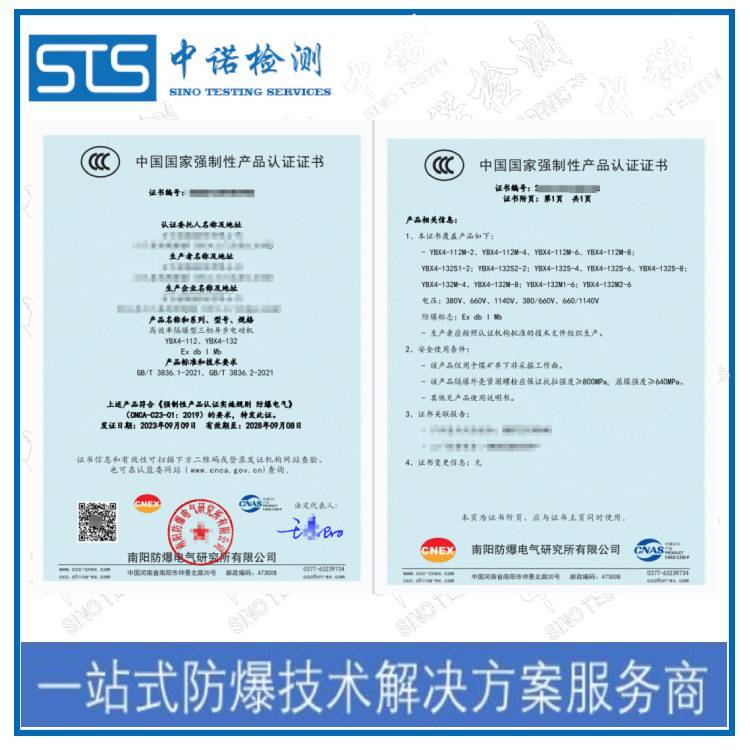

Shenzhen ZhongNuo Testing Technology Co., Ltd. is based in South China, offering explosion-proof construction services, safety inspections, renovations, project acceptance, and explosion-proof installation. We are well-versed in explosion-proof construction standards and have a team of experienced contractors. We have served major enterprises such as PetroChina, LG, Huanlan Environment, BOE, and Sinovac Biotech, receiving consistent praise and trust from our clients!
Installation of electrical wiring in explosive environments shall comply with the following regulations (shared by Shenzhen ZhongNuo Testing Technology Co., Ltd.)
Electrical wiring should be installed in environments with low explosion hazards or far from the source of release, and it should comply with the following regulations:
1) When the material is heavier than air, electrical lines should be laid at a higher level or directly buried. For overhead installation, cable trays should be used; for trench laying, sand should be filled in the trench, and drainage measures should be provided.
2) Electrical wiring should be laid outside the walls of buildings or structures where explosive hazards are present.
3) In an explosive dust environment, cables should be laid in locations where dust is less likely to accumulate and is easy to remove.
(2) Holes in walls or floors between different areas traversed by electrical line trenches, cable trays, or conduits should be tightly sealed with non-combustible materials.
(3) When laying electrical wiring, it is advisable to avoid areas prone to mechanical damage, vibration, corrosion, UV radiation, and potential heat exposure. If avoidance is not possible, preventive measures should be taken.
(4) Wiring with steel pipes can use insulated single-core or multi-core wires without sheathing. When the steel pipe contains three or more wires, the total cross-sectional area of the wires including the insulation should not exceed 40% of the steel pipe's cross-sectional area. The steel pipes should be of the galvanized lock-welded type for low-pressure fluid conveyance. The threaded part of the steel pipe connections should be coated with lead oil or phosphatizing paste. At locations where condensation or condensate may occur, condensate排水 valves should be installed on the pipeline.
(5) Electrical wiring for steel piping in explosive gas environments must be properly insulated and sealed, and should comply with the following regulations:
1) During normal operation, the 450mm range around all ignited source enclosures should be sealed off with insulation.
2) Steel pipes with a diameter of 50mm or more should be isolated and sealed within 450mm of the incoming junction box.
3) Isolation and sealing should be conducted between adjacent explosive environments, as well as between explosive environments and adjacent other hazardous or non-hazardous environments. When sealing, the interior of the seal should be lined with a fibrous filling layer or separator, with the effective thickness of the filling layer not less than the inner diameter of the steel pipe, and not less than 16mm.
4) Connection parts for isolation sealing should not be used for wire connections or branching.
(6) Intermediate joints are strictly prohibited in cable lines within Area 1, and intermediate joints should not be present in Areas 2, 20, and 21.
(7) When connecting the ends of cables or wires, if the internal wires are stranded, the ends should be connected using a molded terminal or crimped connector. The connection and termination of aluminum-core insulated wires or cables should be done by crimping, soldering, or brazing. When connecting to equipment (excluding lighting fixtures), a copper-aluminum transition connector should be used.
(8) Overhead power lines must not cross explosive gas environments; the horizontal distance between overhead lines and explosive gas environments should not be less than 1.1 times the height of the pole towers. In special cases, after taking effective measures, the distance may be appropriately reduced.
Basic Specifications for Explosion-Proof Design in Hazardous Areas (Shared by Shenzhen ZhongNuo Testing Technology Co., Ltd.)
1. First, conduct the overall explosion protection design
2. Directed release of explosive energy. Around the explosion source, comprehensively utilize anti-explosion and venting technologies. Set anti-explosion walls and windows in the direction of high population density, office areas, and critical equipment. In directions with few people and no important equipment, install venting walls and windows.
3. Establish safe distances. Minimize the placement of office areas, residential zones, and critical equipment areas within the range less than the safe distance unless necessary; if they are set, implement necessary explosion-proof measures.
4. Conversion of non-blast-resistant buildings to blast-resistant structures. Within the range less than the safe distance, buildings should undergo blast evaluation, and those not meeting blast resistance requirements should be reinforced to prevent collapse of the buildings; to prevent the fracturing of brittle materials such as bricks, concrete, glass, etc., and the generation of debris.
5. Place explosion-proof shelters in hazardous blast zones.
Standard for Explosion-proof Construction Acceptance - Shenzhen Zhongnuo Inspection Technology Co., Ltd.
G50058 Specification for Design of Electrical Installations in Explosive Hazardous Environments
GBJ54-83 "Code for Design of Low-Voltage Distribution Equipment and Lines"
G50016 Building Design Fire Protection Code
AQ3009 Electrical Explosion-Proof Safety Regulations for Hazardous Areas
GB/T3836.1 "Explosive Atmospheres - Part 1: Equipment - General Requirements"
GB/T3836.15 "Design, Selection, and Installation of Electrical Equipment for Explosive Environments"
GB50257 "Code for Construction and Acceptance of Electrical Installation Works in Explosive and Flammable Gas Environment"
14J938 "Explosion-Resistant and Explosion-Relieving Windows, Doors, Roofs, and Wall Building Structures"
Based on the basic requirements of GB 15577 "Safety Code for Dust Explosion Prevention," in防爆construction and modification in explosive dust environments, the following five major explosion prevention measures can be adopted (shared by Shenzhen ZhongNuo Testing Technology Co., Ltd.).
Anti-knock
1. Definition: An explosion suppression technology that, in the enclosed package with combustible dust and gaseous oxidizers or air, can withstand the pressure of a large-scale explosion, preventing the package from being destroyed.
2. Objective: By enhancing container wall thickness and improving material, external damage is minimized even in the event of a dust explosion.
3. Basic Requirements:
When producing and handling powders that can cause explosions, if there is no explosion suppression device and no pressure relief measures, all process equipment should be designed to be explosion-proof and capable of withstanding the overpressure generated by internal explosions without bursting.
(2) The connecting parts between various process equipment (such as pipes, flanges, etc.) should have the same strength as the equipment itself. For connections between high-strength and low-strength equipment, explosion-proof devices should be installed.
(3) Equipment for explosion-proof pressure and impact resistance should comply with the requirements of GB/T 24626.
Explosion Relief
1. Definition: A controlled explosion technology that, during an explosion within the containment vessel, allows the high temperature, high-pressure combustion products, and unburned materials to be released through pre-set weak points in the containment vessel before the explosion pressure reaches the limit strength, thus preventing the containment vessel from being destroyed.
2. Purpose: To reduce explosion damage by setting up explosion relief devices.
3. Methods: Two explosion relief methods are available – flaming and non-flaming.
4. Basic Requirements:
When the strength of the process equipment is insufficient to withstand the overpressure generated by internal dust explosion under actual working conditions, an explosion relief port should be installed. The port should be directed towards a safe direction, and the size of the port should comply with the requirements of GB/T 15605.
(2) Dust explosion hazard process equipment installed indoors should be vented to a safe outdoor direction through pressure relief ducts. The pressure relief ducts should be as short and straight as possible, with a cross-sectional area not less than that of the relief opening, and their strength should not be less than the strength of the protected equipment container.
(3) Equipment inside the room that cannot vent explosion to the outdoors through a pressure relief conduit should be equipped with a flameless explosion venting cap.
(4) Process equipment with inline piping should be designed to withstand at least 0.1 MPa of internal overpressure.
3. Explosion Suppression
1. Definition: In the initial stage of an explosion, extinguishing the flame and suppressing (preventing) the development of dust explosion through physical and chemical actions.
2. Objective: To pre-detect and extinguish fires, as well as suppress explosions through the installation of an explosion suppression device.
3. Basic Requirements:
Process equipment with a risk of dust explosion should be protected with suppression devices.
(2) If a monitored explosion suppression device is used, it should comply with the requirements of GB/T 18154.
(3) Design and application of explosion suppression systems should comply with the requirements of GB/T 25445.
Four: Explosion-proof
1. Definition: Technology that prevents the spread of an explosion after its occurrence, through physical and chemical means.
2. Purpose: To prevent the spread of flames through pipes or other passageways
3. Basic Requirements:
(3) Equipment and facilities with dust explosion hazards that are interconnected by pipelines should ideally be equipped with explosion suppression devices on the pipelines.
(2) Equipment and facilities with a dust explosion hazard that are interconnected by pipelines should ideally be equipped with explosion suppression devices. The shutoff direction should be consistent with the direction of the explosion's propagation.
Five, Inertizing
For processes such as crushing, grinding, drying powders, and pneumatic conveying through pipelines in sealed containers, inert gases like nitrogen, carbon dioxide, halogenated hydrocarbons, argon, helium, and steam are introduced, as well as inert dusts such as fire suppressant powder, chemical dry powder, and mineral rock powder. This is done to dilute combustible components and reduce the oxygen content in the environment.
explosion-proof electrical modifications for hazardous areas and on-site explosion-proof construction consulting services - Shenzhen Zhongnuo Inspection Technology Co., Ltd.
WeChat Official Account

Scan to follow Official Account