






Overview
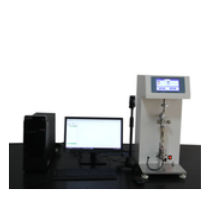
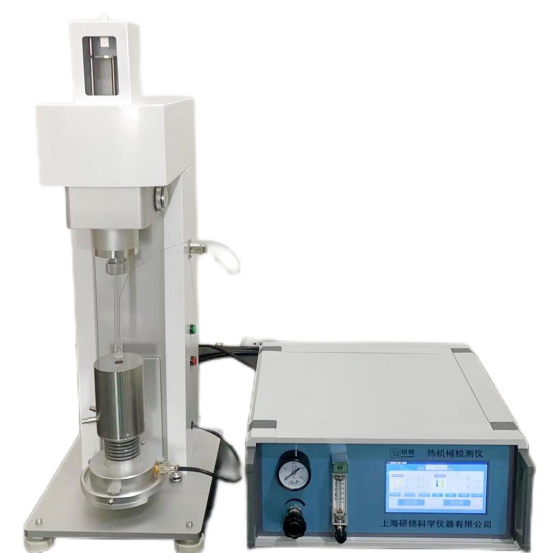
Comprehensive thermal analysis integrates thermogravimetry (TG) with differential thermal analysis (DTA) or differential scanning calorimetry (DSC), allowing for the simultaneous acquisition of TG and DTA or DSC data from the same sample in a single measurement. Widely applied in research and development, process optimization, and quality control for various fields such as plastics, rubbers, coatings, pharmaceuticals, catalysts, inorganic materials, metals, and composites. This instrument employs a microbalance with a sensitivity of one part per million, a high-precision electromagnetic torsion balance, a gas mass flow meter, and perfect sealing to ensure consistent intake and exhaust, facilitating easy data collection for users.
Technical Features
1. Utilizing a high-precision electromagnetic torsion balance with one-millionth accuracy, it boasts excellent stability and repeatability.
2. Utilizes a bottom-pan balance model, capable of measuring Curie point temperature.
3. Equipped with a torque and zero-return balance featuring no-notch support, the displacement sensor utilizes photoelectric components.
4. Torque output is achieved with an electromagnetic torque converter.
5. To minimize baseline zero drift and temperature drift, a temperature compensation device is adopted.
6. Dual-temperature probe ensures high repeatability in sample temperature measurement.
7. Industrial-grade wide-screen touch structure, featuring rich display information including set temperature, sample temperature, oxygen flow, nitrogen flow, differential thermal signal, and various switch states.
8. USB communication interface with strong versatility, reliable signals without interruption, and supports auto-recovery connection function.
9. The furnace body is compact with adjustable heating and cooling rates.
10. The digital gas mass flow meter automatically switches between two gas flow paths, with fast switching speed and short stabilization time.
11. Standard samples included, for customers' convenience in adjusting temperature coefficients.
12. Software adapts to various computer screen resolutions; supports laptops and desktops, compatible with operating systems including WIN2000, XP, WIN7, WIN8, and WIN10.
13. Supports user-programmable software to achieve full automation of measurement steps. The software offers dozens of commands, allowing users to flexibly combine various instructions according to their measurement steps and save them. Complex operations are simplified into one-click operations.
Technical Specifications
1. TG Range: 0-1000mg
2. TG Resolution: 0.1ug
3. TG Accuracy: ±2ug
4. DSC Range: 0 ~ 500 mW
5. DSC Resolution: 1uW
6. Temperature Range: Room temperature to 1250℃
7. Heating Rate: 0.1~80℃/min
8. Temperature Resolution: 0.01℃
9. Temperature Accuracy: ±0.3℃
10. Temperature Repeatability: ±0.2℃
11. Temperature Control Methods: Heating, Constant Temperature, Cooling, and Circulating Temperature Control (fully automatic program control)
12. Curve Scanning: Temperature Scanning
13. Atmosphere Control: The gas mass flow meter automatically switches between two gas lines.
14. Display: 24-bit color, 7-inch LED touch screen display
15. Data Interface: USB standard interface, with corresponding operation software
16. Parameter Standards: Equipped with standard calibration materials, featuring one-touch calibration function, allowing users to calibrate temperature independently.
17. Working Voltage: AC 220V 50/60Hz
Application Examples
Hot stability, Curie point temperature, decomposition process, adsorption and desorption, oxidation and reduction, quantitative analysis of components, reaction kinetics, melting point, enthalpy of fusion, crystallization and crystallization heat, phase transition heat, thermal stability (oxidation induction period), glass transition temperature, effects of additives and fillers.