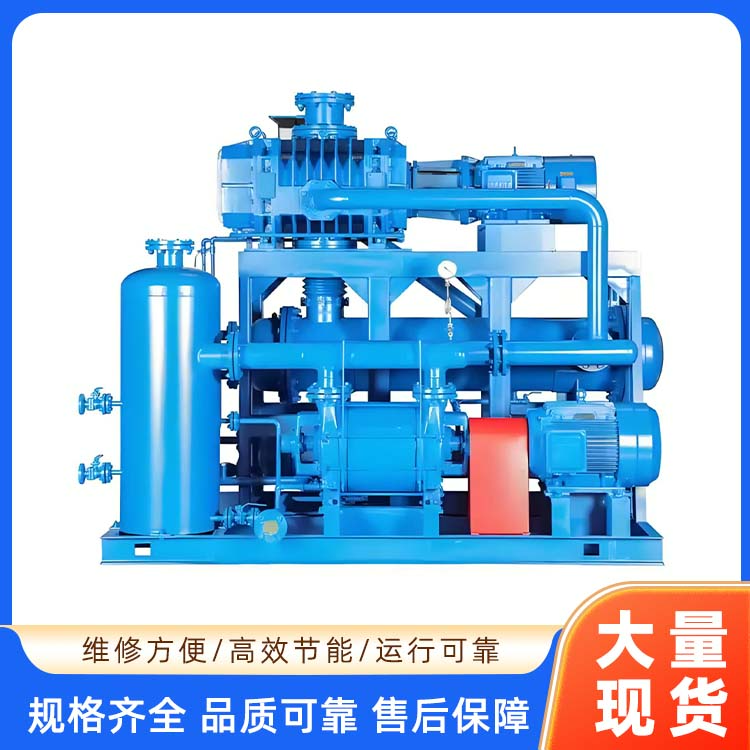









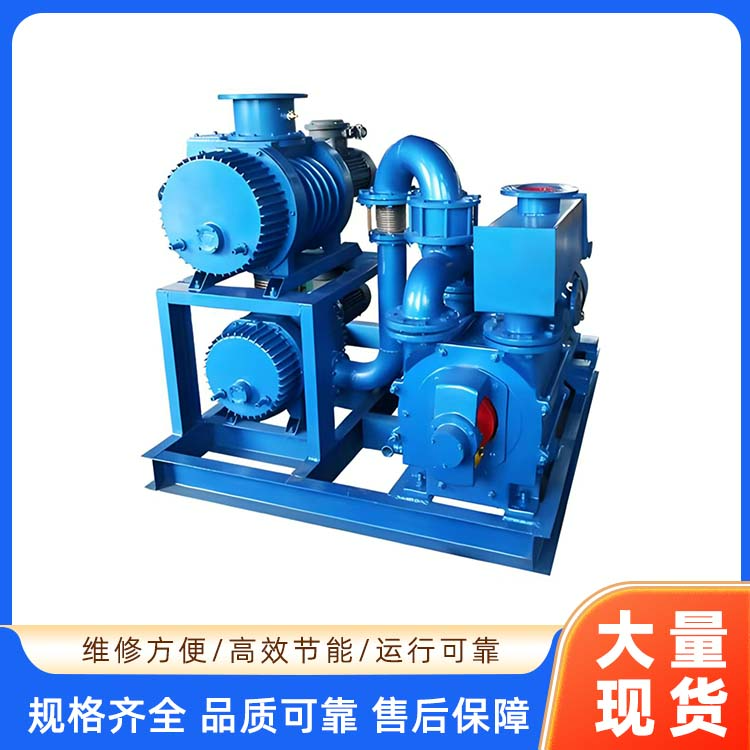
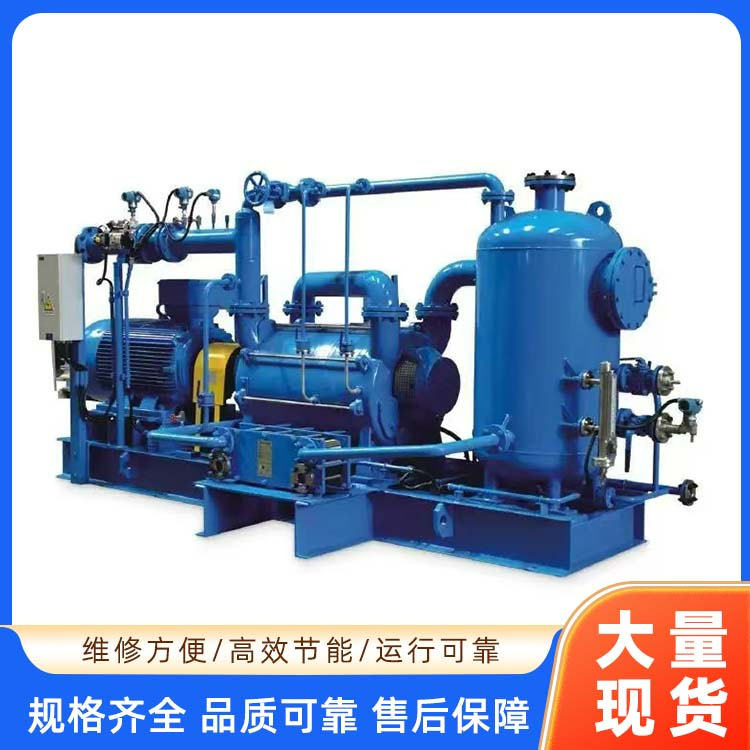
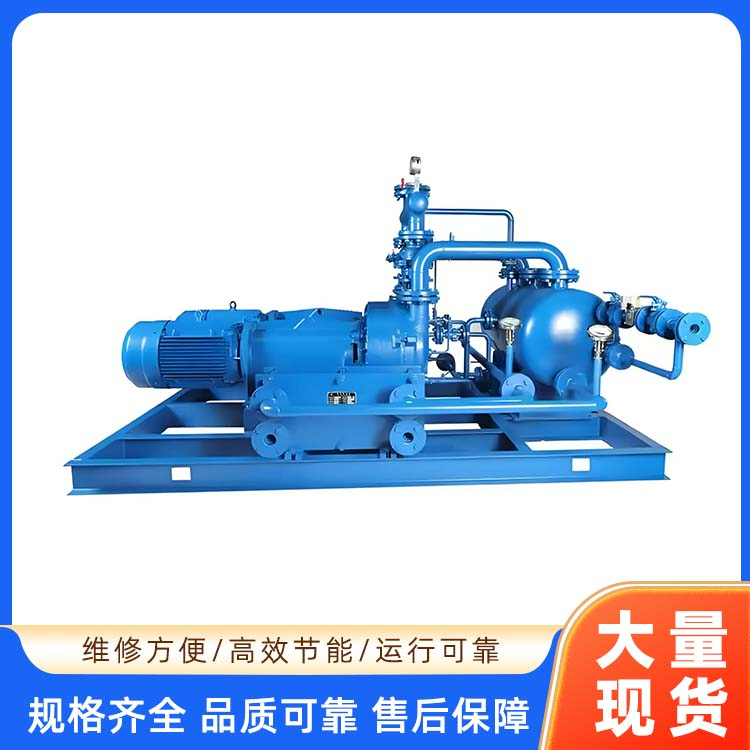
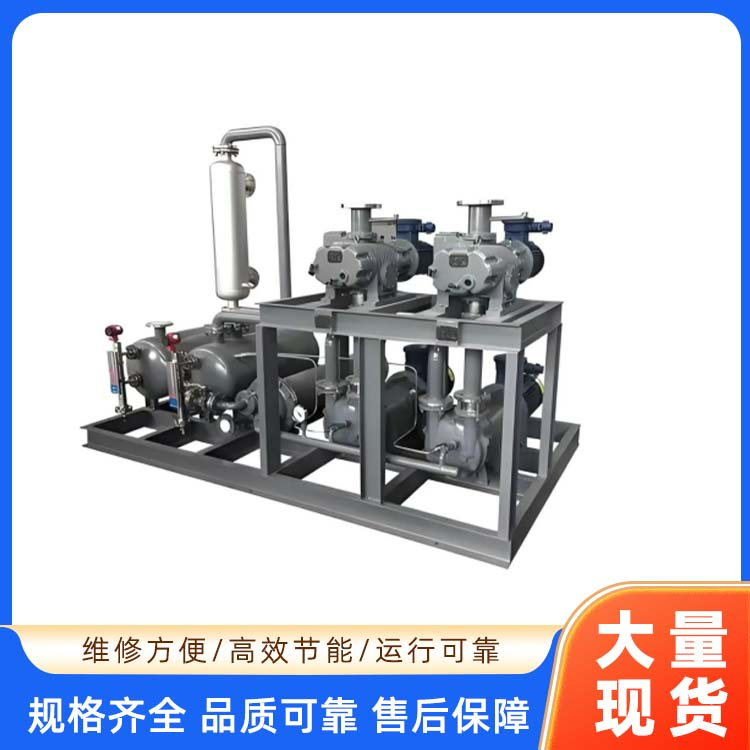
Selection of Roots Water Ring Vacuum Pump Units:
The Roots vacuum unit is generally more advantageous to use a water ring pump as the primary pump compared to other vacuum pumps. This is primarily due to its insufficient ability to remove large amounts of condensable steam, or the solvent being pumped can degrade the pump oil, affecting performance, or when the vacuum system does not allow for oil contamination, this is particularly evident. When selecting a vacuum unit, it is generally required that the ultimate vacuum of the unit be at least one to two orders of magnitude higher than the working vacuum to meet operational requirements.
The Roots Water Ring Vacuum Pumps come in several types:
Roots Pumps - Water Ring Pumps: The role of the water ring pump in the unit is to create the preliminary vacuum required for the Roots pump. Currently, water ring vacuum pumps with high ultimate vacuum, such as the 2BV, 2BE1, and 2SK series, are commonly used as primary pumps. Due to the low ultimate vacuum of the SK series water ring pumps and the higher preliminary vacuum required by the Roots pump, the SK series and other low vacuum water ring pumps are not actually used for the Roots pump. Increasing the vacuum degree of the primary pump can also enhance the ultimate vacuum of the unit.
Roots Blower - Roots Blower - Water Ring Pump: The ultimate vacuum of a single Roots blower is relatively low, especially when operated in combination with a water ring pump. The overall vacuum of the unit may be limited. However, by串联 the Roots blower with a water pump, the ultimate vacuum of the unit can be significantly improved.
Roots Pumps - Roots Pumps - Roots Pumps - Water Ring Pumps: If a pair of Roots pumps and a water ring pump still do not meet the vacuum requirements, an additional stage of Roots pump can be added. Such Roots vacuum pump units are commonly used in high vacuum processes like vacuum freeze-drying.
Selection Considerations for Roots Blower Sets:
· Understand the composition of the gas being extracted, including if it contains condensable vapor, particulate dust, and corrosiveness. When selecting a vacuum pump, knowledge of the gas composition is necessary to choose the appropriate pump for the extracted gas. If the gas contains vapor, particles, and corrosive substances, consider installing auxiliary equipment such as condensers and dust collectors on the pump's inlet pipe.
· The working pressure of the Roots vacuum unit should meet the requirements of the ultimate vacuum and working pressure of the vacuum equipment. For example, a vacuum drying process requires a working pressure of 10mmHg (absolute pressure), the ultimate pressure of the vacuum pump selected should be at least 2mmHg, and it should be able to go below 1mmHg. Generally, the ultimate pressure of the pump should be at least one to two orders of magnitude higher than the working pressure of the vacuum equipment.
· Properly select the operating point of the Roots vacuum unit. The normal operating range of a Roots vacuum unit is from **suction pressure to 5 times the ultimate pressure. For example, the normal operating range of the JZJ2B150-2.1 Roots water ring vacuum unit is 6000Pa to 125Pa. This range represents the normal working pressure after the main pump is activated, and the unit operates at maximum efficiency within this range**.
The vacuum unit should be capable of exhausting the total gas produced during the process of the vacuum equipment under its working pressure.
Select the appropriate unit configuration based on actual working conditions. For example, the JZJ2B300-4.1 and JZJ2B300-2.1 units have the same suction rate and ultimate pressure, but differ in their operating range and power consumption. The normal operating range of the JZJ2B300-4.1 unit is 2000Pa to 125Pa, whereas the JZJ2B300-2.1 unit's range is 5000Pa to 125Pa. Clearly, the JZJ2B300-2.1 unit has a wider operating range but consumes more power. If the working pressure of the system to be evacuated is confirmed to be less than 2000Pa, the JZJ2B300-4.1 unit should be selected to save energy. However, if the unit requires strong preliminary evacuation capabilities and needs to operate at higher pressures for extended periods, the JZJ2B300-2.1 unit with a larger primary pump is more suitable.