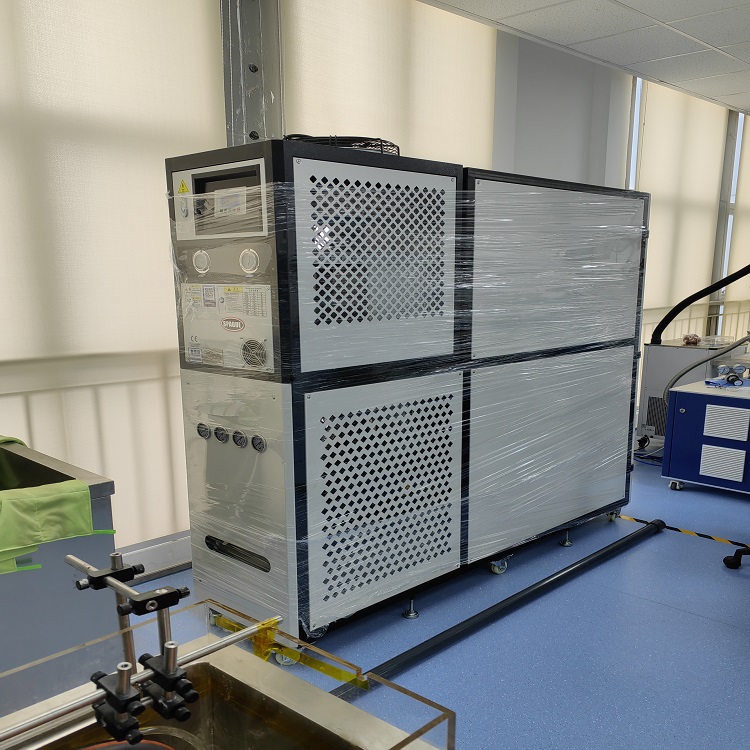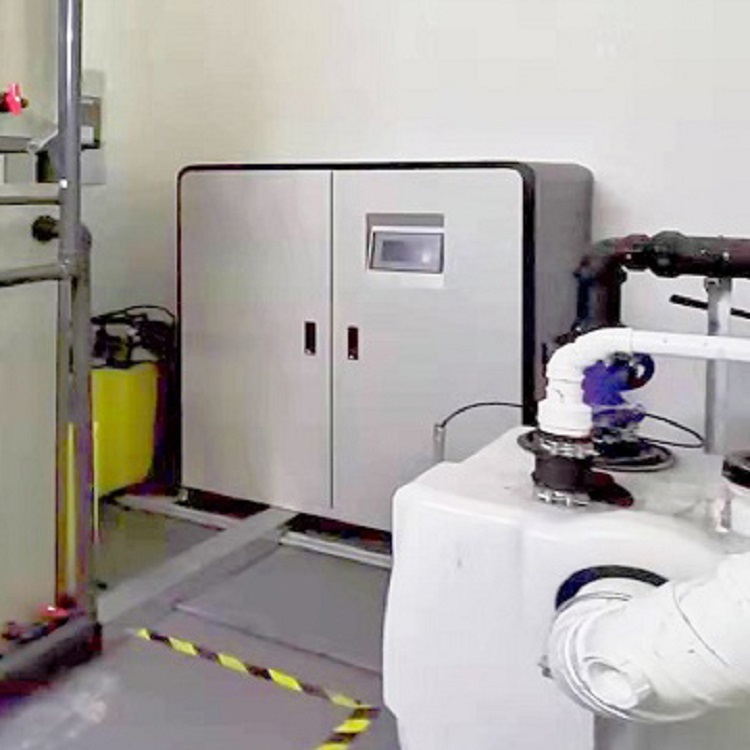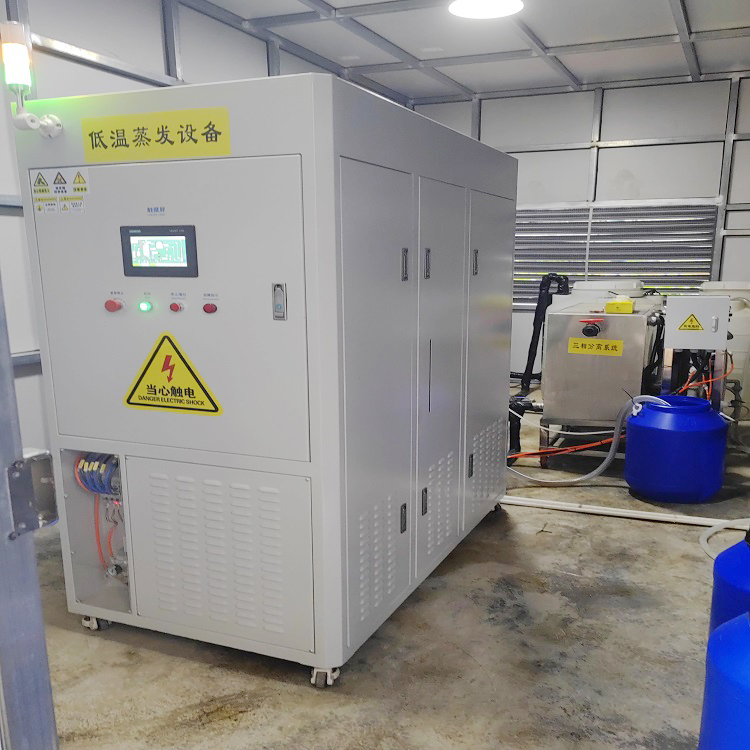


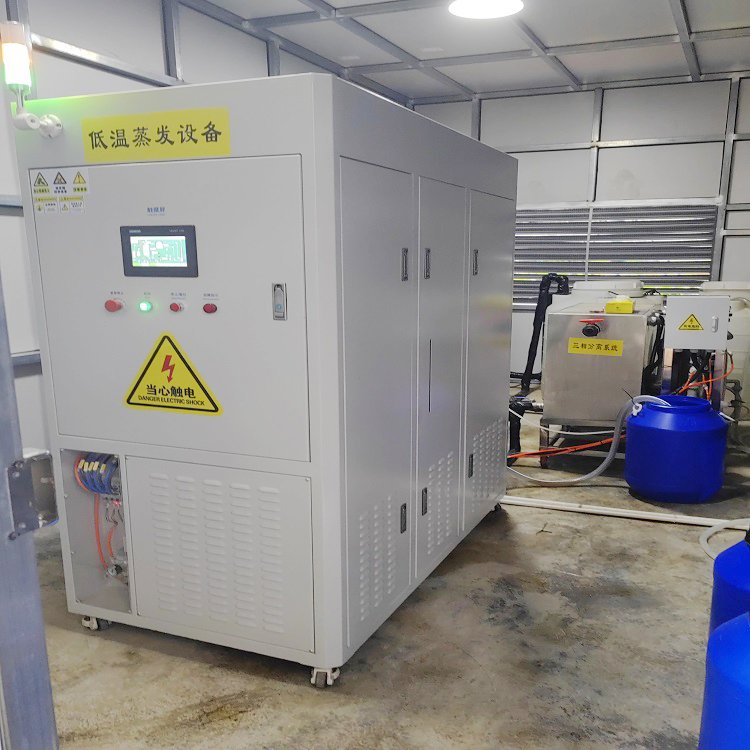







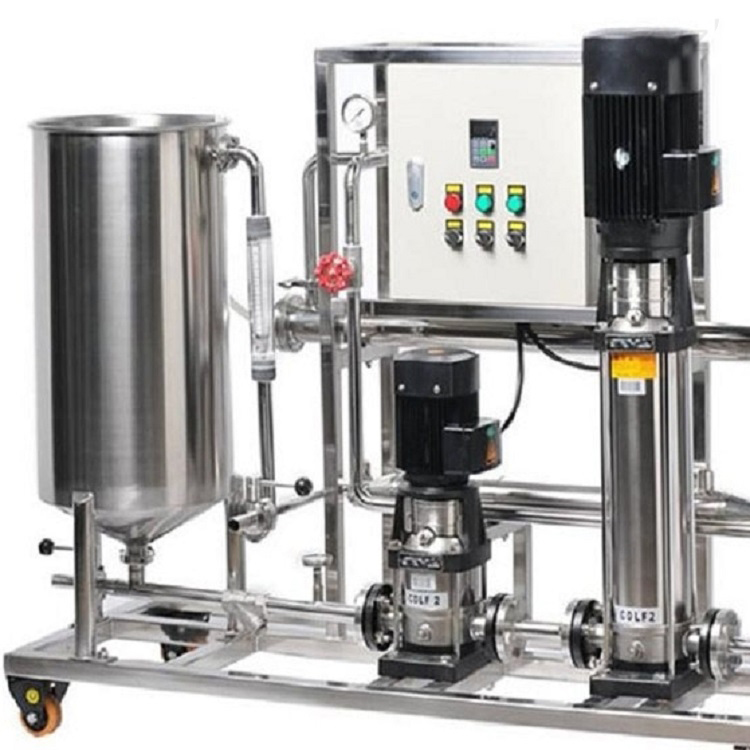
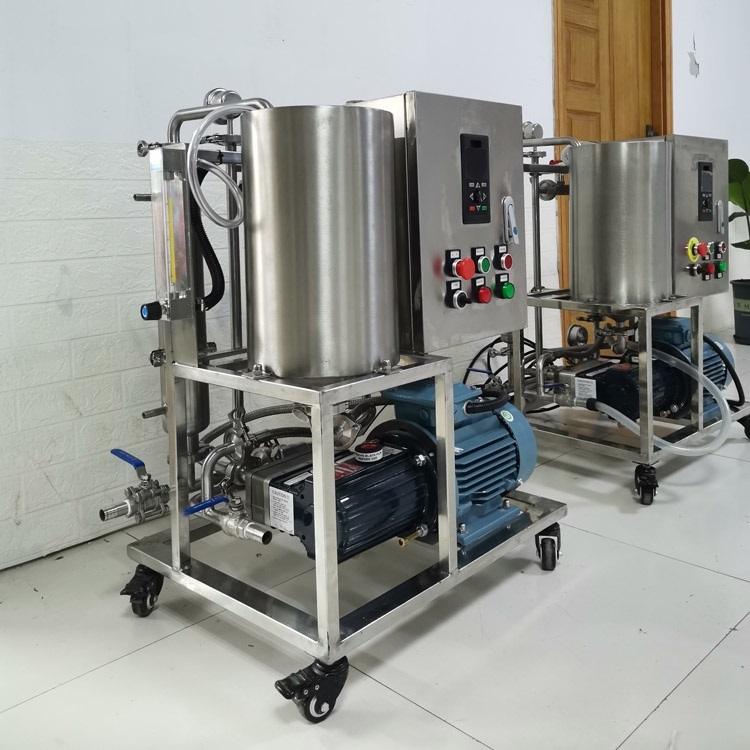
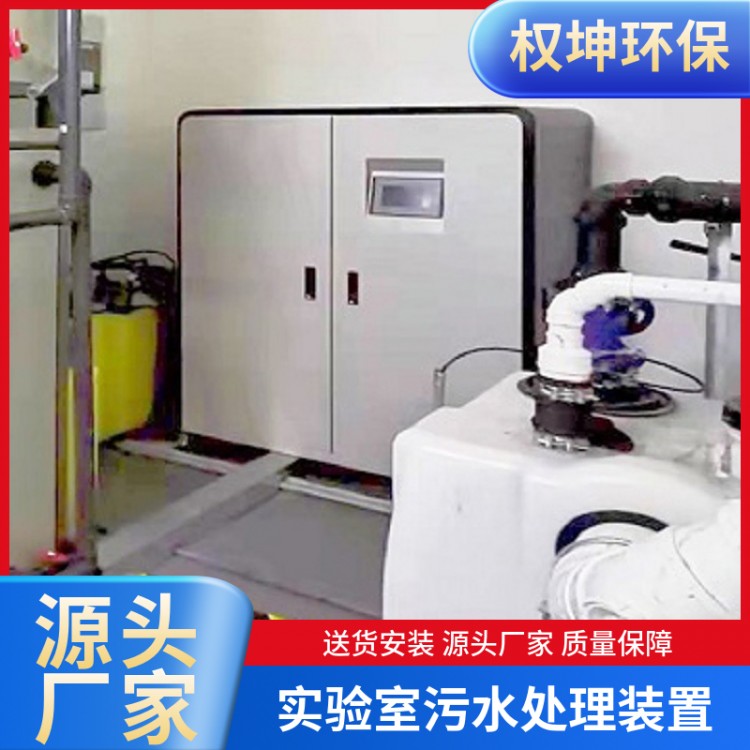
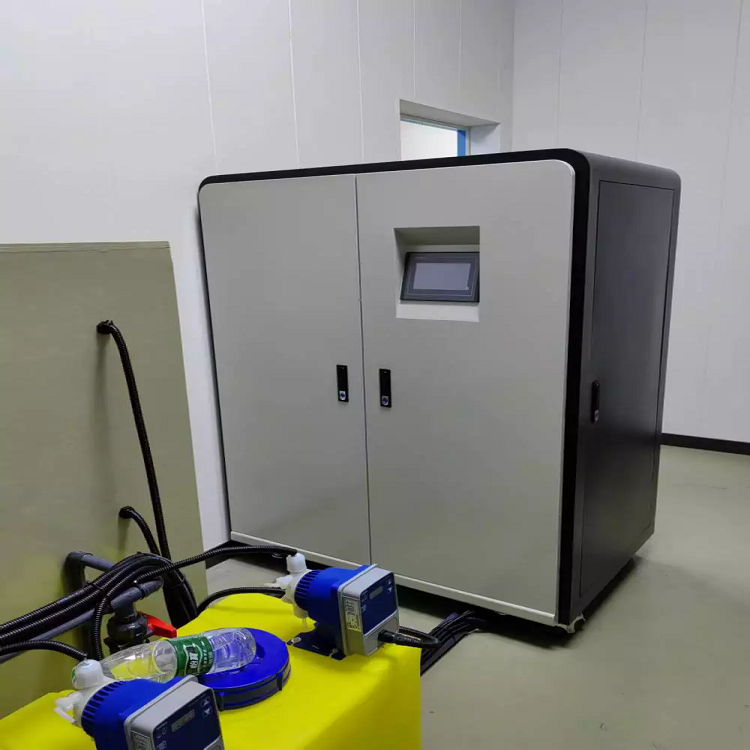
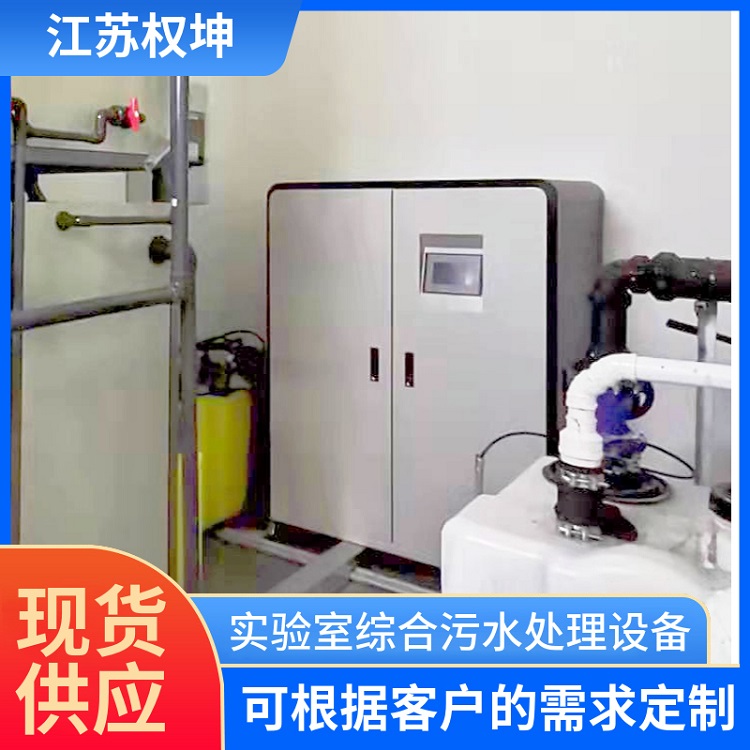
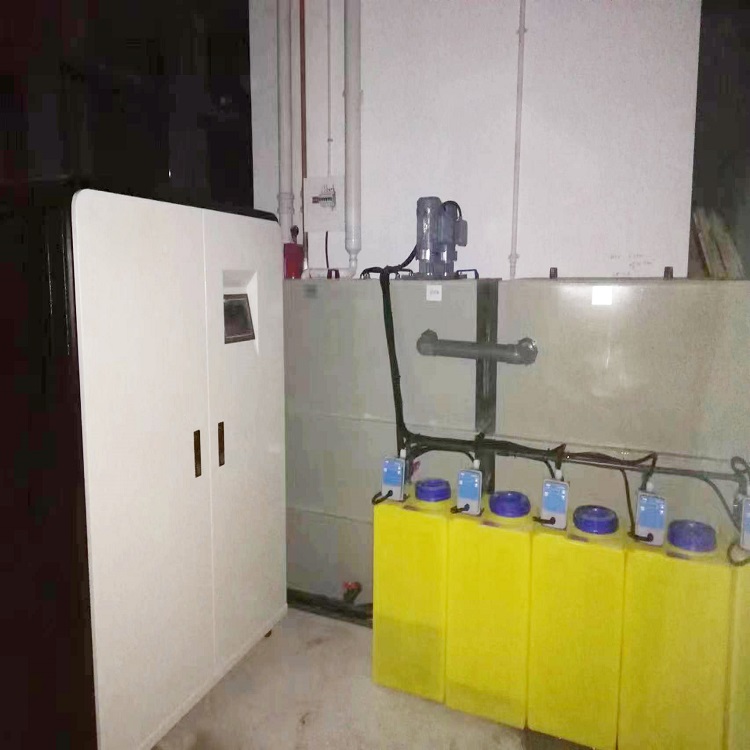
Shenzhen Low-Temperature Heat Pump Evaporator for Wastewater, Fully Automatic Industrial Sewage Treatment Equipment, Compact Footprint
Low-temperature heat pump evaporators also encounter some technical challenges during application. One of the main issues is the frosting of the condenser. When the low-temperature heat pump evaporator operates at lower temperatures, the condenser is prone to frosting, affecting the normal operation of the equipment. To address this, automatic defrosting technology can be employed, either by heating or using other auxiliary devices to prevent the condenser from frosting.

Working Principle:
A low-temperature heat pump evaporator is a device used for refrigeration and heating, operating on the principle of the heat pump cycle. Its primary task is to convert low-temperature, high-humidity refrigerant into a saturated liquid, for the subsequent compression and condensation processes. The low-temperature heat pump evaporator helps to improve energy efficiency, reduce energy consumption, and protect the environment.

The operation of a low-temperature heat pump evaporator mainly consists of two stages: evaporation and condensation. During the evaporation stage, the refrigerant absorbs heat from an external heat source, turning into vapor. At this point, indoor air passes through the evaporator, coming into contact with the low-temperature refrigerant, transferring heat to the refrigerant and causing it to evaporate. In the condensation stage, the evaporated refrigerant enters the compressor, where it is compressed into a high-temperature, high-pressure gas. It then releases heat through the condenser, transferring the heat from the air to the outside. Afterward, the refrigerant returns to the evaporator to continue the cycle.

The working principle of the low-temperature heat pump evaporator relies on the operation of the compressor. The compressor achieves compression and condensation of the heat medium by altering the pressure and temperature of the refrigerant. Specifically, when the refrigerant enters the evaporator, the compressor in the equipment lifts the refrigerant, turning it into a high-pressure gas. It then passes through the condenser, where the refrigerant releases heat and transforms into a high-pressure liquid. The pressure is reduced through a pressure relief valve, and the refrigerant re-enters the evaporator to produce the evaporation and condensation effect.

Advantages of Low Temperature Heat Pump Evaporators:
The low-temperature heat pump evaporator boasts numerous significant advantages and a wide range of applications. Firstly, it is characterized by high efficiency and energy saving. By utilizing heat pump technology and harnessing natural heat energy, it not only saves energy during the refrigeration process but also recycles waste heat, enhancing energy utilization efficiency. Secondly, the low-temperature heat pump evaporator is environmentally friendly. It does not produce pollutants and does not cause secondary pollution to the atmosphere or water sources, aligning with the concept of sustainable development.

Shenzhen Low-Temperature Waste Water Heat Pump Evaporator, Fully Automatic Industrial Sewage Treatment Equipment, Compact Footprint
Application Scope:
Low-temperature heat pump evaporators have a wide range of applications. They can be used in cooling locations such as supermarkets, hospitals, food processing plants, and cold storage facilities. Additionally, they are suitable for heating, providing warmth and hot water for buildings. Moreover, low-temperature heat pump evaporators can also be applied in industrial sectors like chemicals, electronics, manufacturing, and pharmaceuticals.