
















Primary Use
This equipment is widely used in universities, research institutions, and industrial and mining enterprises for high-temperature sintering, metal annealing, chemical engineering, metallurgy, ceramics, glass products, new material development, organic matter ashing, and quality testing. It is also suitable for production and experimentation in military, electronics, pharmaceutical, and special materials industries.
Product Description
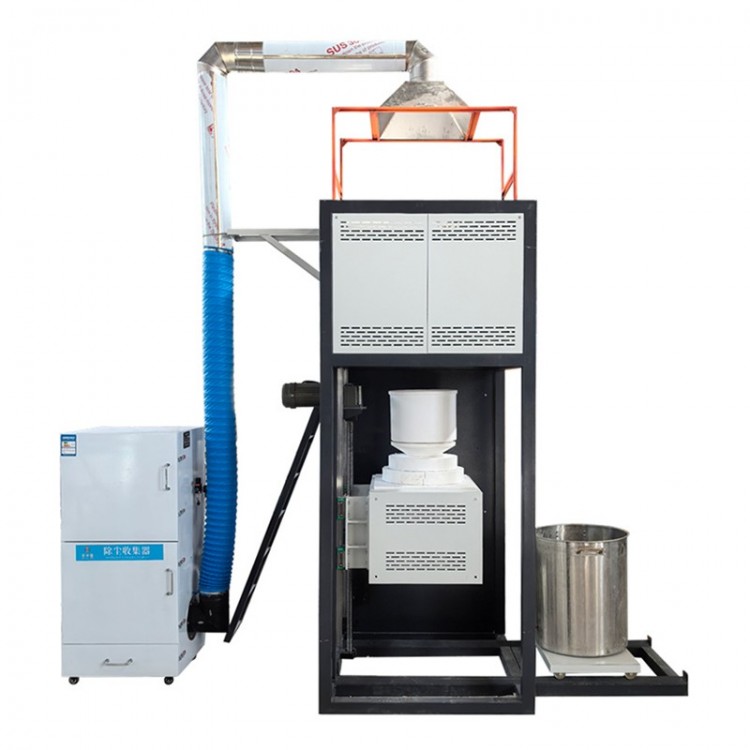
High-temperature bell furnace structure with a loading platform equipped with tracks for moving to the designated position for loading and unloading. Workpieces are stacked on the worktable, with up and down electric drive, and the furnace door is controlled by electric switches for up and down operation. The furnace chamber is heated from all four sides, ensuring excellent uniformity of the furnace temperature. It features furnace chamber materials and a stable temperature control system. The furnace body is assembled from lightweight alumina fiber board, the bottom is constructed with lightweight insulating bricks and heavy-duty load-bearing refractory bricks, and the furnace door mechanism is driven by mechanical transmission.
Heating Element
Select different heating elements based on furnace temperature. The heating elements include: electric furnace wire, resistance strip, silicon carbide rod, silicon molybdenum rod, and molybdenum wire.
Inner lining material
The inner lining is made from imported refractory and heat-resistant materials, crafted through advanced technology. It boasts excellent thermal shock resistance, good corrosion resistance, does not collapse, crystallize, or spall, and has a long service life!
Temperature Control Method
Microcomputer intelligent adjustment technology, featuring PID regulation, fully automatic control, and self-tuning function; multi-stage program programming, capable of controlling various heating, insulation, and cooling programs; power adjustment; high temperature control accuracy; integrated module with silicon-controlled rectifier control and phase-shifting triggering. Protection devices: independent over-temperature protection, over-pressure, over-flow, leakage, short-circuit, etc., with high level of automation and all indicators meeting the standard level.
Product Features
1. The furnace chamber is made of imported lightweight high-purity alumina ceramic material, which boasts high hardness, no powder loss at high temperatures, and no volatilization during high-temperature sintering, meeting industry standards.
2. The heater utilizes high-temperature heating elements, capable of withstanding heavy loads with stability and a long service life. To ensure usage, a full copper isolated transformer is employed for excellent temperature field uniformity.
3. Intelligent temperature control design with fast heating speed, excellent uniformity, and over 3 times the sintering efficiency of industry-standard electric furnaces of the same specification.
4. The intelligent temperature control instrument boasts high accuracy, minimal overshoot, and features temperature compensation and calibration functions. The temperature control accuracy is ±1°C (a third-party inspection certificate is available upon request).
5. The equipment features operational and stop indicator lights, making it easy to determine whether the furnace is in operation or in a stopped state.
6. Double-layered shell carbon steel plate, with surface rust-proof and high-temperature baking paint treatment.
7. All electronic components are from Delixi, featuring leakage protection, reliable
8. Over-temperature alarm and power-off, leakage protection, reliable operation
9. Microcomputer control, intelligent PID adjustment, 30 programmable temperature control curves, automatic operation without supervision (fully automatic rise, drop, and maintenance)
10. Our software allows for computer connectivity, enabling remote control, real-time tracking, historical record-keeping, and report generation for single or multiple furnace units; paperless recording devices can be installed for data storage and output.
11. Temperature Categories: 600°C, 800°C, 1000°C, 1200°C, 1400°C, 1600°C, 1700°C, 1800°C

















