
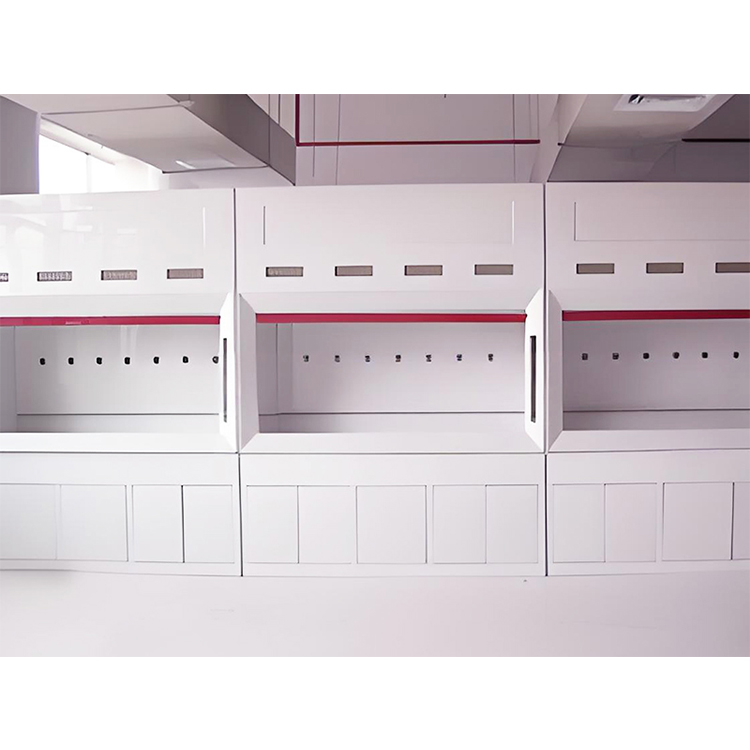








Glass-fiber reinforced laboratory ventilation equipment, featuring corrosion resistance, high strength, and explosion-proof properties. Detailed description follows:
Structure and Material
Cabinet: Made of composite epoxy resin polymer material, the entire cabinet is formed using a one-piece molding process with a mold, featuring seamless overall molding of the four sides with good sealing and corrosion resistance.
Top Surface: Available in 19mm epoxy resin board tops with features like resistance to chemicals, antibacterial, shockproof, non-conductive, easy to clean, wear-resistant, and moisture-proof. Some models also feature ceramic tops, such as 20+5mm thick solid-core fired ceramic tops specifically for laboratories, known for their resistance to strong corrosion, high temperature, and wear.
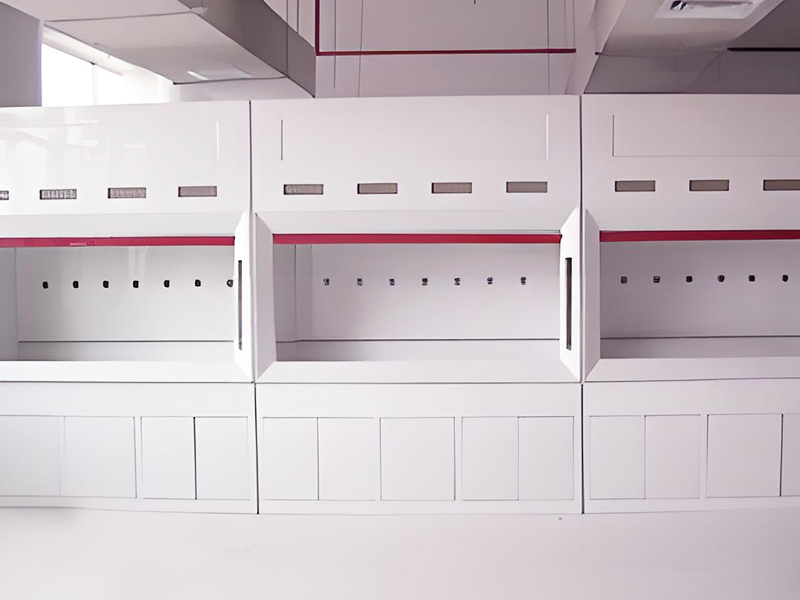
Lining and Diverter Plates: Generally made of high molecular resin material, identical or similar to the cabinet material. The diverter plates are formed in one piece, featuring a three-section ventilation design inside to eliminate exhaust dead corners and effectively discharge gases of different densities.
Window: Generally made of 5mm thick tempered glass, providing clear visibility. Single-piece vertical window, featuring an up-and-down door structure, capable of stopping at any active point. The window frame is made of corrosion-resistant PP material.
Product Features
Strong corrosion resistance: The glass fiber reinforced plastic material has a wide range of corrosion resistance, suitable for operations and environments where there are acidic and alkaline gases, toxic and harmful gases, and organic solvent gases, as well as dust-generating situations.
High strength and light weight: Capable of withstanding temperatures up to 130℃ for short periods and 80℃ for long periods, with an oxygen index of ≥30, it is a flame-retardant material with high strength and the ability to withstand significant impact forces.
Excellent explosion-proof performance: Some fiberglass fume hoods feature explosion-proof capabilities, utilizing special explosion-proof design to effectively control the spread of fire sources during an explosion. The surface also has anti-static properties to prevent static sparks from triggering an explosion.
Easy to Maintain: Simple structure, smooth surface, easy to clean and maintain, reducing operational costs.
Application Scenario
Widely used in laboratories and production workshops across industries such as petrochemicals, pharmaceuticals, and electronics, as well as in flammable and explosive environments like coal, metallurgy, and glass, it effectively ensures safety during experiments and production processes.