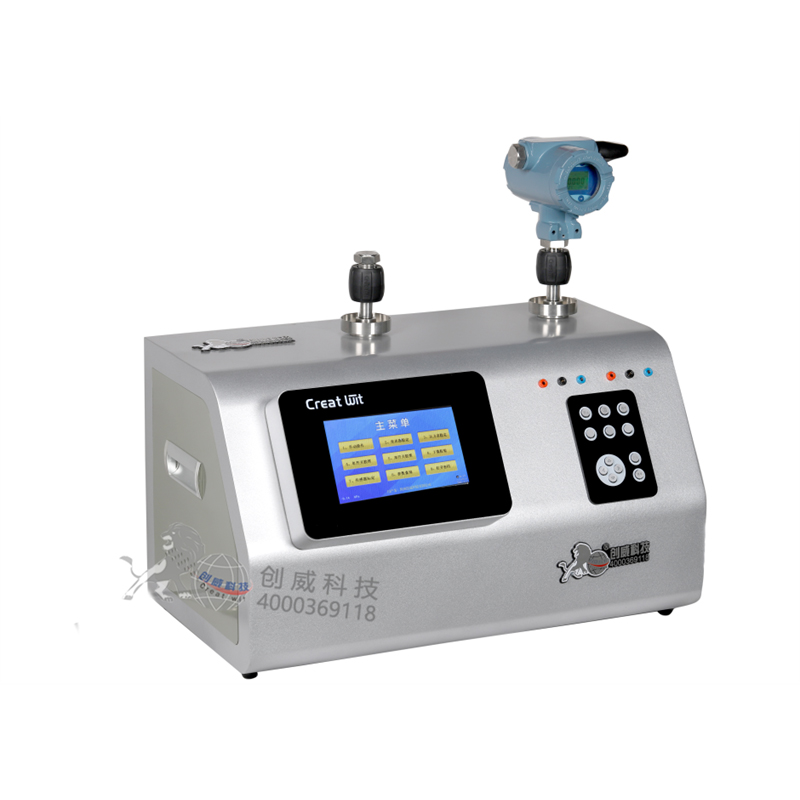


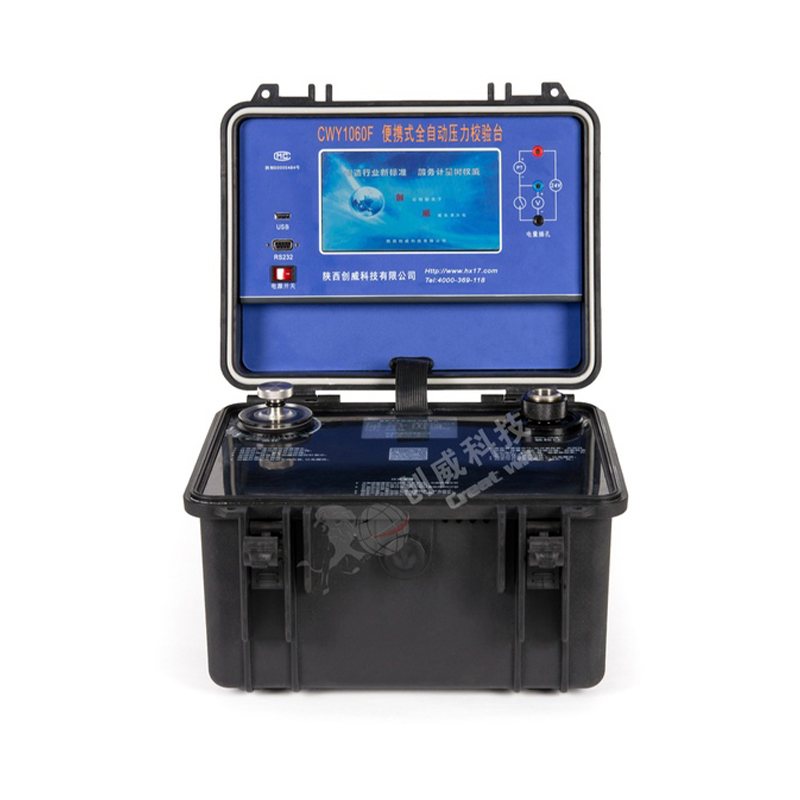
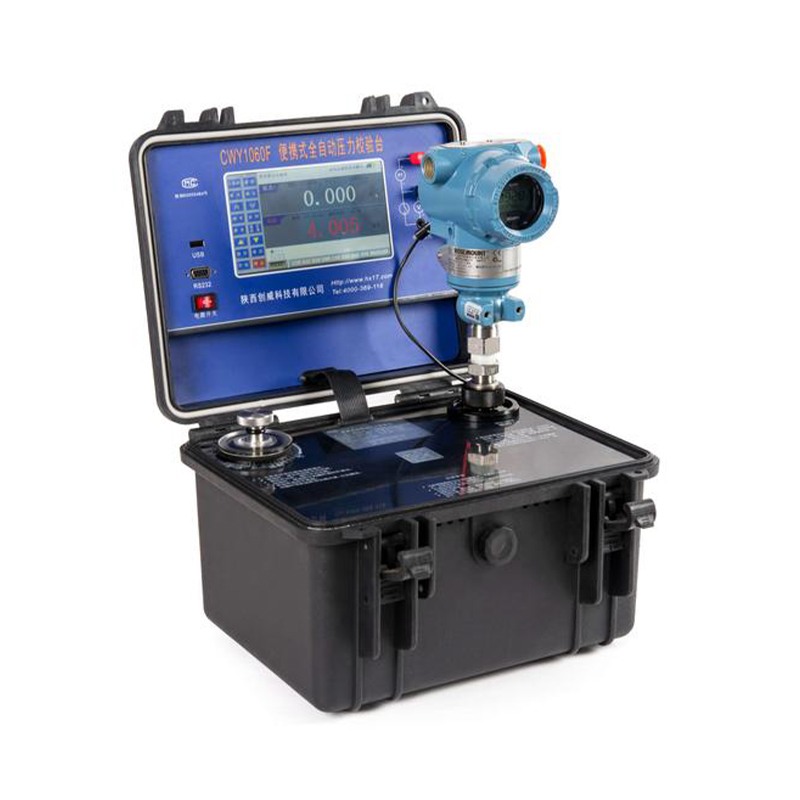





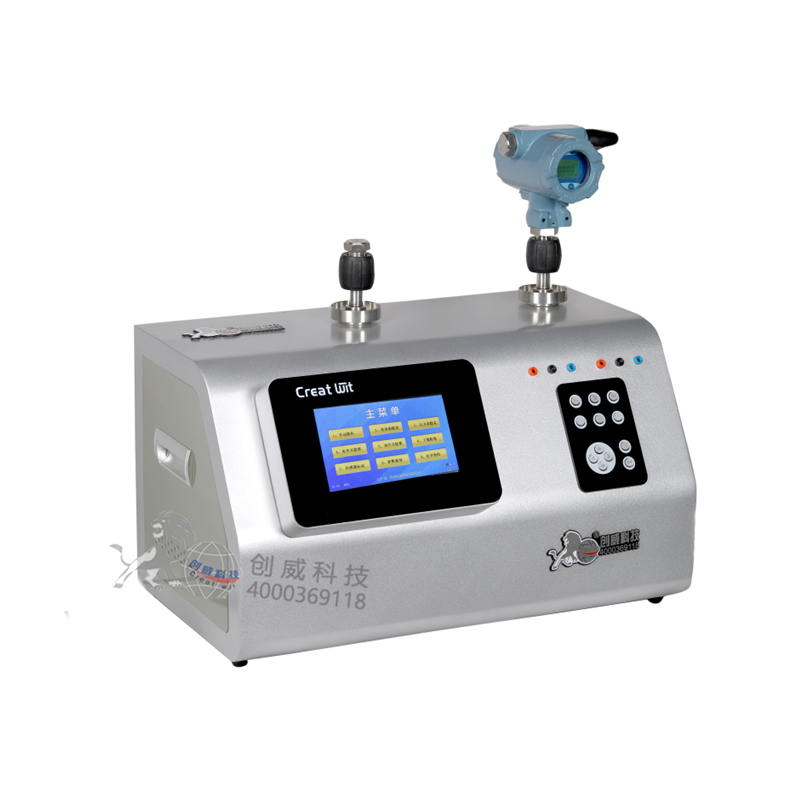
Precision Pressure Gauge Calibration Device Technical Requirements
The fully automatic pressure testing system should comply with the following metrological testing regulations:
1) JJG882-2004 Pressure Transmitter Verification Procedure
2) JJG544-2011 Pressure Controller Verification Procedure
3) JJG52-2013 General Pressure Gauge, Pressure-Vacuum Gauge, and Vacuum Gauge Verification Regulations
4) JJG49-2013 Precision Pressure and Vacuum Gauges for Elastic Elements Calibration Specification
5) JJG875-2005 Digital Pressure Gauge Verification Procedure
Full-Automatic Pressure Calibration Specific Technical Solution
1. Working Conditions:
◆ Ambient Temperature: (20±1)℃
◆ Relative Humidity: Constant temperature room with relative humidity below 80%
◆ Frequency: 50 Hz
◆ Power Voltage: AC 220V
2. Technical Specifications
◆Working Medium: Non-corrosive, non-polluting air; no external high-pressure gas source required for calibration.
◆ The pressure module range is (-100 to 2500) kPa. Currently, for inspection, it is only necessary to send the measuring standard to the authorized metrology testing institution for calibration, without the need to move the entire platform. However, the "规程 for Calibration of Automatic Standard Pressure Generator" was approved at the end of 2015 and, upon issuance, whether it is an internal or external pressure module, all fully automatic pressure calibration stations must send the complete set of equipment to the authorized metrology testing institution for calibration, as control functions such as overshoot and stability also need to be calibrated.
◆ Customizable verification range: Any value between (-100~2500) kPa, vacuum can reach below -100 kPa.
◆ The internal pipeline has a larger diameter and is equipped with a gas-liquid separator, so it is not prone to contamination with water or oil from calibrating equipment.
◆ Unit of Measurement: kPa.
◆ Pressure Display Resolution: Touch Screen - 5 Digits, Computer Interface - 5 Digits.
◆ Pressure Accuracy Grade: 0.05 Grade; 0.02 Grade
◆ Current Accuracy Grade: 0.02
◆ Stable Accuracy: ±5 characters or less
◆ Standard Check Points: At 0%, 25%, 50%, 75%, and 100% of the range, automatic return. Link to computer allows for arbitrary settings.
◆ Custom Inspection Points: Any.
◆ Automatic voltage stabilization time at inspection point: 20 seconds, adjustable between (10-240) seconds.
◆ Transmitter automatic calibration total time (9 points stabilization): Approximately 5 minutes.
◆ Pressure switch calibration time: approximately 2 minutes.
◆ Safety Protection: Over-voltage, over-current, sensor failure, etc. protections.
◆ Current Input: 2 channels, (0~22) mA.
◆ Switch Input: 2-way dry contacts, capable of detecting contact resistance.
◆ Loop Power: 24VDC/30mA, will not damage the meter being tested if mistakenly connected to a standard meter.
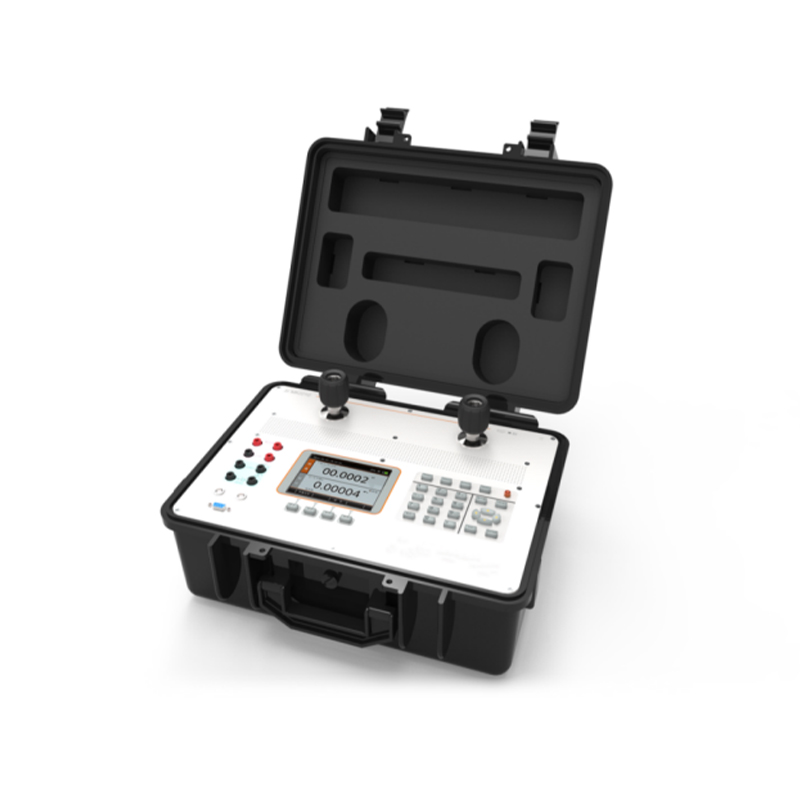
◆ Pressure Fitting: M20x1.5 internal thread quick coupling.
◆ Current/Voltage Interface: Standard banana plug with a diameter of φ6.
◆ Outlet: Inner Diameter: φ6mm.
◆ Weight: 19kg (pneumatic), 26kg (hydraulic).
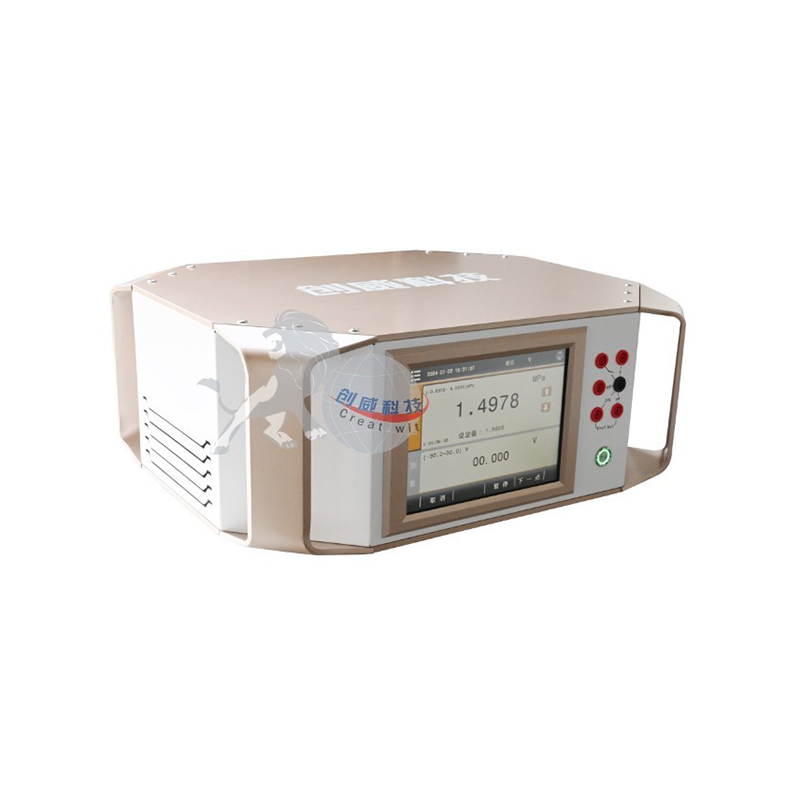
◆ Dimensions: 290(H) x 574(W) x 316(D) mm
Automatic Calibration Software: Optional.
Technical Specifications:2.2 Features of Fully Automatic Pressure Calibration Bench
Press the start button to automatically complete tasks such as pressurizing, depressurizing, stabilizing pressure, recording data, analyzing errors, and printing calibration reports and certificates.
Fully complies with pressure gauge calibration regulations and can be used as a pressure standard.
Stable pressure source provided without high-pressure cylinders, with rapid and stable pressure changes.
Pressure range: (-0.1~60) MPa.
Ø Pressure transmitter, pressure switch (pressure controller), pressure gauge available for inspection.
Full automatic verification function with pressure switch.
Complete protection features include over-voltage protection (alarms if over 110% of the range), over-current protection (when the transmitter current exceeds 20.5mA), leakage, sensor failure, and other alarms. Pressure application stops upon over-voltage, over-current, or sensor failure.
The fully automatic pressure calibration bench can store 20 sets of calibration results, both before and after adjustment, for a total of 56 field instruments.
Ø Can be connected to an automatic calibration software system to form an all-in-one pressure calibration system. Units can be freely set, and pressure calibration can be completed with just a few clicks. It automatically generates calibration reports and certification documents.
Equipped with a printer and computer, compatible with the equipment.
3. Features and Advantages of Full-Automatic Pressure Calibration Bench
Integrated pressure module with temperature compensation for pressure sensors.
The built-in pressure module makes it convenient to use; no additional accessories are needed. Simply install the gauge and press the "Start" button to complete the calibration.
The pressure transmitter is calibrated with an integrated pressure module, ensuring full coverage with no gaps in the middle.
Fully automatic verification, capable of calibrating two pressure transmitters, pressure switches, and pressure gauges of the same range simultaneously, convenient for calibrating dual-point pressure switches.
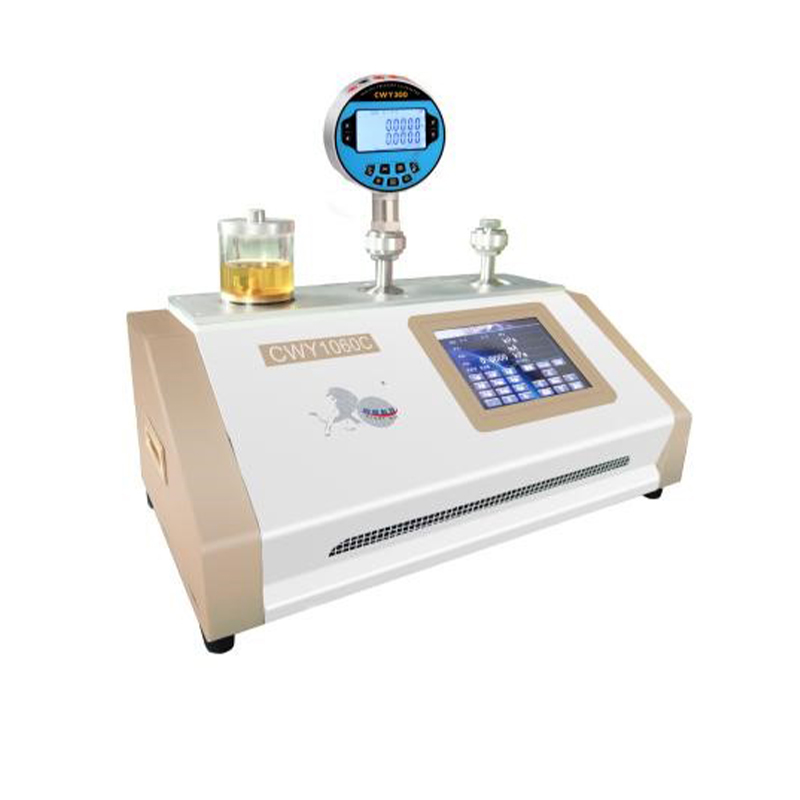
The hydraulic bench is equipped with a filter anti-blocking drainage system, utilizing φ6mm stainless steel pipe. Impurities or dirt from the on-site instruments can be easily drained through the drainage opening. Even if fine sand is inserted into the calibration port, it will not damage the setup. The air pressure bench comes with a standard gas-liquid separator to prevent the liquid in the calibration instrument from entering the calibration bench.
The intelligent voltage stabilizer is designed in full compliance with China's pressure calibration regulations. During the upward stroke, it approaches the calibration point from bottom to top, and during the downward stroke, it approaches the calibration point from top to bottom, without adjustment.
Ø Operation instructions can be displayed on the touchscreen, eliminating the need for a manual during use.
High protection level, preventing the flow of verification medium into the instrument to avoid damage to the instrument.
The hydraulic platform can use water as the working medium, while the air platform uses compressed air.
Data is traceable; as long as the device ID matches the previous inspection, the database can trace back to the previous inspection records, and automatically fill in the inspection forms based on the user's needs.
All inspection processes comply with the inspection procedures.
Ø Features of Master Software:
Software is designed for use with an automatic pressure calibration station. Its advantages include remote operation, optimized calibration process, user-friendly access control, automatic recording and traceability of calibration records. The software utilizes a BS/CS architecture, offering high flexibility and scalability. Compared to similar endpoint operation software, this software centralizes and manages calibration data storage, allowing senior management users to retrieve and review the calibration data of subordinate users at any time. Calibration records can be shared and synchronized, enhancing the work efficiency of the using units.
Product Features
Built-in pressure module
Touchscreen LCD Display
Complete protection features
Equipped with automatic leak detection function
Highlight
Transmitter calibration
Pressure Gauge Calibration
Sensor Calibration
Automatic Verification Management System
Design Concept
Features a filtration and effluent treatment system
Supports water medium
Transformer Oil Support
Intelligent and paperless calibration