







Standard Piston Pressure Gauge Technical Requirements
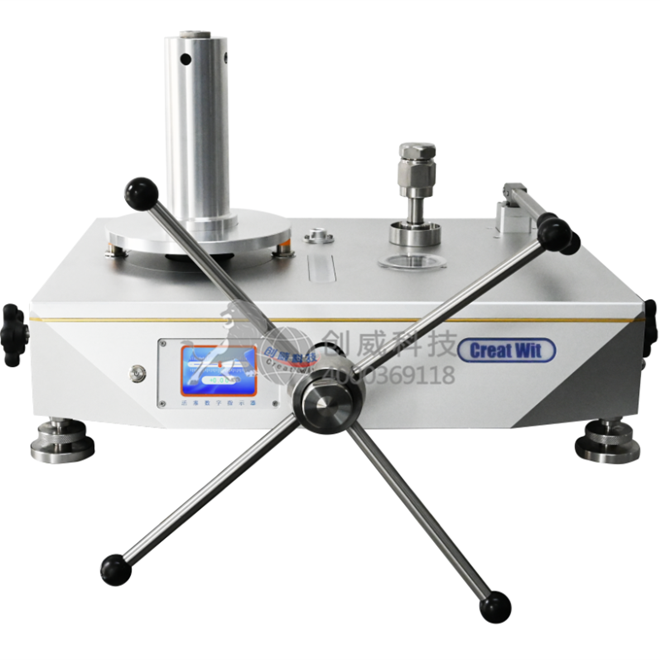
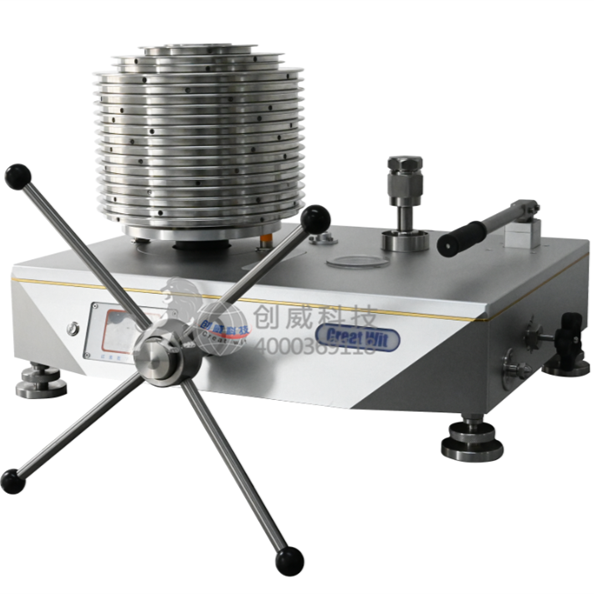
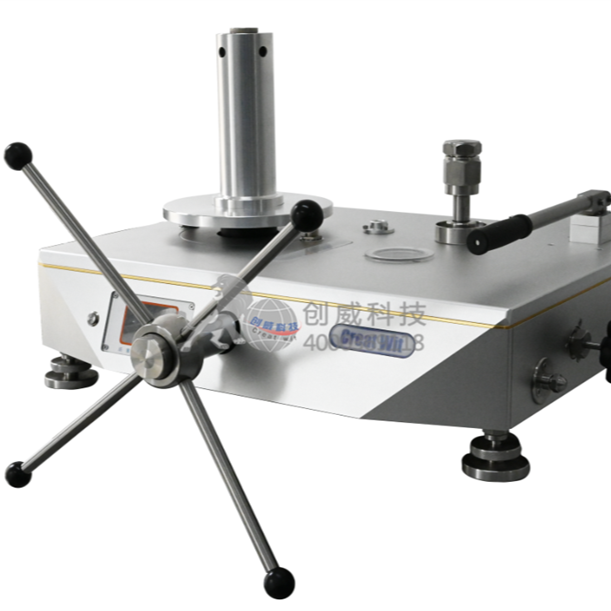
The CW series liquid piston pressure gauge can be used as a reference pressure gauge and a standard pressure gauge. The piston pressure gauge is an essential metrological instrument for establishing pressure standards in China's various metrological testing institutions and industrial enterprises' pressure metrology departments. It is suitable for value transfer and for calibrating digital pressure gauges, precision pressure gauges, pressure transmitters, and more. It complies with the national metrological verification regulations, JJG59-2022 "Piston Pressure Gauge" and JJG99-2022 "Weighing Mass."
Section 2: Specific Technical Solution for Piston Pressure Gauge
1. Working Conditions
Ambient Temperature: (20±2)°C
Relative humidity: Constant temperature room with humidity below 80%
Power Voltage: AC 220V, Frequency: 50Hz
2. Technical Specifications
◆ Model: CW-2500T, CW-5000T, CW-8000T
Range: (5~250) MPa, (10~500) MPa, (10~800) MPa
Accuracy Grade:
(5~250) MPa: 0.005 grade, 0.01 grade, 0.02 grade, 0.05 grade
(10~500) MPa, (10~800) MPa: 0.01 grade, 0.02 grade, 0.05 grade
◆ Working Medium: Dodecanedioic acid diisodecyl ester
Piston Materials: Piston Rod: Tungsten Carbide; Piston Cylinder: Tungsten Carbide
◆ Weighing Configuration: Available in kg sets or MPa sets for pressure deformation coefficient, as per customer requirements.
◆ Weight correction: Apply gravitational acceleration adjustment according to the place of use
◆ Weighing Material: Non-magnetic stainless steel (0.005 grade; 0.008 grade; 0.01 grade; 0.02 grade); Carbon steel (0.05 grade)
◆ Pressure Testing Method: Gage Pressure
◆ Pressure Output: M20x1.5 Standard Quick Connector
3. Features
1) Incorporate a break-proof mechanism to prevent the piston rod from snapping during normal use, thereby avoiding significant losses.
2) The piston rod's limiting structure now employs a ring-type limiter, eliminating the need for limiting screws or clips. This design reduces friction and ensures uniform force distribution on the piston rod during friction, resulting in smooth rotation.
3) Single-step pressure increase from the starting point to 250MPa/500MPa/800MPa can be achieved with a pressure regulator in one go, without the need for an booster, making the operation more convenient for users.
4) The piston system is positioned at the far left of the countertop, with the table stand on the right. This layout is logical as it avoids the inconvenience of previous piston arrangements, where the piston obstructs the table stand during the connection of the test gauge, or the table stand blocks the weights when adding them, thereby affecting each other.
5) The piston system is equipped with a displacement sensor, allowing the floating position of the piston to be displayed in real time on the screen. Users can observe the working position of the piston at any time, featuring sensitivity, clarity, and accuracy.
6) The motor drives the rotation of the piston system, replacing the previous manual rotation method.
7) Equipped with a drainage system. Simply drain the medium from the drain port when the oil cup becomes dirty.
8) Piston rods and cylinders are precision ground, featuring minimal roundness error and clearance, high perpendicularity, extended piston rotation duration, and slow piston descent speed.
9) The loading of weights is designed with a suspended basket structure, featuring a low center of gravity and excellent rotational stability.
10) The pressure system utilizes a combination of pre-pressure by a pre-pressure pump and fine-tuning by a pressure regulator, offering a high-pressure efficiency with a smooth and quick pressurization process.
4. Measurement Function
For use with manometer pistons, digital pressure gauges calibration, and other pressure instruments.
5. Supplier-provided technical documents
1) Main Equipment User Manual
2) Product Compliance Certificate
3) Factory Inspection Report.