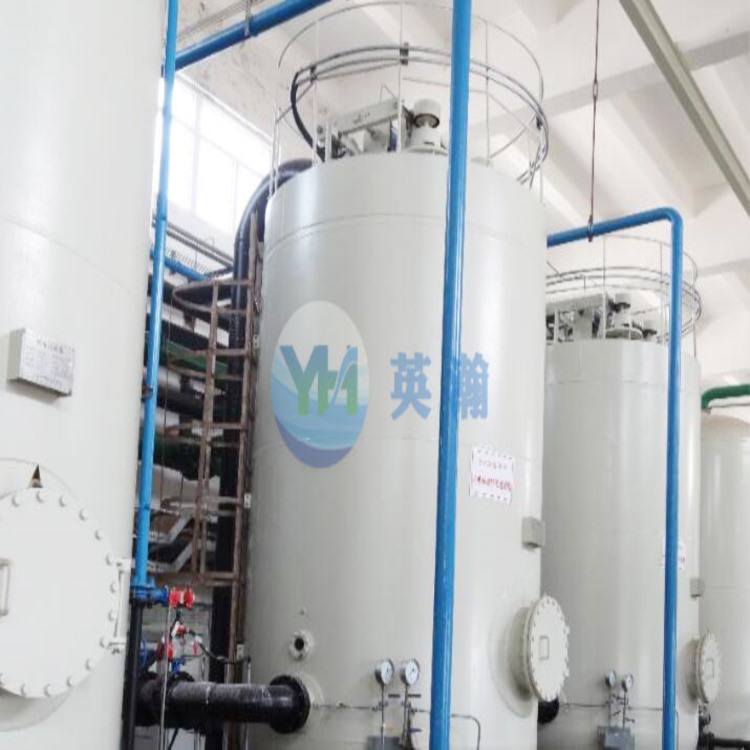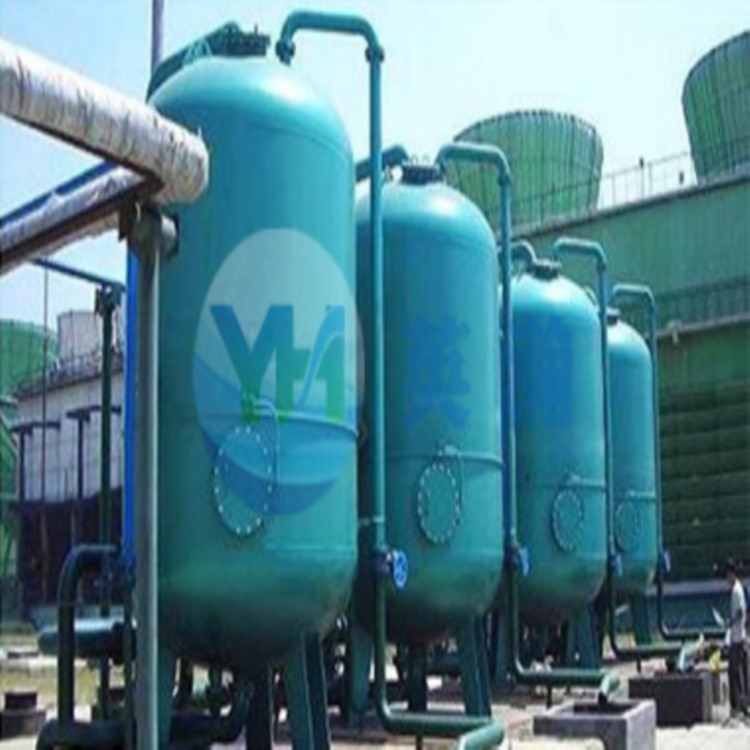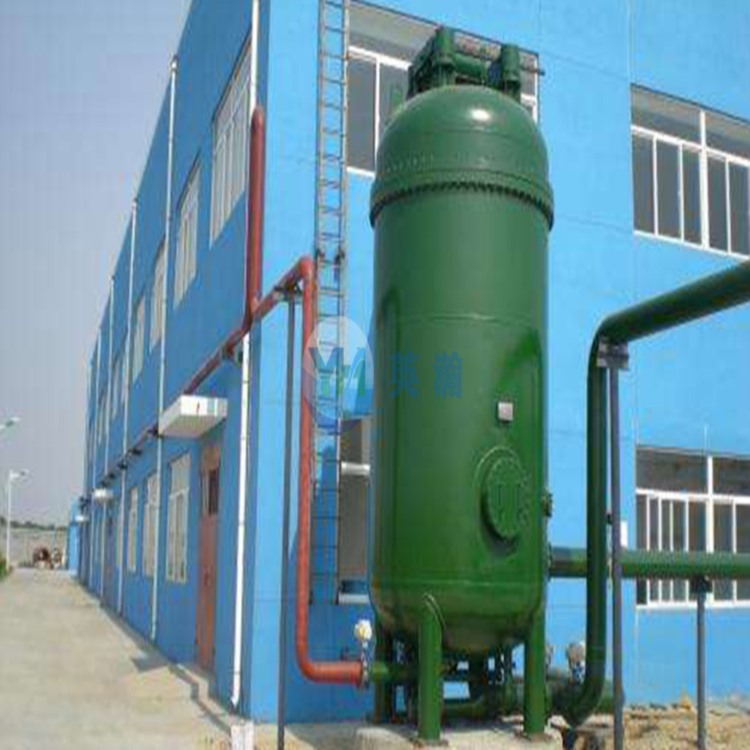

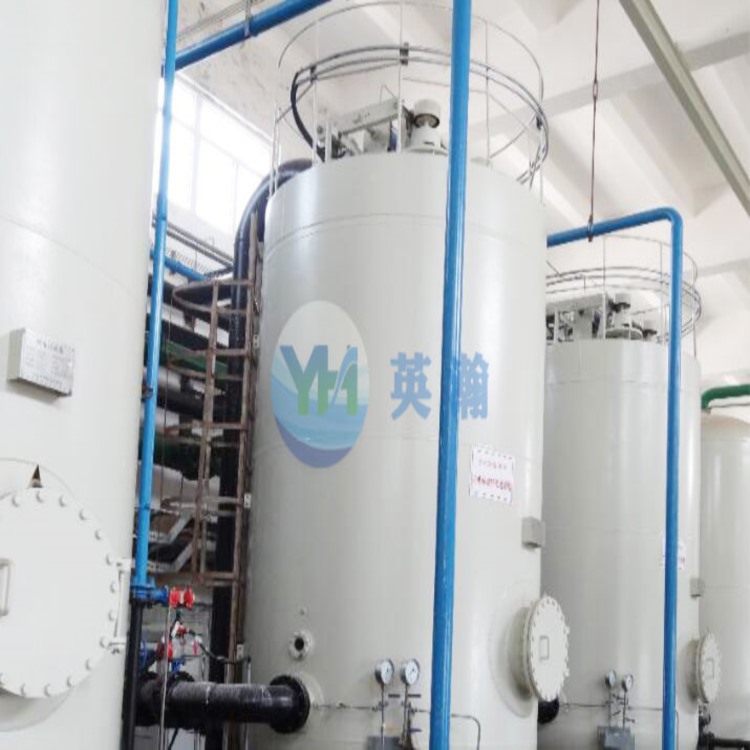
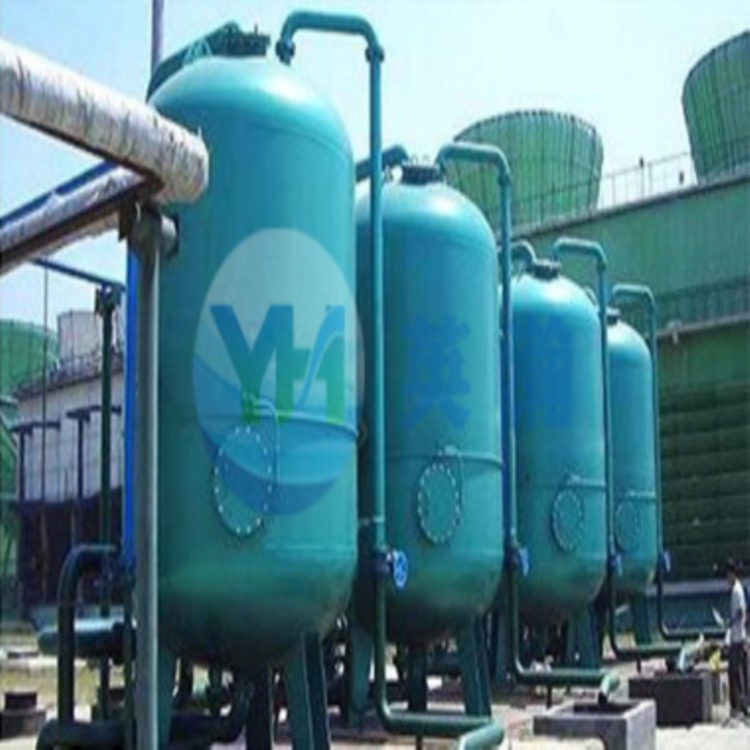
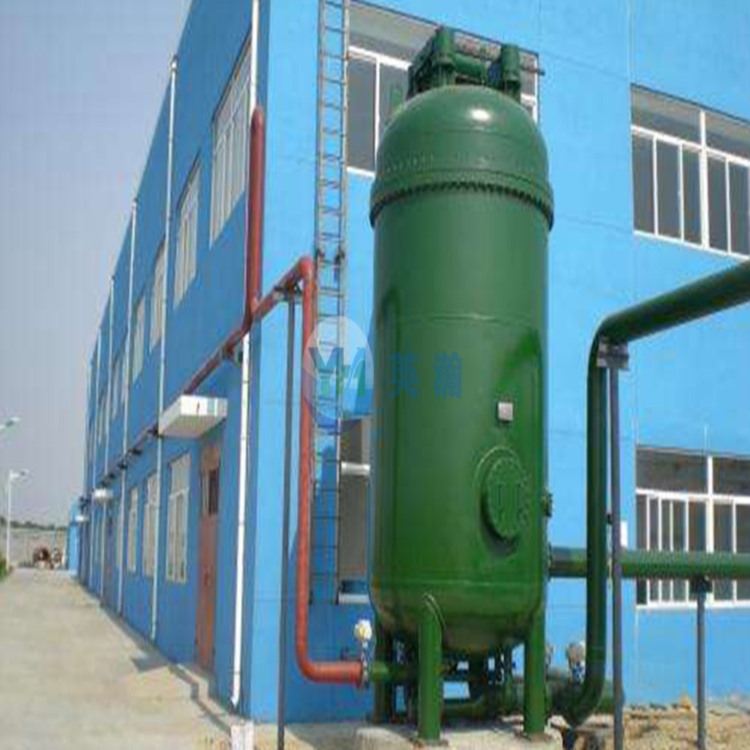











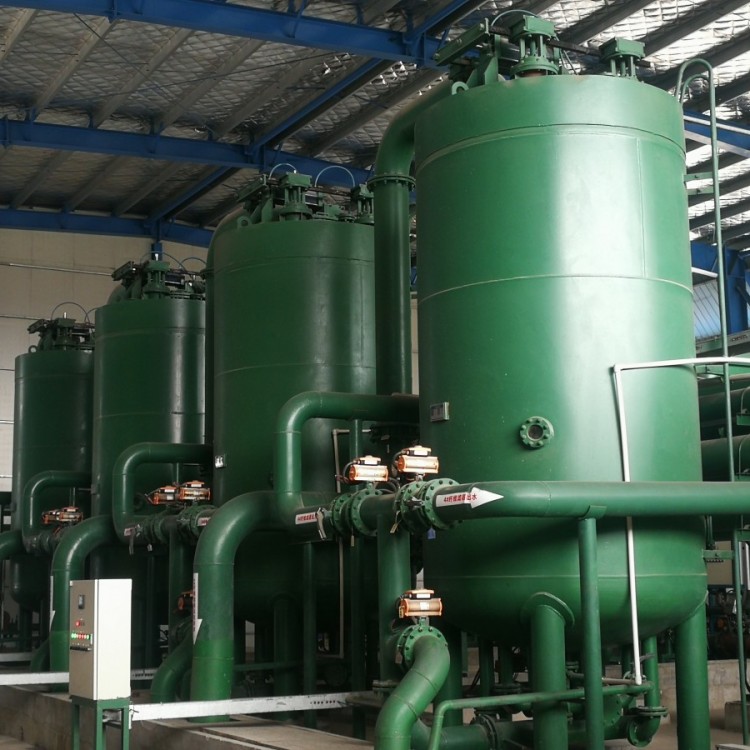
Twist-typePCFPorous Adjustment Fiber Filters
TWISTING PORE ConTROLLABLE FIBER BUNDLE FILTER
One.Company ProfileCompany Profile
Suzhou Industrial Park Yinghan Power Auxiliary Equipment Co., Ltd. is a professional manufacturer specializing in the research, design, and production of high-efficiency fiber filter series water treatment fiber filters. Our flagship product is the patented pore-adjustable fiber filter, also known as the TWF Twisted Pore-Adjustable Fiber Filter. Since its establishment, the company has been dedicated to meticulous work in this field, mastering the core technology of PCF pore-adjustable fiber filters. We have developed the design and production capabilities for a comprehensive range of water treatment fiber filters, with the twisted PCF pore-adjustable fiber filter as our main product, and two other series as auxiliary. Through collaborations with numerous engineering companies, our PCF pore-adjustable fiber filter has been successfully applied in various engineering projects at home and abroad, addressing practical user issues and earning positive feedback.
suzhou industrial park yinghan power auxiliary machine co., ltd,is a professional manufacturer specialized in the research, design and manufacturing of high-efficiency fiber filter series water treatment fiber filter. our leading product is the pore controllable fiber filter authorized by the national patent, also known as TWF pore controll fiber filter. Since its establishment, the company has been committed in this field, mastered the core technology of PCF pore controll fiber filter, The company has formed the design and production capacity of a complete series of water treatment fiber filtration equipment with twisting PCF pore controllable fiber filter as the leading product and the other two series of fiber filtration equipment as the auxiliary. Through cooperation with numerous engineering companies, the company's leading product PCF pore controll fiber filter has been successively obtained in some engineering projects at home and abroad, which has solved the user's practical problems and has been favorably received by the user.
The PCF Pore-Adjustable Fiber Filter is currently one of the most advanced high-efficiency fiber filters. It boasts flow rates of up to 80-100 m/h, with features such as large flow capacity, small footprint, high filtration accuracy, and ease of automation. Our company's pore-adjustable fiber filters offer additional standout advantages, including user-friendly design and low transmission resistance.
PCF pore controllable fibre filters are currently the most advanced fibre filter. It has a flow rate of 80 to 100m/h, with a large flow, small footprint, high filtration precision, and easy to achieve automation.
In addition, our SQZ series of water and steam sampling equipment, designed for industrial boiler water-gas sampling analysis, has been widely used in industries such as power, metallurgy, and petrochemicals.
In addition, the SQZ series of water sampling equipment produced by our company for the steam and water sampling analysis of the industrial boiler also has wide application in the fields of electric power, metallurgy and petrochemical industry.
The company's manufacturing plant spans an area of 10,000 square meters with a building area of 5,000 square meters. Key equipment includes: plasma cutting machines, profile cutting machines, dual torch cutting machines, automatic cutting machines, shearing machines, rolling machines, bending machines, various machining centers, various lifting equipment, hydraulic presses, bending machines, air compressors, presses, spot welders, silicon-controlled rectifier welding machines, automatic welding, ultrasonic thickness gauges, X-ray thickness gauges, ultrasonic and transistor flaw detectors, and more.
Company factory covers an area of 10000 square meters, construction area of 5000 square meters, the main equipment are: plasma cutting machine, profile cutting machine, double cutting torch cutting machine, automatic cutting machine, shearing machine, roll machine, bending machine, all kinds of cutting machine tools, all kinds of lifting equipment, hydraulic press, pipe bender, air compressor, pressing machine, spot welding machine, silicon controlled rectifier welding machine, automatic welding, ultrasonic thickness gauge, X-ray thickness gauge, ultrasonic flaw detector and transistor, etc.
Our mission is to be dedicated, professional, cooperative, and achieve mutual success. In the future, we will continue to adhere to the principle of "serving customers and ensuring quality," consistently refining our core business, and effectively collaborating with engineering companies and related users to contribute to improving the global water environment.
The company's development purpose is: dedicated, professional, cooperation and win-win. In the future, the company will continue to adhere to the principle of "user first, quality first", continue to do its own main business, and work well with the engineering company and relevant users to work hard to improve the water environment of the earth.
Two.OverviewAbstract
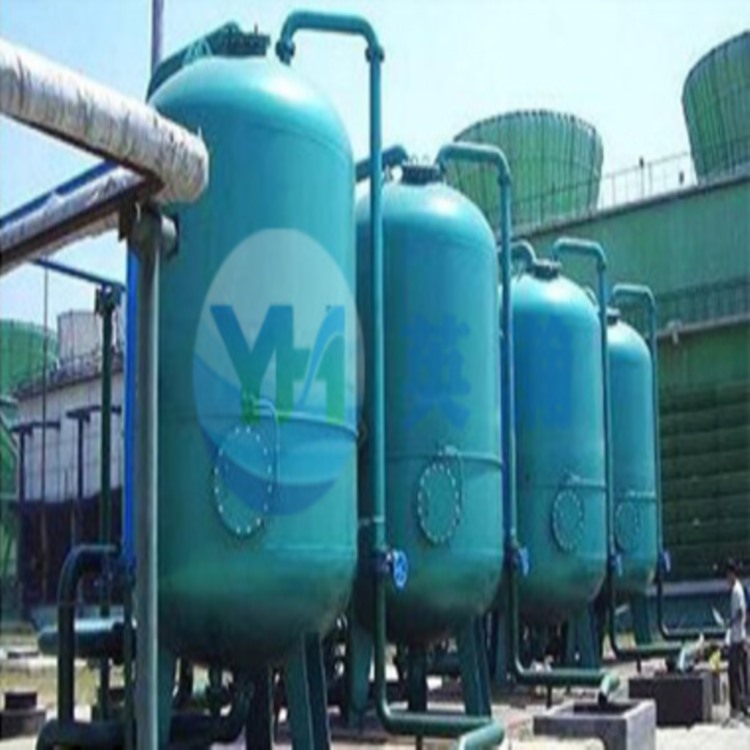
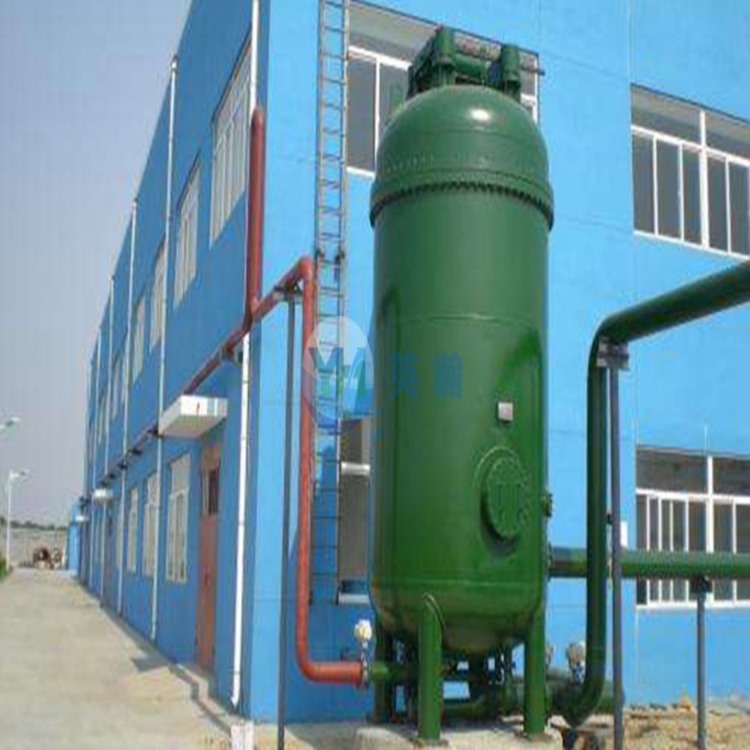
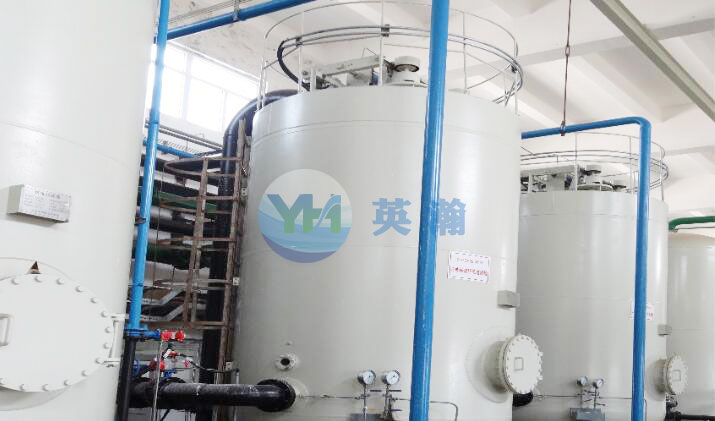
Porous Adjustment Fiber FilterPORE-CONTROLLABLE FIBER BUNDLE FILTER, also known as the Twisting Filter. It is a water filtration device that uses specially treated long fibers as the filtration medium. Addressing the drawback of traditional fiber filtration equipment with relatively smaller filtration area, this device employs a transverse flow filtration method, effectively increasing the filtration area without enlarging the equipment diameter, thereby enhancing the flow rate. In the 1990s, the concept of the Twisting Fiber Filter was first proposed and implemented domestically. Based on summarizing and improving upon previous technologies, our company has applied for and been granted relevant patents. Pore Controllable Fiber Bundle Filter, also can be referred to as TWISTING FIBER FILTER. The water filtration equipment which using a specially treated long fiber as the filtration medium. In view of the disadvantage of relatively small filtration area of traditional fiber filtration equipment, this equipment adopts the transverse flow filtration mode, which effectively increases the filtration area and increases the flow rate of the equipment without increasing the diameter of the equipment. In 1990s, the concept of twisting fiber filter was firstly put forward and implemented in China. On the basis of summarizing and improving previous technologies, our company has applied for relevant patents and obtained authorization.
|
Three.Operating Principle How Does It Work
A Twisted Pore Adjustment Fiber Filter is an advanced filtration equipment. It utilizes a soft, high-strength curved fiber yarn with stable performance and high single-filament strength as the filter material, combined with an electrical control system to achieve the filtration treatment of raw water. It boasts high filtration accuracy, large flow rate, and relatively small land occupation.
Twisting pore controll fiber filter is an advanced filter equipment. It USES a kind of stable performance, high strength single filament soft, high strength curved fiber filament as the filter material, with the electronic control system, to achieve the filtering of raw water treatment, which has the advantages of high filtering accuracy, large flow, relatively small cover area.
Different from traditional vertical filtration methods, this filter allows the feedwater to pass through the filter media horizontally, thus enabling greater flow rate and volume for equipment of the same diameter.
Different from the traditional longitudinal flow filtration method, the incoming-water is transversely through the filtration layer, so with the same diameter the equipment can achieve a larger flow velocity and flow rate.
1.Filter StatusFiltering
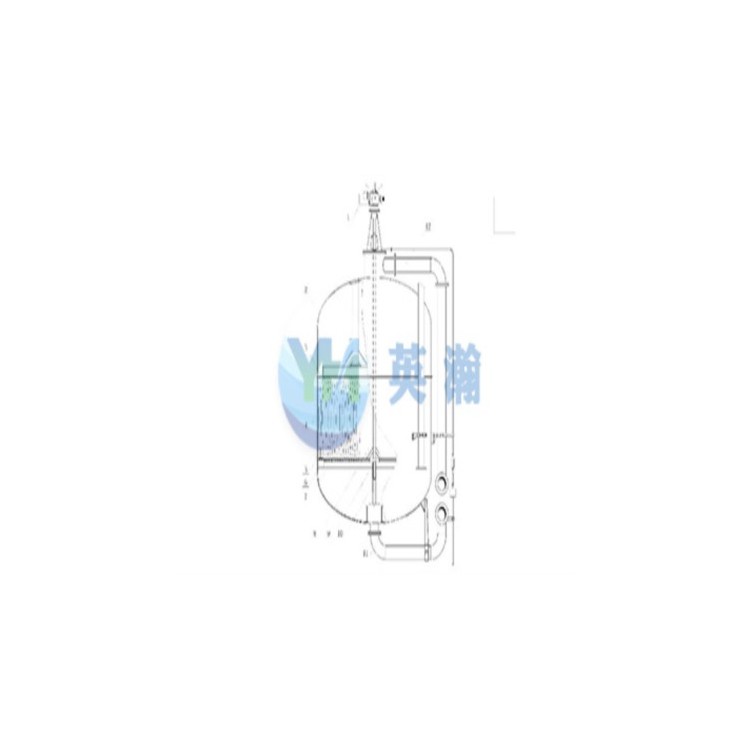
As shown in the right figure, the rotating mechanism set on the outside of the tank drives the filter unit to rotate, tightly wrapping the PP fiber bundle around the central water pipe, forming a uniform, fine, and dense porous filter layer. The filtered water passes through this filter layer from the outside into the central water pipe, thus trapping and adsorbing impurities in the water. During the filtration process, the pre-filtered water system passes through the filter layer horizontally, as the PP filter fibers are arranged in a regular pattern, preventing any bias flow phenomenon.
As shown in the figure on the right, the rotating units outside the tank drives the filtration module to rotate, so that the PP fiber bundle is tightly wound on the central tube,forming a uniform, tiny and dense porous filtration layer.through which the incoming water enters the central tube from the outside, thereby retaining and adsorbing the sewage in the water. In the process of filtration, the incoming water goes through the filtration layer in a horizontal direction. Because the PP filter wires are arranged in a certain rule, the bias phenomenon will not occur.
|
A certain quantity of soft PP fiber bundles are wrapped longitudinally around the central drain pipe, forming a filter unit. Depending on the specifications of the filter, one or four filter units are set up inside the tank.
A certain number of fine PP fiber bundles are longitudinally wrapped on the central gathering pipe to form a filter unit. One or four sets of filter units are set in the tank according to the size of the filter specifications.
The surface area of the four filter elements inside the equipment is greater than the cross-sectional area of the tank, allowing for a high theoretical filtration rate of up to 100m/h. Generally, it can reach 60 to 80m/h. Taking a DN2000 twist-type pore regulating fiber filter as an example, its flow rate can reach 200 to 300 T/H, while a standard DN2000 high-efficiency fiber filter typically operates at a flow rate of 30m/h, with a corresponding flow rate of 94T/H.
The surface area of the four filter cartridge in the equipment is larger than the cross-sectional area of the tank, so its theoretical filtration rate can be up to 100m/h. Generally, it can reach 60 ~ 80m/h. For example, the flow rate of DN2000 torsional pore regulated fiber filter can reach 200 ~ 300T/H, while the conventional flow rate of DN2000 high efficiency fiber filter is 30m/ H, and the corresponding flow rate is 94T/H.
2.Backwash stateBackwashing
When the retained material increases and the differential pressure (or flow rate, operating time) reaches the set value, the system automatically enters the backwashing step. During backwashing, the external rotating mechanism drives the PP filter fibers to be fully relaxed. Under the combined action of the backwashing water flow and cleaning air, the retained dirt is washed off and discharged through the drain line. After cleaning, the system can automatically return to the filtering state or enter standby mode.
When withholding content increased, the differential pressure (flow rateor Running time) to set data, automatically enters backwashing steps. The rotating units outside the tank drives the filtration module thoroughly relaxed, under the joint action of the backwashing water and compresses air, the elution of sewage intercepted is discharged through the drainage pipe, after cleaning can automatically enter the filtering state or ino standby state.
|
During the anti-washing process, the introduction of clean air causes the PP filter fibers to produce intense vibrations and friction with each other while being cleaned. Added to this is the effect of the clean air, which makes the retained substances on the filter fibers easily shed under the combined scrubbing of the backwash water flow and the clean air. Furthermore, the rotating mechanism drives the filter fibers to repeatedly perform rotation and relaxation actions during the anti-washing process, which contributes to achieving a better anti-washing effect similar to that of a washing machine.
The compressed clean air, make PP fiber bundle in the process of cleaning produce strong jitter and rubbing against each other, and Plus the carrying effect of cleaning air,the sewage intercepted on the fiberbundle can be easily peeled off by the combined washing water and cleaning air. In addition, the rotary mechanism drives the filter wire to repeat several times of rotation and relaxation during the backwashing process, which is helpful to obtain better backwashing effect similar to that of washing machine.
Four.Advantages Product Advantage
1. High filtration rate: Achieves a filtration speed of 60-80 m/h, with a maximum of up to 100 m/h. The pore-adjusting fiber filter equipment with a single machine capacity of 300 m³/h and a diameter of DN2000MM can significantly reduce the footprint of the equipment, as well as lower the construction costs for accompanying valves and control accessories.
High strain rate:The filtration speed is up to 60 ~ 80m/h, and the maximum is up to 100m/h. The diameter of the twist pore control fiber filter equipment with a single processing capacity of 300m3/h is DN2000MM;
2. Rapid Anti-Money Laundering: Comprehensive and swift, typically completing the anti-money laundering process within 3 to 5 minutes.
Rapid backwashing:The reverse washing process can be completed in 3 ~ 5min.
3. Filtration Material: Utilizes PP fiber bundle filtration material, which boasts excellent chemical stability, resistance to acids, alkalis, and oxidizers, as well as biodegradation resistance. It adapts well to changes in raw water quality.
High quality filter material:High quality PP fiber bundle filter material is adopted, which has good chemical stability, acid resistance, alkali resistance, oxidant resistance and biodegradation resistance, and has good adaptability to water quality changes of raw water.
4. Low Self-Consumption of Water: Due to its excellent backwashing performance, the backwashing process can be completed in a shorter period of time, with a backwashing self-consumption rate of 1-3% of the cycle water volume.
Low water consumption:Because of the good backwashing effect, the backwashing process can be completed in a relatively short time, the self-use rate of reverse washing is 1 ~ 3% of the periodic water yield.
5. Low initial investment: Requires only 1/3 to 1/2 of the land area of traditional filters for the same processing capacity.
Low one-time investment:With the same processing capacity, the area is only 1/3 ~ 1/2 of the traditional filter.
6. Low-pressure drop filtration, low energy consumption: final filtration head loss ≤ 0.08 MPa
Low pressure differential filtration, low energy consumption:Water head loss at the end of filtration is less than or equal to 0.08Mpa.
7. Easy Maintenance: Filters have a long lifespan, are easy to replace, and quick to install.
Easy to maintain:The filter material has a long service life, and easy to replace.
8. High level of automation: capable of full automatic operation.
with high level automation,Fully automatic operation can be realized.
9. High-efficiency water quality: filtration precision up to 2-5 μm, with a removal rate of suspended particles exceeding 95%.
high efficiency and excellent water quality: The filtration accuracy can reach 2 ~ 5μm, and the removal rate of suspended solids can reach more than 95%.
Twist-type porosity adjustable fiber filters offer numerous advantages compared to other types of filter equipment, including high filtration efficiency, compact size per unit volume, light weight, and low cost (when compared by unit water treatment capacity). The following table lists a comparison of technical specifications between the TWF porosity adjustable fiber filters, mechanical filters, and high-efficiency fiber filters (for reference only):
Compared with other types of filtration equipment, the twisting pore control fiber bundle filter has many advantages, such as high filtration efficiency, small volume, light weight and low price (according to the unit volume of water). The following table lists the comparison of technical indexes of TWF pore regulating fiber filter, mechanical filter and high-efficiency fiber filter (for reference only).
Comparison Itemsitems | Mechanical Filter | High-efficiency fiber filter | Twist-type Porosity Adjustable Fiber Filter |
Filtering Method filter type | Surface Filtration | Deep Filtration depth filtration | Deep Filtration |
Filtering Speedm/h) Filtration velocity | 8~10 | 20~40 | 60~100 |
Filter Media Types Filter material types | Sand and gravel | Polypropylene fiber | Flexible CurvingHigh-tensile fiber yarn bundle |
Filter Media Replacement Filter material replacement | Inconvenience inconvenience | Inconvenience inconvenience | Easy to replace |
Five.Application Scope
1. Quality Water
For: Producing and manufacturing potable water, drinking water, purified water, high-purity water, and industrial water
For: production of tap water, drinking water, pure water, high pure water, industrial water
Process: A. Raw Water (Low Turbidity Water: Concentration ≤ 100 mg/l) → Micro Flocculation → PCF Filter → Post Treatment → Effluent
Process: A. Raw water (low turbidity water: concentration less than 100 mg/l) →micro-flocculation→ TWF filter →post-treatment→ effluent
B. Raw Water (High Turbidity: Concentration > 100 mg/l) → Coagulation and Clarification → PCF Filter → Post-Treatment → Effluent
B. Raw water (high turbidity water: concentration >100 mg/l) → coagulation clarification →TWF filter→ post-treatment →effluent
2. Recycled Water
For: Swimming Pool Water Treatment, Aquarium Water Circulation, Water Park, Artificial Landscaping, Freshwater Aquaculture
For: swimming pool water treatment, aquarium water circulation, water park, artificial landscape, freshwater aquaculture
Process: Raw Water → Hair Collector → Microflocculation → PCF Filter → Recirculation
Process: raw water→ hair collector→ microflocculation →PCF filter →recycling.
3. Reclaimed Water Reuse
For Use: Greywater Reuse, Hotel Greywater Treatment, Accommodation Area Greywater Treatment
For: miscellaneous water reuse, hotel water treatment, accommodation area water treatment
Process: Untreated Water → Grating → Clarification and Sedimentation, Contact Oxidation → Microflocculation → PCF Filter → Disinfection → Reuse
Process: to be treated water→grille→clarification precipitation→contact oxidation→microflocculation→PCF filter→disinfection→reuse
4. Advanced Sewage Treatment
For Use: Direct Treatment of Effluents from Domestic Sewage or Industrial Wastewater After Physical-Chemical/Biological Treatment
Used for: direct treatment of effluent after physicochemical/biochemical treatment of domestic sewage or industrial wastewater.
Process: Wastewater → Primary Sedimentation Tank → Biochemical Treatment → Coagulation and Sedimentation → PCF Filter → Reuse
Process: wastewater→primary sedimentation tank→biochemical treatment→coagulation precipitation→PCF filter→ reuse
Specific ApplicationsThe Specific Application
1. Prefiltration for Softening Water System
Replace traditional mechanical filters to prevent suspended particles, colloids, and other impurities in the water from entering the resin layer, wrapping and contaminating the resin, reducing its exchange function, and ensuring the periodic water production and regeneration effect of the ion exchange resin.
replace the traditional sand filter, prevent the impurities in water such as suspended matter and colloid from entering ito the resin layer to wrap and contaminate the resin, reduce its exchange function, and ensure the periodic water production and regeneration effect of the ion exchange resin.
2. Power Plant Condenser Circulating Water Treatmentndenser in power plant
Used for removing rust, suspended particles, and colloidal metal corrosion products from recirculated water, to prevent these minute suspended particles and colloidal particles from entering the condensate desalination system, which may affect the resin's exchange capacity and working cycle.
It is used to remove the rust, suspended matter and colloidal metal corrosion products in the circulating water, prevent these tiny suspended matter and colloidal particles from entering the condensate water desalting system, and affect the exchange capacity and working cycle of the resin.
3. Full Membrane Water Treatment System Pre-treatment for Chemical Plants
Retain silt, clay, suspended particles, and other fine particles in water, preventing impurities from entering ultrafiltration, reverse osmosis, and other membrane elements, which could block the filtration channels and cause mechanical fouling. This can extend the cleaning cycle and service life of the membranes.
Interception of sediment, clay, suspended matter and other small particles in water, to prevent impurities ino ultrafiltration, reverse osmosis and other membrane elements, blocking the filter channel, causing mechanical fouling. The cleaning cycle and service life of the film can be prolonged.
4. Steel Industry Circulating Water Filtration
Remove large amounts of rust, scale, biological slime, algae, microorganisms, and other corrosive products from recirculating water to prevent blockages in pipes and nozzles.
Filter a large amount of rust, iron slag, biological slime, algae, microorganisms and other corrosion products in the circulating water to prevent pipe and nozzle blockage.
5. Oil Field Return Water Filtration System
Removes suspended matter, large molecular bacteria, organic substances, and some fine particulate impurities from backflush water, protecting groundwater resources from contamination.
The groundwater resources shall be protected from contamination by removing suspension, macromolecular bacteria, organic matter and some fine particulate impurities back int the water injection.
Six.Equipment SpecificationsEquipment specification
Model model number | Trafficm3/h) produced water quantity | Reference外形尺寸:Φ×H:mm) reference dimension |
PCF75 | 75 | Φ1200×3800 |
PCF100 | 100 | Φ1500×3800 |
PCF120 | 120 | Φ1500×4200 |
PCF150 | 150 | Φ2000×4000/Φ1800×4400 |
PCF200 | 200 | Φ2000×4700 |
PCF250 | 250 | Φ2200×5100/Φ2000×5300 |
PCF300 | 300 | Φ2200×5550/Φ2000×5750 |
PCF350 | 350 | Φ2400×5350/Φ2200×5850 |
PCF400 | 400 | Φ2400×5700 |
PCF450 | 450 | Φ2400×6200/Φ2800×5600 |
PCF500 | 500 | Φ2800×6500 |
Note: The equipment specifications in the table are for reference only; the actual specifications should be determined by the design drawings signed by both parties. Note: the equipment specifications in the table are for reference only, and shall be subject to the design drawing signed by both parties. | ||
Model model number | Trafficm3/h) produced water quantity | Reference Outline DimensionsΦ×H:mm) reference dimension |
PCF5 | 5 | Φ380×1500 |
PCF10 | 10 | Φ400×1750 |
PCF15 | 15 | Φ480×1700 |
PCF20 | 20 | Φ550×1850 |
PCF25 | 25 | Φ550×2200 |
PCF30 | 30 | Φ650×2500 |
PCF40 | 40 | Φ800×2500 |
PCF50 | 50 | Φ900×2700 |
PCF60 | 60 | Φ1000×2800 |
Note: The equipment specifications in the table are for reference only, and the actual specifications should be determined by the signed design drawings between both parties. Note: the equipment specifications in the table are for reference only, and shall be subject to the design drawing signed by both parties. | ||
Seven.Equipment performance parametersEquipment specification
Design Pressure Design Pressure | 0.6Mpa | Operating Temperature Working Tmperature | 5~60℃ |
Work pressure Working Pressure | 0.55Mpa | Anti-money Laundering Cycle Cycle Of Backwashing | 3~10h |
Hydrostatic Test Pressure Water Pressure Test Pressure | 0.75Mpa | Anti-money Laundering Time Time Of Backwashing | 5~10min |
Design Temperature Design Tmperature | 0~60℃ | Filter Precision Filtration precision | 2~5μ |
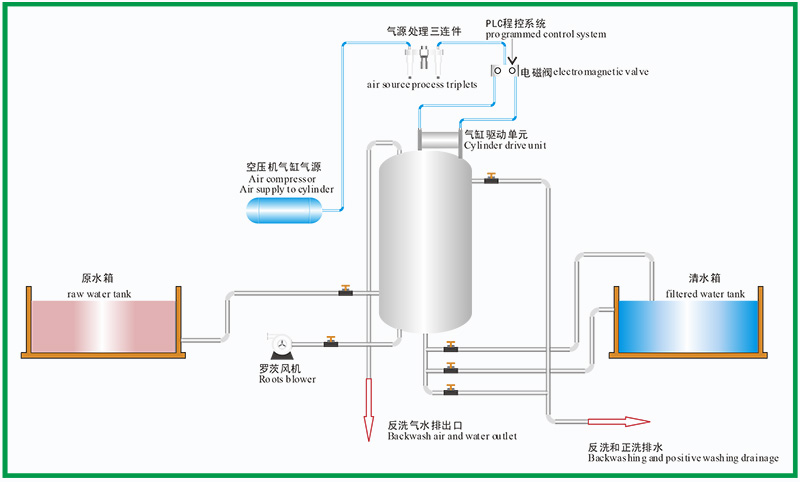
Eight.Reference Process Flowchart
Nine.Equipment Maintenance and Care PrecautionsEquipment Maintenance Notes
1. Usage PrecautionsOperational Considerations
1) When setting the backwashing pressure (0.5-0.8 kg/cm²), do not set it too high, otherwise it may cause deterioration of filtered water quality, reduced water flow, and abnormal drainage.
Set back flush pressure (0.5-0.8㎏/㎝2), don't set too high,or will cause deterioration of water quality, water flow reduction and abnormal exhaust pipe, etc.
2) Install regulating valves and check valves at the raw water inlet; install check valves at the backwash inlet.
Install regulating valve and check valve at raw water inlet; install check valve at backflush inlet.
3) Absolutely no reaching into or inserting any objects into the gear area while the machine is in operation.
It is strictly prohibited to reach for or put other objects ito the rotary gear under the running state.
4) After shutdown, be sure to rinse the filter fibers repeatedly to thoroughly remove water from inside the filter (ensuring the filter fibers do not stick to any suspended particles. If not rinsed clean, it will reduce the filtration efficiency).
After the filter is shut down, it is necessary to repeatedly flush the filter fiber, and completely remove the water inside the filter (makng filter fiber filaments free of suspended solids; if not, the filtering effect is reduced)
5) Perform a chemical soak cleaning at least once a month, using disinfectants such as CaCLO2 or NaCLO (with a CL concentration of 20ppm) to soak the filter for at least 12 hours, followed by a gas-water mixture flush to remove algae and microorganisms from the filter material fibers.
Soak and clean at least once a month. Infuse disinfectant such as CaCLO2 or NaCLO (CL concentration is 20ppm) to the filter and soak for at least 12 hours. Then mix air and water to rinse and remove algae, microorganisms and other substances on the filter fiber.
6) We recommend removing all valves every three months and thoroughly cleaning out any foreign matter with a soft cloth.
It is recommended to remove all the valves once every three months and thoroughly remove the foreign bodies with soft cloth.
7) To prevent rust on the worm gears, it is necessary to apply lubricant regularly.
To prevent rotary gear from rusting, grease should be applied regularly.
2. Causes of Failure and Reference SolutionsThe malfunction and the reference solutions
Phenomenonmalfunction | Fault CauseThe cause of the problem | Inspect and process |
Water quality deterioration | Exceeded backflush set pressureBackwash set pressure exceeded 2. Fiber yarn exhibits abnormalityThe fiber filament is abnormal 3. The raw water inlet valve is too large, resulting in excessive water inflow.Raw water inlet valve open too large, Excessive inflow 4. Excessive raw water suspended solidsSuspended solids in raw water are too high 5. Raw water suspended particle diameter too smallRaw water suspended solids diameter is too small | 1. Precisely set backwash pressureAccurately set backflush pressure 2. Contact the manufacturerContact the manufacturer 3. Adjust the inlet valveAdjust inlet valve
4. Pre-treatment Equipment InspectionCheck the pretreatment equipment 5. Adjust dosing quantityAdjust the dosage |
2. Reduced Water Treatment Volume | 1.Raw water pump is experiencing an anomalyThe raw water pump is abnormal 2.Original water inlet valve opened too smallSmall opening of raw water inlet valve 3.Incomplete backwashingThe filter is not thoroughly being backwashed 4.Foreign object clogs pump inletForeign matter clogs the pump inlet | 1.Repair or ReplaceRepair or replace 2.Adjust the raw water inlet valveAdjust the raw water inlet valve 3.Rinse back冲洗Redo the backwash 4.Inspect water pump intakeCheck the pump inlet |
3. Cylinder runs with abnormal noise | 1.Bearings have failedBearing failure 2.Sprocket rustRotary gear rusting | 1.Replace Bearingsreplace the bearing 2.Rust removal, lubrication applicationRemove rust and apply lubricant |
4. Pneumatic valve does not open | 1.Valve stuckValve sticking 2.Incorrect installation direction of pneumatic tubePneumatic tube installed in the wrong direction 3.Air pump malfunctionThe air pump broke down | 1.Repair or Replace Pneumatic ValveRepair or replace pneumatic valves 2.Realign the pneumatic tube directionReadjust the direction of the pneumatic tube 3.Repair or replace air pumpRepair or replace the air pump |
5. Inadequate backflushing | 1.Short backwash setting timeBack flush set time is short 2.Low backwash gas flowLess backwashing airflow 3.There is繁殖of adherents on the fiber thread.Filaments with attachments to bree | 1.Adjust backwash timeAdjust the backwash time 2.Inspect Roots Blower and air pipelineCheck roots fan and air line 3.Disinfect and sterilizeSterilize with chlrine gas |
Ten.Operation ProcedureOperating instruction
Please refer to the random delivery documents.
See delivery documentation.