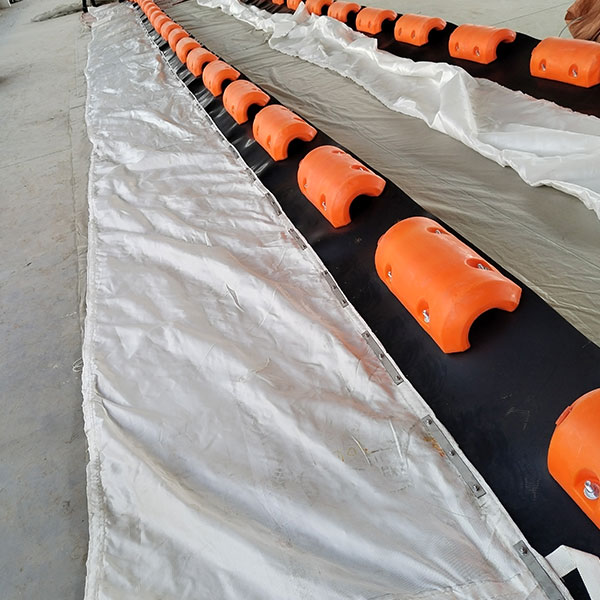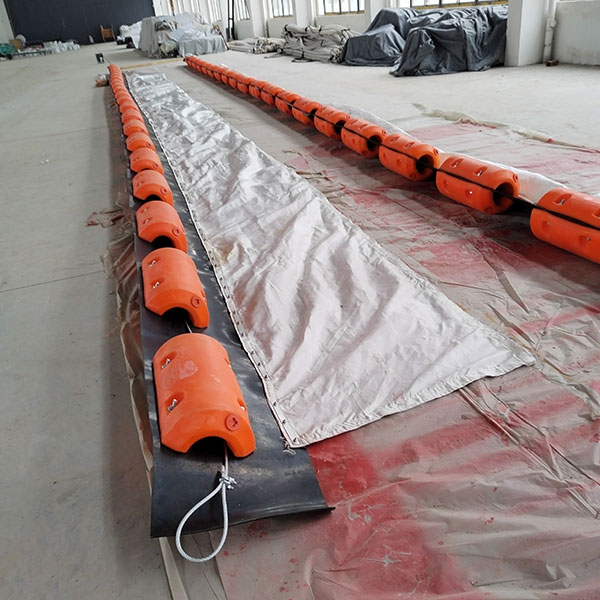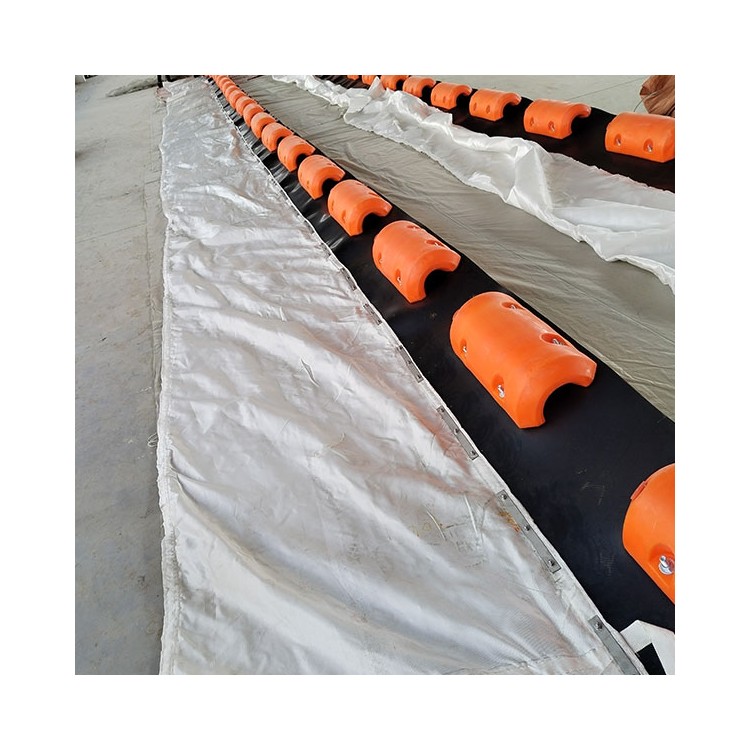

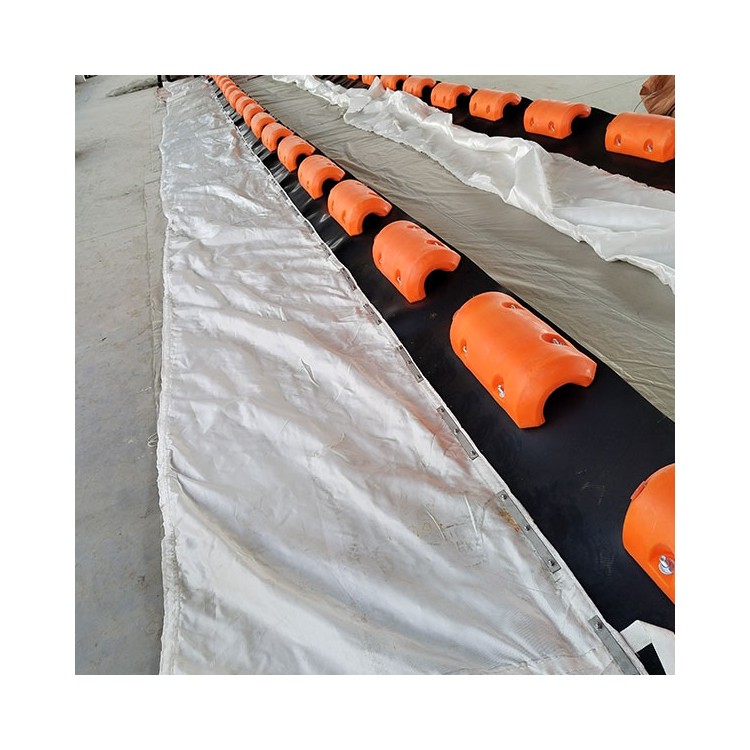
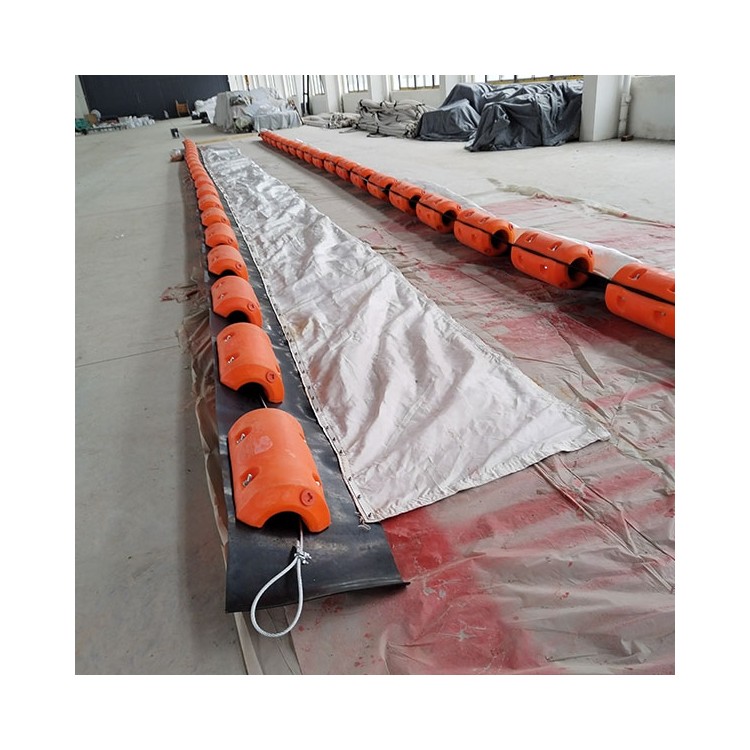
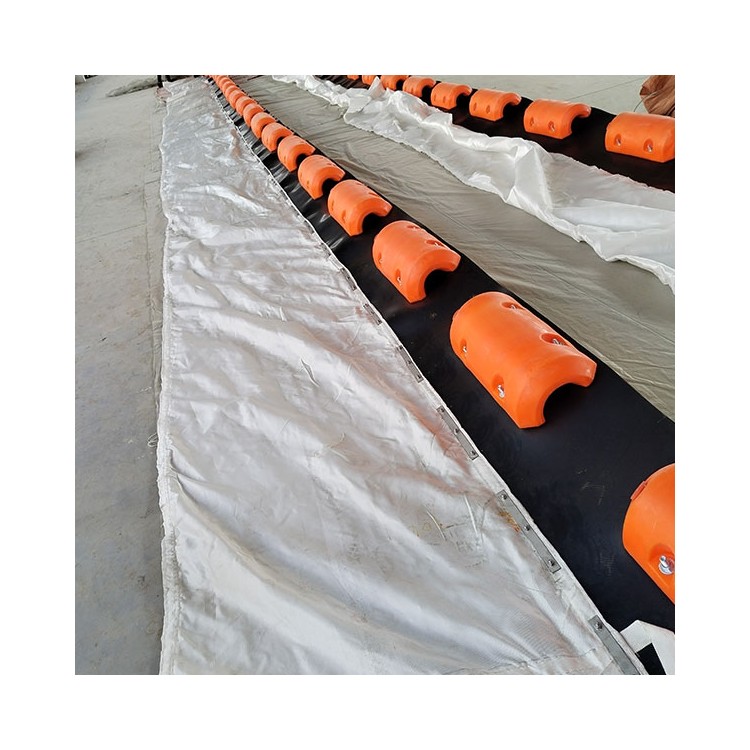







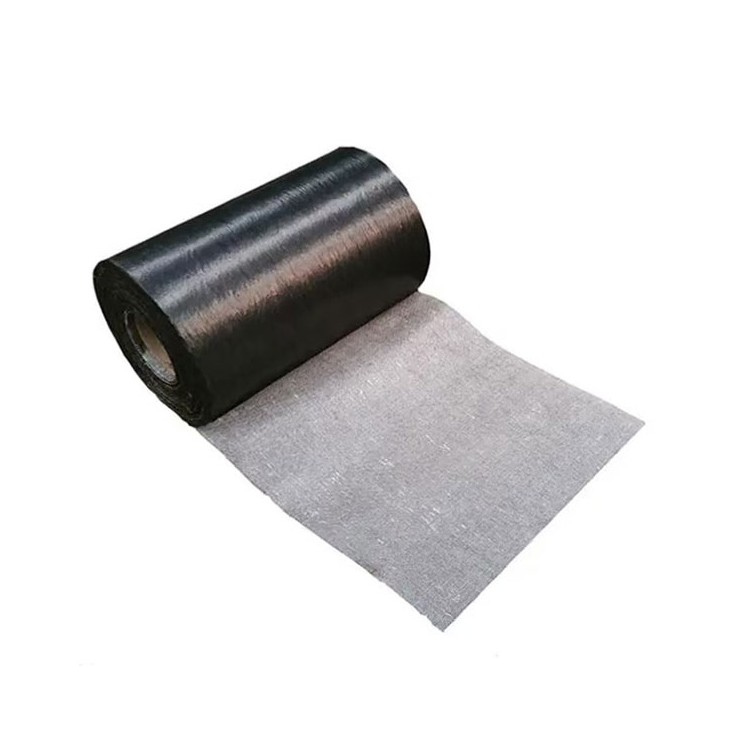
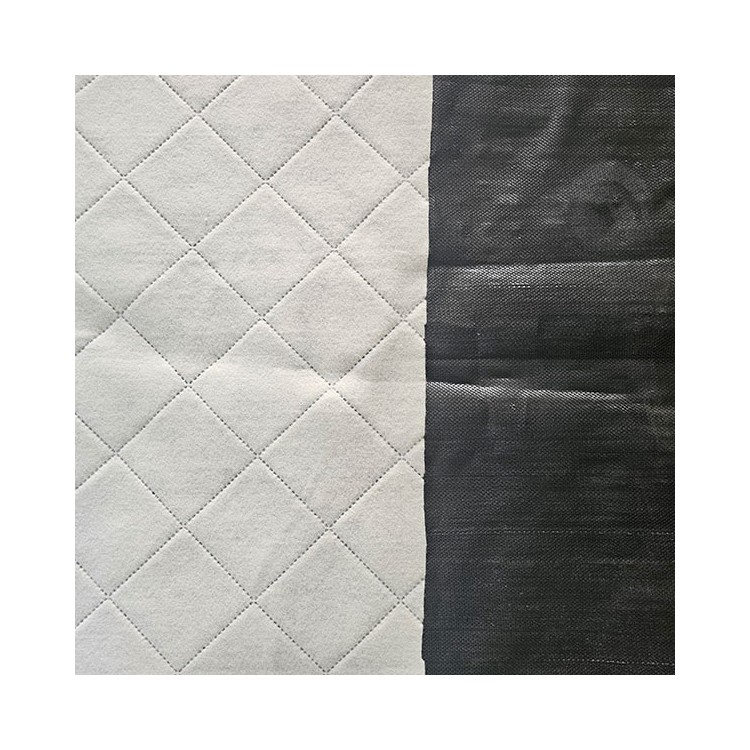
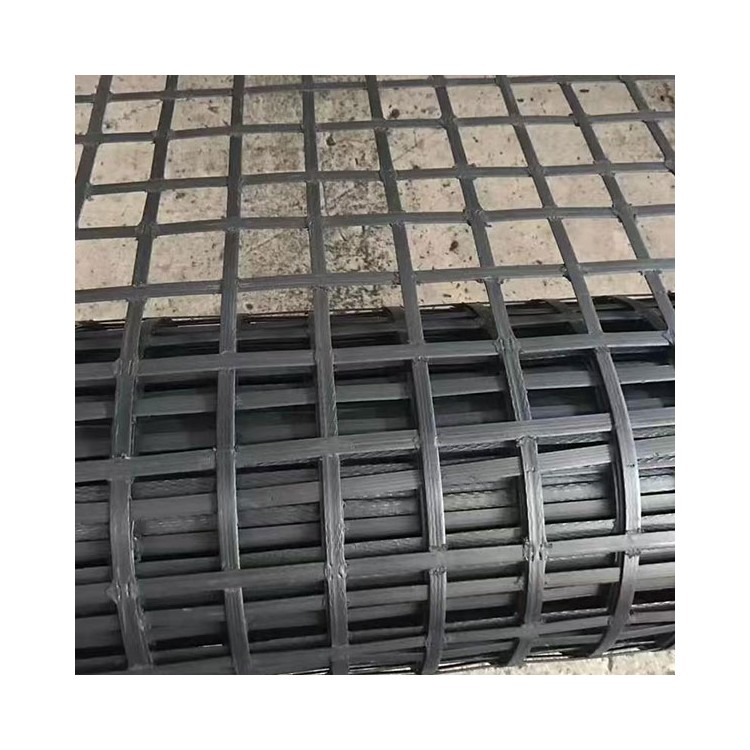
A rubber boom is a device that uses a submerged floating body with skirts to contain surface oil, debris, and underwater cyanobacteria to prevent their spread. It is commonly used to block the spread of oil in marine and port spill incidents and to control the proliferation of cyanobacteria in lakes. Composed of floats, skirts, tension bands, ballast chains, and mooring pieces, it is anchored to the surface and underwater areas where containment is needed. It comes in various types such as ocean, lake, and port models, each with its corresponding technical data.
Basic Structure: Rubber booms are equipment designed to float stably on water surfaces, preventing oil spill spread, reducing oil spill area, and transferring oil and floating debris, thus protecting the aquatic environment. There are many types of rubber booms, each with different designs. However, the basic structure consists of buoyant bodies, skirts, tension bands, ballasts, and joints.
Buoyancy: The part of the rubber berm that provides buoyancy. Its function is to utilize air or buoyancy materials to give the rubber berm buoyancy, allowing it to float on the water surface. The buoyancy can be placed inside or outside the rubber berm's surface.
Skirt: Refers to the continuous portion below the boom. Its function is to prevent or reduce oil from escaping beneath the boom.
Tension band: A long component (chain, strap) capable of withstanding horizontal tension applied to the rubber berm. It is primarily used to bear the pulling forces generated by wind, waves, currents, and dragging.
Ballast: A weight used to enable the boom to hang down and improve its performance, keeping the rubber boom in an ideal state underwater. Typically made of steel or lead materials, or utilizing water as the ballast.
Fitting: A device permanently attached to the boom, used for connecting each section of the boom or other auxiliary facilities.