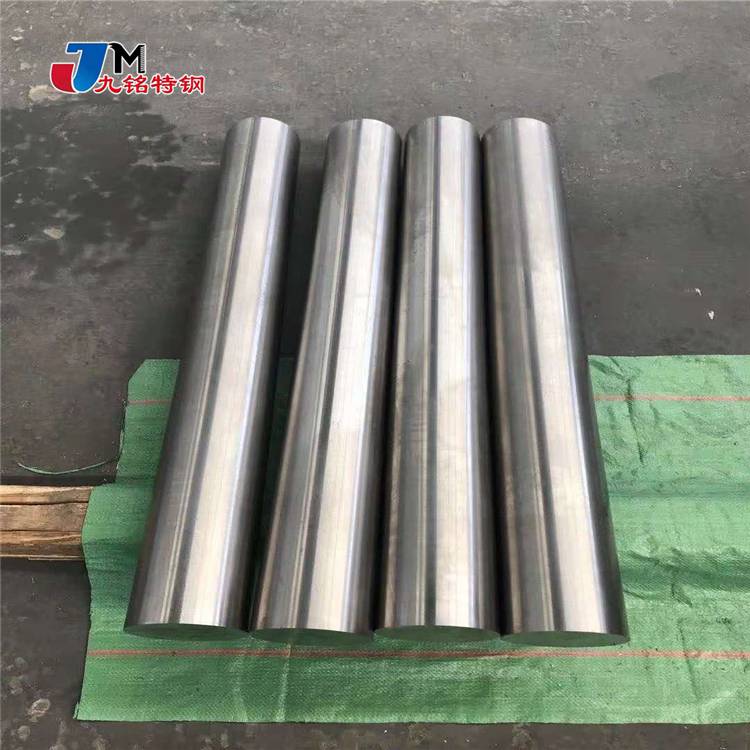

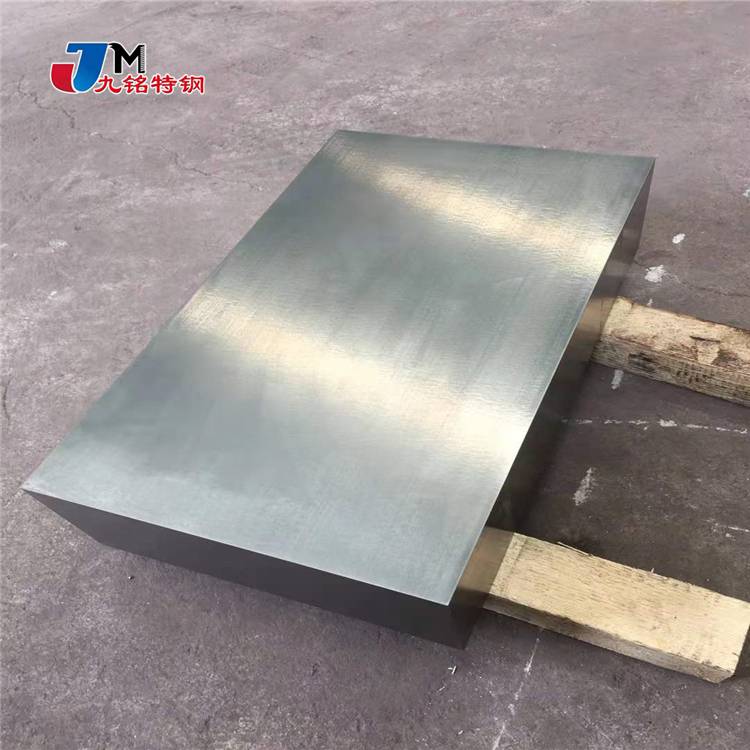
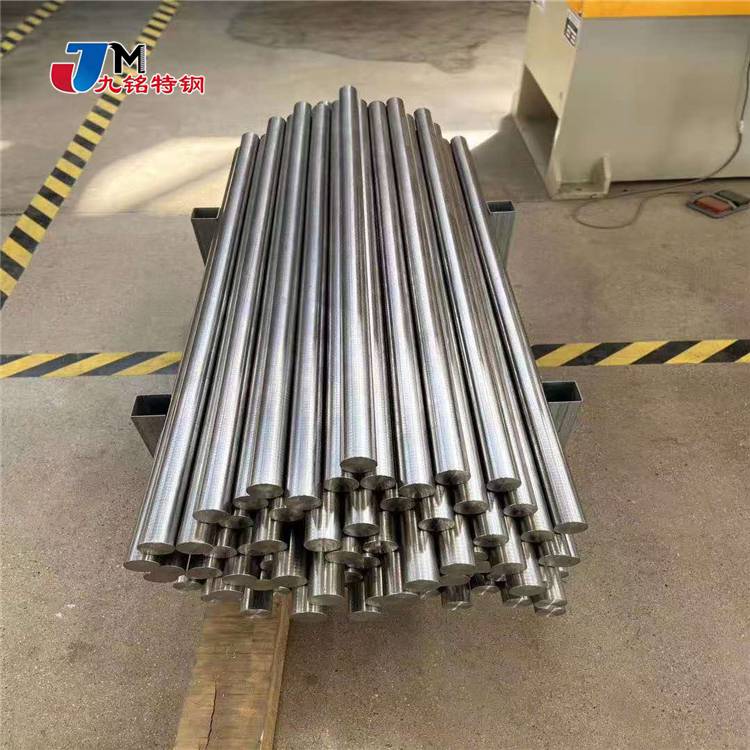











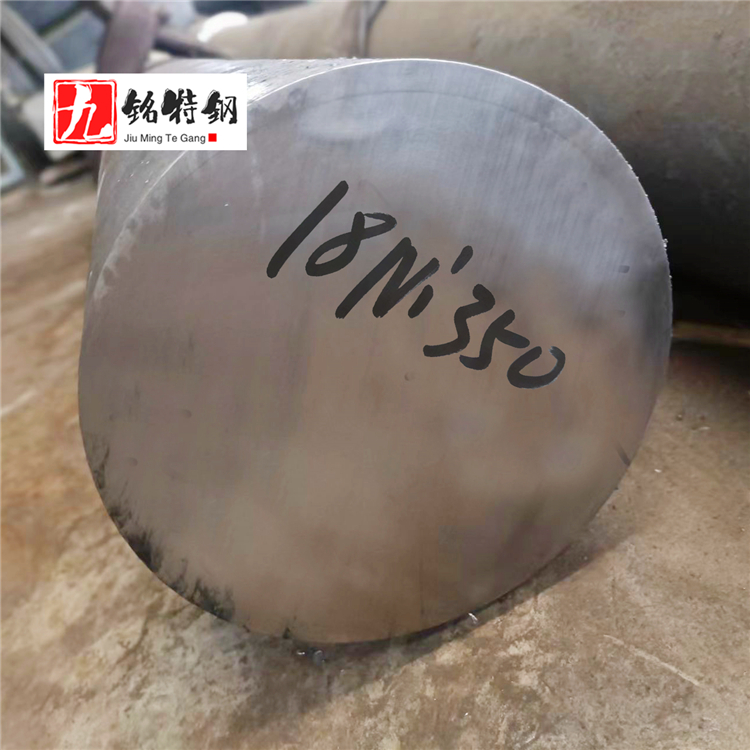
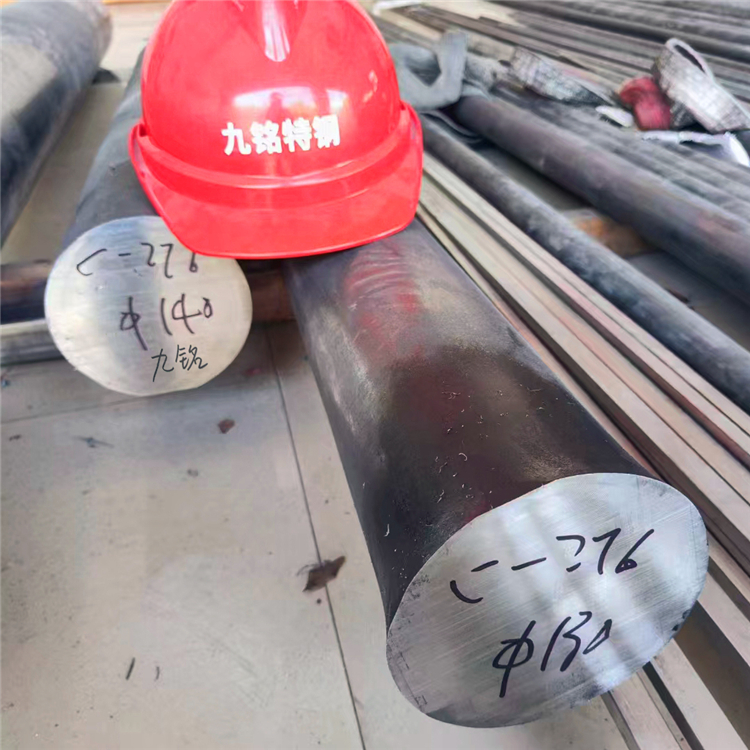
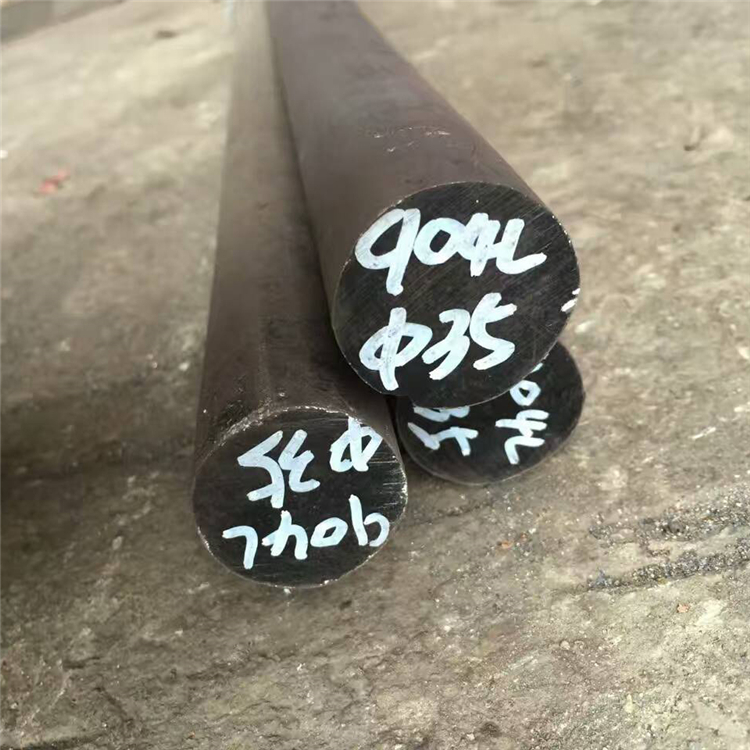
Hardened Martensitic Age-Hardening Steel 18Ni Marage 250 Bars, 18Ni(350) Creep Resistance
18Ni300 mold steel is a low-carbon, martensitic precipitation-hardening plastic mold steel. Titanium, aluminum, cobalt, and molybdenum are the alloy elements that contribute to the precipitation hardening. Carbon content is low by mass fraction (about 0.03%), aimed at improving the steel's toughness. Impurities have a significant impact on the properties of martensitic precipitation-hardening steel, with a more pronounced effect on steels with higher yield strength. This necessitates vacuum melting for such steels to reduce impurities, segregation, and gas content in the ingots, ensuring good toughness and fatigue resistance.
Chemical Composition:
C ≤0.03
Ti 0.5-0.8
Mn ≤0.10
P ≤0.01
S ≤0.01
Co 8.5-9.5
Mo 4.6-5.2
Ni 18.0-19.0
Primary Uses:
1) Primarily used for precision die forging.
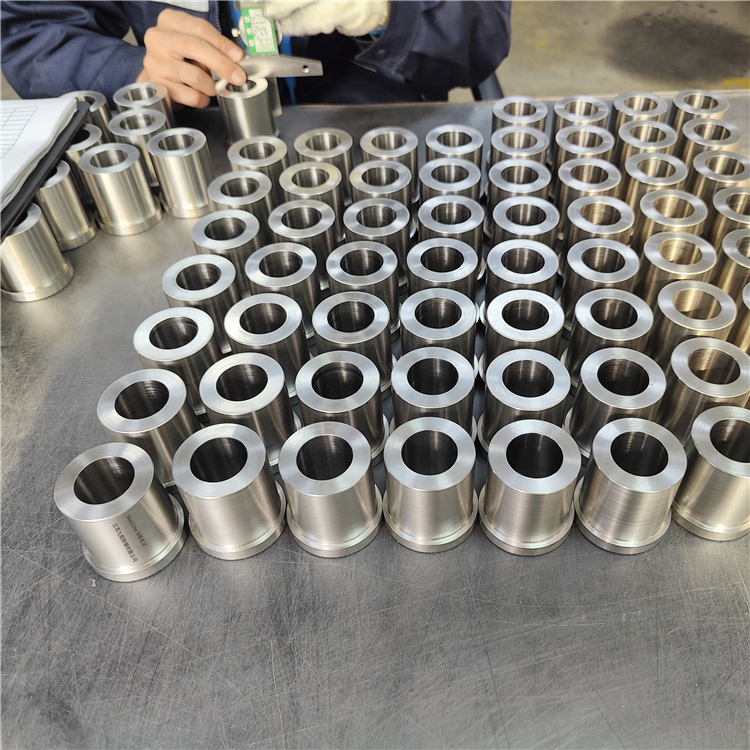
2) Produce high-precision, ultra-mirror finish, complex cavity, large cross-section plastic molds for mass production.

Martensitic Age-Hardening Steel 18Ni(200) Ultra-Low Carbon Steel 18Ni(250) Molding Steel 18Ni(300) Chemical Composition 18Ni(350) Mechanical Properties Heat Treatment
Properties and Applications of 18Ni Martensitic Age-Hardening Steel:
Representative steel grades of 18Ni steel include 022Ni18Co8Mo3TiA [18Ni(200)], 022Ni18Co8Mo5TiA [18Ni(250)], 022Ni18Co9Mo5TiA [18Ni(300)], and 00Ni18Co13Mo4TiA [18Ni(350)].
18Ni steel is a typical martensitic age-hardening steel with a low carbon content. The alloy elements Ti, Al, Co, and Mo are responsible for the age-hardening effect, and impurities have a significant impact on the properties of martensitic age-hardening steel, with a more pronounced effect on steels with higher yield strength. This necessitates vacuum melting for such steel to reduce impurities, segregation, and gas content in the ingot, ensuring the steel possesses good toughness and fatigue resistance.
In 18Ni steel, carbon has a significant impact on strength, even with a minimal carbon content, it can significantly enhance the martensite strength. However, after increasing the carbon mass fraction to 0.03%, it will reduce the yield strength of the steel. Therefore, the carbon mass fraction in 18Ni martensite aging steel should not exceed 0.03%.
Sulfur in 18Ni steel is harmful. It exists in the form of sulfides within the steel and distributes along the hot rolling direction, causing anisotropy in the steel. Therefore, it is required to minimize the sulfur content in the steel as much as possible.
The addition of a substantial amount of Ni to 18Ni steel primarily ensures the formation of a single martensite after solid solution quenching. Secondly, Ni's effect on Mo is to form the age-hardening phase Ni3Mo. When the Ni content exceeds 10%, it also improves the fracture toughness of the martensitic时效 steel.
After solution heat treatment, 18Ni steel forms ultra-low carbon martensite with hardness of 28~30HRC; after aging treatment, the hardness can increase to 50HRC due to the precipitation of various types of intermetallic compounds. This steel maintains good toughness and high fracture toughness under high strength and high ductility conditions. Additionally, it has no cold working hardening, minimal deformation after aging heat treatment, good weldability, and can be treated with nitriding on the surface.
18Ni class low carbon martensitic age-hardening steel is primarily used for manufacturing high-precision, ultra-mirror finish, complex cavity, large cross-section mechanical parts and plastic molds for mass production, but due to its high cost, its usage is limited.