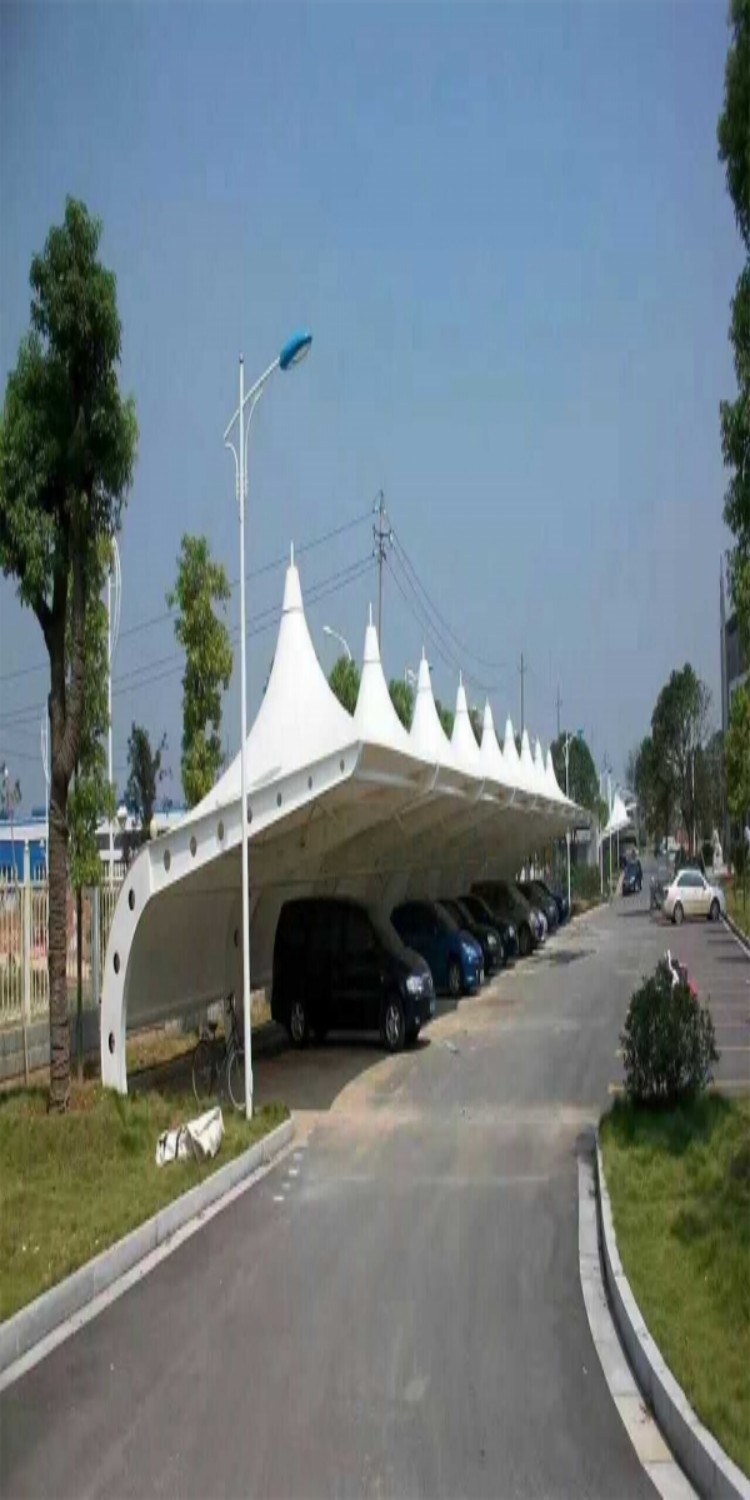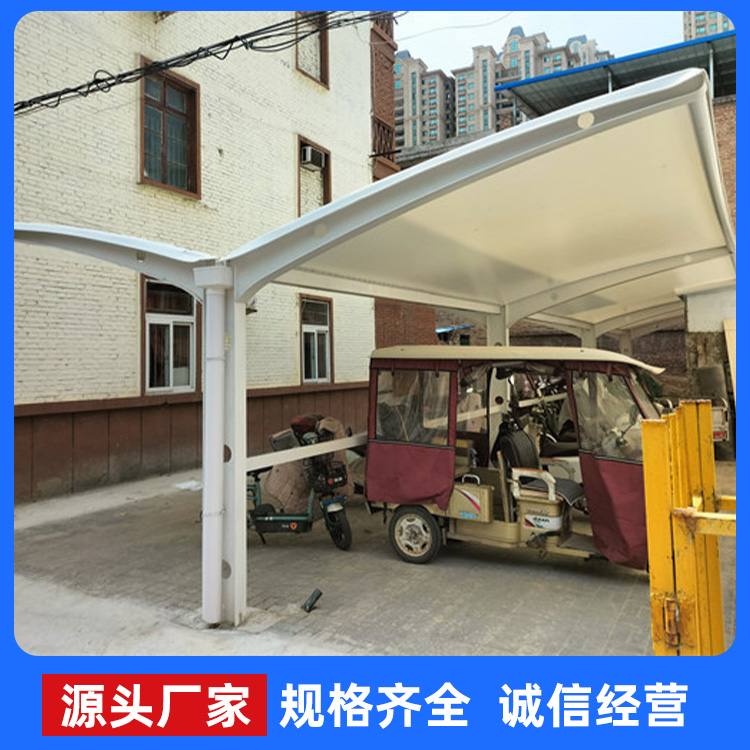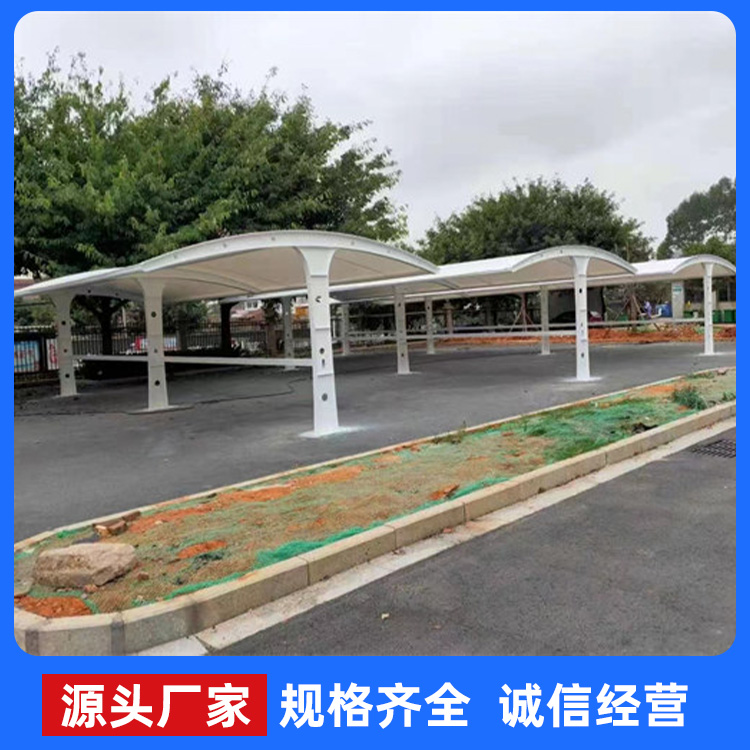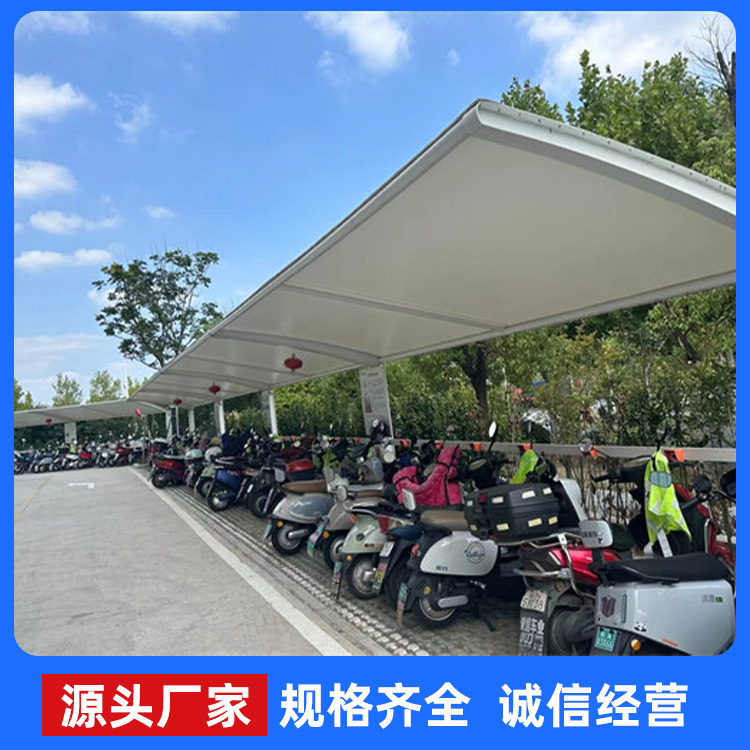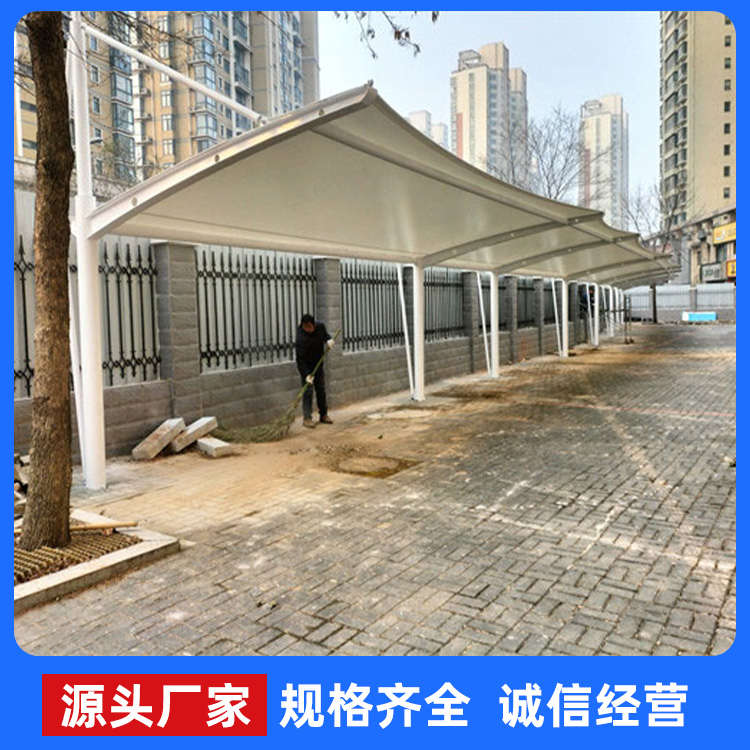


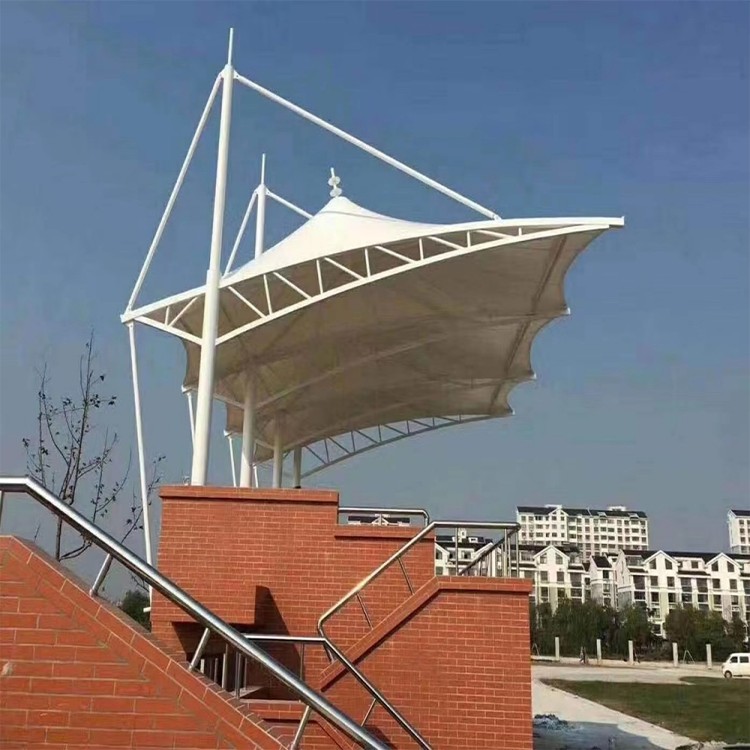
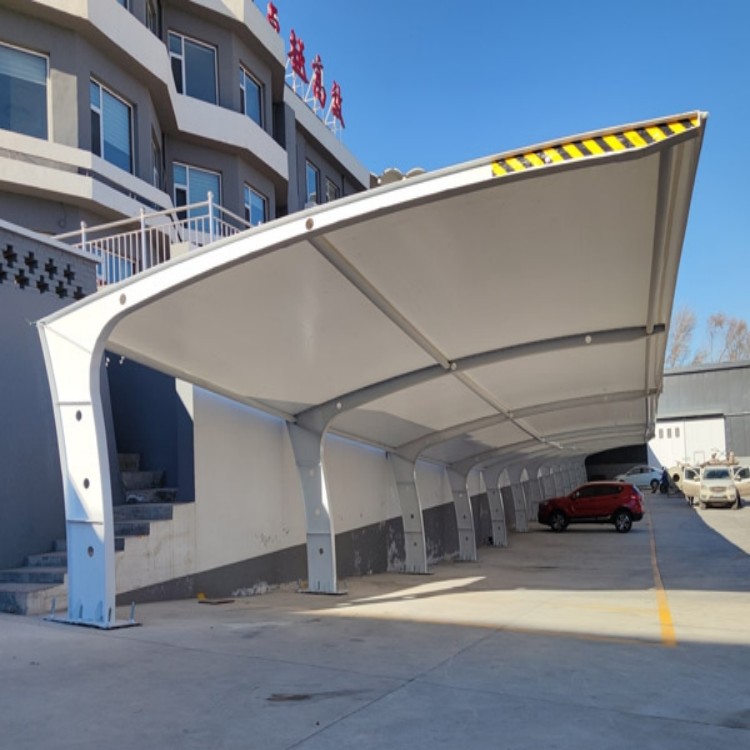


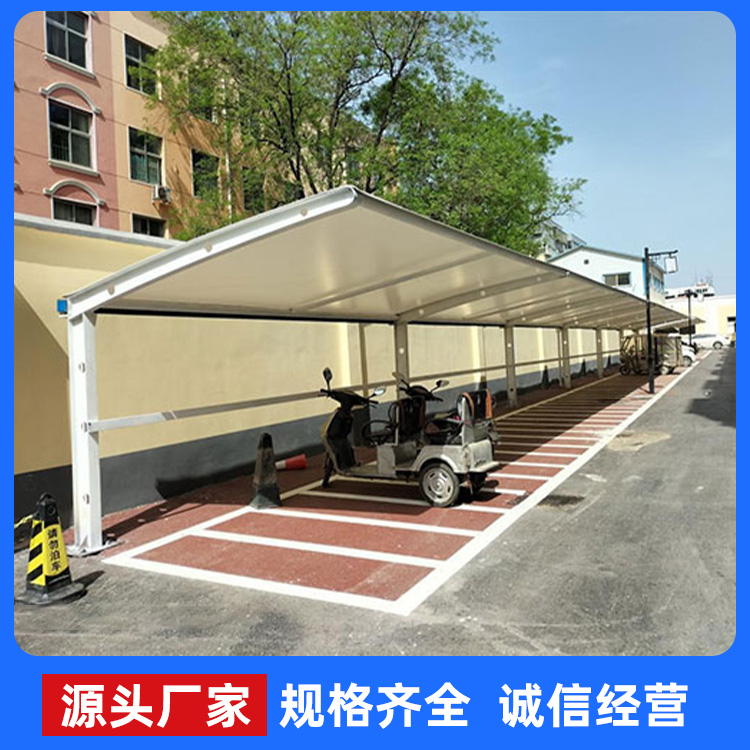
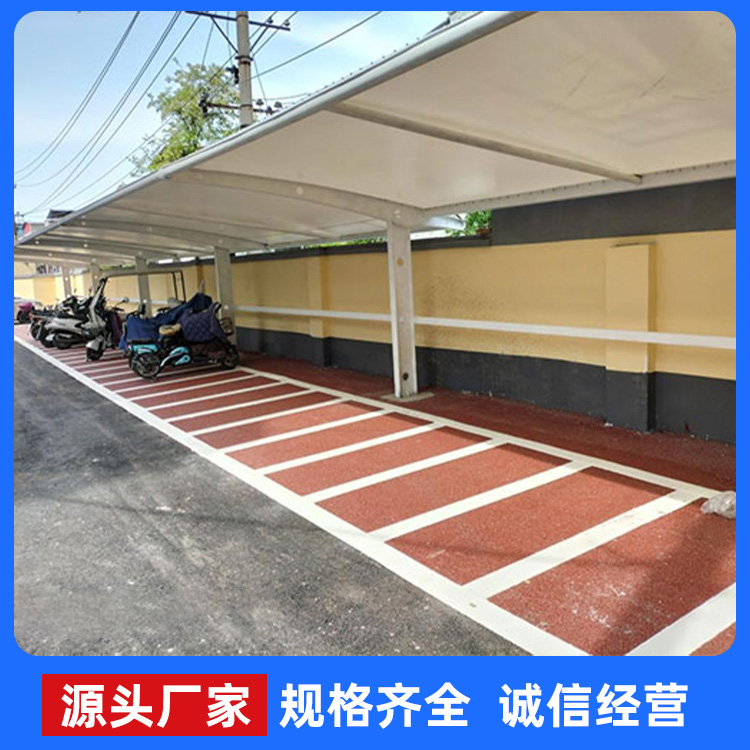
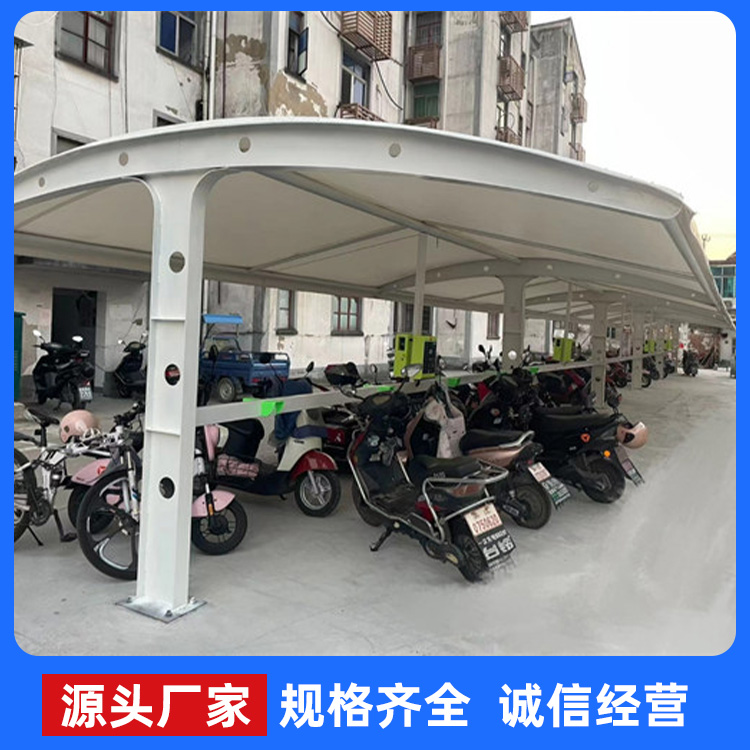
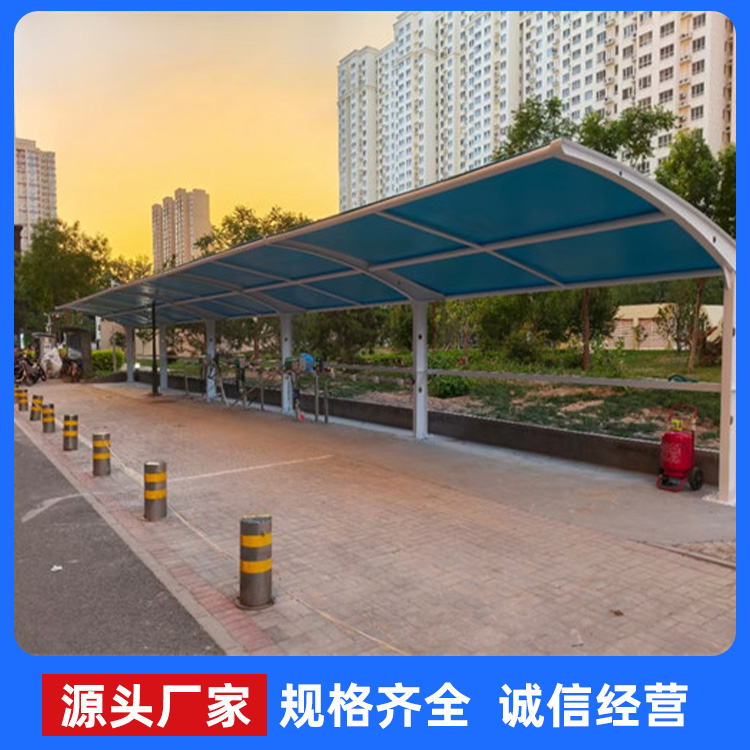
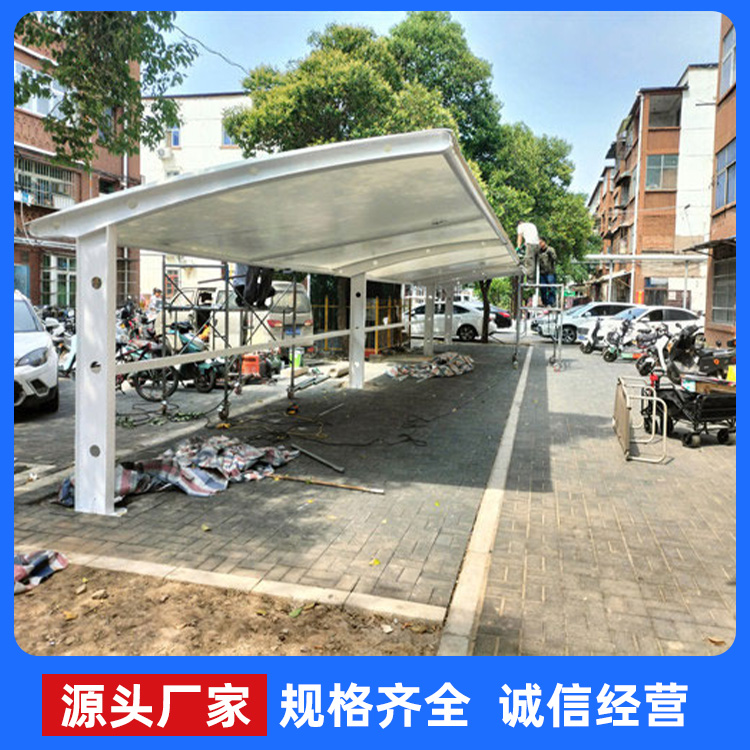





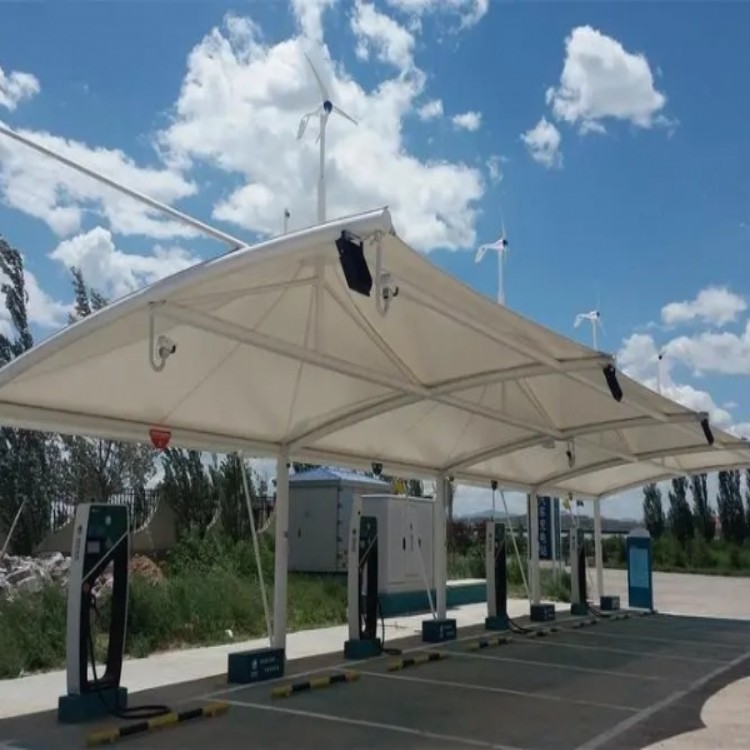
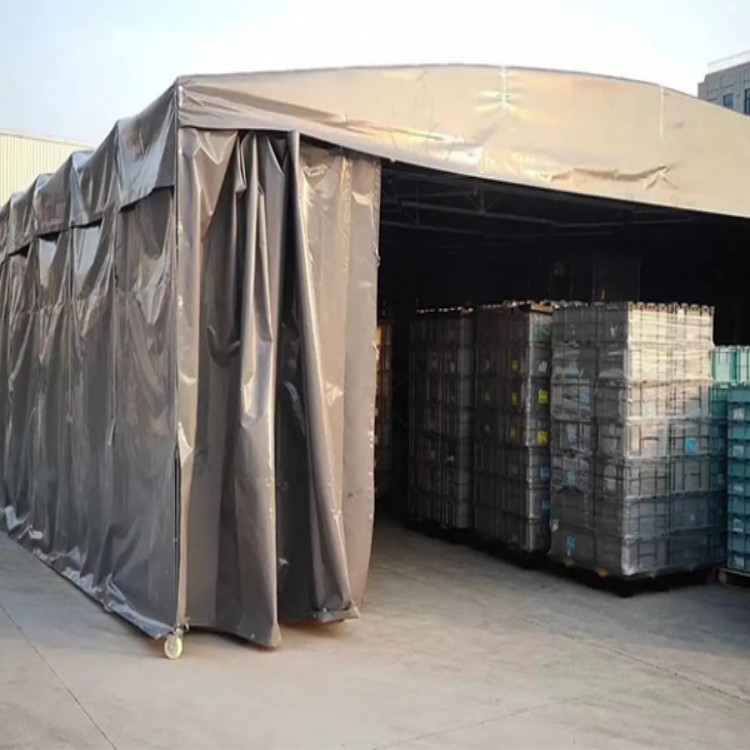
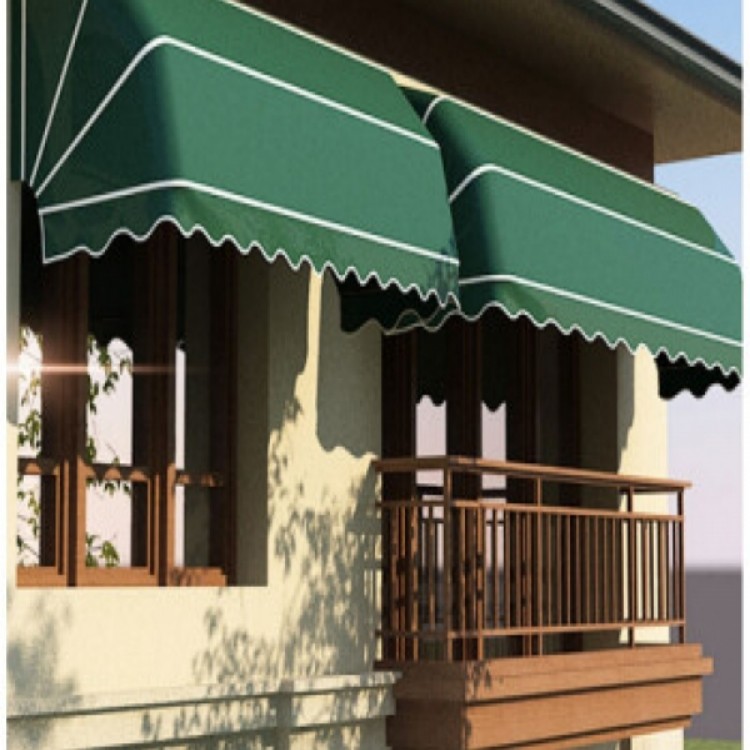
Membrane structure parking shelters are a modern parking facility constructed from high polymer materials, featuring lightness, strong weather resistance, good light transmittance, easy cleaning and maintenance, and high aesthetics. Below is a detailed introduction to membrane structure parking shelters:
I. Structure and Materials
Membrane structure parking canopies are primarily composed of steel, steel cables, and membrane materials, formed into a unique spatial structure through careful design and construction. The membrane materials typically use high-strength polymer films, such as glass fiber membranes coated with PTFE and polyester membranes coated with PVC, which are not only lightweight but also possess excellent durability and resistance to aging.
II. Features and Advantages
Aesthetically pleasing: Membrane structure parking sheds stand out with their unique curved shapes and smooth lines, adding a vibrant touch to urban landscapes. They not only fulfill basic needs like sunshade and rain protection but also enhance the overall aesthetic of the surrounding environment.
Lightweight Structure: The membrane structure carport has a light self-weight, making it easy to install and dismantle, reducing the requirements for the foundation and also minimizing construction difficulties and costs.
High weather resistance: The high molecular membrane material used boasts excellent weather resistance, capable of withstanding various harsh weather conditions such as strong winds, heavy rains, and high temperatures, ensuring the stability and safety of the parking shed.
Good light transmission: Some membrane parking canopies use transparent film materials, which effectively utilize natural light, save energy, and create a bright and comfortable environment.
Easy-to-clean and maintain: The surface of the film material is smooth, resists dust and contamination, making cleaning and maintenance relatively simple and convenient.
Section 3: Application Scope
Membrane structures are widely used to meet public and private parking needs in urban settings, including communities, schools, business districts, sports complexes, factories, and institutions. They not only offer the convenience of sun and rain protection but also serve as charging facilities for electric vehicles, enhancing ease of use and safety.