









I. Certification Definition and Background
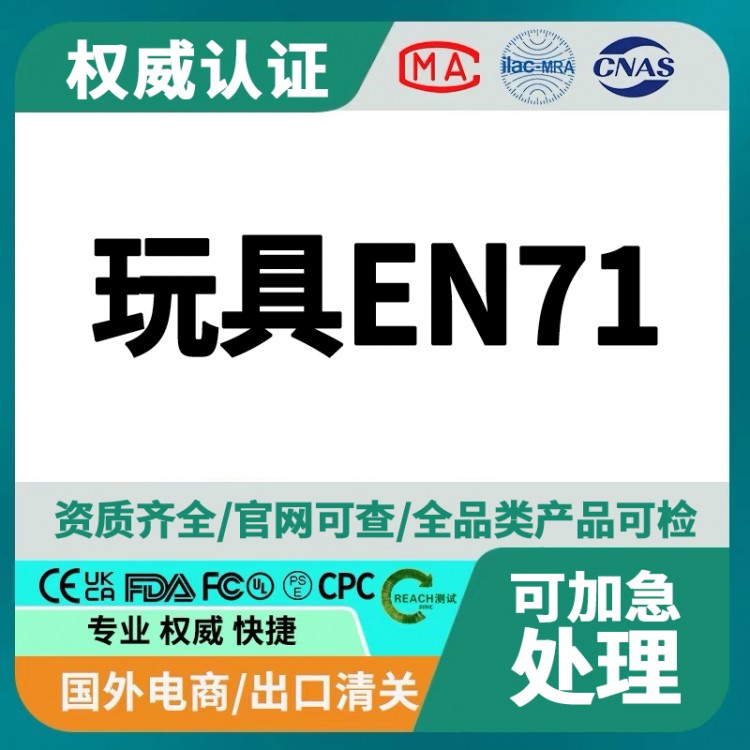
Definition: EN71 certification is a mandatory safety standard for toys for children under 14 years old in the EU, established based on the Toy Safety Directive 2009/48/EC, ensuring that toys comply with EU safety requirements in terms of physics, chemistry, flammability, and more.
Background: First proposed by the European Committee for Standardization (CEN) in the 1970s, it has been revised multiple times with technological advancements, covering comprehensive safety regulations for toy materials, design, and production processes throughout the entire process.
II. Application Scope
Applicable Products:
Age Limitation: Toys for children under the age of 14, including plastic toys (building blocks, puzzles), plush toys, wooden toys, electronic toys (remote-controlled cars), art supplies (crayons, paints), etc.
Special Categories: Includes painting materials (EN71-7), home trampolines (EN71-14), chemical experiment toys (EN71-4/5), etc., requiring additional testing.
Exclusion Scope:
Children's clothing, footwear, and headwear (subject to textile regulations)
Scientific laboratory equipment (not for toy use)
Children's furniture (such as cribs).
III. Core Testing Standards and Items
Physical and Mechanical Properties (EN71-1)
Test Focus:
Small parts (choking hazard): A cylinder with a diameter of 31.7mm simulating a 3-year-old's throat is used; if it can fully enter, it is deemed a risk.
Sharp edges/points (cut-resistant), rope length (asphyxiation prevention), projectile impact force.
Typical Test:
Tug Test: Simulates children pulling to detect the risk of parts falling off.
Drop Test: Check for cracks after the toy is dropped from a height of 85 cm.
Flammability Test (EN71-2)
Inspection Items: plush toys, cosmetic apparel, headwear accessories, etc., made of flammable materials.
Testing Method:
Burning Rate Measurement: After the material comes into contact with the flame source, the flame spread does not exceed 50mm/s.
Self-extinguishing test: Must extinguish automatically within 2 seconds after combustion.
Chemical Migration (EN71-3)
Regulatory Elements: 19 heavy metals including lead, cadmium, and mercury, with limited solubility amounts (e.g., lead ≤ 13.5mg/kg).
Testing Method: Simulate gastric acid environment to measure the migration amount of heavy metals in the material.
Other common standards:
EN71-9~12: General Requirements and Analytical Methods for Organic Compounds (such as plasticizers, fragrances)
EN71-13: List of Prohibited Substances in Toys Containing Fragrance.
IV. Certification Process and Cycle
Application Process:
Step 1: Complete the application form and provide product technical information (design drawings, material list).
Step 2: Send samples to CNAS/ILAC-accredited laboratories for testing (e.g., SGS, BV).
Step 3: Laboratory completes testing and issues report (cycle 5-7 days).
Step 4: Obtain CE certification mark and attach EN71 compliance statement.
Technical document requirements:
Test reports, risk assessment documents, production quality control records.
V. Cautionary Notes
Certification Validity Period:
Test reports generally do not have a fixed validity period, but retesting is required for design changes or material alterations.
Label Requirements:
Mark with CE symbol, age warning applicable (e.g., "Not suitable for children under 3 years old").
Market Supervision:
EU Customs conducts random inspections; non-compliant products will face delisting or recall.
Section 6: Certification Significance
Legal Compliance: Mandatory entry requirements for the EU market, avoiding trade barriers.
Safety Assurance: Reduce risks of choking, poisoning, and fire caused by toys.
Market Trust: Enhance brand credibility and boost consumer purchase confidence.