








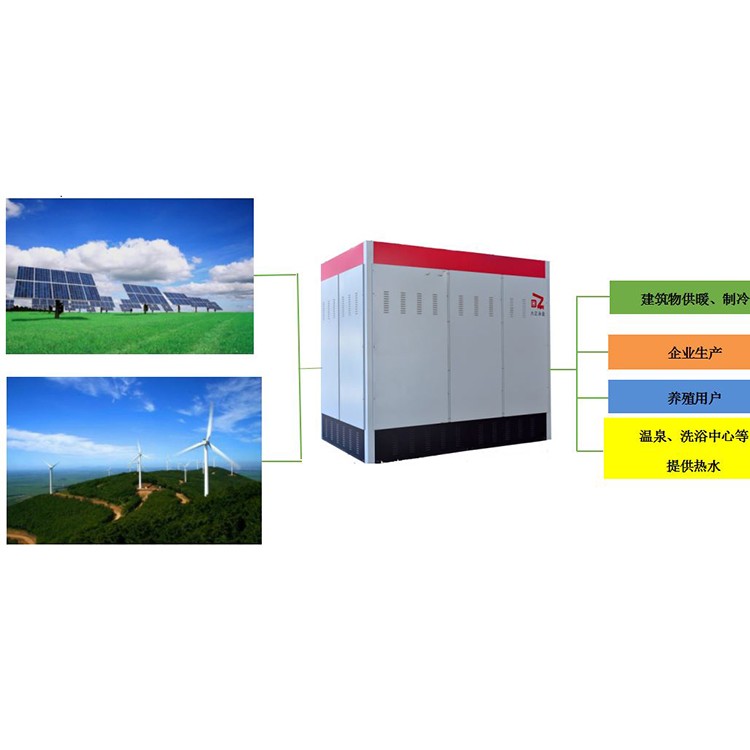


Background of the Development of Thermal Storage Electric Boilers
In recent years, due to the continuous development of China's power industry, there has been a significant change in the industrial structure. Moreover, as the quality of people's lives has been consistently improving, especially in central cities with special environmental protection requirements and areas with abundant electricity supply, a fertile ground has been cultivated for the application of electric boilers in China. Additionally, in the past few years, a temporary phenomenon of excessive electricity supply over demand has occurred for certain reasons. As a result, power supply departments have introduced preferential policies (such as promising to reduce or waive additional capacity fees, with electricity prices as low as 0.18 yuan per kilowatt-hour), creating favorable conditions for the birth of heat storage electric boilers in China.
Investment Analysis
1. New investment is minimal. Electric heat storage for off-peak electricity usage does not require capacity expansion. No network or supporting facilities are needed; the factory has no special requirements, one machine can serve triple purposes; traditional heating methods require investments in municipal networks, standard factories, and site infrastructure.
2. Low operational costs. Electric heat storage utilizes inexpensive off-peak electricity, reducing energy expenses. Electric heat storage systems have a long lifespan, small size, simple structure, no maintenance required, and are fully automated with no need for human attendance; traditional equipment like coal, gas, and electric boilers incur costs for major repairs, maintenance, operation staff, etc.
3. Quick cash flow. Depending on the usage rate of electric storage heating, the investment is recouped within 1-5 years and begins to generate profit; assets appreciate annually. Traditional heating methods lack a concept of investment recovery; assets depreciate annually until they reach zero.
4. Policy support is available. It's a energy-saving and emission-reduction technology promoted by 6 national ministries.
Product Advantages:
Extra-long lifespan
Heating elements deform easily under high-temperature use, but their structure remains unchanged. They possess good plasticity, are easy to repair, and have high radiation rates. Being non-magnetic and highly corrosion-resistant, they have a long service life. For frequently started, stopped, and long-term structurally designed and manufactured energy storage elements, the main body of the energy storage element can be maintenance-free during operation.
Energy Storage Element: This product utilizes energy storage materials, functional thermal fluids, and high-temperature ionic thermal fluid technology in the structural design and manufacturing of the energy storage element. The main body of the energy storage element requires no maintenance during the operation period of the device.
(2) High thermal efficiency, no need for standby boiler
This product utilizes lightweight thermal insulation material for the equipment's outer thermal protection layer, resulting in minimal heat loss. It features heating elements with rapid temperature rise, even heat distribution, long-distance thermal radiation transmission, and fast heat exchange. Compared to metallic heating elements, it boasts a higher electrical to thermal conversion rate, with the system's operational thermal efficiency exceeding 95%. In other words, under the same conditions, operation costs can be significantly reduced.
(3) System stable and reliable
The control system employs PLCs with strong anti-interference capabilities and distributed CPU parallel processing technology, enabling full adaptation to various environments. The system is designed with an integrated structure, featuring multi-point temperature measurement to ensure the safe and reliable operation of the boiler. It is user-friendly and highly automated.
(4) Automated Unattended Control
Automatic control and simple operation are featured. The self-control system can automatically detect operating parameters such as indoor and outdoor temperatures, water temperature, and flow rate through sensors, and operates automatically according to pre-set times, temperatures, and heating outputs.
Regenerative electric boiler conditions
Due to the need to supply heating during off-peak hours while also storing thermal loads for flat and peak electricity periods, the power requirement is high. Users typically require a separate transformer and sufficient load capacity.
2. Solid heat storage takes up less floor space, but requires a slightly higher investment.
I. Working Principle:
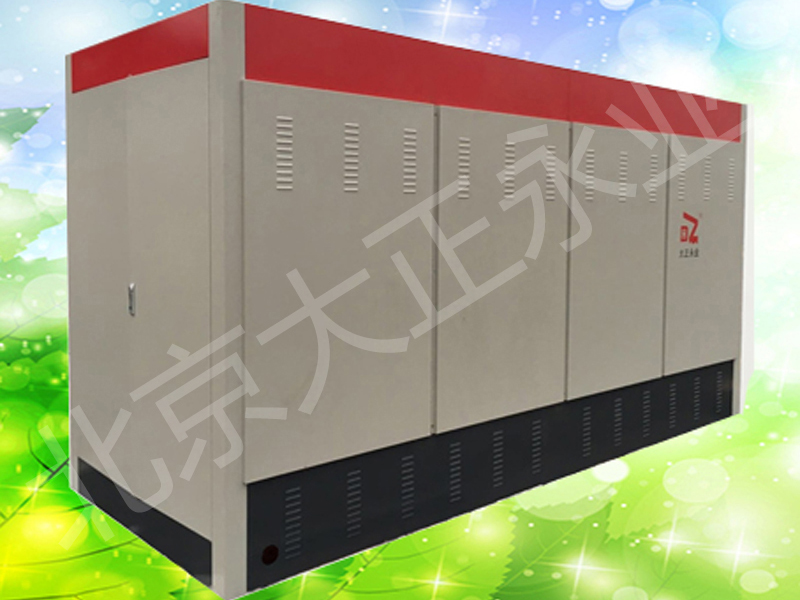
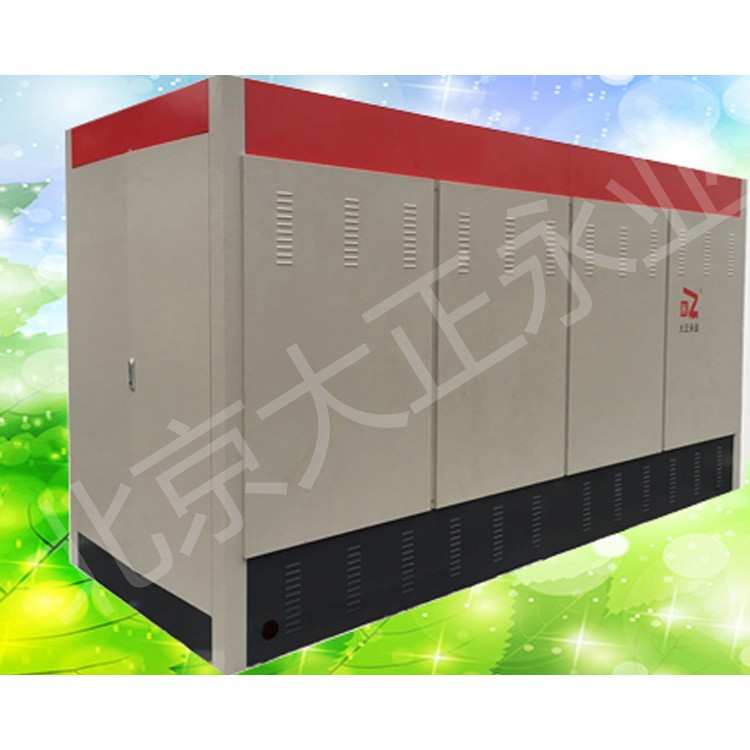
High-temperature solid heat storage electric boilers utilize off-peak electricity (from 23:00 to 7:00, a total of 8 hours) to heat the storage medium to 800 degrees Celsius, storing heat. During peak electricity usage hours, the boiler releases heat as needed through an automatic control system, providing either adjustable temperature heating for circulating water or domestic hot water supply, thereby achieving the effect of "shifting peak and filling valley" and reducing heating costs.
2. The technological breakthrough of the high-temperature solid heat storage electric boiler lies in the use of solid-state heat storage materials and integrated structural design, combining heating, storage, heat exchange, heating supply, and control functions into one, creating a true vacuum phase change boiler.
3. Notable features of the high-temperature solid heat storage electric boiler:
(1) The product boasts high technological content, integrating the latest achievements in materials science, heat transfer, and control technology, organically combining them into a single system.
(2) The system is stable and reliable, utilizing cost-effective solid heat storage magnesium bricks for its thermal storage material, with a lifespan of over 15 years. The internal circulation system is constructed with full stainless steel, extending its service life. The control system employs a PLC with strong anti-interference capabilities, and the control software is configured with multiple protection functions, further ensuring the system's reliability.
(3) High thermal storage capacity, integrated structural design, with minimal footprint. Thermal storage capacity reaches 700Kcal/liter, 20 times that of atmospheric water; the system employs an integrated design, significantly reducing the footprint, with the boiler's total area being 1/10 of an atmospheric water tank boiler.
(4) The system boasts high thermal efficiency, utilizing radiant heat transfer for heating, ensuring stable and efficient heat transfer; insulation is achieved with insulating materials, offering excellent thermal retention; the system is designed with an electrical to thermal conversion efficiency of 95%.
(5) Vacuum phase change boiler, with higher safety performance compared to conventional boilers, can be installed in basements.
(6) Easy to install with strong adaptability to boiler rooms. The product can be arranged according to the specific dimensions of the boiler room, with on-site installation method. All critical components of the boiler can be transported through the general passageways of the building for assembly on-site; the boiler is designed in a modular manner, suitable for various different users.
(7) On-demand heating with constant temperature supply. Thanks to its controllable heating method, this product can maintain a constant temperature supply below 85°C as per user requirements, and heat as needed by combining with actual climate temperatures. The system responds quickly with simple operation.
(8) Easy operation with unattended service. This product features a fully automated control system, making it simple to operate. Operators can be trained with minimal instruction and the system can run unattended in full automatic mode. With a touch screen interface, the human-machine dialogue is user-friendly, featuring a full Chinese interface that allows for clear visibility of the boiler's operating status.
4. The advanced control system utilizes state-of-the-art programmable logic controllers (PLCs), ensuring reliability, stability, rapid response, high precision, and strong anti-interference capabilities. It can operate continuously for extended periods in harsh environments and is equipped with various communication interfaces and modules for easy connections and data recording at all levels.
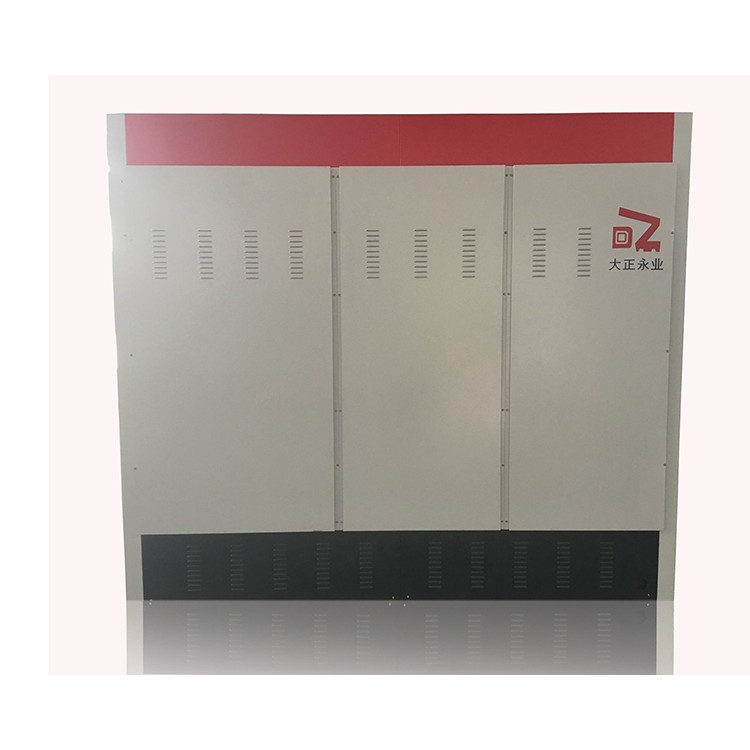
Industrial Electrically Heated Solid Heat Storage Equipment Technical Specifications:
DZ-100KW, DZ-200KW, DZ-500KW, DZ-1000KW, DZ-2000KW, DZ-20000KW Total Heat Storage: MJ/8h - 2880, 5760, 14400, 28800, 5760, 57600, 576000 Working Pressure: Standard Atmosphere (Mpa) Input Power: 100KW, 200KW, 500KW, 1000KW, 2000KW, 20000KW Heating Capacity: MJ/h - 360, 720, 1800, 3600, 7200, 72000 Rated Voltage: 380V, 10KV Thermal Efficiency: 95% Outflow Temperature: 20-85℃ Heat Exchange Medium: Air (Internal Recirculation) High Temperature of Heat Storage: 800℃ Set Temperature for Heat Storage: Below 750℃ Heat Storage Medium: Solid (MgO) Operating Mode: Intelligent Automatic (PLC Programmable) Operation Interface: Touch Screen Color Display Environmental Humidity: RH<85% Dimensions (L×W×H) mm: 4560×1760×2240, 5360×2090×2400, 5630×3140×2930, 8230×3250×3360, 10080×3610×5300, 15300×16300×5300 Life Span: 15 Years Heating Area (㎡): 800-1000, 1500-2000, 4000-5000, 8000-10000, 16000-20000, 160000-20000