





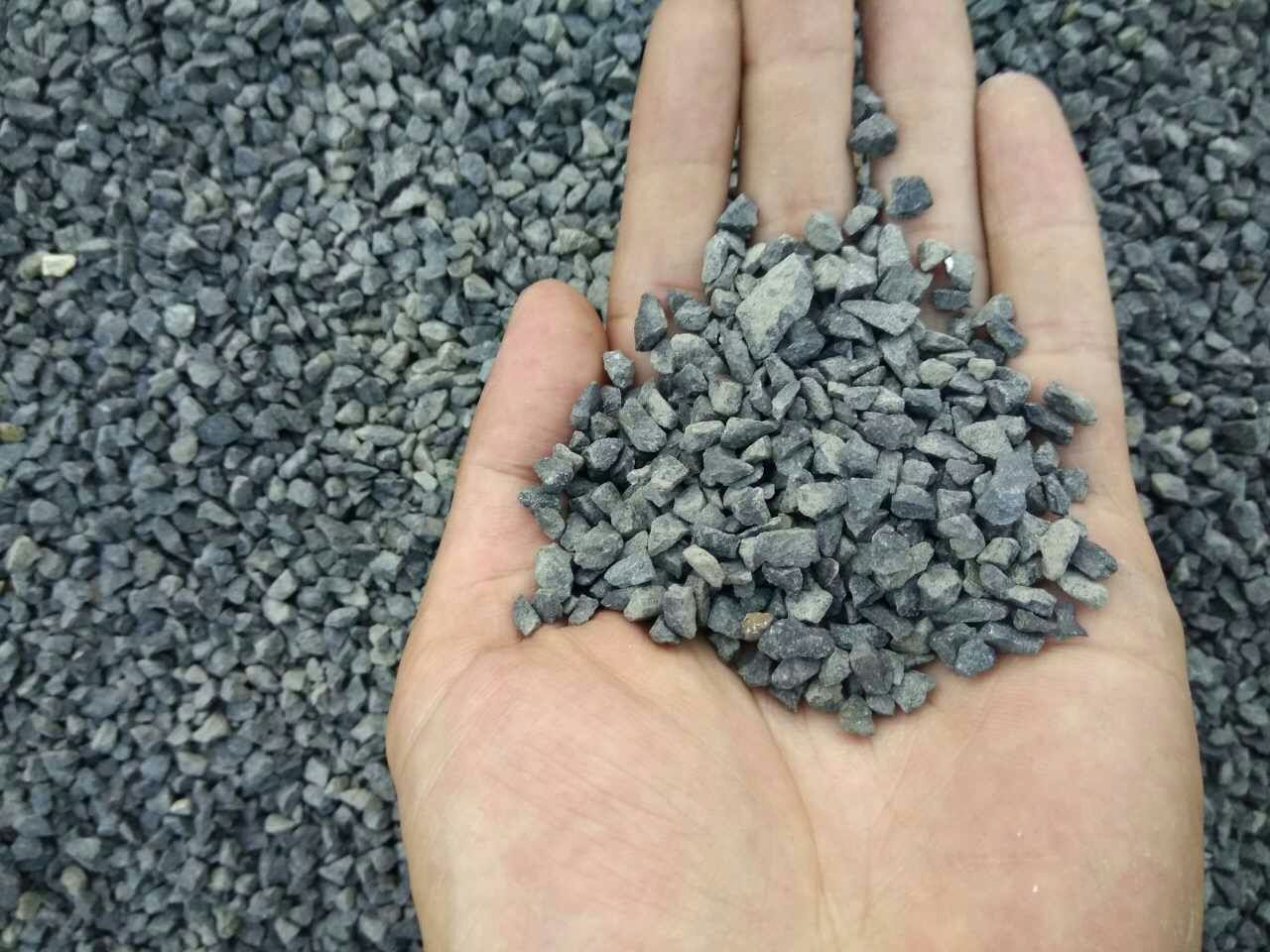


Open-pit mining of basalt aggregates involves using specialized mining and transportation equipment to conduct extraction activities in an outdoor environment.
We categorize open-pit mining into manual, mechanical, hydraulic, and dredger mining based on the different excavation tools and transportation equipment used. The total of the pits, benches, and open-pit channels formed by open-pit mining is referred to as the stone quarry.
The production process of open-pit mining mainly includes drilling at the stripping face, followed by charging and blasting, and then transportation. Stones are transported to a crushing or beneficiation site, while rocks or soil are carried to a waste rock dump. During the open-pit mining of basalt, we typically divide the rock layers into stratified sections of a certain thickness or horizontally, then mine layer by layer from top to bottom, maintaining a certain distance ahead during extraction.
Due to its high-temperature resistance, this fiber meets our temperature requirements and, when mixed with other materials, can also contribute to hardening and softening effects. Its excellent waterproofing properties are a notable characteristic of basalt fiber. It is non-absorbent in various environments, which gives it a low moisture absorption rate, making it a marketable option. It boasts good elasticity, tensile strength, high sound absorption coefficient, and strong resistance to wear and chemical corrosion. These are all characteristics of basalt fiber. When combined with asphalt concrete, basalt fiber enhances performance. Its excellent surface affinity and excellent resistance to aging make it a superior material.
Shandong basalt fibers are still environmentally friendly materials, thus making them reusable and highly significant in energy conservation and environmental protection. The chemical composition of the short-cut basalt fiber minerals ensures excellent mechanical properties and stable chemical characteristics. If subjected to surface expansion treatment, the short-cut basalt fibers can achieve high oil absorption rates while also providing reinforcement and toughening effects, making them suitable for use in asphalt mixtures. Moreover, the adsorption capacity of basalt fibers is related to the roughness of their surface. We should control relevant variables during use to facilitate our application. The composition structure of the fibers has an impact on their characteristics. Only by correctly understanding the distinct features of basalt fibers can we open up a broader development space for them.
WeChat Official Account

Scan to follow Official Account