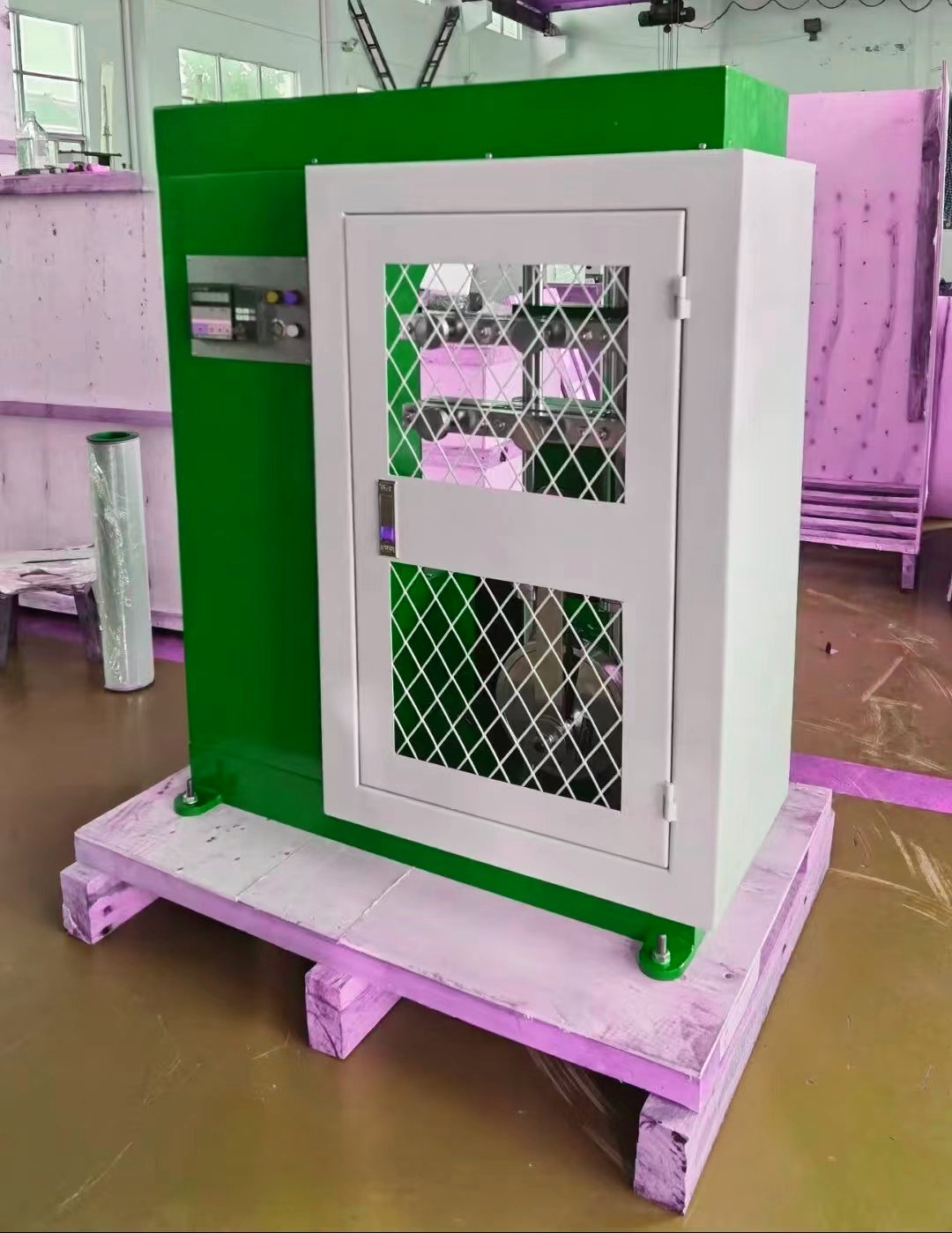








Gear friction pair
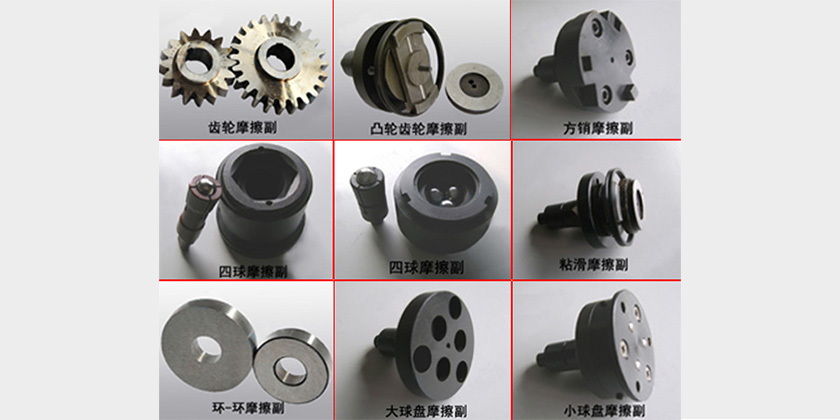
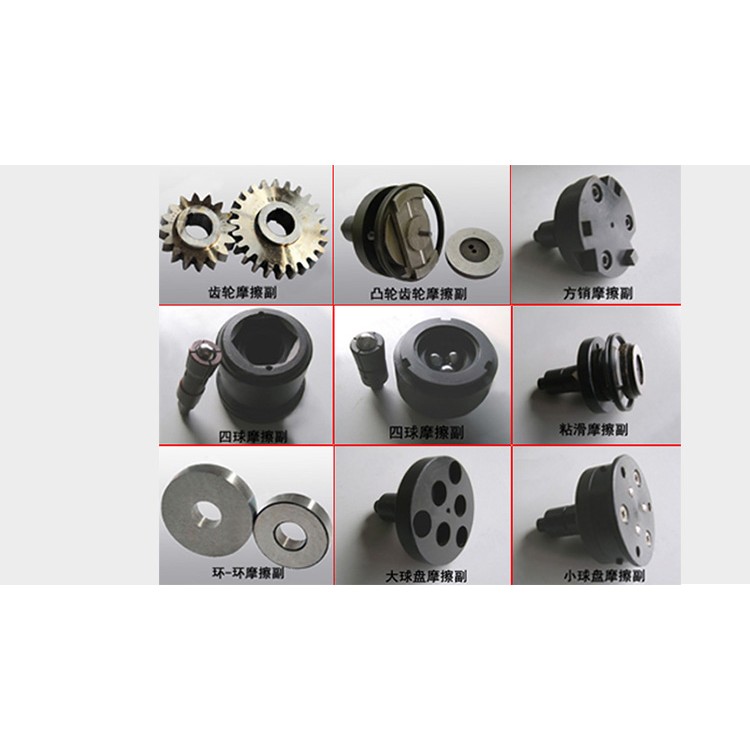
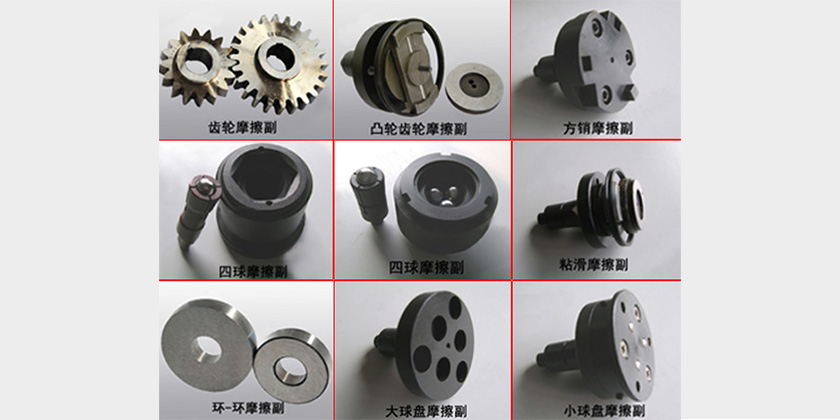
The friction pair is mainly used for evaluating the performance of gear oils, as well as assessing the load-bearing capacity of lubricants. The upper gear is the driven gear (with 16 teeth), while the lower gear is the driving gear (with 24 teeth). During testing, the driving gear drives the driven gear to rotate, and friction and wear tests are conducted.
Cylinder gear friction pair
The friction pair primarily simulates line-to-face contact friction. Its structure consists of a middle roller held in place by standard cylindrical pins, with friction pairs made of materials specified by the tester above and below the roller. This friction pair is mainly used to simulate the friction form of rolling and sliding composite motion, and is applied in bearing friction and wear simulation tests.
Face-to-face friction pair
The friction pair simulates face-to-face contact friction. The upper specimen is a square pin specimen, while the lower specimen is a disk. Both the friction surfaces of the square pin and the disk are flat. During testing, a certain stress is applied between the round pin and the disk, with the contact surface trajectory radius of the square pin and the disk being 23.075mm.
Four-ball friction pair
The friction pair is primarily used to evaluate the load-bearing capacity of lubricants and greases under high temperatures. The upper specimen is a standard diameter 12.7mm steel ball, while the lower specimen consists of three standard diameter 12.7mm steel balls fixed in an oil box. During testing, the main shaft drives the upper steel ball to slide against the three steel balls in the oil box in a point-contact manner.
Adhesive and slippery friction pair
The friction pair simulates face-to-face contact friction. The upper specimen is a large thrust ring, and the lower specimen is a disc. The friction surface of the thrust ring is flat, and the friction surface of the disc is an end face. During testing, a certain stress is applied between the thrust ring and the disc to generate friction. This friction pair is primarily used for evaluating the friction and lubricating properties of oil products.
Ring-to-ring friction pair
This friction pair simulates line-to-line contact friction. Both the upper and lower specimens are circular test rings. During testing, the tangent contacts of the circumferences of the two test rings are in contact, with a certain stress applied between the rings, allowing for sliding friction, rolling friction, and combined rolling and sliding friction.
Large ball raceway friction pair
The friction pair simulates point-to-plane contact friction. The upper specimen is a standard 12.7mm diameter steel ball, and the lower specimen is a plate. The friction surface of the steel ball is an arc, while the plate's friction surface is flat. During testing, a certain stress is applied between the steel ball and the plate, with the contact surface trajectory radius of the standard steel ball and the plate being 21.65mm.
Miniature ball bearing friction pair
The friction pair simulates point-to-plane contact friction. The upper specimen is a standard 6.35mm diameter steel ball, and the lower specimen is a plate. The friction surface of the steel ball is an arc, while the plate's friction surface is flat. During testing, a certain stress is applied between the steel ball and the plate, with the contact surface trajectory radius of the standard steel ball and the plate being 11.935mm.