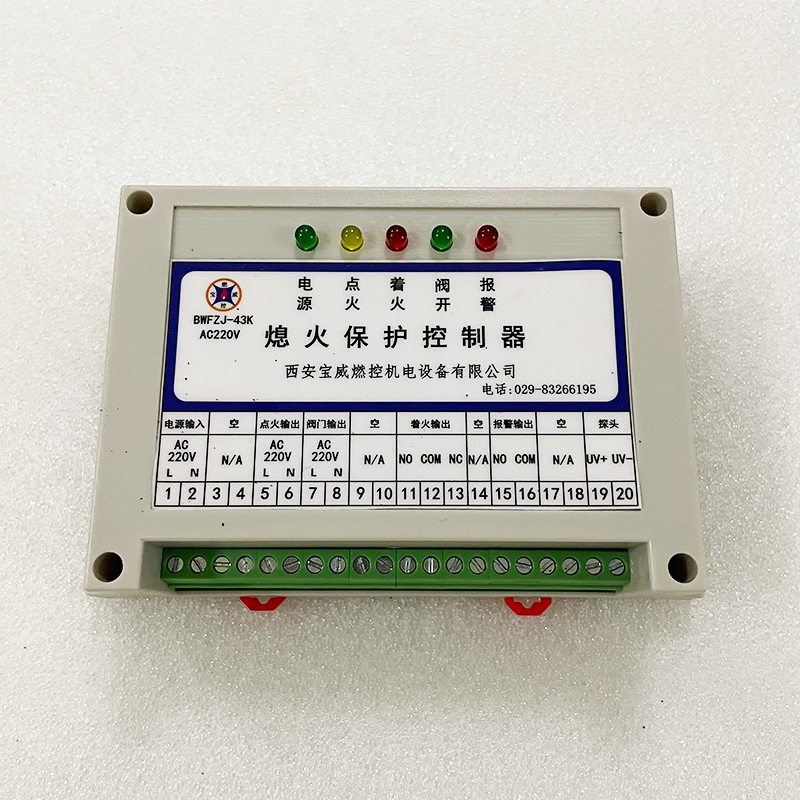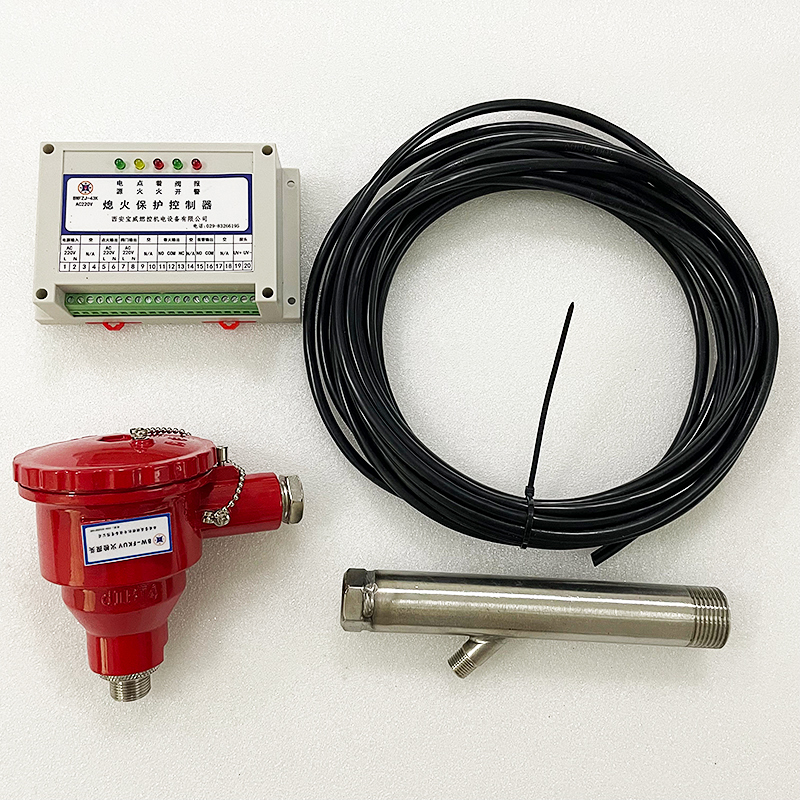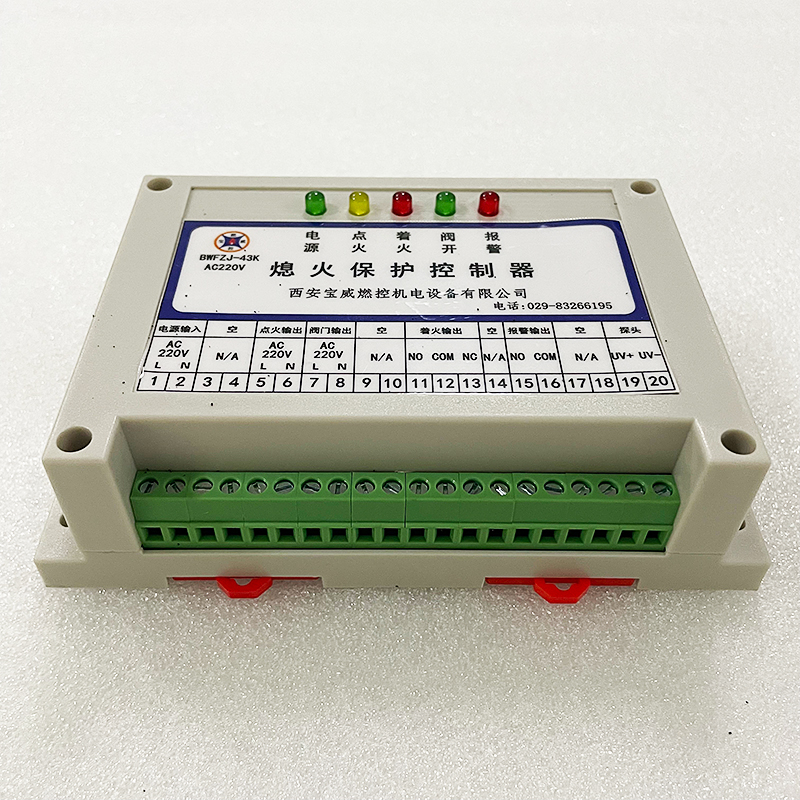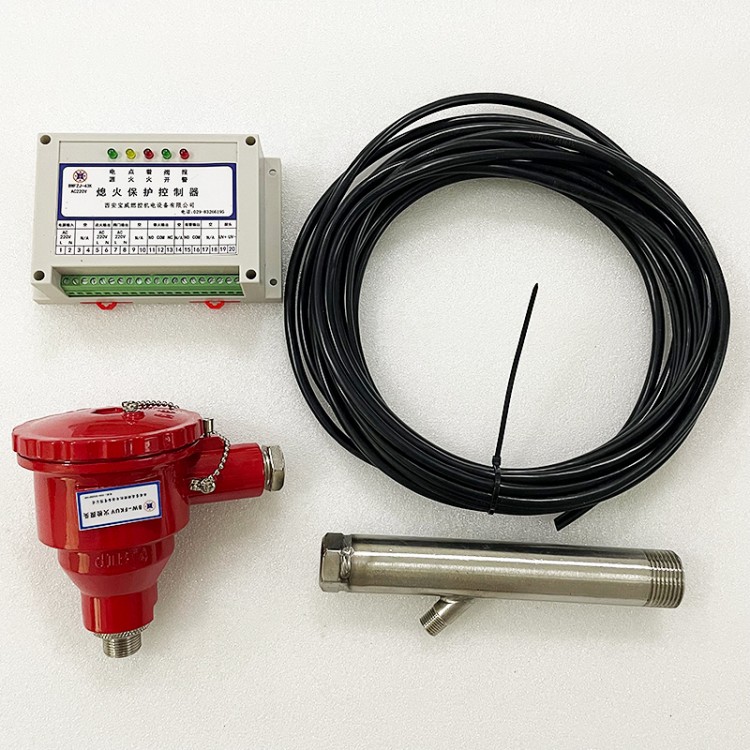


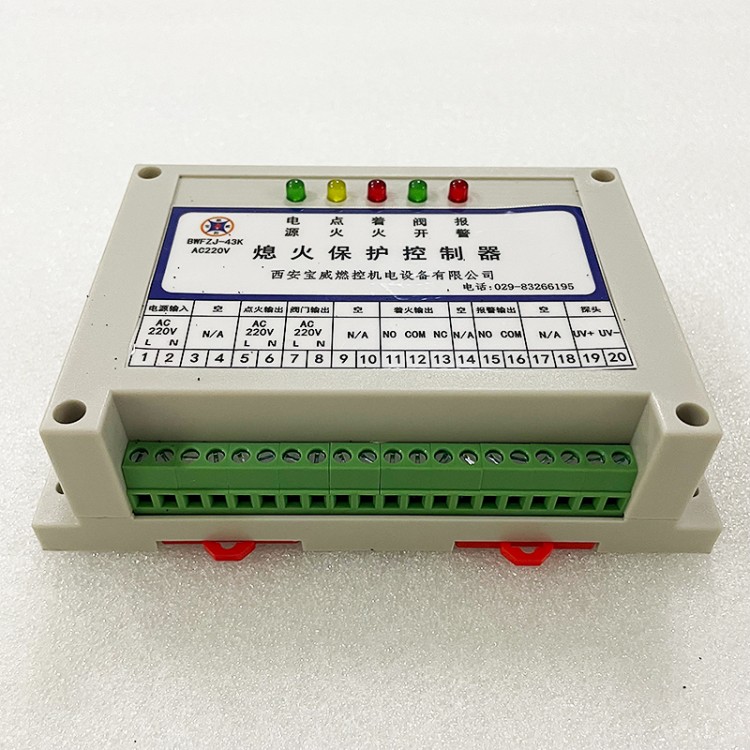











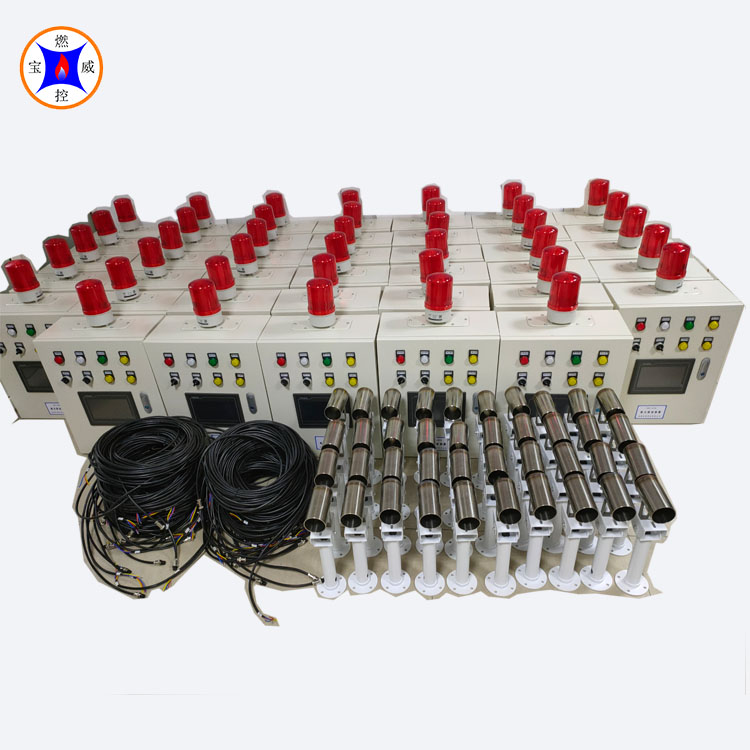
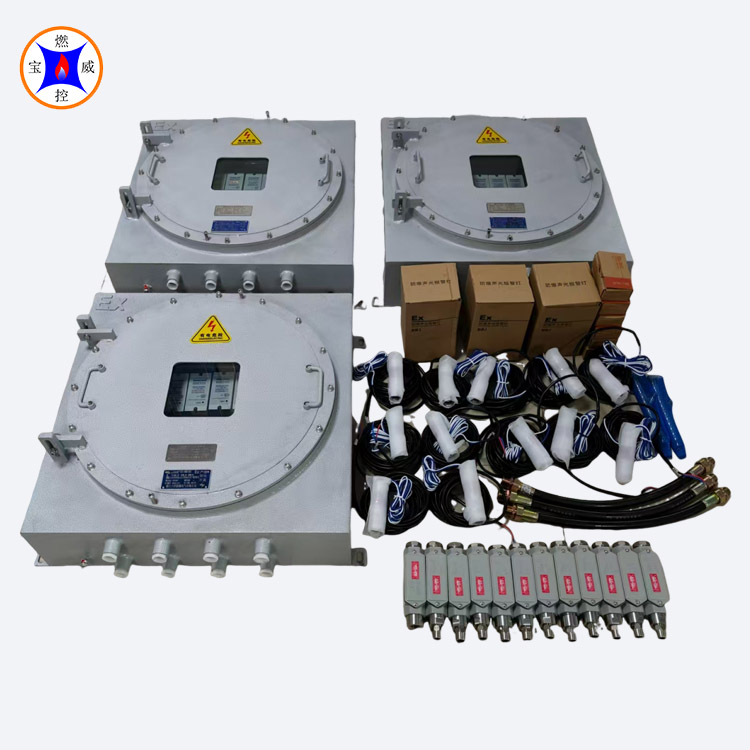
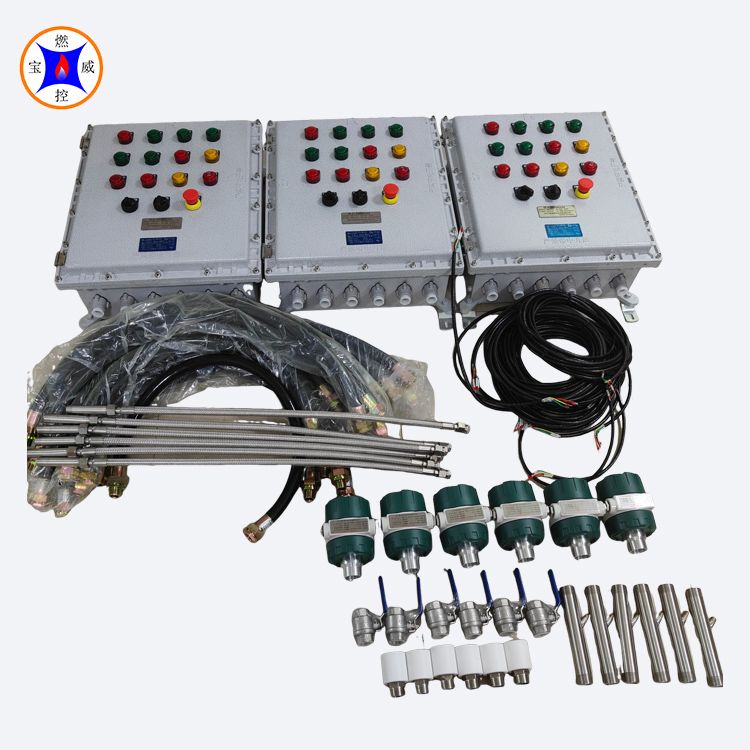
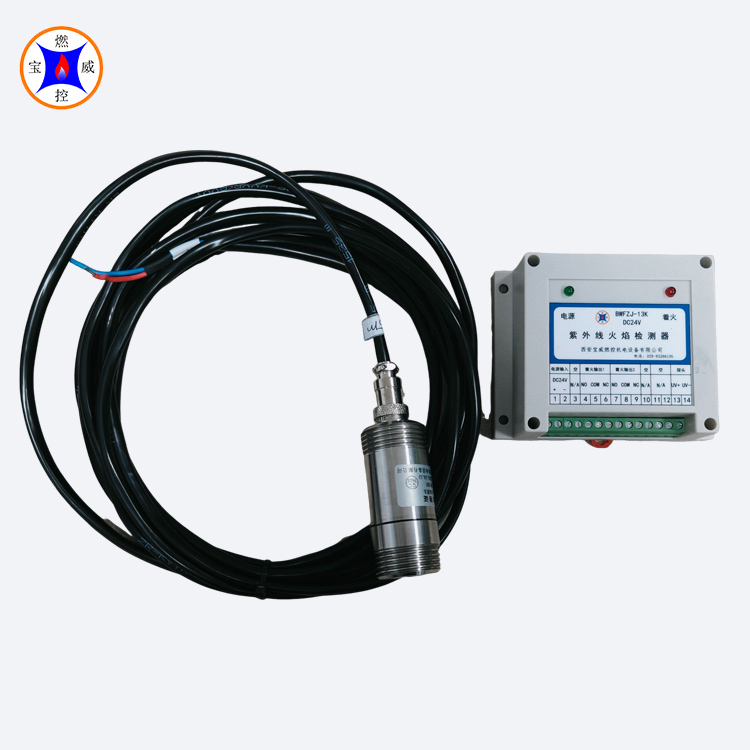
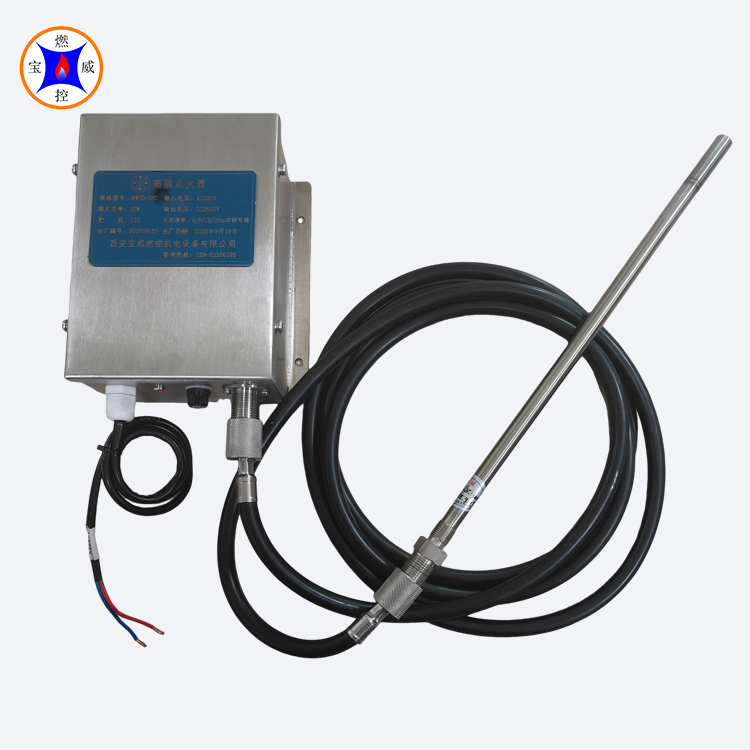
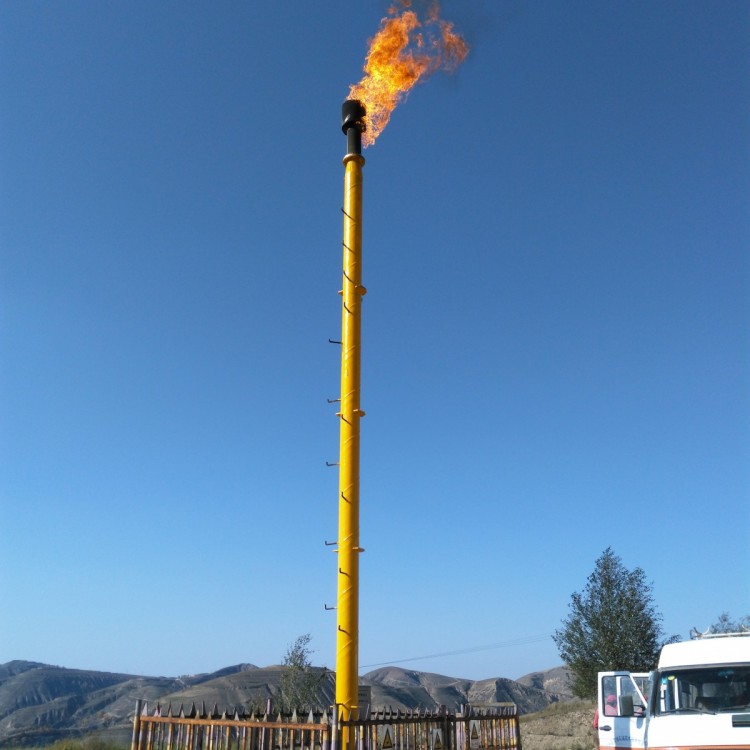
BWFZJ-43K DC24V/AC220V Flame-out Protection Controller is a specially designed and developed flame detector for industries such as petrochemical, metallurgical, coal chemical, and ceramic industries. The product boasts simplicity, reliability, and easy maintenance, making it suitable for flame detection in various gas and oil-fired furnaces as well as torches.
I. Working Principle:
The BWFZJ-43K DC24V/AC220V flameout protection controller employs a highly sensitive imported ultraviolet photoelectric tube. This tube boasts high sensitivity, fast response speed, and simple application circuits. It only responds to ultraviolet light within a narrow range of 185~260nm produced during flame combustion, remaining unresponsive to other spectrum ranges of ultraviolet light. It can detect ultraviolet light during flame combustion, thereby determining the presence and intensity of the flame. Consequently, this detector is sensitive only to the ultraviolet light produced by flame combustion, unaffected by sunlight or high-temperature radiation in the furnace, and has strong anti-interference capabilities.
II. Function Overview:
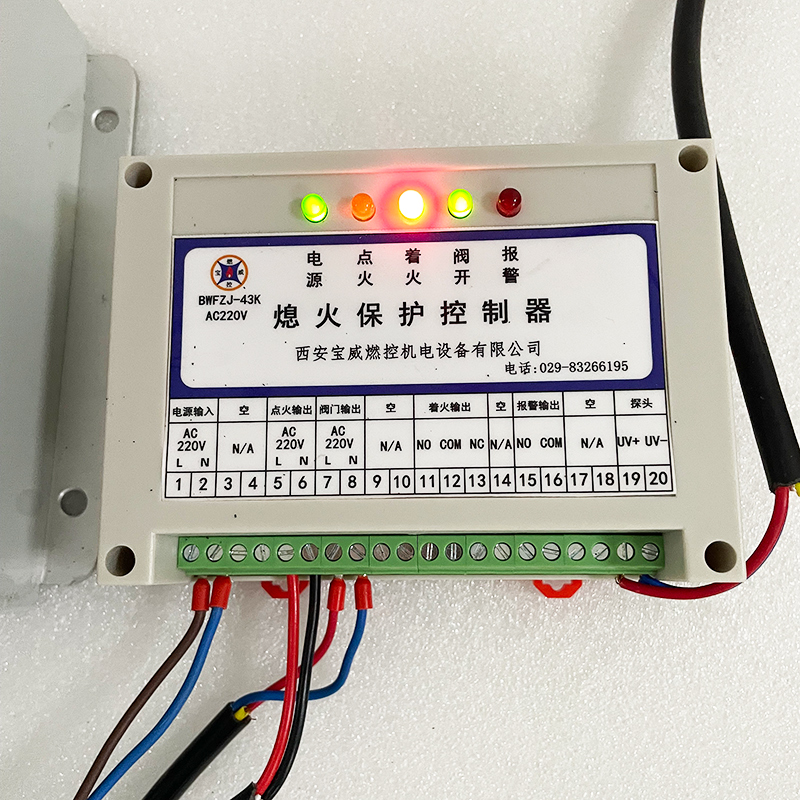
Power on, the power indicator light (red) illuminates, simultaneously the ignition indicator light (green) blinks, the igniter begins to ignite for 8 seconds, and the valve open indicator light (green) lights up, the fuel valve opens at the same time. (Reserve 8 seconds of ignition time; keep the fuel valve open until the 8-second ignition time ends. After the ignition time ends, the fuel valve will switch on and off according to the actual flame signal, for example, with flame kept open, without flame closed.) The flame monitoring system starts running. If a flame is detected, the flame-on indicator light (red) illuminates. Conversely, if no flame is detected or the flame extinguishes, the fuel solenoid valve is automatically shut off, and the flame-out alarm light (red) continues to blink as a warning, indicating the flame has extinguished. Once the operator is in place, the power to the flame-out protection controller can be disconnected, stopping the controller from functioning. Only after the operator has resolved the fault can the power be reconnected for operation.