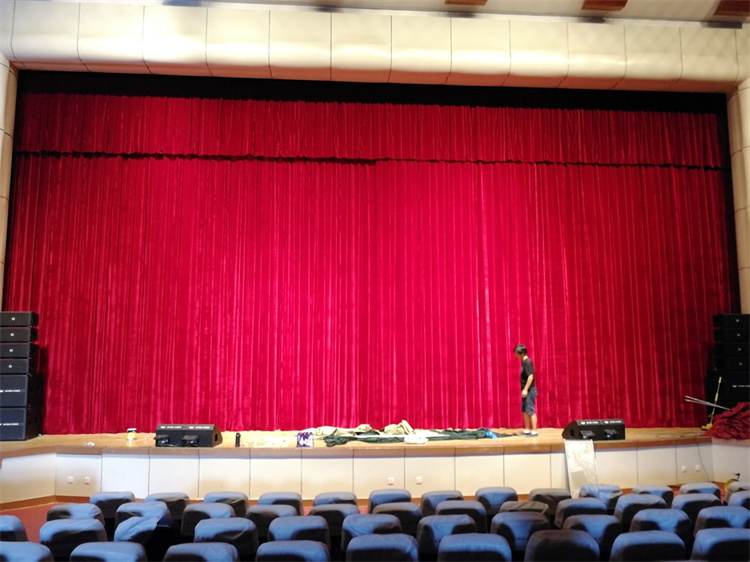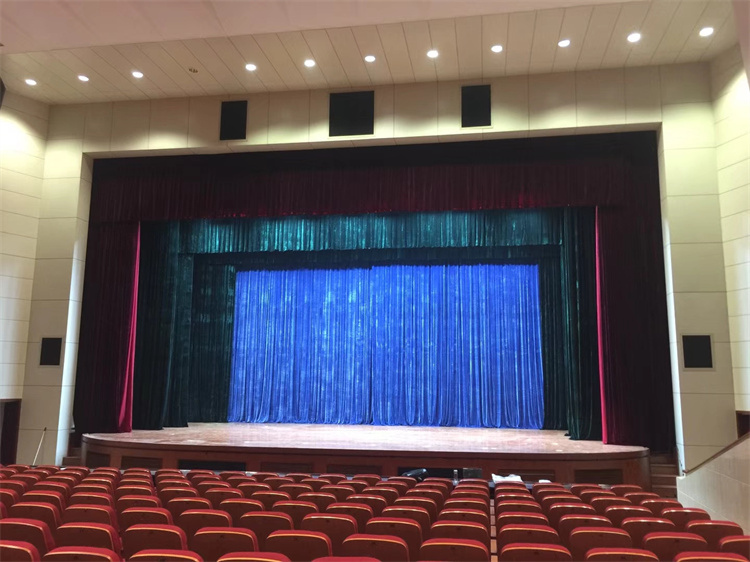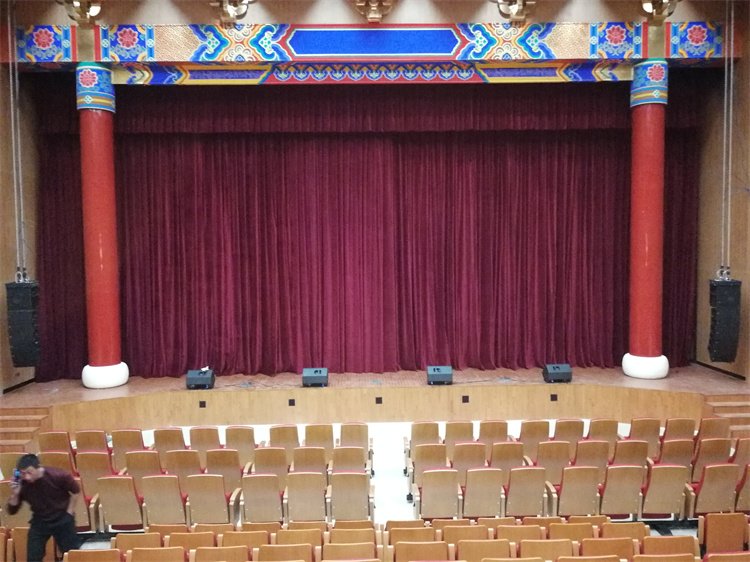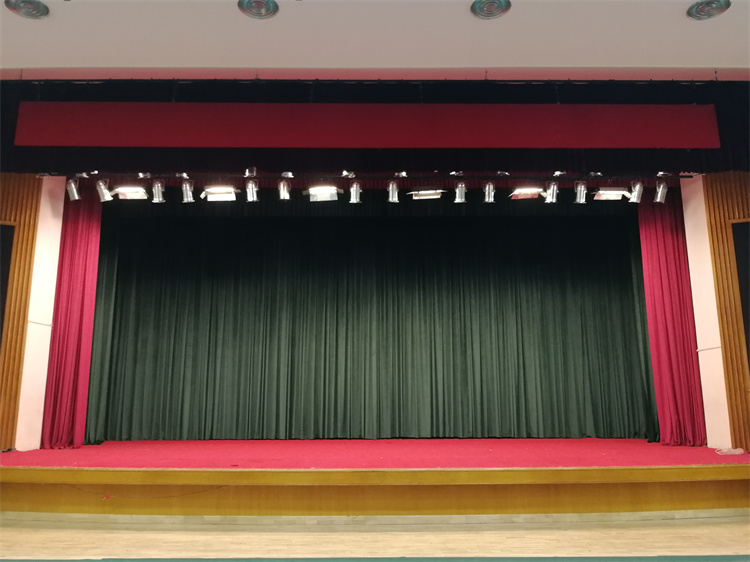

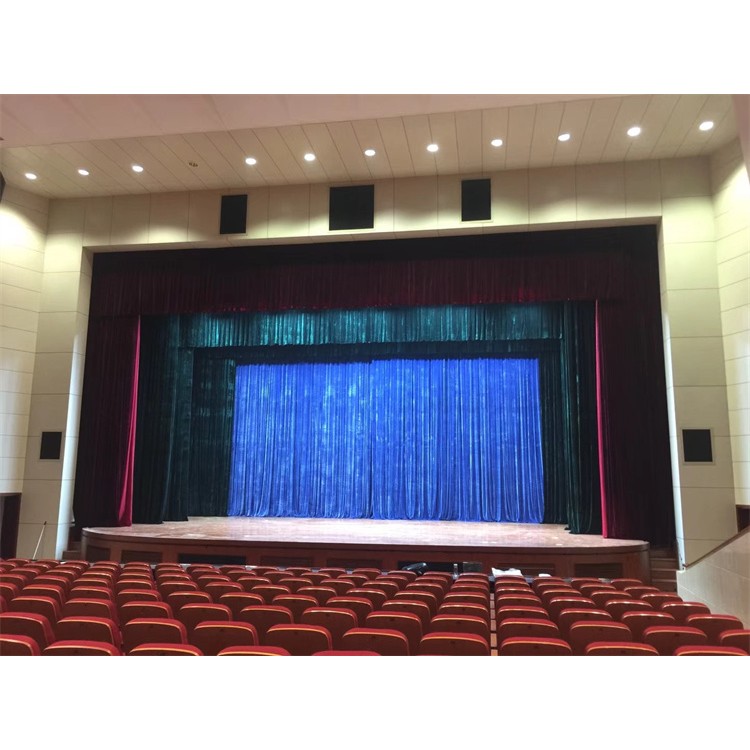

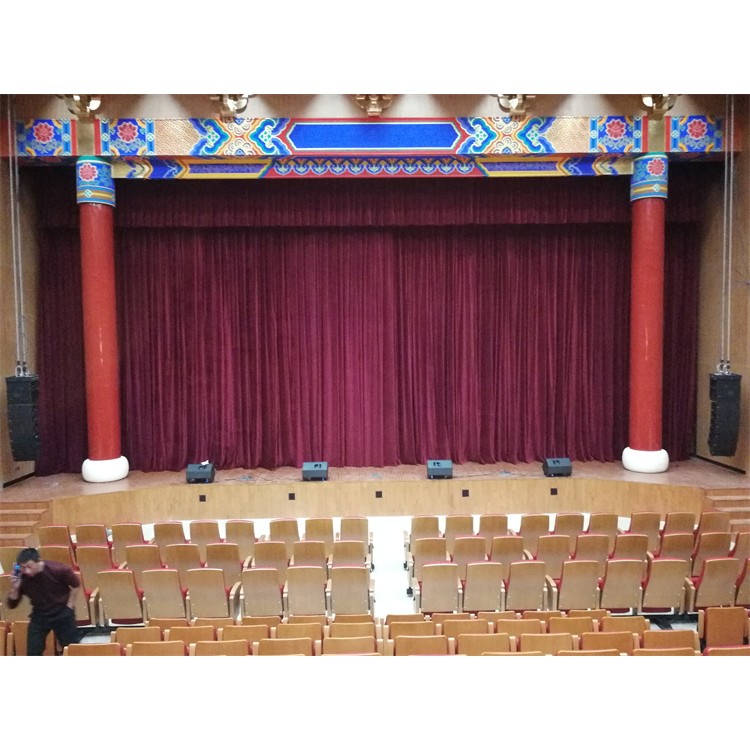
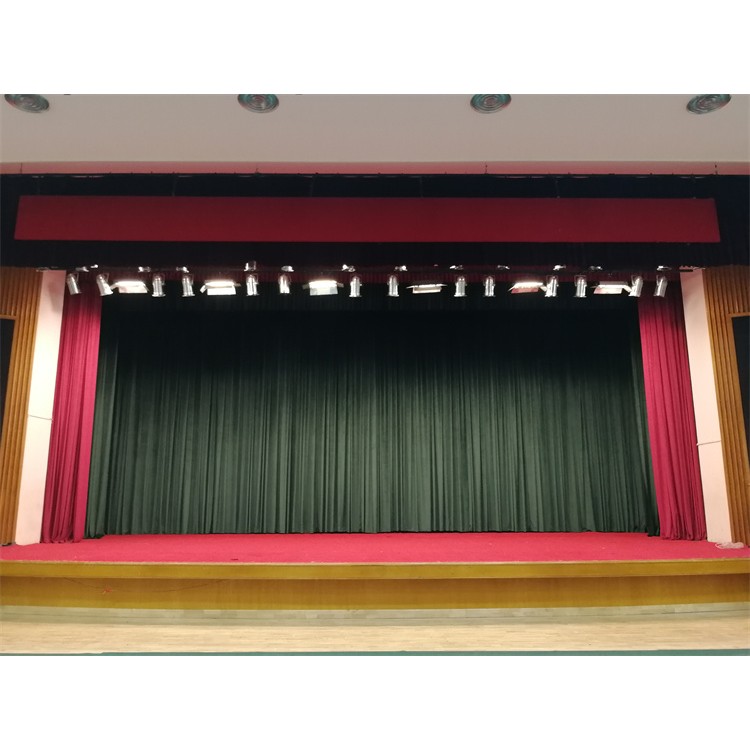








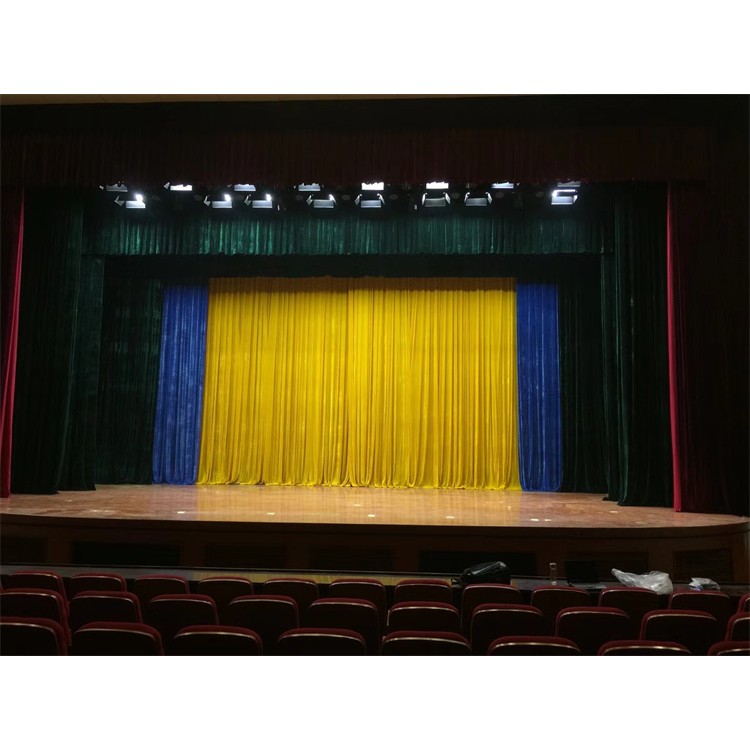
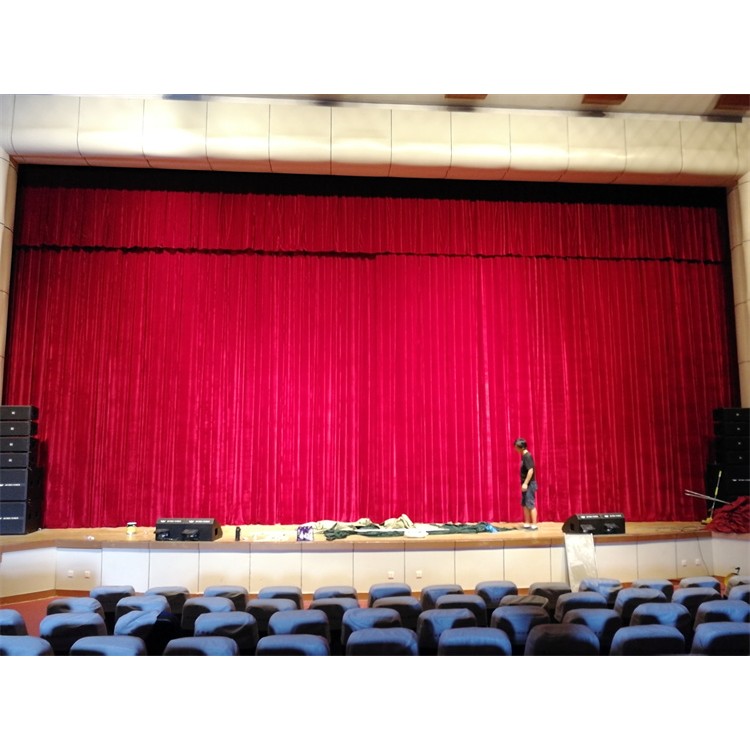
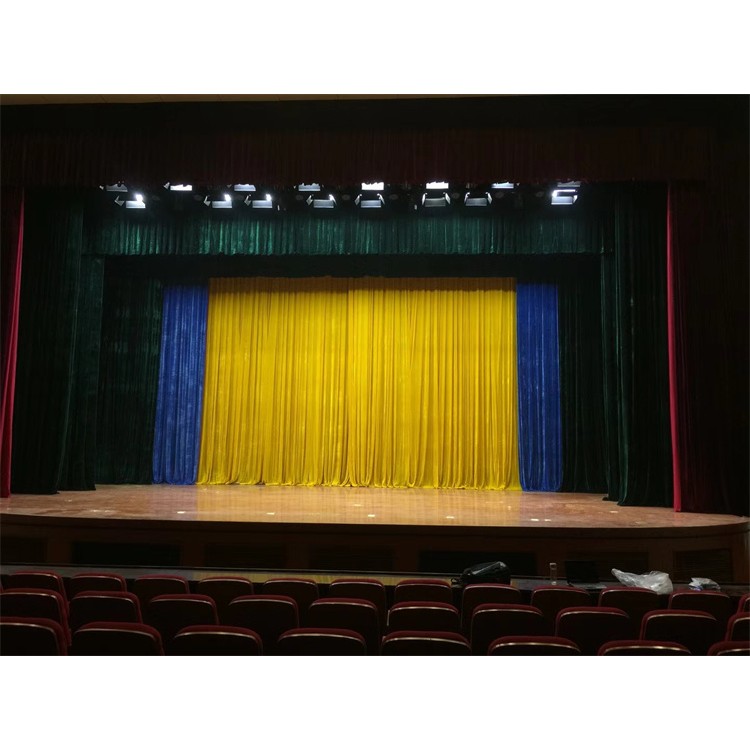
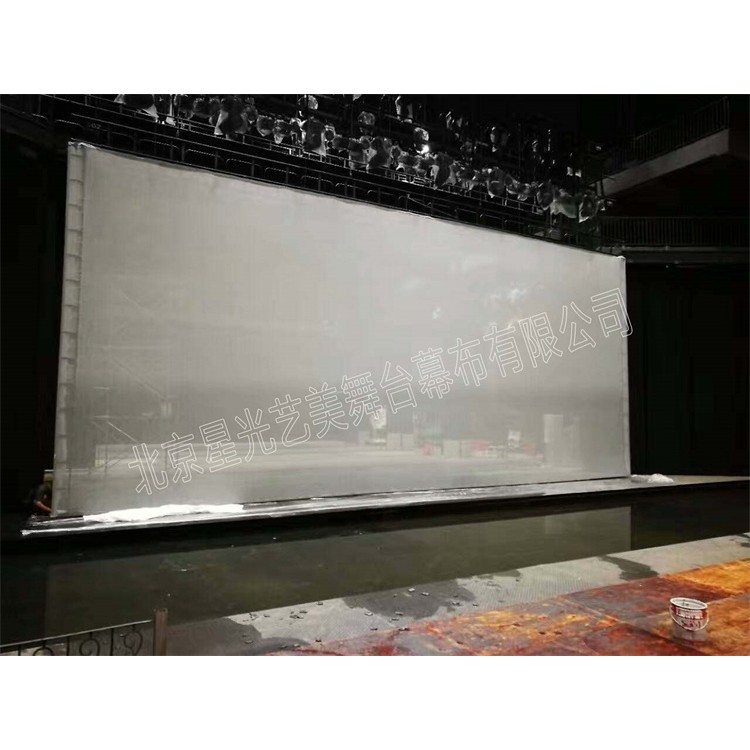
Draperies - The draperies are the curtains that separate the audience hall from the stage, serving as the gateway to the stage and the main curtain. They are primarily used for opening and closing at the beginning and end of meetings or performances and can also be used as a backdrop. Located on the inside of the proscenium stage, between the proscenium and the false proscenium. There are various types of closing mechanisms, such as: double-sided, lifting, interlocked lifting, single-sided opening and closing, and diagonal tension. The control systems for these are also divided into manual and electric. The draperies at this Hangning Cultural Center are designed as even, reversible double-sided, which is a popular style today. They are stable, have a long service life, and are not easily damaged. The color and fabric of the draperies can directly affect the audience's visual experience, requiring elegance and solemnity. This proposal uses purple-red sisal rope with natural lining as the fabric, creating a strong three-dimensional effect through an artistic folding technique. (2) Frontal Curtain - The frontal curtain is a horizontal curtain at the front of the stage's proscenium, used to block the audience's view of the stage's front area, and serves to decorate and beautify the stage. It complements the main curtain and is also known as the conference sign curtain, allowing for the flexible replacement of slogans for different meetings and performances. (3) Second Curtain - Serving solo singing, solo playing, and other performances, it highlights the main performer and sets the atmosphere. Located behind the main curtain, near the second side curtain. Typically made as a reversible curtain with three pleats, this proposal, due to insufficient lifting space, can only offer reversible or lifting styles. From an economic perspective, the proposal chooses the rolling wheel reversible style. (4) Third Curtain or Conference Curtain (optional) - Mainly used for creating a backdrop for meetings, emphasizing the importance of the meeting, and setting the atmosphere. (5) Cross Curtain (horizontal curtain) - Commonly in dark green, hung on standard or extended rods, located above the proscenium stage. It works with side curtains to control the line of sight in the performance space. (6) Side Curtain (side curtain) - Located on the left and right sides of the stage, matching the color of the cross curtain. It restricts the performance area and can change the stage performance area's opening by hanging in parallel, "eight" shape, or inverted "eight" shape, guiding and controlling the audience's line of sight to the designated performance area. It mainly beautifies the stage and blocks the audience's view of the side stage. (7) Daytime Curtain - Located at the rear of the proscenium stage performance space, serving as a backdrop to represent the performance environment. Its height and width are usually larger than the proscenium size and can be designed as a flat curtain or arched wide curtain according to the performance needs. The daytime curtain faces the audience and can be illuminated or projected with various colors using skyhoists or slides, creating an integrated image with the entire stage space. This proposal uses white fine canvas, which is white and has good light-absorbing properties. (8) Black Curtain - Located behind the sky curtain at the rear of the stage, suitable for representing dark scenes, such as outdoor settings, night, or nothingness in Kabuki theater. It is also used as a backdrop during acrobatic performances. Made with black sisal rope, folded artistically in three. (9) Gauze Curtain - Generally not a fixed installation in theaters, gauze curtains are semi-transparent curtains made of thin cotton or synthetic materials with a mesh-like pattern. In addition to their inherent lightness and the ability to be pleated into various decorative curtains, they also have a certain degree of light transmission. Gauze curtains, such as white, black, and painted gauze curtains, are commonly used on stage to represent the scene environment. Lighting from behind the painted gauze curtain can reveal figures and spatial environments hidden behind, making it easy to express dreamlike or nostalgic scenes. Lighting from the front onto the gauze curtain can render the images painted on it. Lighting from the back of the gauze curtain onto the curtain's back makes the painted images in front appear to disappear. Other single-color gauze curtains also have these characteristics, with white and light-colored gauze reflecting light strongly, while dark and black gauze can better absorb scattered stage light, making it easier to express virtual and hazy幻觉 spatial effects.