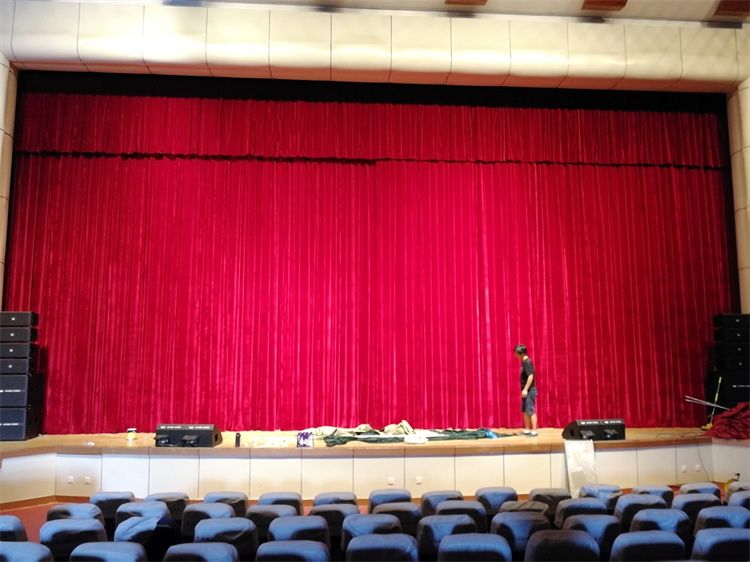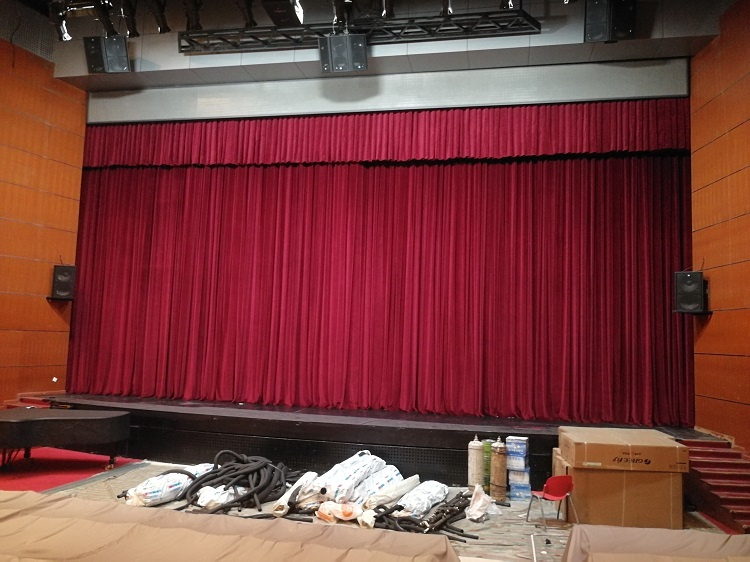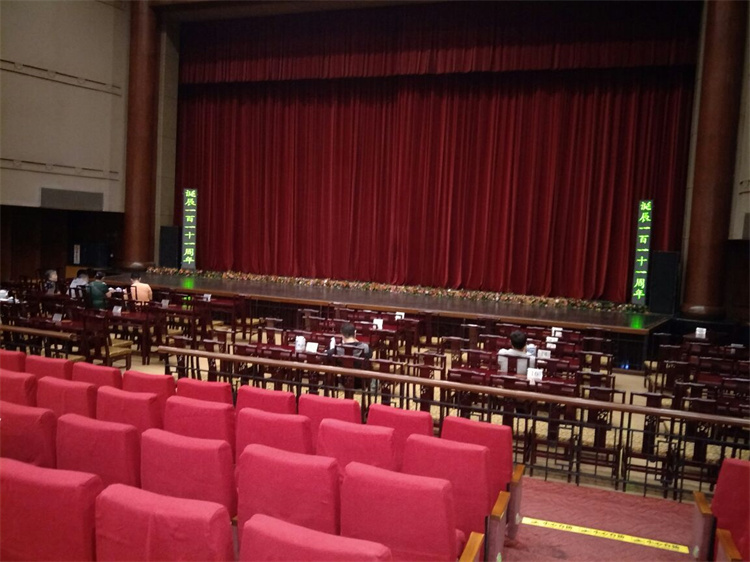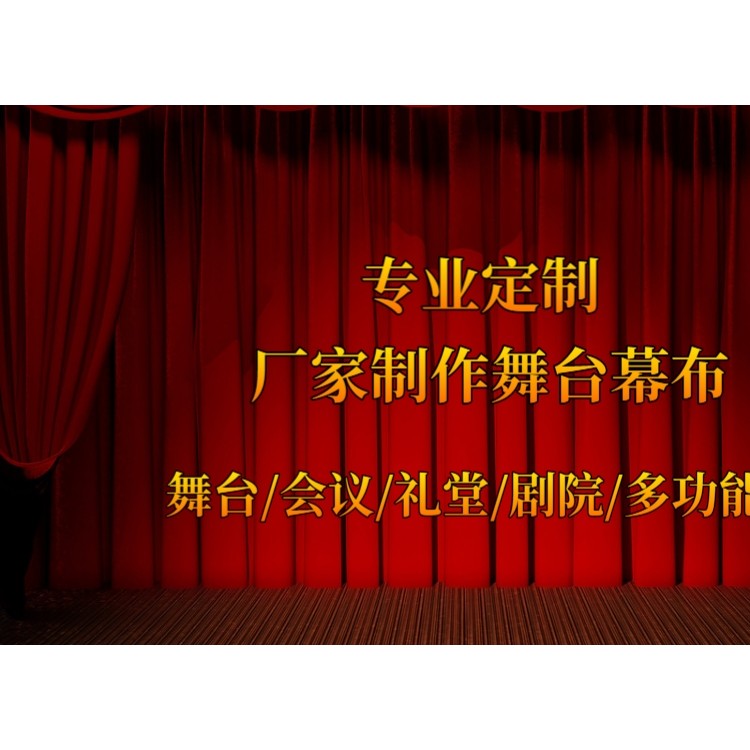

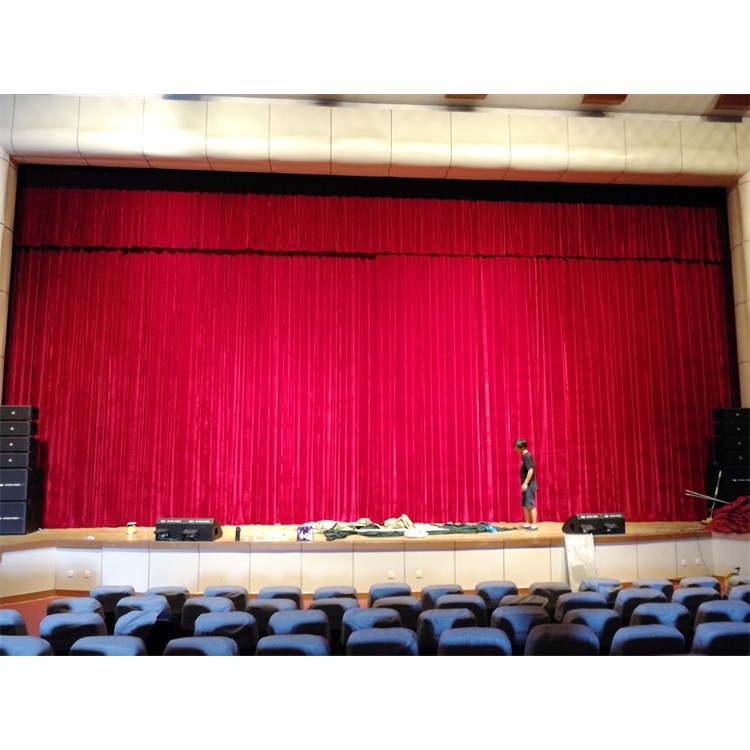

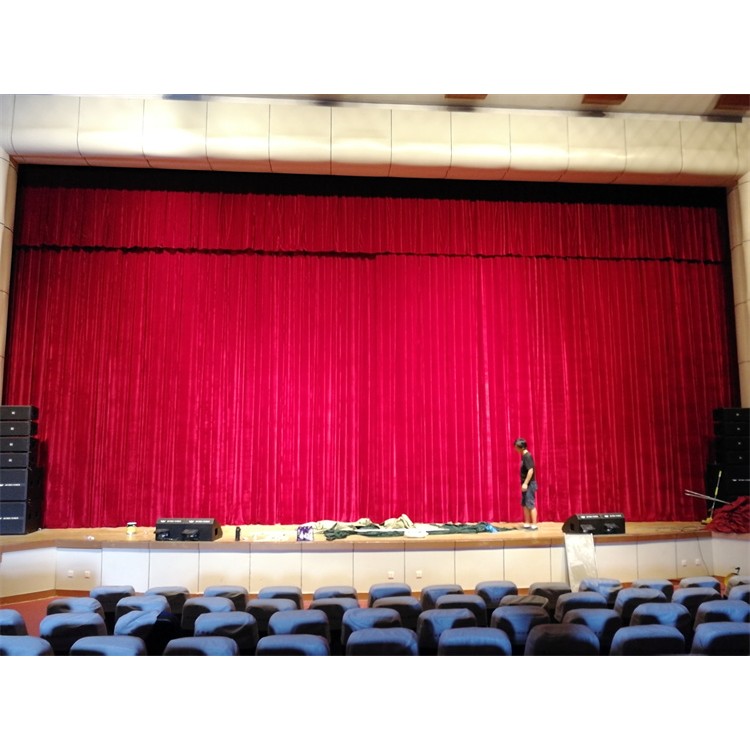
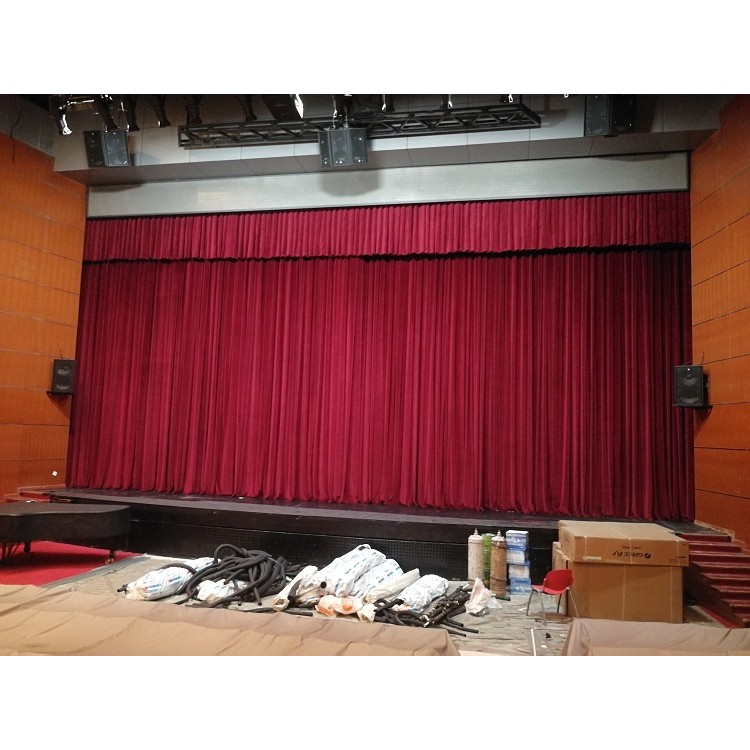
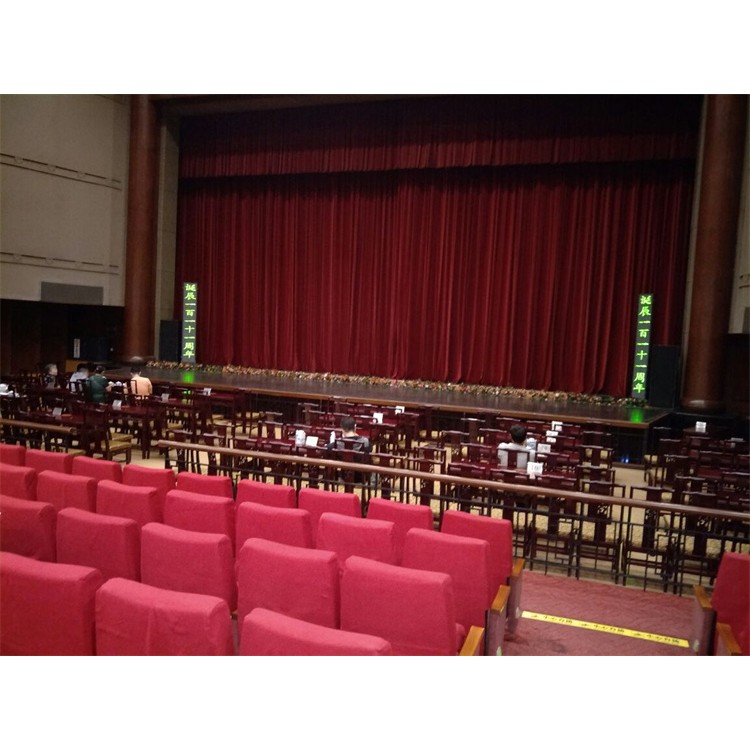








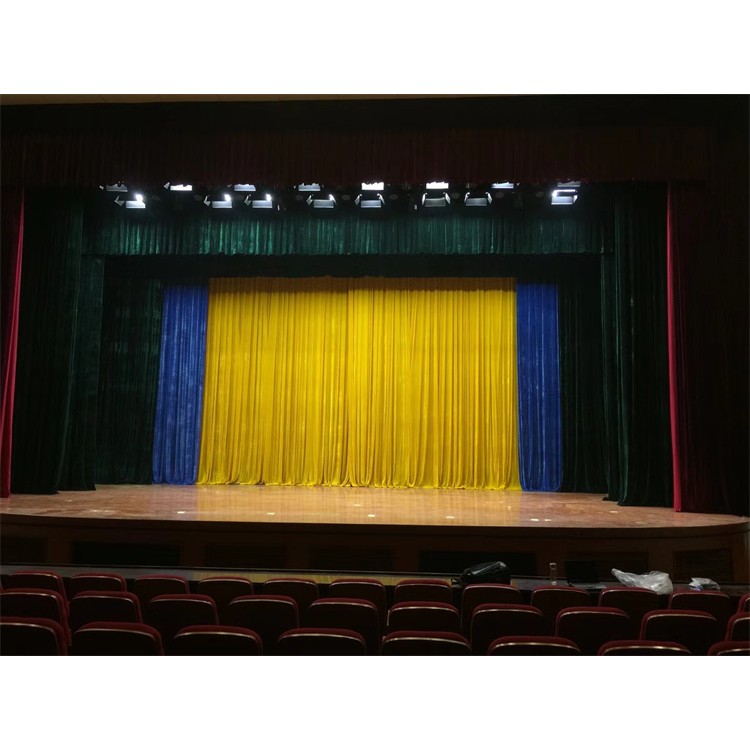
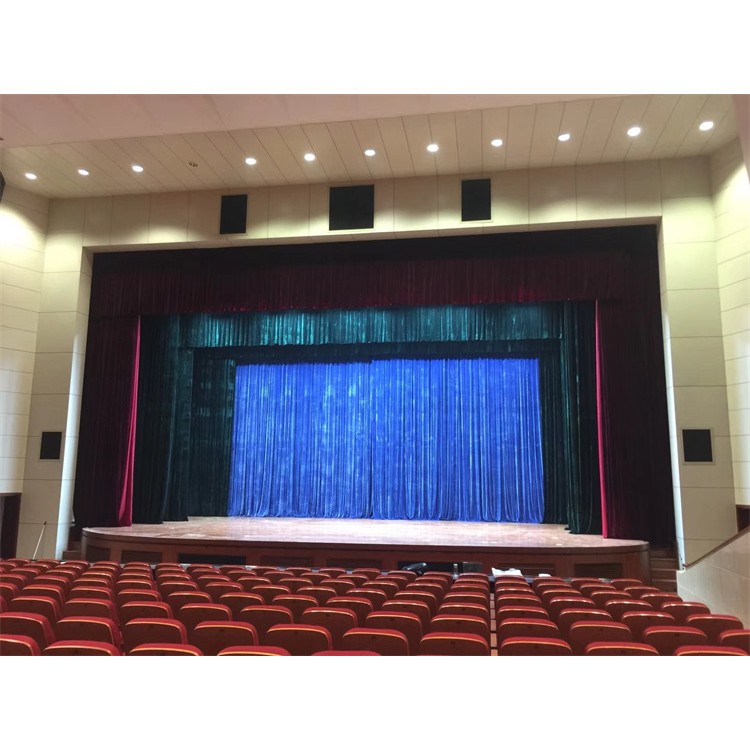
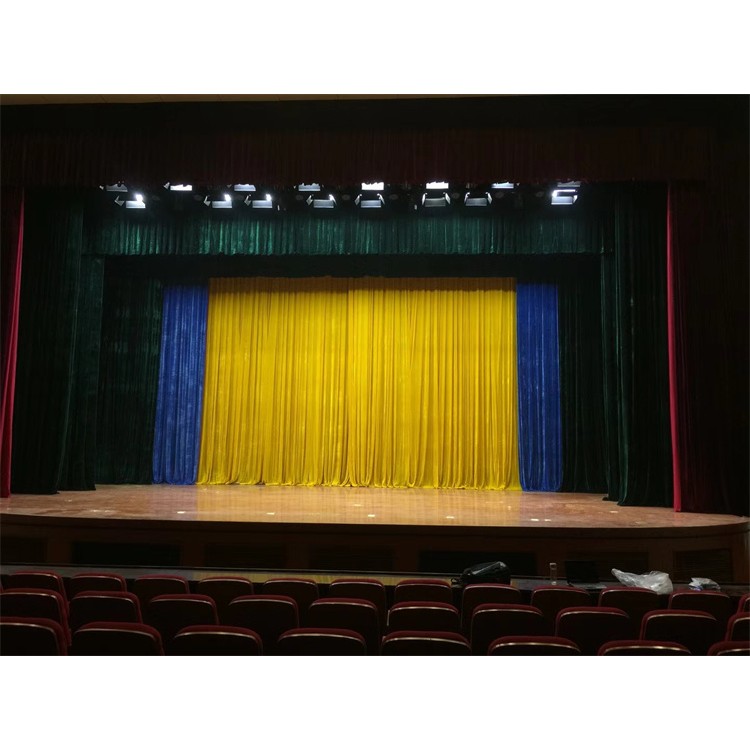
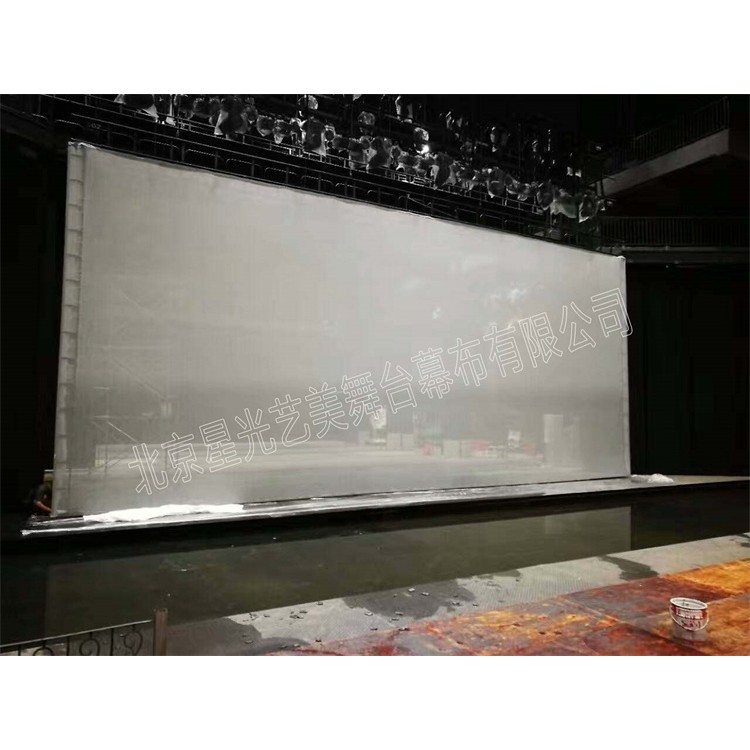
Front curtain: Located immediately inside the stage edge, it is used to hang the names or slogans of meetings or performances, displaying the theme. It comes in both lifting and fixed styles. (2) Backdrop: Behind the front curtain is the backdrop, used for scene changes during performances. The vibrant colors and innovative designs of the backdrop provide the audience with artistic enjoyment. The backdrop is available in various forms such as lifting, sliding, lifting-sliding, cascading, and butterfly styles. The lifting backdrop can move up and down; the sliding backdrop can open horizontally; the lifting-sliding backdrop can simultaneously lift and slide, creating a two-dimensional motion; the cascading backdrop, controlled by multiple motors, pulls the curtain vertically, creating a layered effect, hence the name "cascading"; the butterfly curtain can be lifted, offering the usual backdrop functions and can also be pulled into various shapes like butterflies, waves, and petals based on the plot. (3) Second and Third Curtains: The second curtain is usually positioned slightly behind one-third of the stage depth, while the third curtain is at two-thirds of the stage depth. They are used to divide the performance area based on the performance needs, ensuring continuous performance during scene changes. They can also serve as a backdrop to set the atmosphere when needed. They can move in an opening and closing motion and can also be raised or lowered with the hoist, offering lifting and opening functions. (4) Back and Front Curtains: These curtains are used to block the audience's view of the stage's upper and side areas, hiding auxiliary spaces beyond the performance area. Simply put, they are used to "hide the ugly." This design enhances the audience's sense of the stage's beauty and depth. If the masking is not done well and is seen through by the audience, it is called "exposing the trick." The position of the back and front curtains is typically determined by the distance from the stage edge to the side bridge, usually about 1.5-2 meters from the stage edge. For stages with lift equipment, a back and front curtain is placed at the front edge of a lift, with the next one positioned 2.5-3 meters apart. The number of curtains depends on the stage depth, typically 3-5 horizontal curtains and 6-10 vertical curtains for musical theater performances. The closer curtains block the view of the front audience, while the farther curtains block the view of the back audience. The vertical curtains are 2.5-3 meters wide and 0.5 meters taller than the stage opening height. (5) Gauze Curtain: Used for background lighting during performances, it complements red, yellow, green, and blue lights to depict lightning, storms, dreams, and memories, creating a blurred sense of time and space, enhancing the performance effect. (6) Screen and Masking: Multi-functional theaters are equipped with screens, along with masking screens, aperture masks, and other accessories to meet the requirements of standard, 3D, wide-screen, and aperture films. The screen movement styles include overall lifting and reel lifting. The reel screen is a new type of specialized equipment for movie theaters, halls, and auditoriums with limited space and where a screen架 cannot be hoisted but movies must be shown. Depending on the stage structure, the reel screen can be fixed on the side wall, front wall, truss, or rafters. The scroll curtain is fixed under the theater's truss, with a decelerating motor driving the curtain frame to rotate, moving the curtain horizontally with various scenes, creating dynamic effects like the Long March or flowing rivers. The scroll curtain has both horizontal and vertical movement styles. (7) Meeting Backdrop: Located at the rear of the stage, about 2 meters away from the sky curtain, it is used to block the audience's view of the stage's rear. (8) Sky Curtain: Used for slide projection and background changes, it utilizes lighting to depict landscapes, thunderstorms, tranquil countryside, etc., allowing the audience to experience the grandeur of the plot.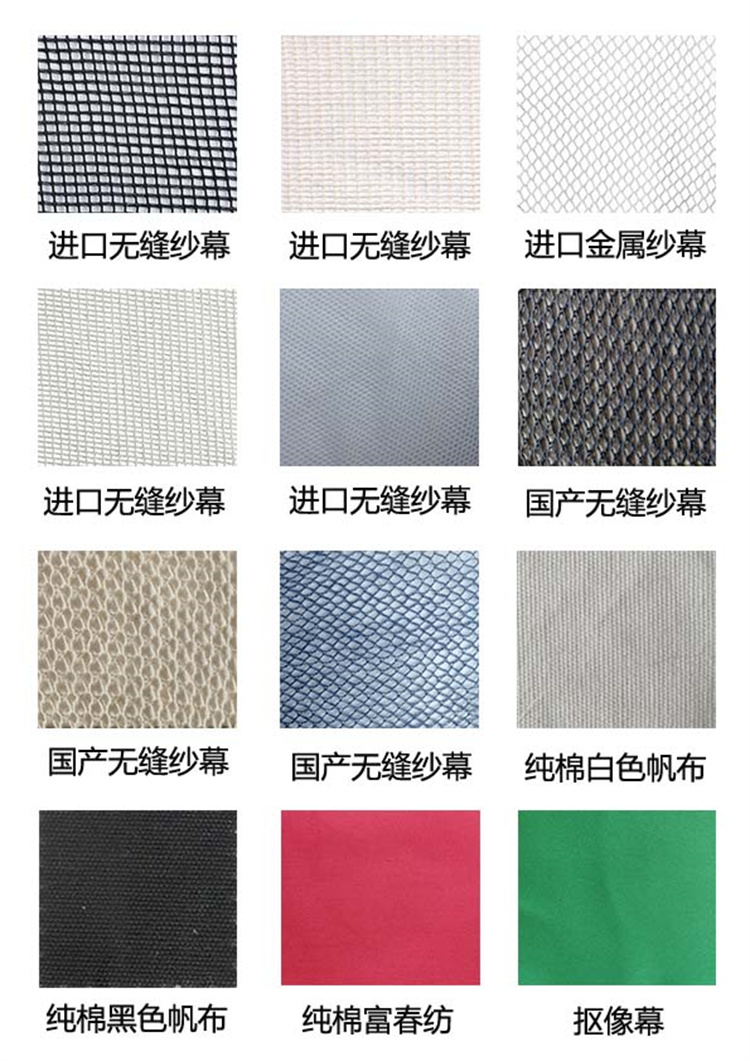
WeChat Official Account

Scan to follow Official Account