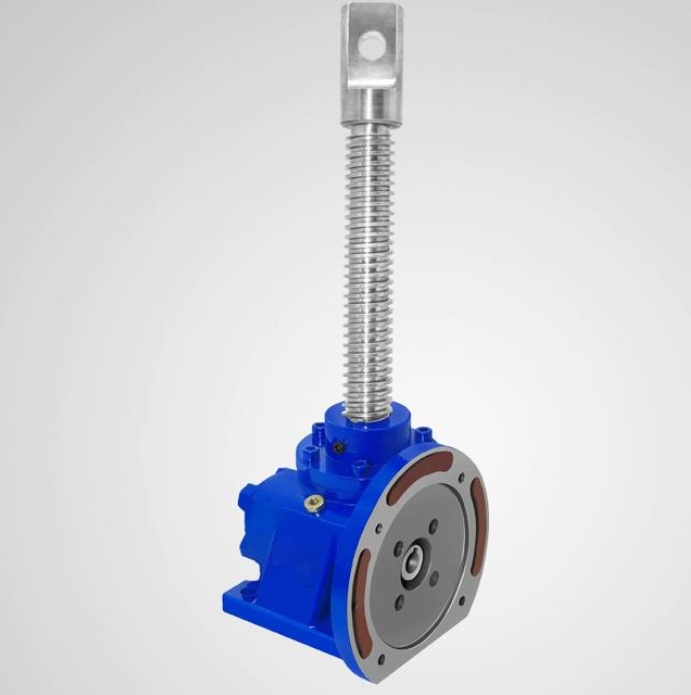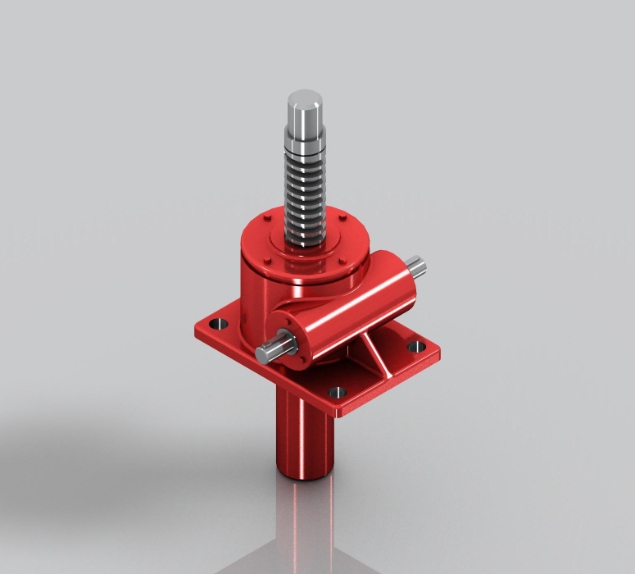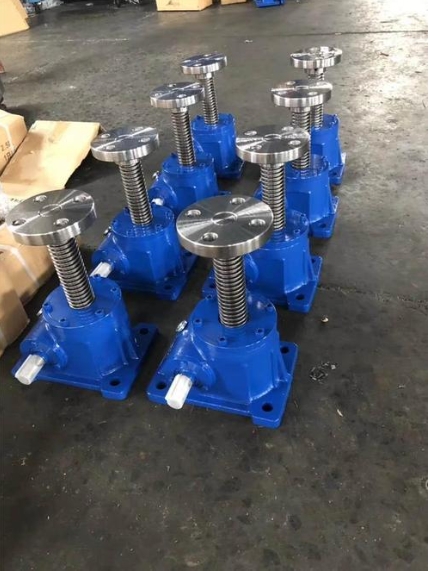

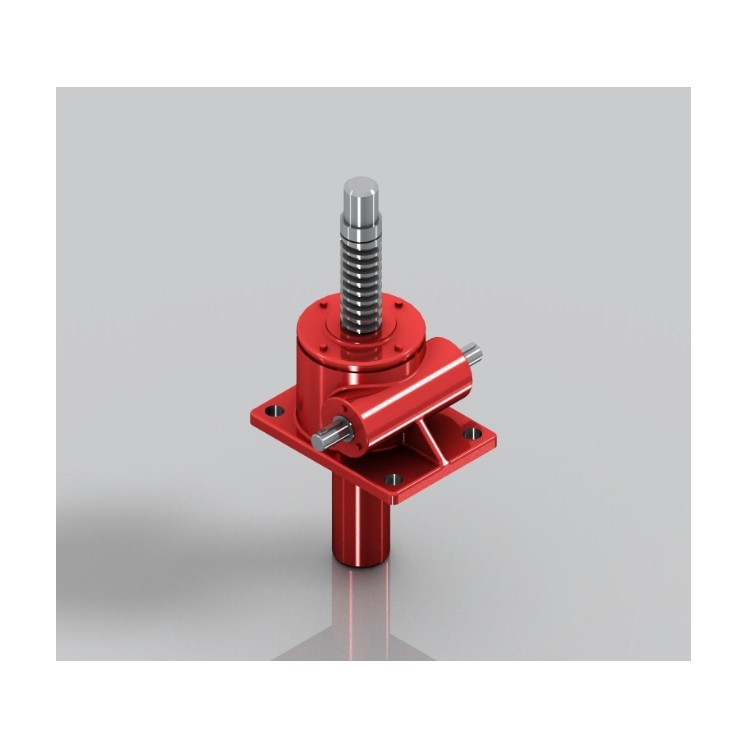

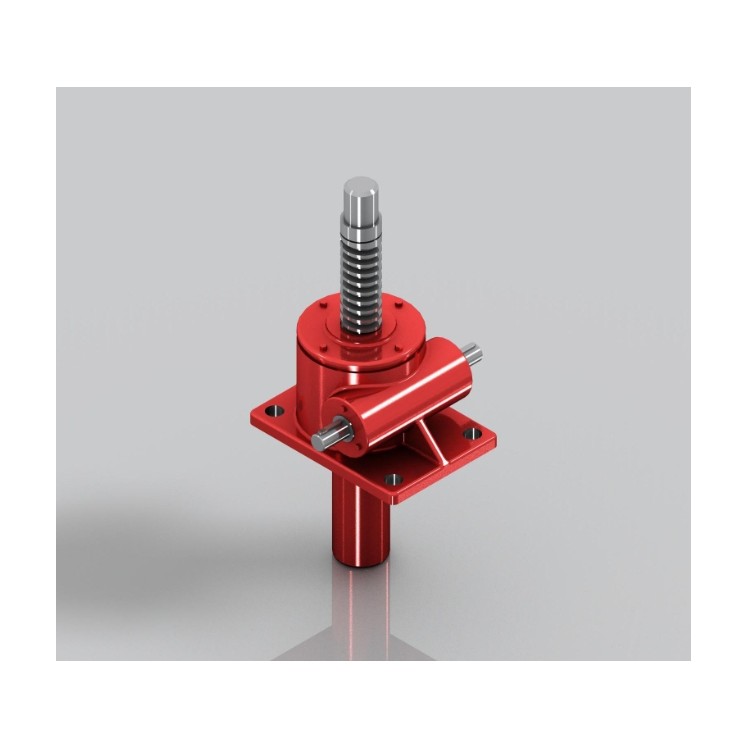
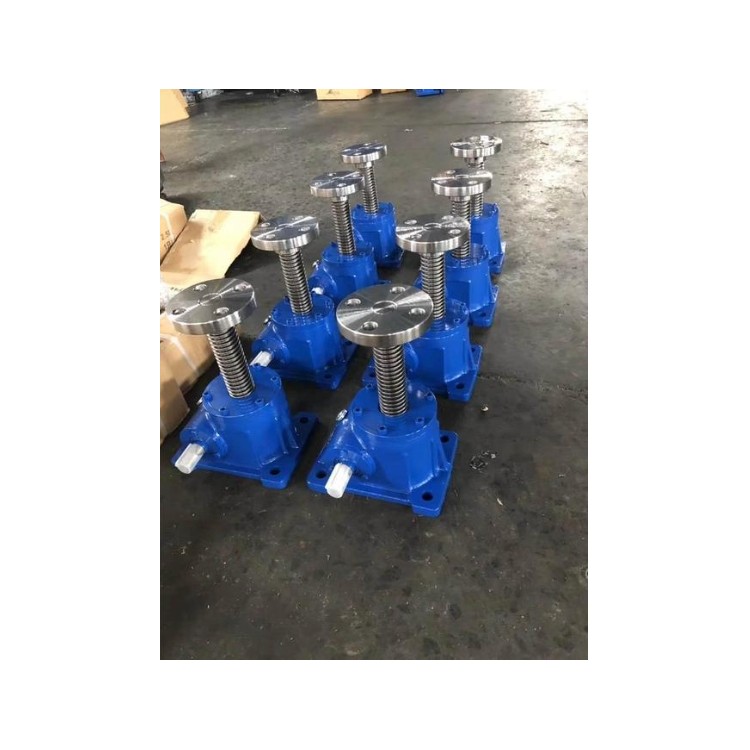
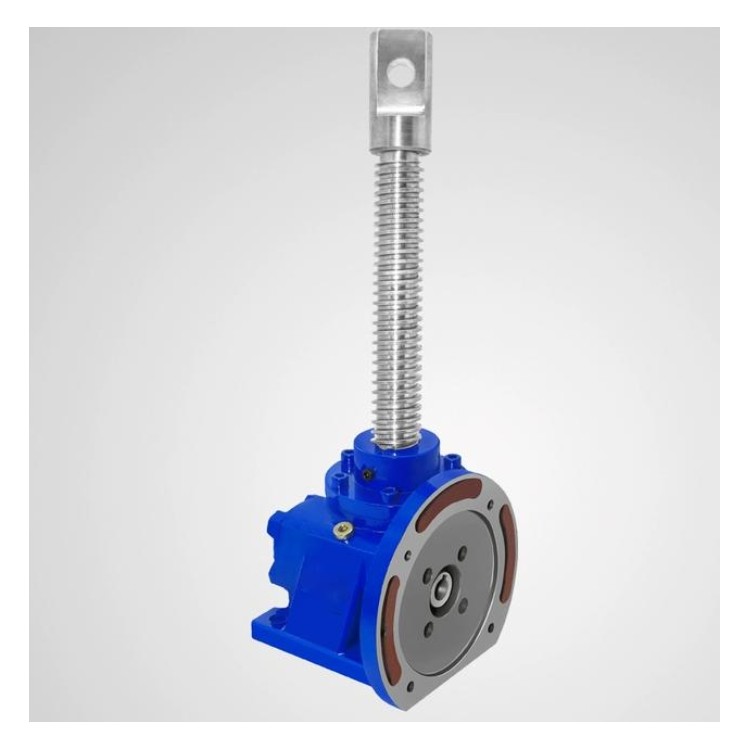







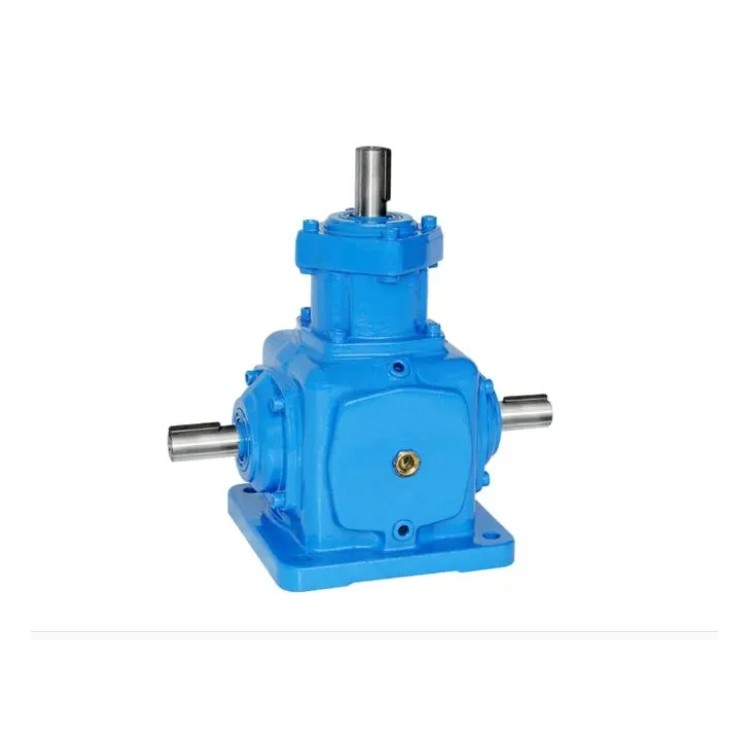

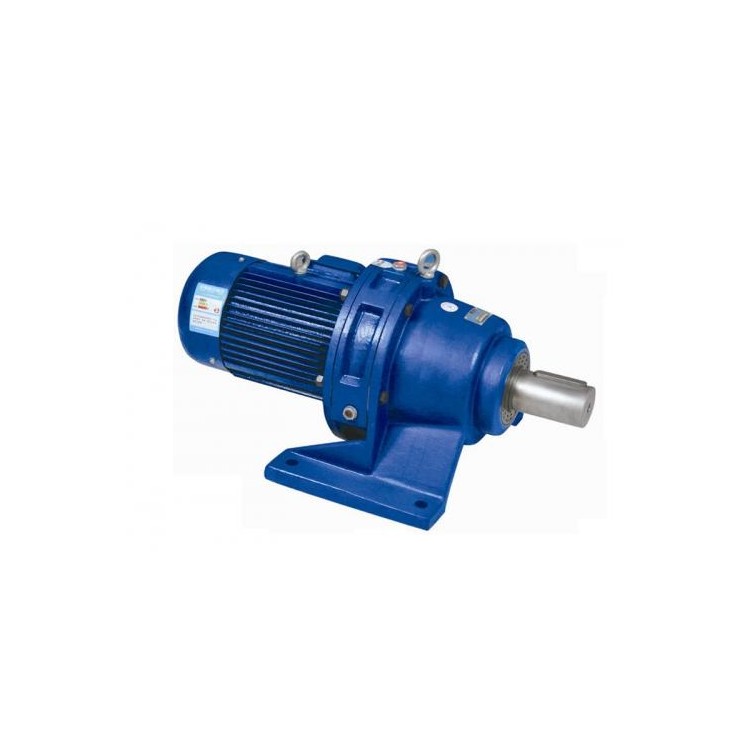
Turbine Screw JackAlso known as worm gear screw lift or QWL lift.
I. Basic Composition
The screw jack consists mainly of a housing, worm gear, screw, worm, and bearings. By the engagement of the worm gear with the worm, it converts rotational motion into linear motion, thereby enabling the lifting and lowering function.
2. Working Principle
When the motor drives the worm to rotate, the worm gear follows suit, moving the screw up and down to achieve lifting and lowering operations. This design features an automatic locking property, ensuring that the load does not slide down due to its own weight when the drive stops, thereby guaranteeing the safety and stability of the operation.
III. Advantages and Features
Tightly structuredThe worm gear screw jack features compact size and light weight, making it easy to install and use.
Versatile functionsIn addition to the basic up and down function, propulsion, inversion, and various height adjustments can be achieved with accessories.
Self-locking featureAs described above, the worm gear screw jack features an automatic locking mechanism, ensuring the safety of operation.
High precisionAchieves linear motion to meet various high-precision work requirements.
Flexible usageWide power source, can be directly driven by an electric motor or other power sources, or equipped with a handwheel for manual operation.
VersatileBroadly applicable to industries such as machinery, metallurgy, construction, and hydraulic equipment.
IV. Application Scope
Turbine screw jacks are widely used in a variety of fields including high-speed trains, metallurgy, plastic machinery, equipment, petroleum, thermal power generation, papermaking, glass, hydraulic engineering, and aviation. In these sectors, they perform functions such as lifting, lowering, advancing, reversing, and adjusting height positions.
V. Usage Precautions
Work EnvironmentConfirm the safety of the working environment and avoid operation in harsh conditions (such as dust, high temperatures, etc.). If necessary, wear protective clothing and use gloves and safety goggles.
Equipment InspectionCheck all components of the equipment for any loose or detached parts before use to ensure its integrity and smooth operation.
Test and VerifyAll newly purchased or repaired lifting platforms must be tested to verify the correctness of the changes.
Maintenance and careRegularly inspect and maintain the mechanical parts, ensure moisture protection, adjust the tension appropriately, and strictly prohibit overloading.