








Our company has passed the strict assessment and certification by the local Fire Protection Association, and is equipped with two detection capabilities: fire facility inspection and electrical fire prevention inspection. We are well-equipped with advanced detection instruments and tools, and have a detection team composed of experienced and skilled technicians. All employees have completed relevant fire protection training and technical evaluations. During the fire detection process, we combine high-tech methods with precise measurements to provide scientific and accurate detection reports, effectively preventing and avoiding fires, and eliminating fire hazards.
In a complex with multiple buildings, each with a certain number of interlinked control devices, is it necessary to have a fire control room in every building? Can fire control rooms be flexibly arranged based on management needs?
Answer: A complex of multiple buildings can choose the appropriate form of fire automatic alarm system based on the actual conditions of the buildings and management.
a. When opting for a centralized alarm system, only one fire control room is required. Within the fire control room, install a fire alarm controller with centralized control functionality (interconnected type). In each building, install a fire alarm controller with area control functionality (interconnected type), which can be placed in areas accessible only to on-duty personnel. The manual control of dedicated lines for fire facilities such as pumps and fans must be achieved through the centralized control unit. For the bus interconnection control of automatic fire facilities like pumps, fans, smoke exhaust valves, and smoke baffles, this can be implemented by the area controllers located in each building based on the actual situation.
b. When selecting the form of a control center alarm system, a fire control room should be set up in each building, and a main fire control room (fire control center) should be established or designated. The common fire equipment such as pumps in a building complex should ideally be centrally controlled from the main fire control room; alternatively, they can be controlled by the nearest sub-fire control room, with the main fire control room exercising control over the equipment through inter-regional interlock. Fire equipment such as smoke and exhaust fans can be controlled by the corresponding fire control room based on the control scope of the building's fire control room.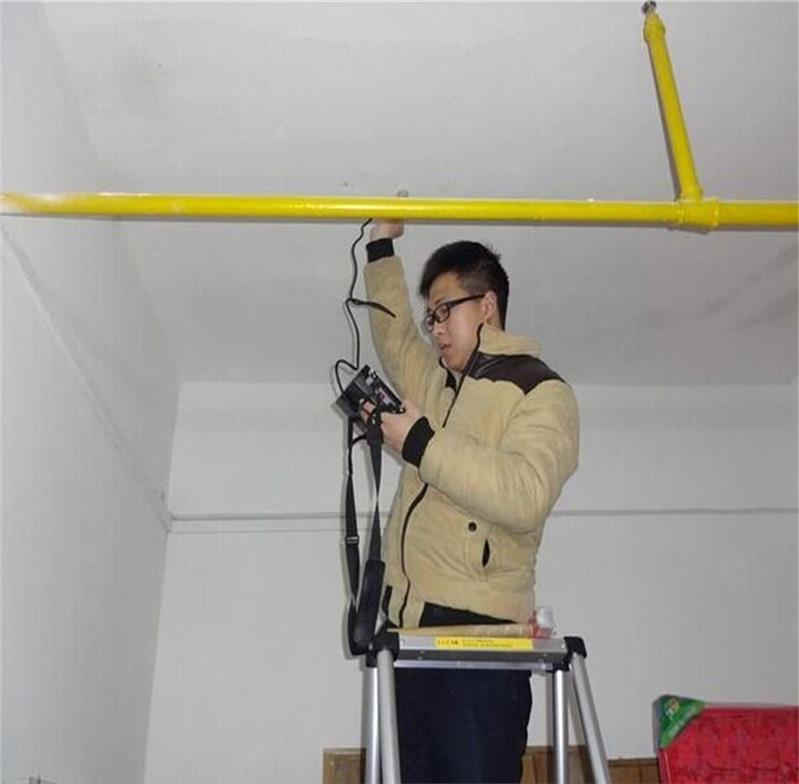 Outdoor Fire Hydrant System
1. When the fire lane passes through the door opening of the building, its clear height and width should not be less than 4 meters; the clear width between door pilasters should not be less than 3.5 meters.
2. Pipeline wells and cable wells within the building should be sealed with non-combustible materials with a fire resistance of not less than 0.50h at intervals of every 2 to 3 floors, with the ceiling. The walls of these wells should be constructed with non-combustible materials having a fire resistance of at least 1.00h. The inspection doors on the walls should be of Grade B fire-resistant doors.
3. The walls of elevator shafts and machine rooms, etc., should be made of non-combustible materials with a fire resistance of not less than 1 hour. For indoor elevator shafts and machine rooms in high-rise industrial buildings, the walls should be made of non-combustible materials with a fire resistance of not less than 2.5 hours.
4. The height of the handrail on the emergency stairs should not be less than 1.1m. For the exterior of other buildings, the slope angle may not exceed 60 degrees, and the clear width may not be less than 80cm. Additionally, the depth of the step may exceed 22cm at a distance of 25cm from the handrail, without being subject to this restriction.
5. Fire-fighting water can be supplied from the water supply network, natural water sources, or fire ponds.
6. The water column of the outdoor fire hydrant must still be no less than 10 meters (measured from the ground).
7. The water flow for outdoor fire hydrants in civil buildings should ensure 30 L/s.
8. The main water conveyance pipelines for the looped network and the pipelines delivering water to the looped network should not be fewer than two.
9. Circular pipelines should be divided into several vertical sections with no more than 5 fire hydrants in each section. The minimum diameter of the outdoor fire-protection water supply pipeline should not be less than 100mm.
10. Outdoor fire hydrants should be installed along the road. When the road width exceeds 60 meters, it is advisable to set hydrants on both sides of the road, preferably near intersections.
11. Fire hydrants should not be more than 2 meters from the roadside and should be no less than 5 meters from the exterior wall of the building.
12. The spacing between outdoor fire hydrants should not exceed 120 meters. The protection radius of outdoor fire hydrants should not exceed 150 meters.
13. The water flow rate for each outdoor fire hydrant should be calculated at 10-15 L/S; the water flow rate for the pump coupling is 10-15 L/S.
14. The fire hydrant water column in high-rise buildings must not be less than 10-13 meters.
15. The outdoor ground-mounted fire hydrant should have one outlet with a diameter of 150mm or 100mm and two outlets with a diameter of 65mm.
16. The fire reservoir should meet the automatic sprinkler fire suppression duration, calculated for 1 hour.
17. Fire reservoir of 18m³. Residential building category 1: 12m³.
18. Fire hydrant reservoirs for fire truck water supply should have a protection radius not exceeding 150 meters. The water intake for fire trucks should be set up at a distance of not less than 15 meters from the building (excluding the pump room).
WeChat Official Account

Scan to follow Official Account