


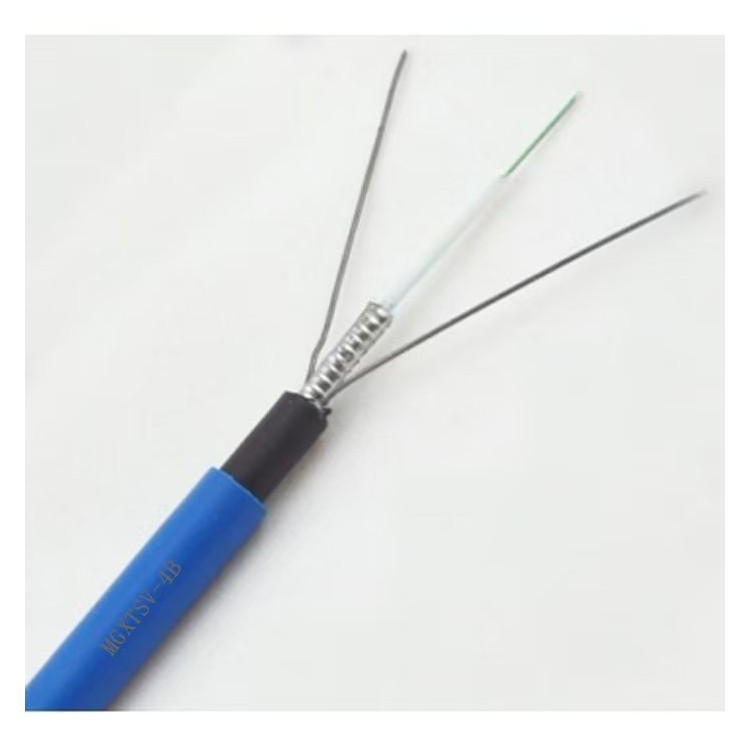









Cross-linked polyethylene insulated power cables feature stable thermal-mechanical properties, excellent electrical performance, and resistance to chemical corrosion. They also boast simple structure, light weight, and installation without drop height restrictions. These cables are a novel choice for wide application in urban power grids, mines, and factories.
Insulation of cables - Cross-linked polyethylene is obtained by converting linear molecular structure polyethylene into a three-dimensional network structure through chemical and physical methods, thereby significantly enhancing the thermal-mechanical properties of polyethylene, maintaining excellent electrical performance.
The conductor of the cross-linked polyethylene insulated power cable has a rated working temperature of 90°C, which is higher than both polyethylene and polypropylene insulated cables. Consequently, the cable's current-carrying capacity is further increased.
Flame-retardant/Fire-resistant power cables. The flame-retardant grade is indicated by adding "A", "B", or "C" after the letter "Z", such as "ZA", "ZB", "ZC". When "ZR" is used, it is generally considered to be "C" grade flame-retardant. The indication for flame-retardant fire-resistant grade is by inserting "A", "B", or "C" into the middle of "ZN", such as "ZAN", "ZBN", "ZCN". When "NH" is used, it is generally considered to be "ZCN". For example:
Model Name Equivalent
ZC-YJV Copper Core Cross-Linked Polyethylene Insulated Sheathed Flame Retardant C-Class Power Cable, ZR-YJV
ZCN-YJV Copper Core Cross-Linked Polyethylene Insulated Sheathed Flame Retardant C-Class Fire-Resistant Power Cable NH-YJV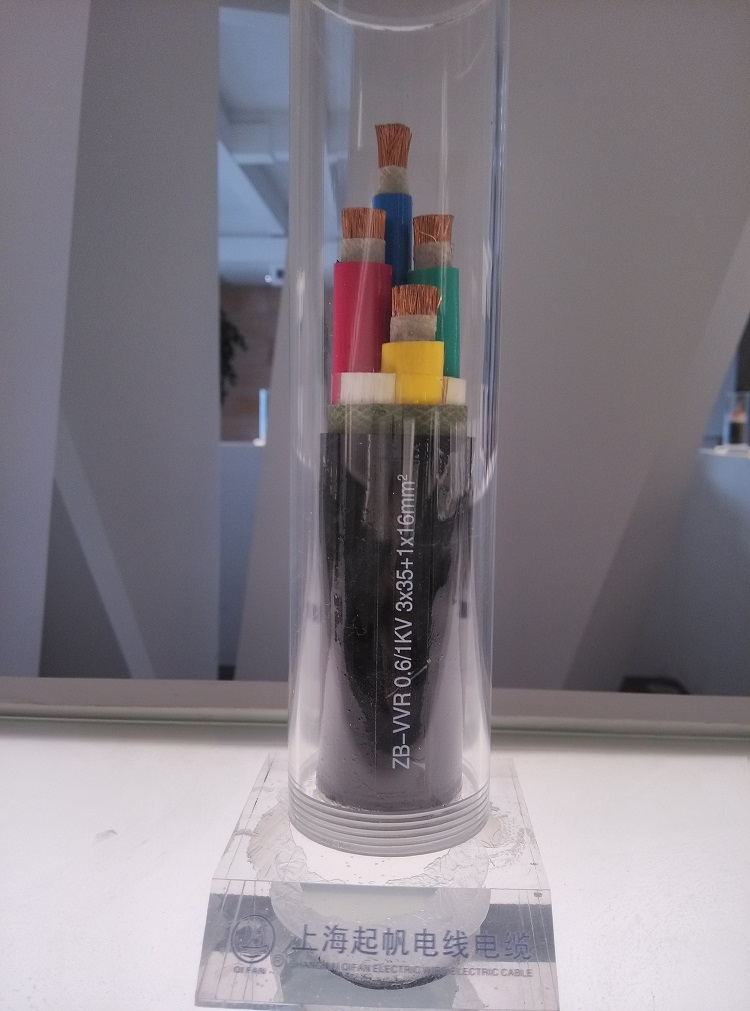 0.6/1KV Single-core Cross-linked Polyethylene Insulated and Sheathed Power Cable
Product Usage: For electric power lines, used for the supply and distribution of electrical energy.
2. Product Standard: GB12706
3. Product Characteristics: (1) Cables can be laid without preheating at environmental temperatures of not less than 0℃. The laying drop of the cable is not restricted. (2) The long-term allowable working temperature of the cable cores must not exceed the following: 90℃ for cables with a poly sheath; 80℃ for cables with a polyethylene sheath. (3) The temperature must not exceed 250℃ during core short-circuiting (for a continuous duration of 5S). (4) The minimum bending radius for cable laying is as follows: Single-core cable: 20(d+D)±5%; Three-core cable: 15(d+D)±5%. Where: D is the actual outer diameter of the cable, d is the actual outer diameter of the conductor.
4. Product type, name, and application scope
Type Name Application Scope
Copper-core / Aluminum-core
YJV, YJLV Cross-linked Polyethylene Insulated Sheathed Power Cables, fixed in aerial, indoor, cable trench, or underground installations
YJY JYLY Cross-linked Polyethylene Insulated and Sheathed Power Cables, Fixedly Laid in Indoor, Cable Trench, or Underground
YJV22, YJLV22 Cross-linked Polyethylene Insulated Steel Tape Armored Power Cable, Fixedly Installed in Locations Subject to External Pressure
YJV23 YJLV23 Cross-linked Polyethylene Insulated Steel Tape Armored Polyethylene Sheathed Power Cable, Fixed in places frequently subjected to external forces
YJV32, YJLV32 Cross-linked Polyethylene Insulated Fine Steel Wire Armored Power Cables, Fixed in installations requiring tensile strength
YJV33 YJLV33 Cross-linked Polyethylene Insulated Fine Steel Wire Armored Polyethylene Sheathed Power Cable, fixed in installations requiring tensile strength.
YJV42 JYLV42 Cross-linked Polyethylene Insulated Steel Wire Armored Power Cables for Fixed Installation Underwater, in Vertical Shafts, or in Locations Subject to Tensile Forces
YJV43 YJLV43 Cross-linked Polyethylene Insulated Steel Wire Armored Polyethylene Sheathed Power Cable, suitable for fixed laying in locations requiring high tensile strength.
Electrical cables, to ensure the normal operation of the cables and motors, the following three principles should be adhered to when selecting the cable cross-section:
1. During normal operation, the actual temperature rise of the cable should not exceed the maximum allowable temperature rise for the insulation.
2. Select based on the allowable voltage loss during cable line operation.
3. The selection of cable cross-section must meet the requirements for mechanical strength.
Basic Structure of Power Cables:
The basic structure of power cables consists of four parts: the core (conductor), insulation layer, shielding layer, and protective sheath.
1. Core wire. The core wire is the conductive part of power cables, used for transmitting electrical energy and constitutes the main component of power cables.
2. Insulation. Insulation serves to electrically isolate the core wire from the ground and from other phase wires, ensuring the transmission of electrical power and is an indispensable component of the power cable structure.
3. Sheath layer. Power cables with 15KV and above usually have conductor sheath and insulation sheath.
4. Protective Layer. The function of the protective layer is to shield the power cable from external impurities and moisture, as well as to prevent direct physical damage to the power cable.
WeChat Official Account

Scan to follow Official Account













