



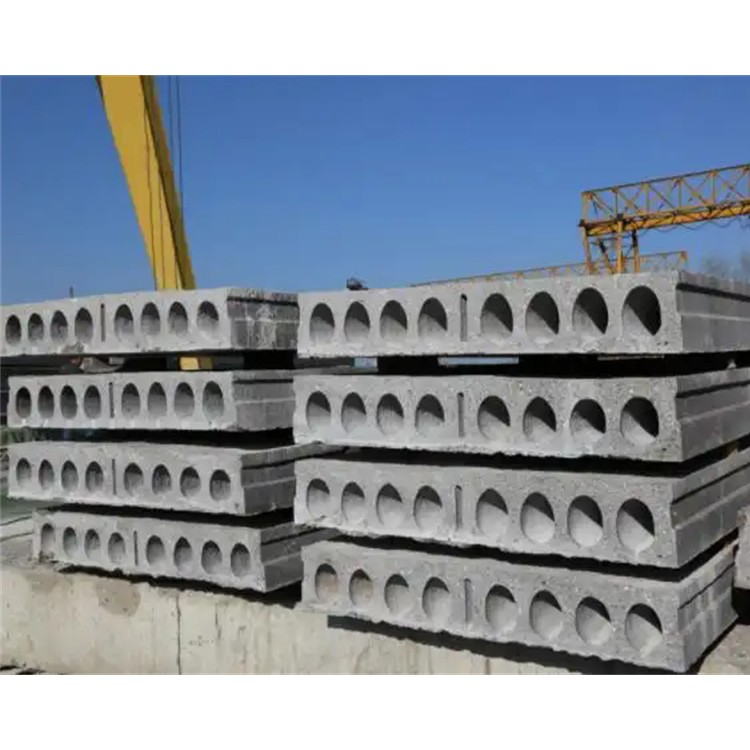
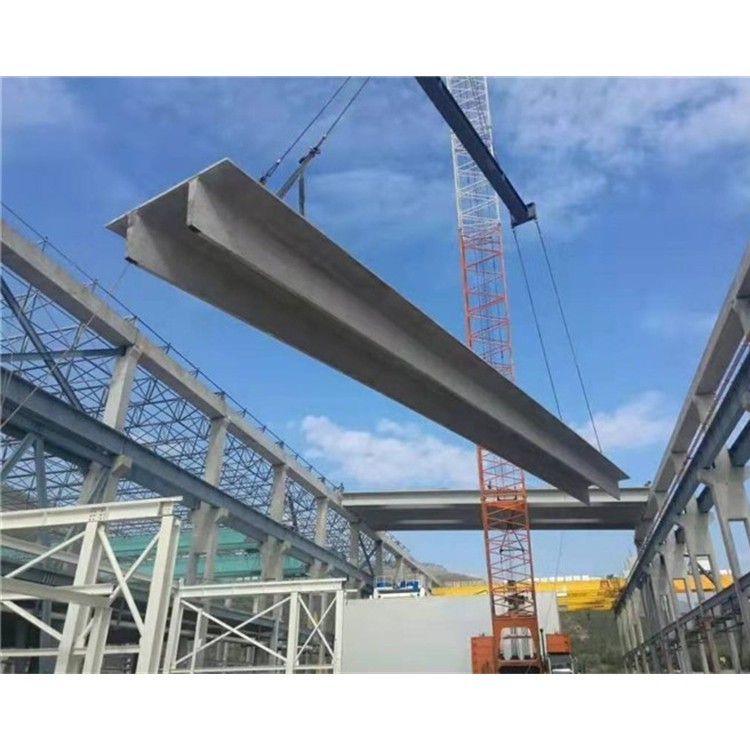







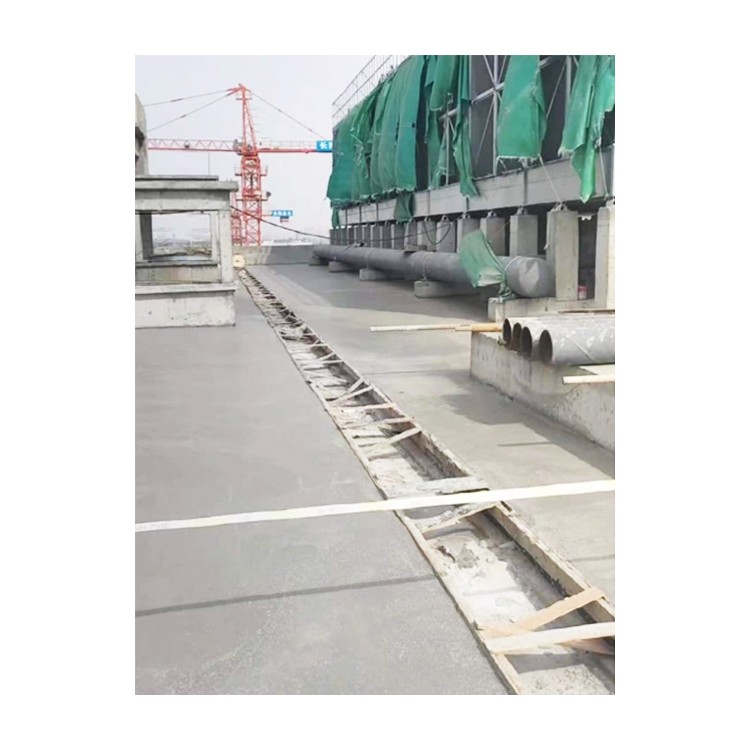

Comparatively, roof foam concrete insulation offers significant advantages in terms of cost-performance over traditional roof insulation materials.
1. Stable thermal performance meets building energy-saving requirements
Foam concrete used for roofing is typically composed of dry materials such as cement, offering stable thermal properties. The thermal conductivity of foam concrete ranges from 0.06 to 0.12 W/m, with high thermal resistance. The thermal conductivity of the product can be adjusted by design, with the mixture ratio being adjusted after calculations for control. The control process is straightforward and the performance is stable. It can be used for large-scale pouring.
2. Strength and bulk density adjustable
Foam concrete is a lightweight thermal insulation material with a compressive strength of 0.5 to 1.2 Mpa and a finished density of 300 to 400 kg/m³. It can be adjusted and controlled programmatically according to engineering requirements. Using foam concrete as roof insulation material, especially for walkable roofs, offers unique advantages. It completely resolves the issues of insufficient strength and short service life of traditional insulation materials.
3. Low water absorption rate
Foam concrete contains a large number of independent bubbles, evenly distributed, with a relatively low overall water permeability.
4. Three-in-one process, quick installation
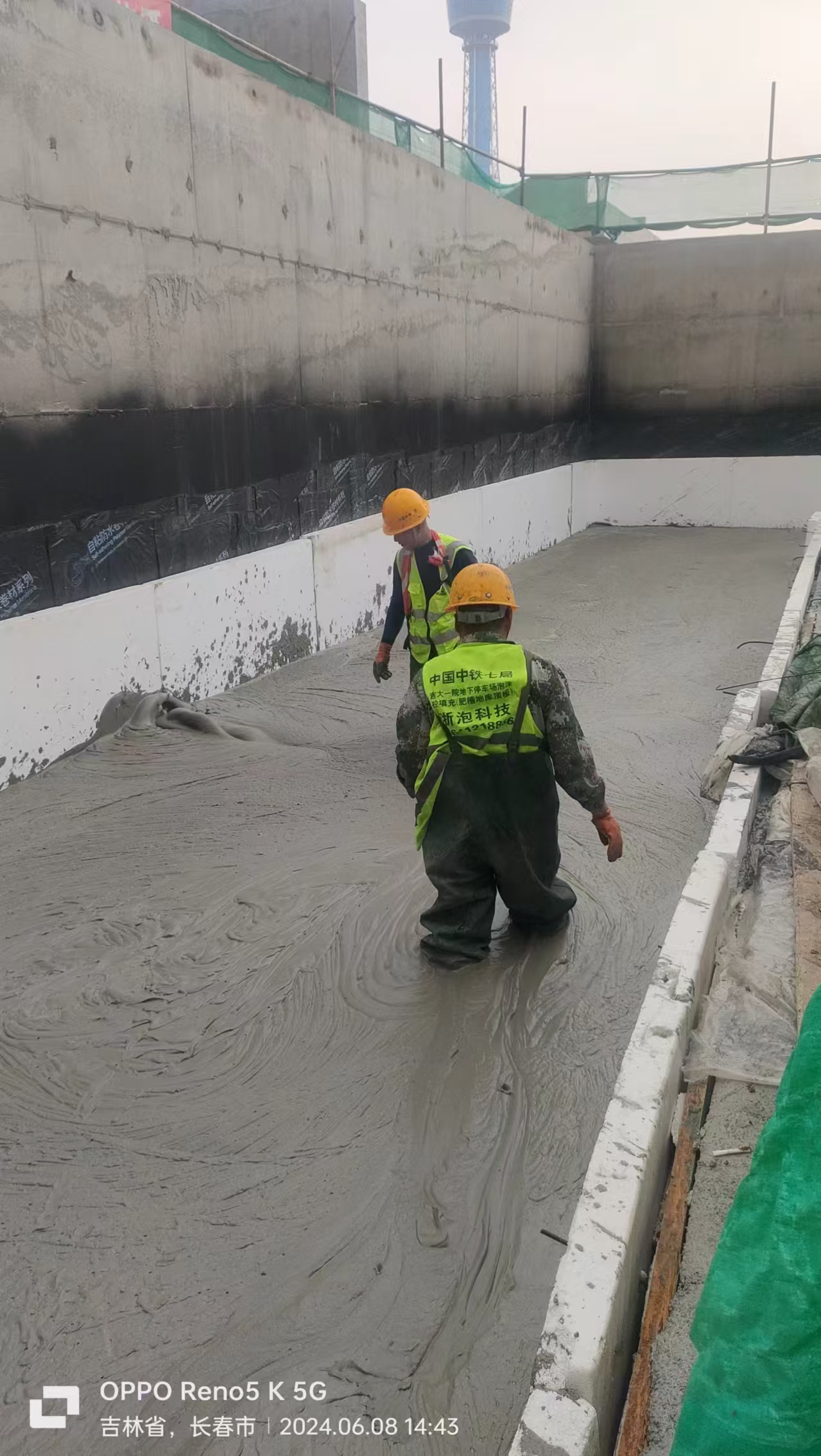
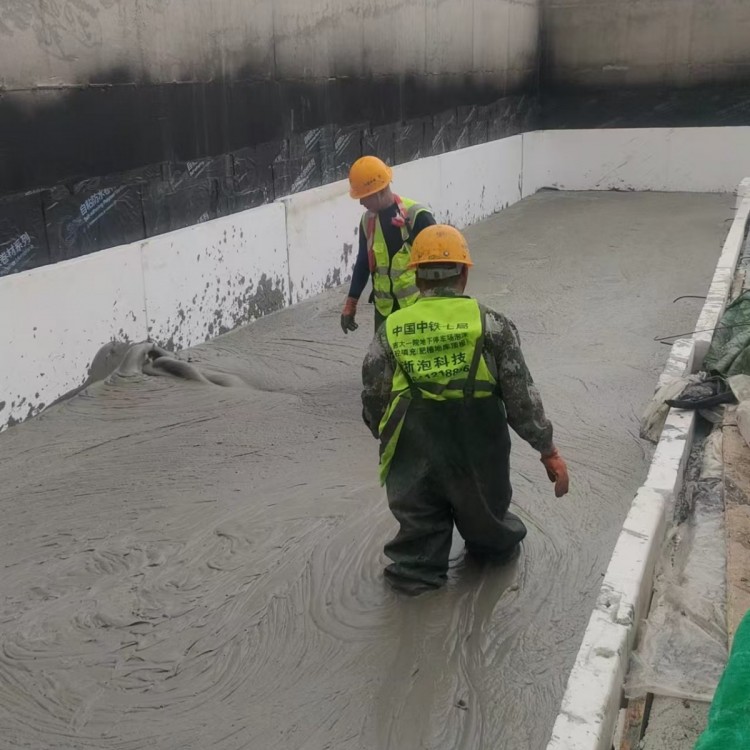
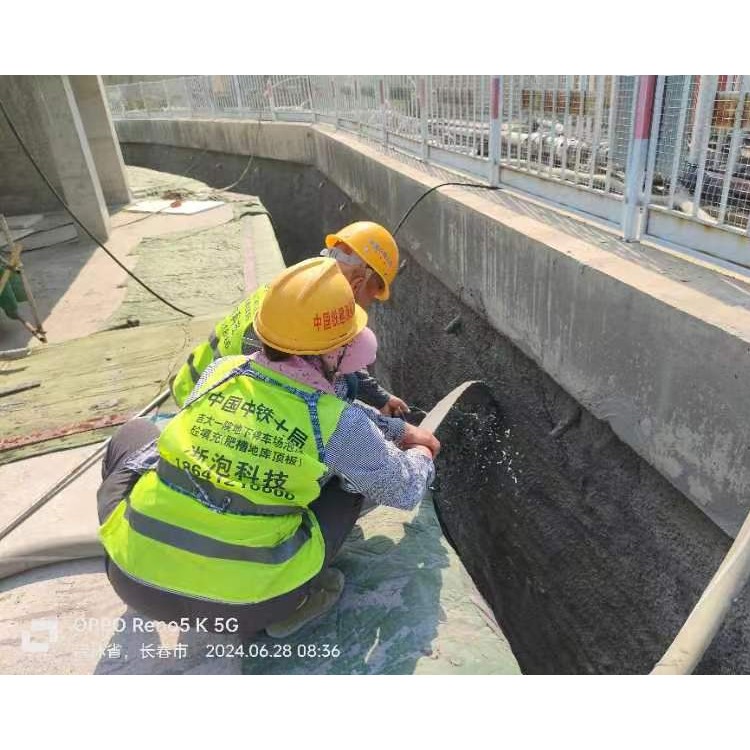
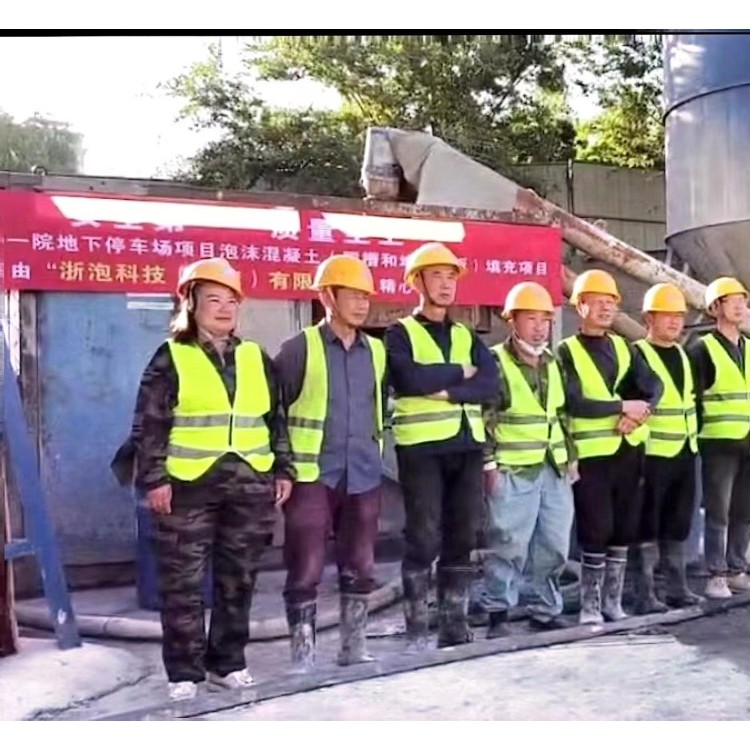
Process combines three steps, reducing traditional process stages. Foam concrete on-site operation, one machine for six people, daily output of 100-120 m3 per machine, no need for additional auxiliary equipment, fast construction speed.
5. Good liquidity compactness.
Foam concrete features unique liquid and resilient foaming properties, high fluidity, enabling long-distance pumping up to 300 meters and below 100 meters in height. It boasts strong injection capabilities, high mechanization, and can be directly poured using flexible hose. It fills dense materials in hard-to-reach areas.
6. Direct waterproofing, no need for leveling, sloping, or protective layers