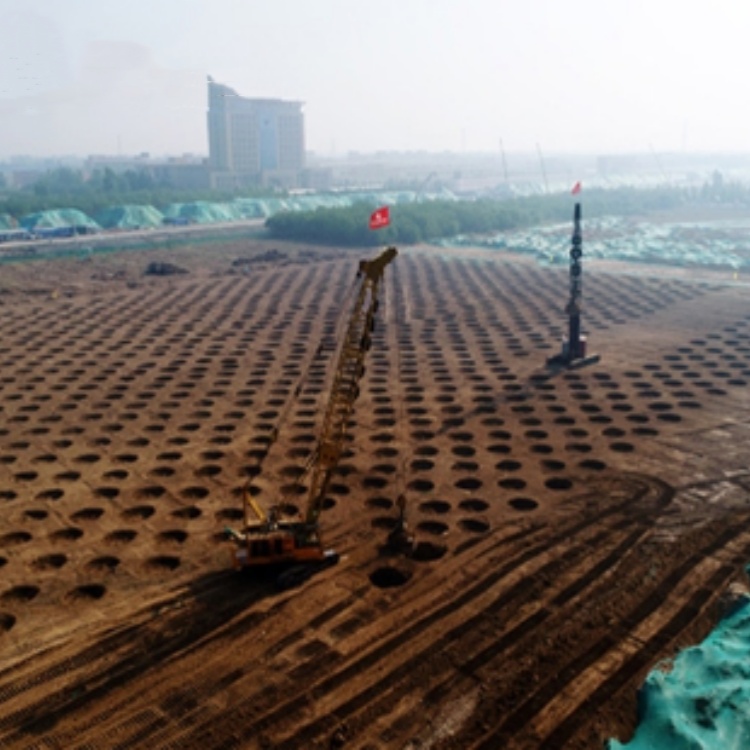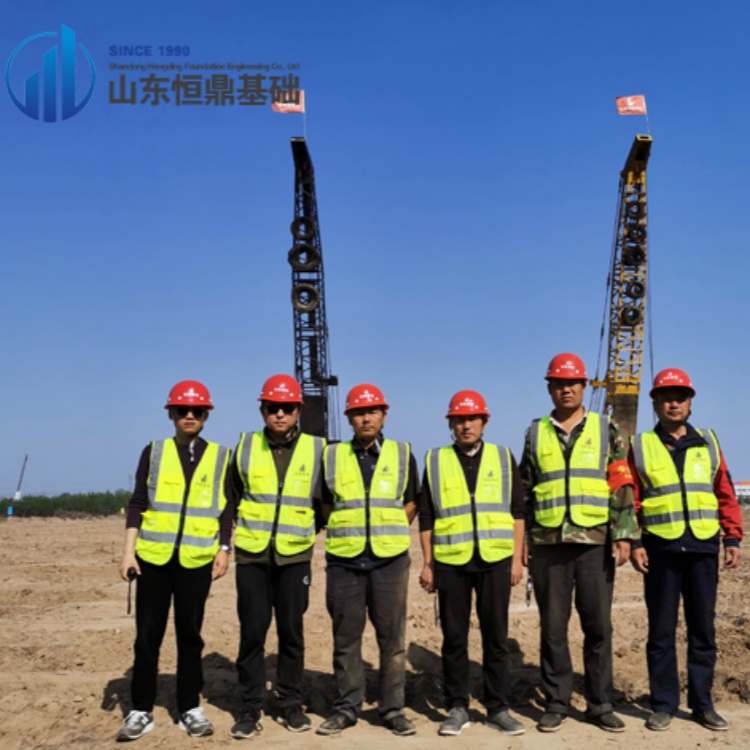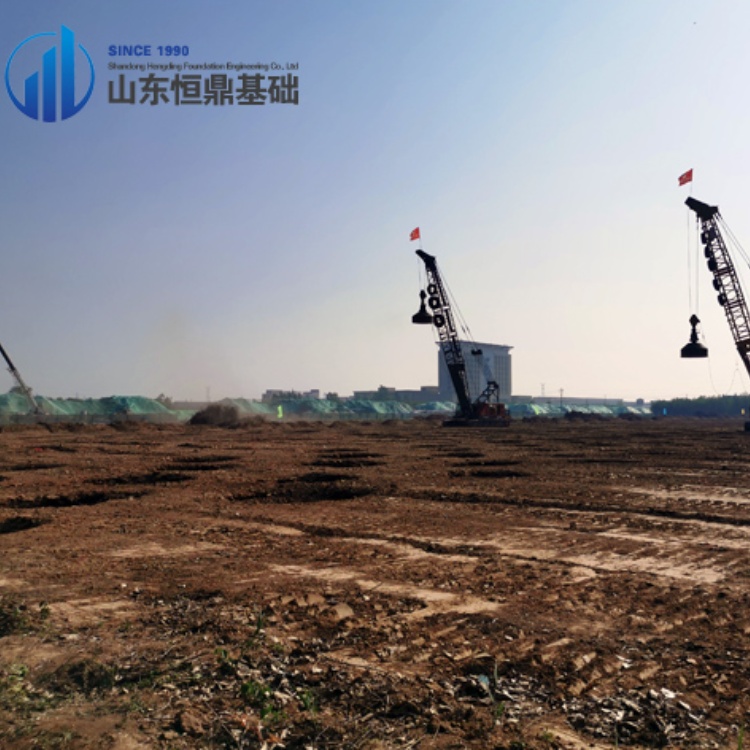


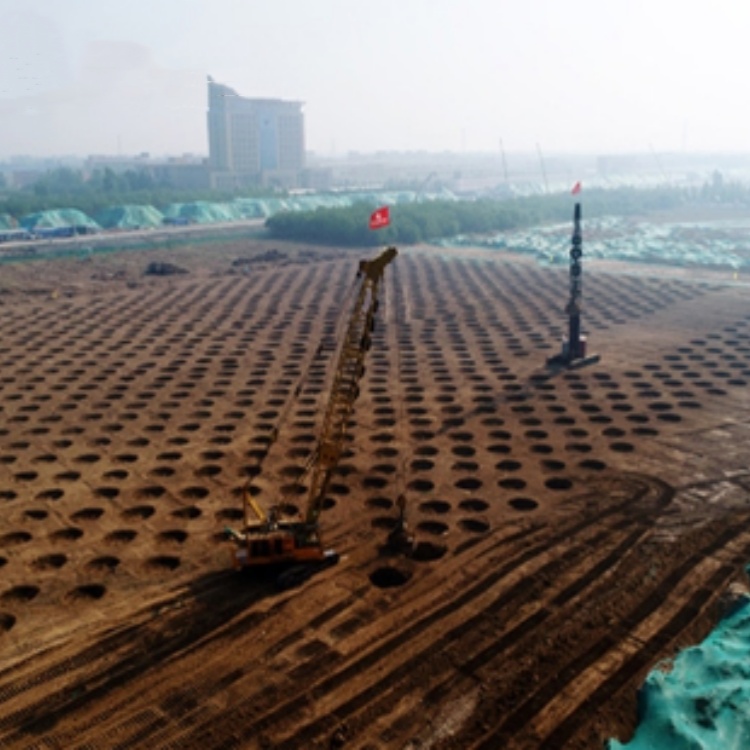
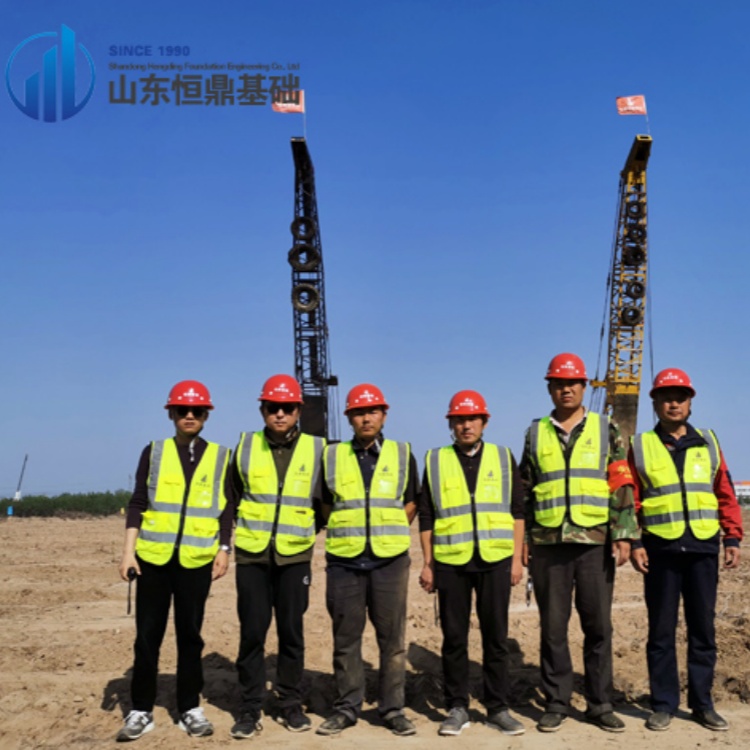
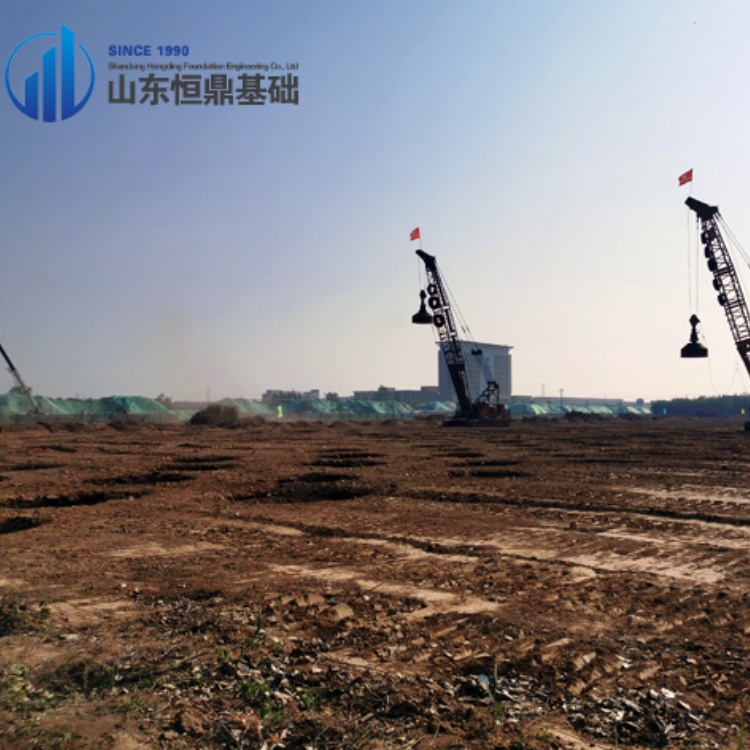


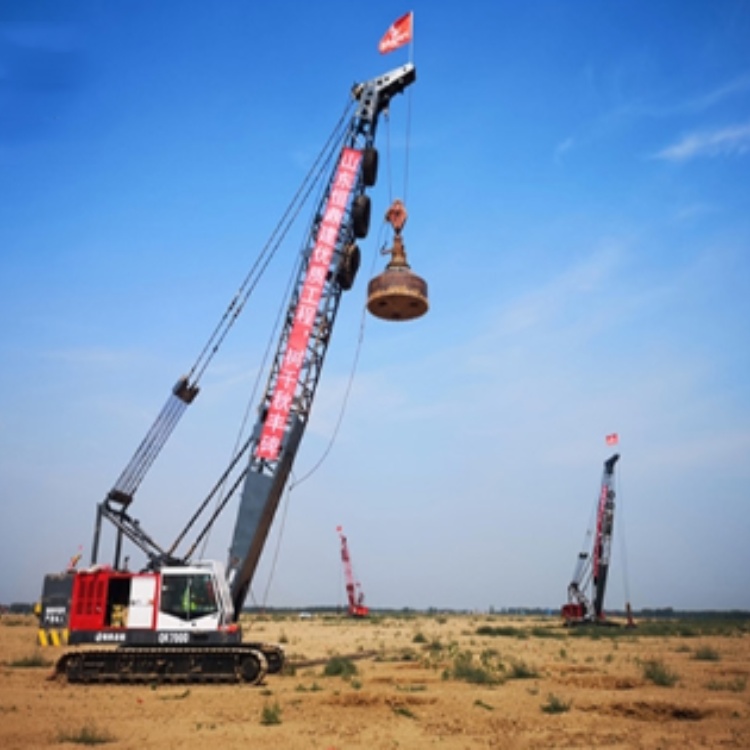
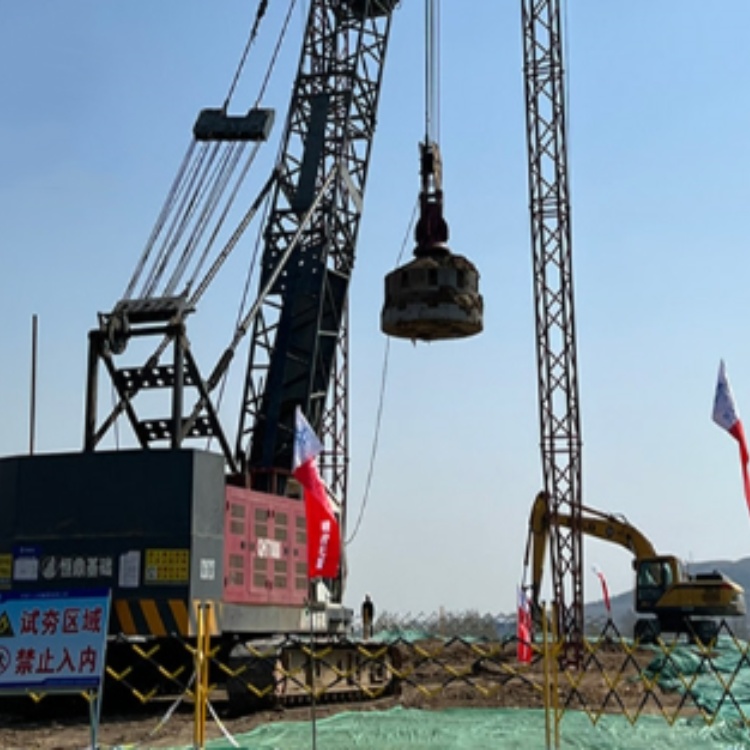
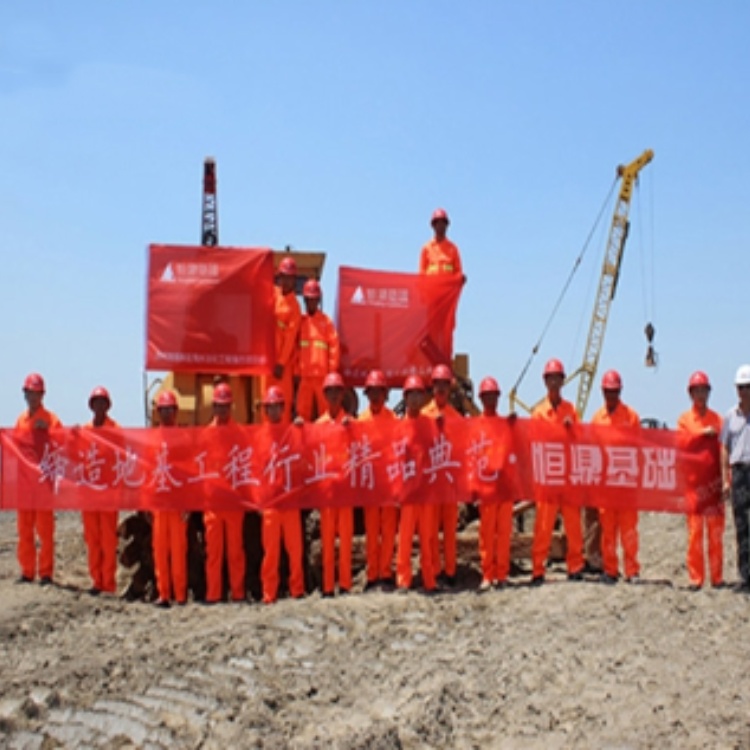





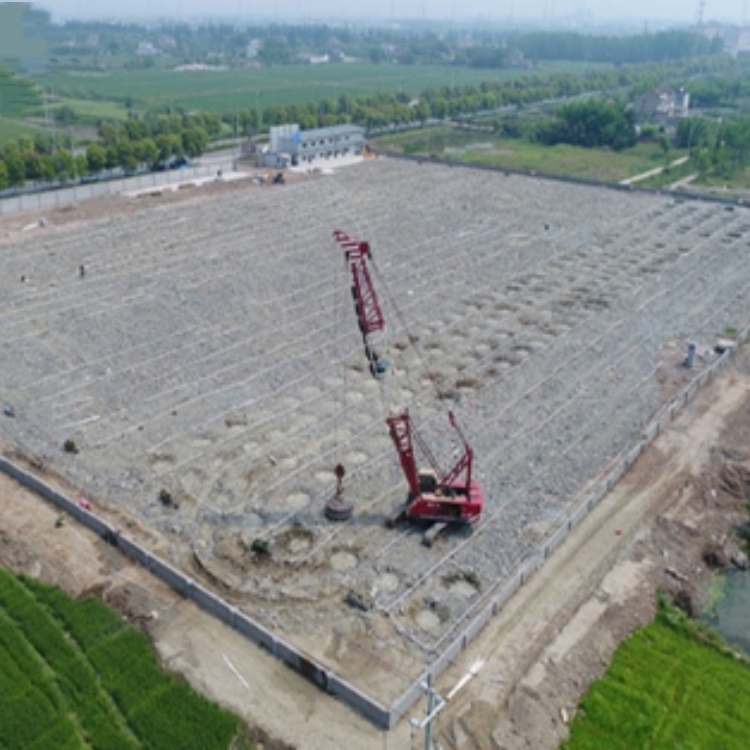
Proposed modular intelligent heating equipment production and big data energy management center project, located in the Economic and Technological Development Zone of Dezhou City, Shandong Province. The project covers an area of 150 acres, with approximately 110 acres requiring dynamic compaction. The original terrain features a deep pit up to -6 meters, which has been backfilled but remains uneven. The surface is covered with tree roots and cultivated soil. The design employs dynamic compaction for foundation treatment to meet the design requirements for the base.
Preparation Phase:
(1) Temporary Path: To ensure the smooth progress of the leveling project, the construction of temporary paths should be completed before the leveling process. This also enhances safety. The width of the temporary path should not be less than 5 meters to facilitate the entry and exit of heavy compaction machinery.
(2) Organize equipment arrival and assembly; bulldozers and vibratory compactors are in place.
(3) Site Grading: The first step is to clear the surface vegetation, weeds, and other domestic waste such as backfill with bulldozers and excavators, to roughly level the existing site to meet the requirements for machinery operation surfaces.
(4) To meet construction environmental protection requirements, the current land on the site has been covered with a green net, adhering to the principle of removing the net as it is dismantled and leveling the ground.
Adhere to the principle of gradual land leveling without large-scale operations, dividing the work into regions. Perform leveling and dynamic compaction in a continuous process, delivering a completed area after the dynamic compaction and leveling of each section.
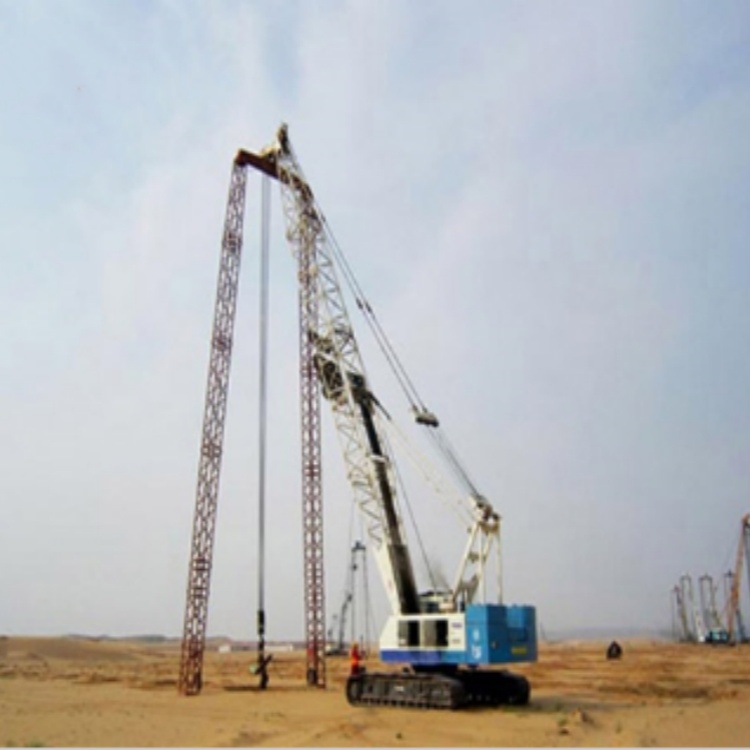
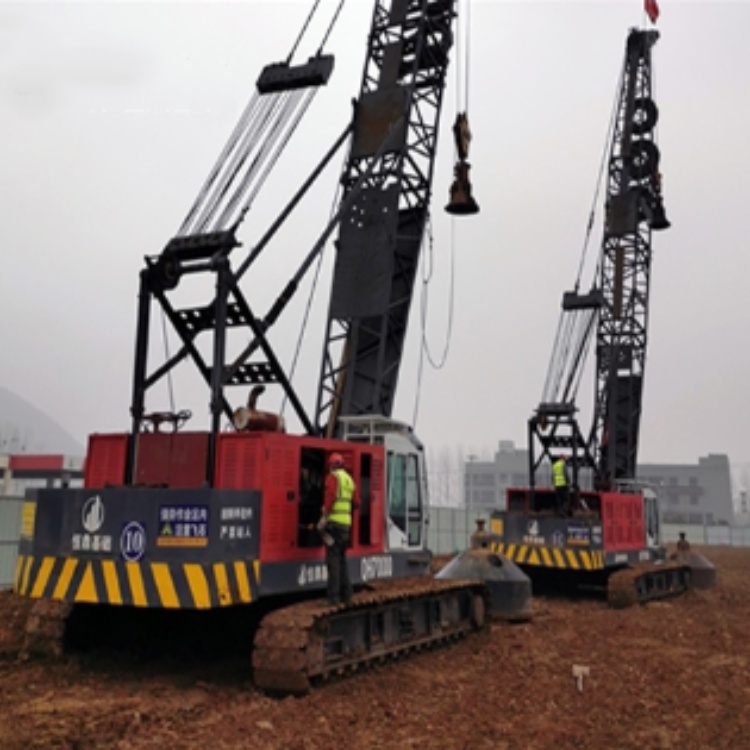
Compaction pile driving method, which involves dropping heavy hammers weighing from tens to hundreds of tons from heights of several to dozens of meters to dynamically compact the soil, thereby reducing its compressibility and increasing its strength. This reinforcement method is primarily suitable for coarse-grained soils with particle sizes greater than 0.05mm, such as sandy soil, gravelly soil, loess soil, fly ash, mixed fill soil, backfill soil, low-saturation silt, clay, slightly expansive soil, and collapsible loess. The compaction pile driving method refers to the technique of using heavy hammers to strike the soil layers from a certain height to rapidly consolidate the foundation for improved bearing capacity of soft soil.
Also known as the dynamic consolidation method, it employs lifting equipment to elevate a 10 to 40-ton weight to a height of 10 to 40 meters, allowing it to fall freely, compacting soil layers with the powerful impact energy and shock waves. The dynamic compaction method is primarily used for sandy soils, unsaturated clayey soils, and fill soil foundations. For unsaturated clayey soil foundations, continuous or intermittent beating methods are generally adopted; and the number of compactions and effective compaction depth are determined through on-site testing based on engineering requirements. Existing experience indicates that under a compaction energy of 300 to 800 tons-meters, an effective compaction depth of 6 to 10 meters can typically be achieved.
Quantify ferric oxide and mica sheets, locally distributed in the area, with an average thickness of 1.77 meters. The original soil foundation bearing capacity characteristic value fak ≥ 120 kPa.
Groundwater Impact on Engineering:
The groundwater in the area is a Quaternary aquifer. During the survey, the groundwater depth was measured at 1.62-3.52m. The primary source of groundwater replenishment is atmospheric precipitation and upstream runoff, with an annual fluctuation range of 1.00-2.00m in groundwater level. The historical high water level was at 19.00m. The design elevation for the strong compaction work face in the northern part of the site is 20.6m, and in the southern high-fill area, it is 21.5m, with less than 3 meters from the exploration groundwater level. Given the shallow groundwater depth in this project, the influence of groundwater must be considered in the strong compaction design. Under heavy blows of the compaction hammer, the pore water pressure in the foundation will rapidly increase, causing local groundwater levels to rise quickly, leading to the "rubber soil" phenomenon. To ensure a good foundation compaction effect under limited construction conditions, it is necessary to adopt an appropriate construction plan that controls the groundwater level within a reasonable range. Otherwise, the foundation may "leak," causing groundwater levels to rise and rapidly increase pore water pressure, leading to foundation slumping, which is difficult to rectify.
Preparation Process for Site Compaction Test
1. All original topsoil and vegetation, including roots and construction debris, were removed using bulldozers to a depth of no less than 10cm, and have been transported out of the site.
2. Ensure the levelness of the construction site, using GPS and other surveying equipment to lay out the perimeter lines and elevation controls (based on design requirements for zero elevation and independent foundation bottom elevation, calculate the site leveling elevation value from the total settlement after compaction), and use bulldozers for site leveling to ensure smooth operation of the compaction machinery.
3. In the southern trial compaction area of the laying-out exit zone, the trial compaction area is set to be approximately 15 meters long and 60 meters wide. Level land within the area has marked compaction points using red bags.