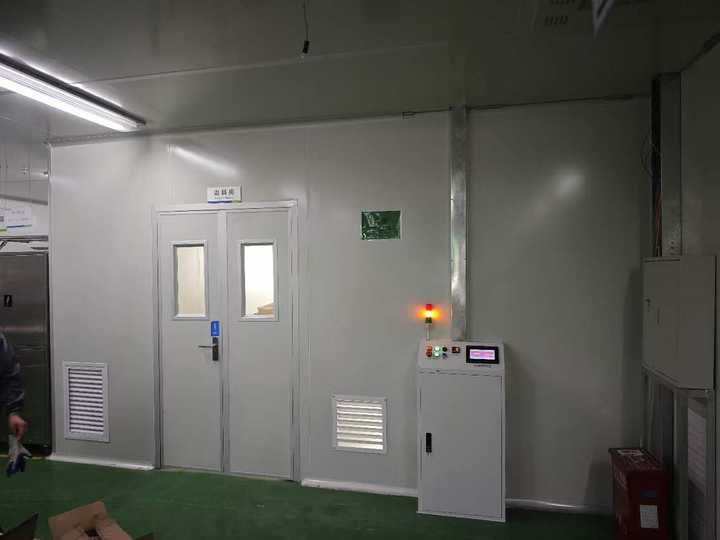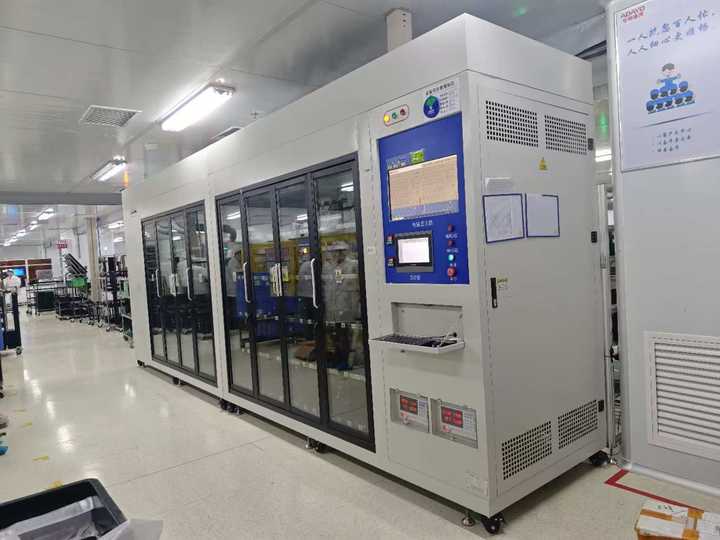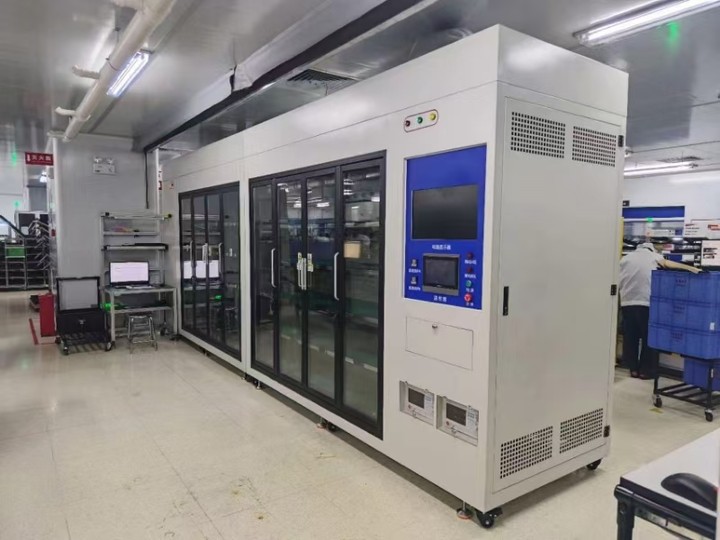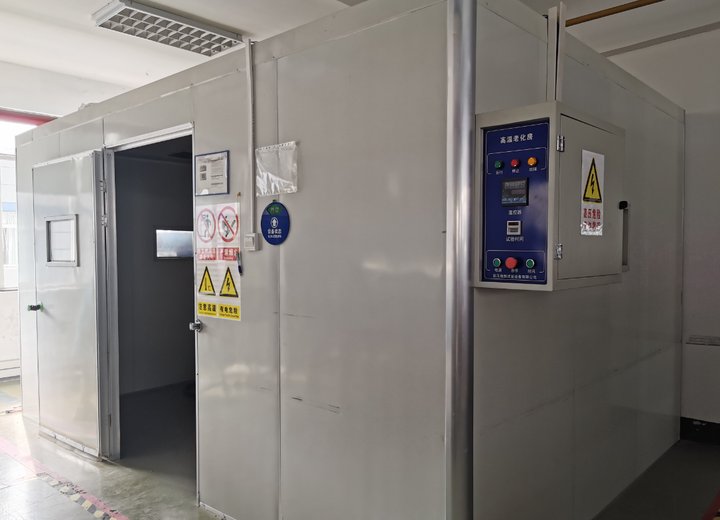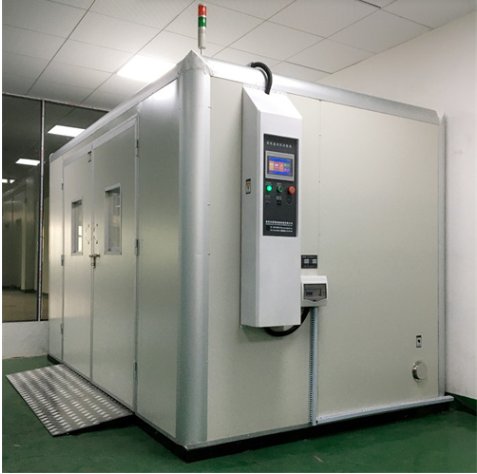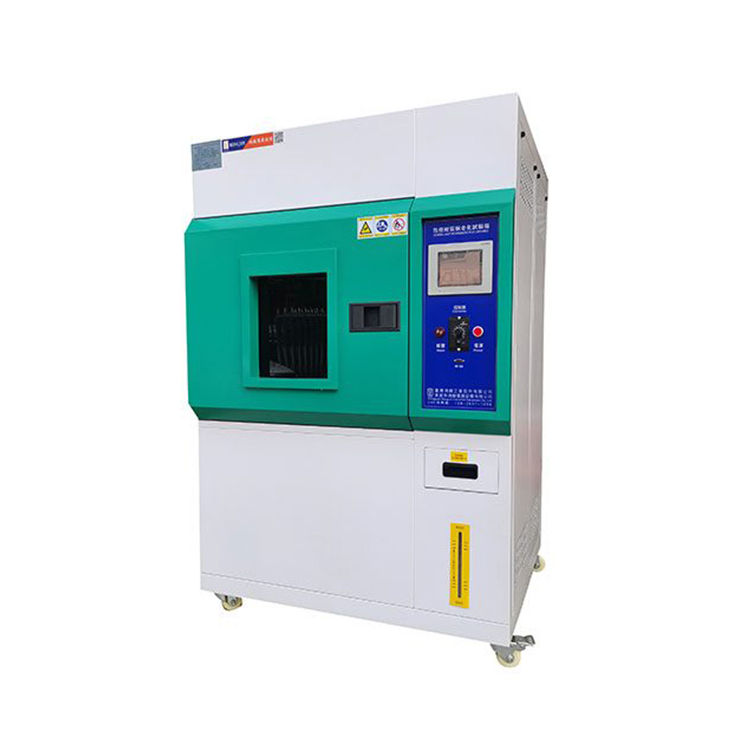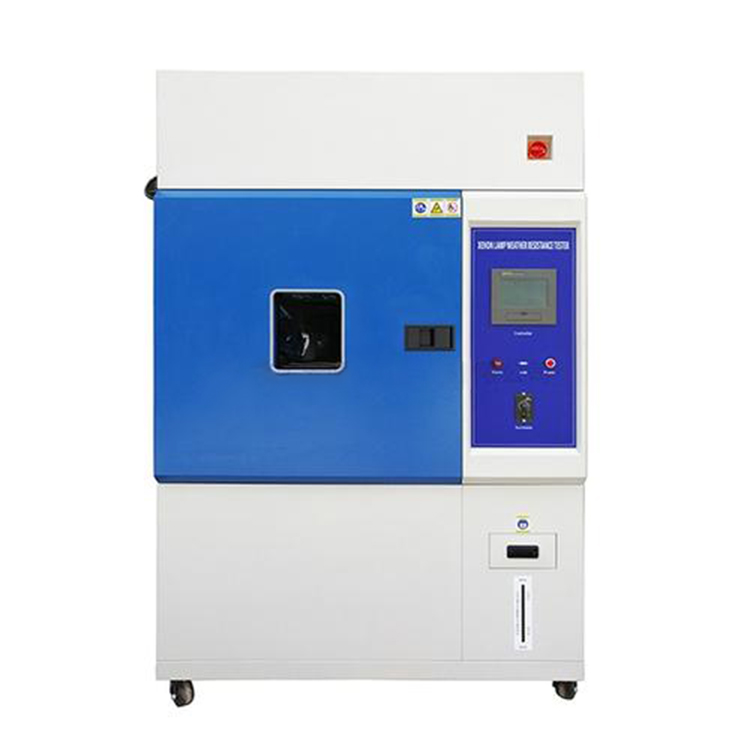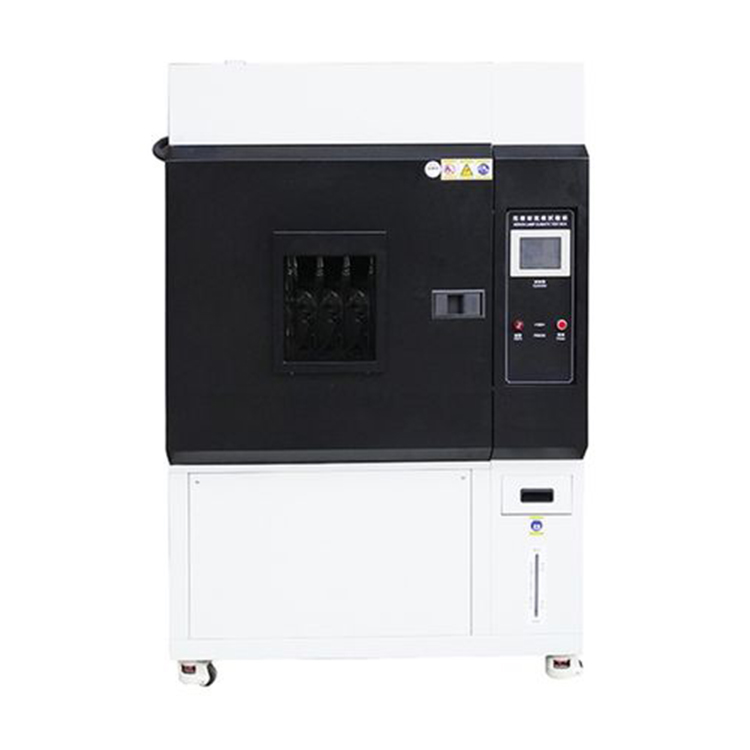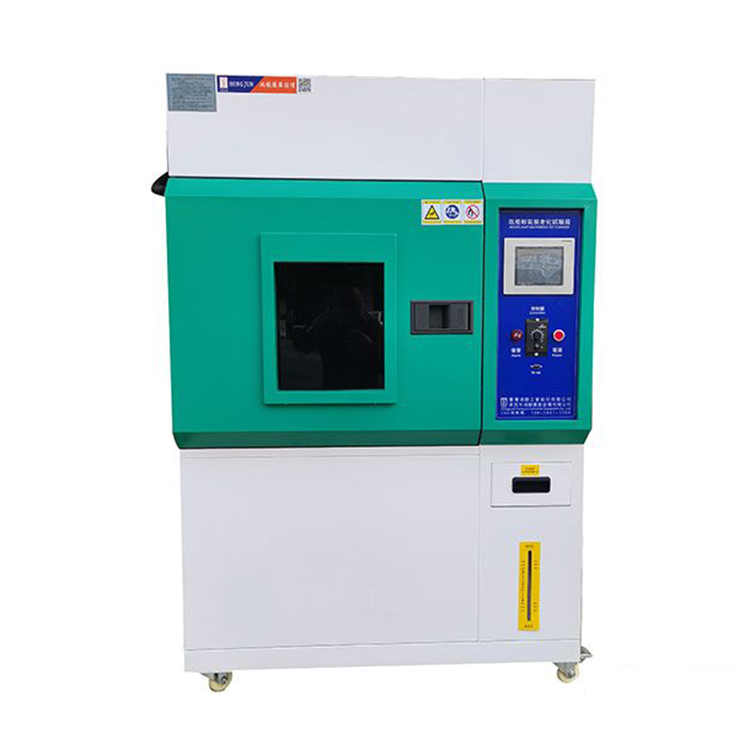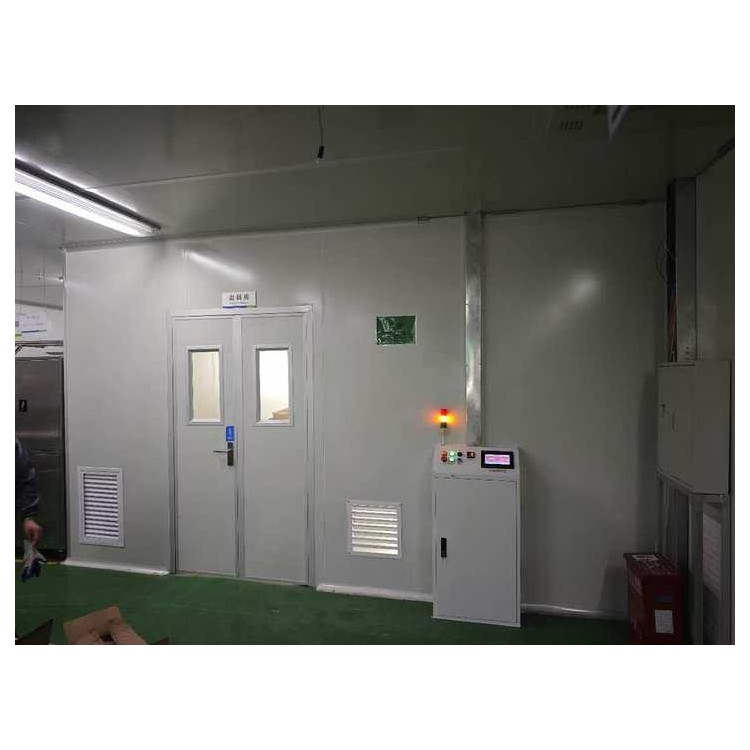

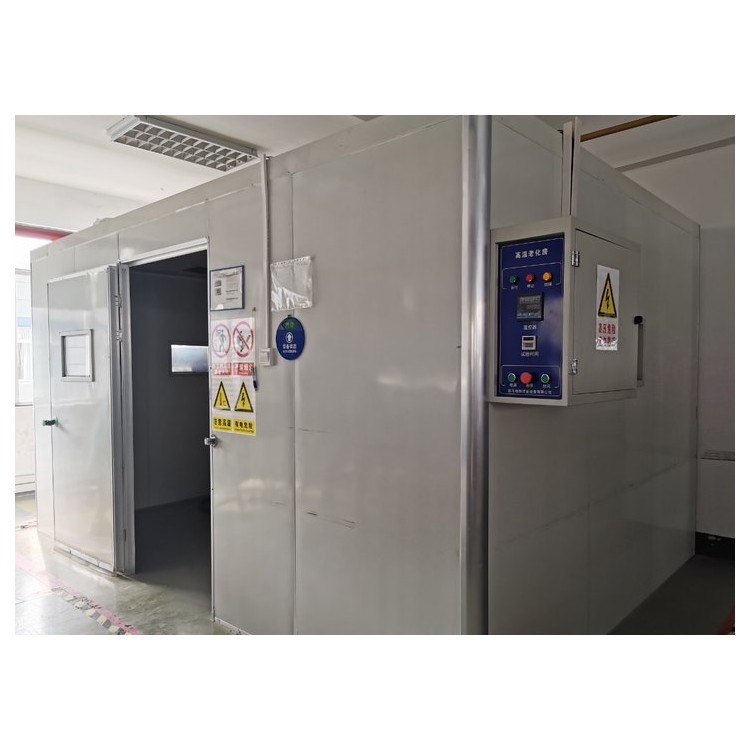


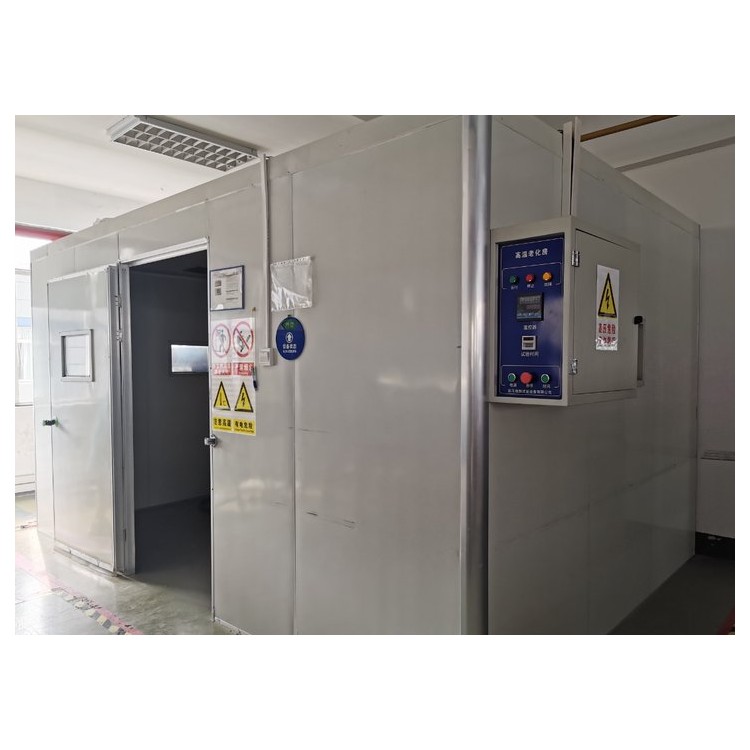





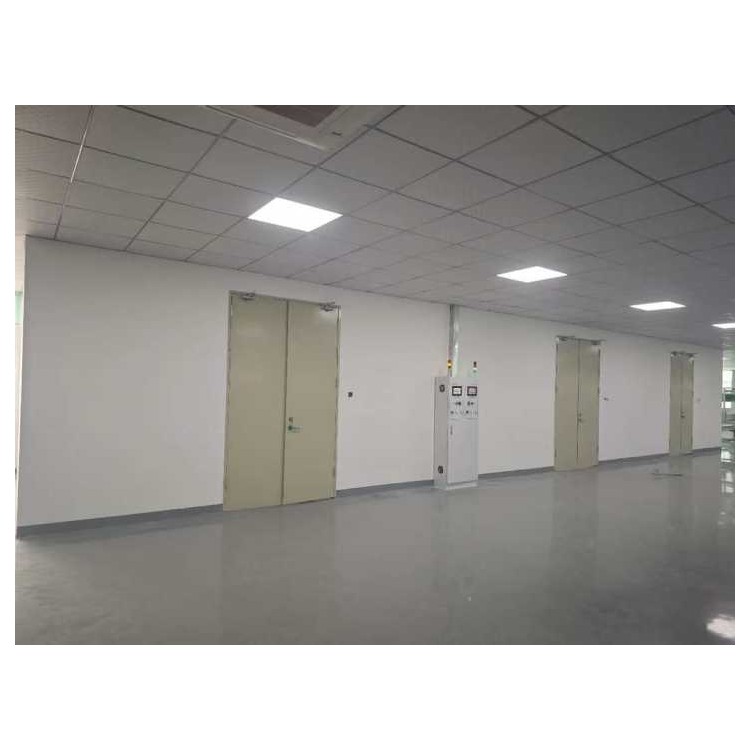
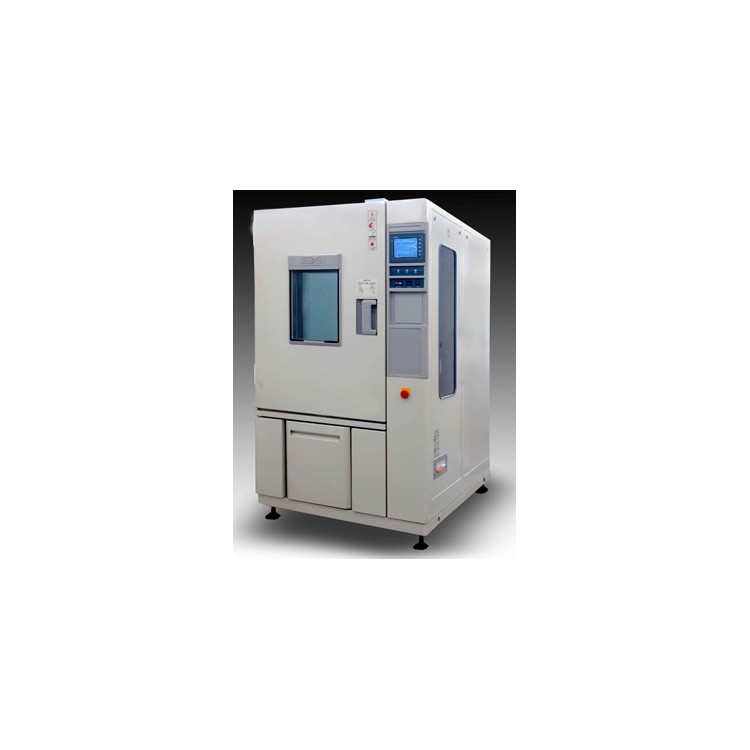
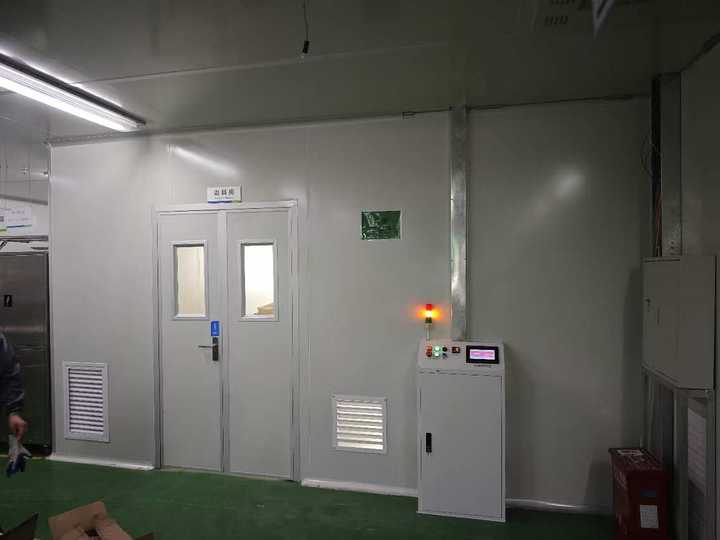
Aging room, also known as high-temperature aging room, baking room, and burn-in room, is a device that simulates high-temperature and harsh environment tests for high-performance electronic products (such as computers, monitors, terminals, automotive electronics, power supplies, motherboards, monitors, switching power supplies, etc.), biotechnology, and chemical products. It is an essential experimental equipment for improving product stability and reliability and is a crucial production process for manufacturers to enhance product quality and competitiveness. This equipment is widely used in power electronics, computers, communications, and other fields. Aging rooms are mainly divided into the main system, temperature control system, heating system, temperature-holding circulation system, and test load. This testing program can detect defective products or components, providing an effective means for customers to quickly identify and resolve issues, thereby significantly improving production efficiency and product quality. It is also a device used for load or temperature aging tests on interfaces such as switch-mode power supplies, mobile phone chargers, batteries, LCDs, mainboards, scanners, monitors, LEDs, biological equipment, and interface cards. The outer framework of this equipment is composed of insulated panels and compartments, equipped with a main distribution box, test stand, temperature controller, timer, various electrical switches, heating elements, racks, sliding doors, circulation fans, exhaust fans, and power outlets, simulating a high-temperature and harsh environment (40°C - 70°C ±5°C, power ON-OFF actions, etc.). Products are connected to simulated loads and operated under this environment. Test duration can be set arbitrarily. This testing program can detect defective products or components, making it an essential equipment for process and quality control. As the performance and environment of the aging room must ensure the required temperature, power quality, load, working hours, and safety, as well as operational habits of personnel, a qualified aging equipment should be a safe, reliable, energy-efficient, feature-rich, and expandable system.
Product Applications: Widely used in power electronics, LED, automotive electronics, computers, and communication fields.
Suited for quality inspection of products such as electronics, plastics, electrical appliances, instruments, food, vehicles, metals, chemicals, construction materials, aerospace, medical, and more.
Categories
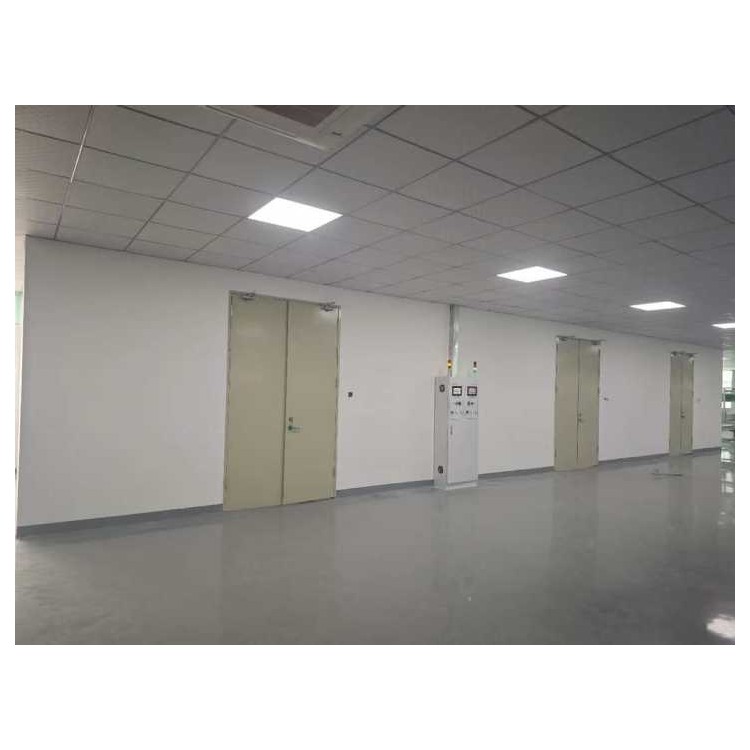
Room-type (walk-in) aging room
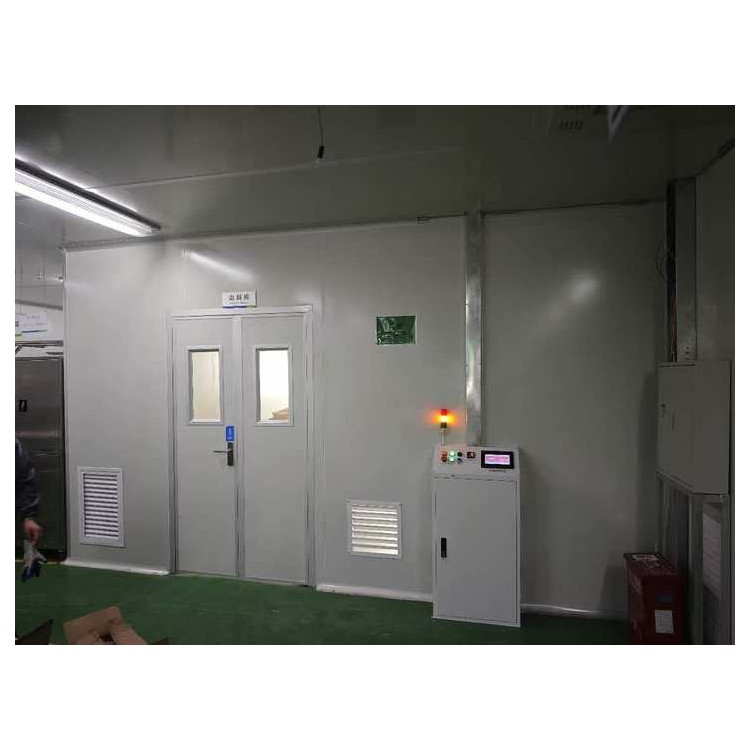
Room-style aging rooms are designed according to customer specifications, featuring insulated sliding doors or double swing doors for entry and exit. Observation windows can be installed as needed for outdoor monitoring of product tests. Power outlets are installed at convenient locations for power supply during aging tests. Features include low requirements for product and trolley styles, ample space, simple structure, and low cost.
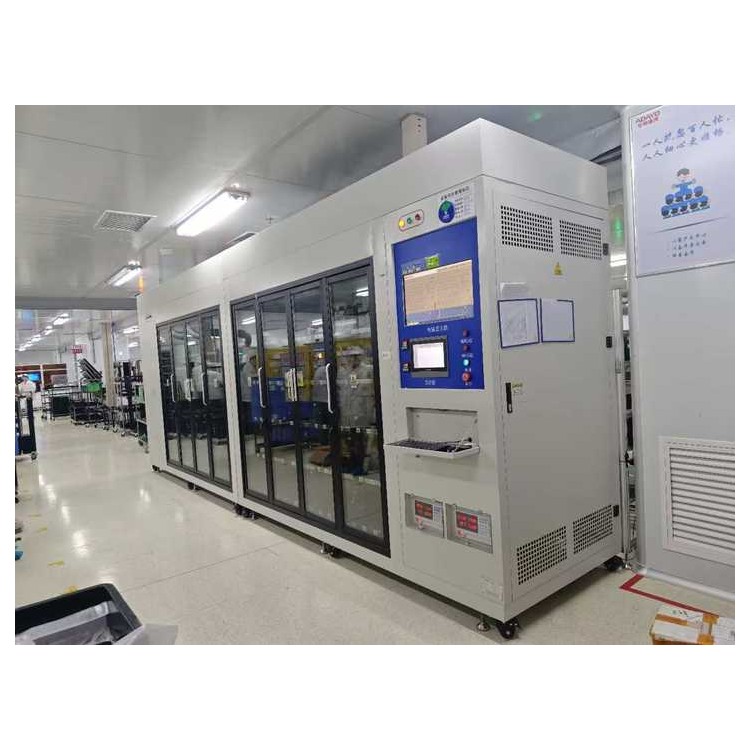
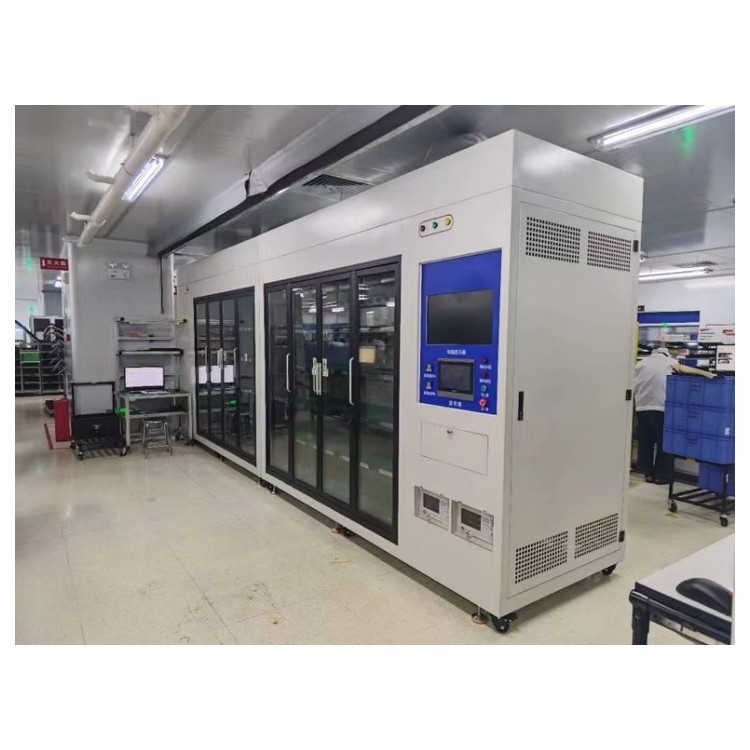
Chamber Isolation
Chamber aging rooms are customized to meet client specifications, featuring sliding doors and large panoramic glass windows in the testing area. For products requiring power supply, domestic brand power outlets are securely mounted on the product shelf tracks or at convenient locations within the testing area for easy operation. Features: Operators can test products up and down without entering the aging room, clearly observing the B/I status of the product during the process; this eliminates the discomfort of operators entering a overheated room and also saves energy.
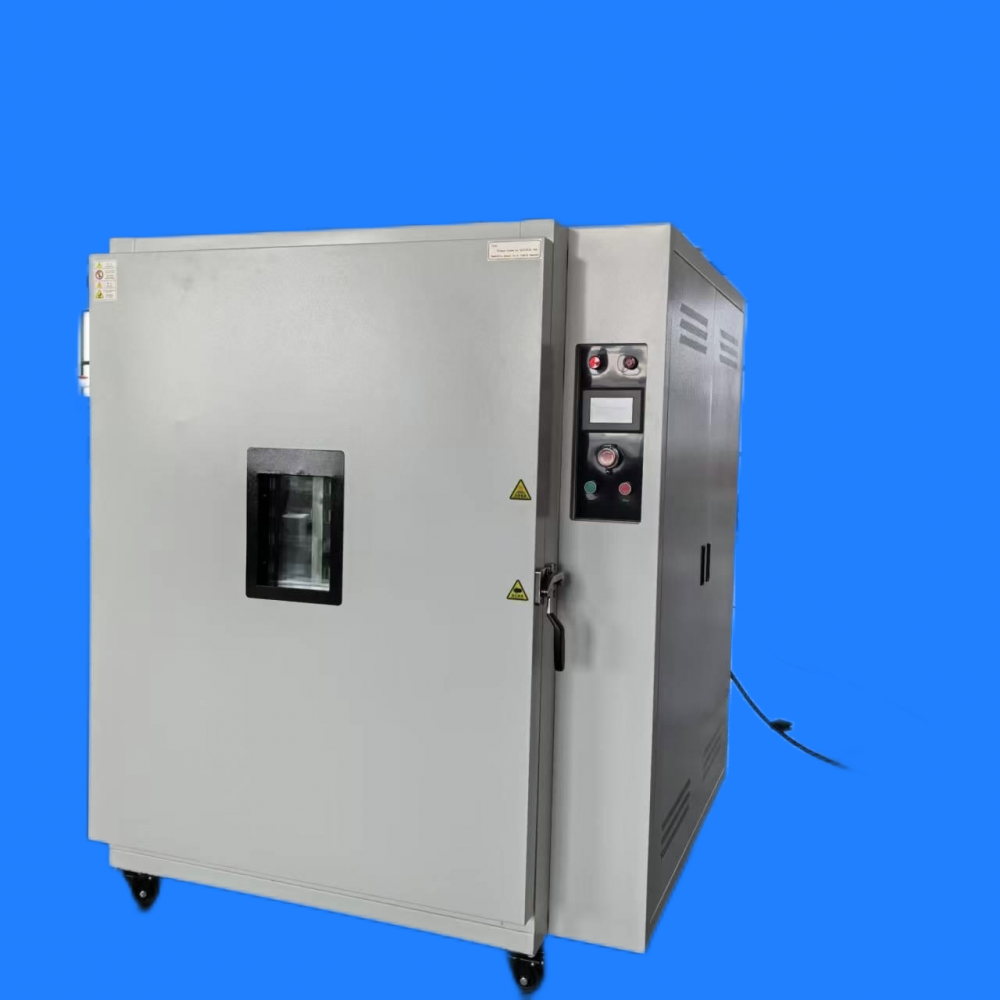
Portable
The portable aging chamber is directly processed into finished products in our company (assembled on-site at the customer's location if the volume is too large), and the trolley dimensions are all designed according to customer requirements. Suitable for low production volumes or small-batch testing of R&D trial products. Other parts are similar to the Chamber testing system, featuring: small land occupation and easy relocation at any time.
Features
1. Accurate temperature control with high precision. Thanks to the unique duct system design and electrical control system, it maintains a highly uniform room temperature, significantly surpassing similar products.
2. The room temperature range is wide and continuously adjustable, with settings from +5℃ to 60℃ or up to 85℃. Products with higher temperatures can be designed upon special customer request.
3. The system is fully equipped with protective features, ensuring long-term stable and trouble-free operation.
4. The laboratory's structural design is advanced and rational, with matching products and functional components at the forefront of the industry. It can meet long-term, stable, safe, and reliable production requirements. It can satisfy users' processing and production needs for the aforementioned applications, and is easy to use, operate, and maintain with a long service life, attractive appearance, and a user-friendly interface, making both operation and monitoring simpler and more intuitive.
5. The main components of the equipment are sourced from well-known domestic and international brands, ensuring the overall quality and performance of the unit.
6. Attractive appearance, easy to install, with a short construction period.
An aging room product is a device designed to simulate high temperatures and harsh environments for high-performance electronic products, serving as a crucial experimental tool to enhance the stability and reliability of electronic devices. It is an essential production process for manufacturers to improve product quality and competitiveness. Therefore, the aging room itself must ensure the stability of its operations, being of high quality, safe, and reliable. Additionally, to meet future production development needs, it should also be flexible, open, and possess certain expandability.
7Complies with standards:
Aging room products take full consideration of relevant industry standards in their system structure and design principles, including body standards and electrical engineering standards.
The relevant standards are:
"Environmental Test for Electrical and Electronic Products - GB/T2423.2-2001"
"Code for Design of Low-Voltage Distribution Systems" GB50054-95
"Code for Design of Power Supply and Distribution System - GB5002S2-95"
"Code for Construction and Acceptance of Grounding Systems for Electrical Installation Projects GB50169-92"
"Grade A Building Material for Combustion Performance Classification"
"Code for Acceptance of Ventilation and Air Conditioning Construction Quality"
Detailed Information
Key Technical Parameters
1.1 Room Size: Customized room dimensions based on client's site and required aging room quantity
1.2 Temperature Range: Room temperature +5℃ to 60℃ or 85℃
1.3 Temperature Fluctuation: ≤±1℃
1.4 Temperature Deviation: ≤±2℃~5℃ (measured under no-load at 80℃)
1.5 Control Methods: Push-button control system or PLC touch screen control system
1.6 Operation Mode: Temperature Adjustable/Constant Operation
1.7 Power Supply: AC 380V; 50 Hz
1.8 Room Aging Power: Determined by room size and temperature range (PTD controlled temperature adjustment)
Noise Level: ≦65~75 decibels (measured 1.5 meters outside the aging room)
Chamber structure and material specifications
2.1 Wall Materials: The storage body is assembled with double-sided color steel thermal insulation panels (polyurethane board or mineral wool board). The thickness of the panels is selected based on the requirements of the aging room itself and the customer, with options including 50mm, 75mm, and 100mm thicknesses. The color steel plates come in thicknesses of 0.426mm and 0.476mm, etc. The entire storage body is constructed with a steel frame structure and fixed supports made of aluminum profiles. The edges inside and outside the storage body are lined with aluminum profiles or stainless steel plates; (ground treatment is according to customer requirements), and sealant is applied at the joints to ensure the room's airtightness and aesthetics. (The fire resistance of the building materials meets the requirements of Grade A in the "Classification of Combustion Performance of Building Materials.")
Note: Polyurethane boards do not meet the requirements of Grade B2 for the combustion performance classification of building materials, and they cannot achieve the A-grade fire resistance level. Therefore, most professional companies that make aging rooms typically use rock wool sandwich panels.
2.2 Seal the joints with密封glass silicone, ensuring both the room's airtightness and aesthetic appeal.
2.3 Surface Treatment: No treatment required if the temperature is below 60°C; insulation flooring is needed if it exceeds 85°C.
2.4 The combustion performance of the building materials meets the requirements of Grade A in the "Classification of Combustion Performance of Building Materials."
2.5 Door opening settings: Customized in quantity and size to meet requirements
2.6 Observation Window: 400×600mm, tempered glass, installed on the main door; quantity or size can be increased as needed
Wind Temperature Control System
The wind pipe system complies with the "Code for Acceptance of Construction Quality of Ventilation and Air Conditioning Engineering" GB50243-2002 standard. It typically consists of a circulation system, a heating system, and an over-temperature exhaust system. The circulation system, over-temperature exhaust system, heating system, and the matching duct system are installed on the top of the aging room, without occupying other spaces. The circulation system uses a circulation fan and matching ducts for circulation, ensuring uniform temperature within the test area. The heating system employs electric heaters for heating, with the heaters placed in the circulating air ducts of the aging room's roof, surrounded by fire-resistant and insulating materials. Controlled by a PLC temperature module or PID gauge, the heater power adjusts automatically according to the indoor temperature fluctuations after reaching the required product temperature, maintaining the room temperature stable at the set accurate value. The room temperature can be raised to the set temperature within the specified time. The heater stops heating once the set temperature is reached. The heater is equipped with an overheat protection device (EGO). If the customer's own product generates heat, an overheat exhaust system is used. For low heat generation, an electric shutter automatic negative pressure exhaust is used; for high heat generation, a low-noise fan exhaust is employed, with its speed controlled by a variable-frequency drive.
The temperature control process: When the machine is turned on, the heater starts heating. The heater stops heating once the temperature reaches the set value. As time goes by, the temperature in the product area gradually increases. When the temperature exceeds the set upper limit, the exhaust system activates to expel overheated gases outside. The variable frequency inverter controls the outdoor exhaust fan to operate, and the fan stops exhausting air when the temperature drops to the set lower limit, at which point the exhaust system also shuts down. The recirculation system maintains a continuous circulation state during the aging process of the products to ensure temperature balance. The entire system is characterized by stable performance, accurate control, minimal temperature fluctuations, high balance, and low noise.
Noise Control: Utilizing high-quality low-decibel circulating fans, the air ducts are wrapped with 3mm thick asbestos for both insulation and noise reduction. According to acoustic principles, all moving parts are treated with canvas and springs for soft connections, aiming to minimize noise to a lower standard.
Aging Room Control System
Utilizing two-level PID temperature control, it achieves precise control over the temperature in the test area (product area). The temperature controller also allows for real-time scrolling display of any temperature in the test area. For those with independent loads, it can monitor the temperature in the load area, preventing excessive temperatures and facilitating accurate temperature control in the test area. The control system is equipped with various protection functions, including over-temperature alarm protection, fan failure alarm protection, no-airflow alarm protection, and indoor smoke detection alarm protection, ensuring the aging room operates stably and reliably for an extended period without faults. (PLC control is optional.)
Product Test Bench (Optional)
Product testing racks are typically designed and manufactured according to the customer's products and requirements. If load-bearing is required, corresponding load frames are produced. Generally, the design of the testing racks requires stable and reasonable structures, easy operation, attractive appearance, and functional features, to the fullest extent meeting the customer's needs.
Control system design and safety protection measures
6.1 The electrical control design refers to the "Code for Design of Low-Voltage Power Distribution," GB50054-95, the "Code for Design of Power Supply and Distribution," GB5002S2-95, and the "Code for Construction and Acceptance of Earthing Systems for Electrical Installation Works," GB50169-92, to standardize the electrical control design.
6.2 Control System Integration with Aging Function Design. The design features control of the electrical cabinet, with aging time, temperature, and various operation switches all operable from a single control cabinet; the electrical cabinet panel is designed for aesthetics and ease of operation.
6.3 The aging process can be fully automated with partial abnormality self-handling capabilities, making operation automatic and simplified.
6.4 Multi-protection features ensure safety and reliability.
Automatic power cutoff to the circulating system when an overheating condition is detected in the electric heating element or fan failure, accompanied by an alarm from the buzzer.
b. Electric heating and fan联动 design: The heater cannot be activated independently if the fan fails to start. When turned off, both the electric heating and the circulating fan shut down simultaneously to prevent damage due to dry burning.
c. Heaters are connected with high-temperature-resistant wire, which does not burn at 300°C.
d. Install explosion-proof lighting fixtures indoors to enhance bulb longevity and prevent bulb bursting.
e. The storage body is made of flame-retardant insulation material, offering excellent thermal insulation properties and high safety factor.
f. Over-temperature Audio-Visual Alarm Function: If an over-temperature condition occurs during the aging process, the red light will illuminate and the buzzer will sound.
g. Smoke Alarm Function: Indoor smoke detectors are installed to prevent products from burning due to any reason during the aging process and trigger an alarm. The power supply to the aging room is automatically shut off upon alarm activation.
Determinants of Aging Room Costs
Determining Factors for Aging Room Costs
The aging room price composition is made up of the following factors:
Room size (determines fan selection, number of fans, and duct size)
Typically, axial fans, centrifugal fans, and air handlers are used for this purpose.
Axial fans are installed at the top of the aging room, with corresponding louver windows mounted on the ceiling based on the number of fans. The concept is to exhaust air from above and draw in air from above, making this method cost-effective. However, the controllability of temperature uniformity is not high, as warm air rises from below.
Centrifugal fans are installed at the top of the aging room. The number of ducts is designed according to the fan's power and the room's size, each connected to the bottom of the room. Two double-layer louvered outlets are installed on each duct, allowing the direction of the air to be adjusted. The air is then recirculated from the return air outlet at the top. Centrifugal fans are primarily used for aging rooms that are not very large.
Breezeways are primarily used when aging rooms are too large, with wide spans, and there's a high requirement for temperature uniformity. If the room is very large, the number of centrifugal fans needed increases accordingly, resulting in significant noise. This also leads to a high construction cost.
2: Temperature Range (Different materials are selected based on varying temperature ranges)
The commonly used thermal insulation material in the market is high-density rigid polyurethane foam. It features an outer shell of 304 stainless steel, with a temperature resistance of 85 degrees, good hardness, and excellent quality. It is especially necessary for large-scale aging rooms, as it is easy to disassemble and move. However, it is relatively expensive, but it is generally used by professional companies.
Additionally, EPS color steel plates are mainly used for aging within the temperature range of room temperature to 60 degrees. EPS color steel plates are commonly referred to as foam boards, are not flame-retardant, and do not meet the requirements of the "Classification of Combustion Performance of Building Materials" B2 level. They are safe for long-term use below 60 degrees. Rock wool color steel plates are used only above an aging temperature of 60 degrees.
3: Required products for aging, as well as product power (differences in products relate to whether they heat up, and power relates to the power supply configuration inside)
Power for aging products: In the aging room, power supply for the aging racks is required. The power involves the size and quantity of the wire, and if the product heats up, it involves the use of residential-grade wire.
4: Uniformity of Temperature Requirement
The aging room temperature is generally ±1℃ at 40 degrees, ±3℃ at 50 degrees, and ±5℃ above 60℃. If the uniformity requirement is too high above 60℃, PLC multi-point control or master-slave machine control can be adopted.
5: Commonly used aging temperature points and total power of products (involves exhaust system; exhaust is maintained at a constant temperature point based on room size, temperature range, and product power. When the product overheats, the exhaust fan operates to ensure the temperature is controlled within the set point.)
Common temperature points for aging rooms: Involves the exhaust system, based on the total power (heating power) of the products inside the aging room, then according to the required temperature, calculate the power of the exhaust fan and the size of the exhaust pipe through the corresponding formula. Currently, the technology used on the market is hot air recirculation, which has good temperature uniformity.
Equipment Prohibited
Flammability, explosiveness, and volatile substance sample testing and storage
2: Testing and Storage of Corrosive Material Samples
3: Biological Sample Testing or Storage
4: Testing and Storage of Samples from Strong Electromagnetic Emission Sources
5: Safe Operating Procedures for High-Temperature Aging Room
1. Safety Operating Procedures for High-Temperature Aging Room
Before use, proper preparation is essential. A thorough understanding of the equipment's performance is required, as well as familiarity with safety precautions in each specific operation.
(2) Prior knowledge of the high-temperature aging room and its surrounding environment, as well as the location of the electrical gates, is mandatory before use.
(3) After each use, ensure all safety measures such as water, electricity, and gas are secure before leaving.
(4) Be equipped with a fire extinguisher or sand, and place them as visibly as possible. A fire hydrant for firefighting should also be available.
2. Safety Precautions for Fire and Electricity
When using electrical power, it is essential to check in advance that the electrical switches, motors, and all parts of the mechanical equipment are properly installed.
(2) Ensure the switch is fully engaged and pulled down when starting and stopping work.
(3) When replacing fuses, ensure they match the load rating and do not increase the size or substitute with copper wire.
(4) Absolutely refrain from using wet hands, wet rags, or iron-tipped bristles to clean or wipe switches, electrical outlets, and other electrical components to prevent electric shock.
(5) In the event of overheating in electrical power equipment, immediate shutdown is required.
(6) For power supplies of 110 volts or higher, the metal parts of the instrument must be grounded.
(7) Unauthorized personnel are prohibited from entering.
Cautionary Notes
Please note the following items carefully; we will not be held responsible for any consequences otherwise.
Check the voltage before use, please use the voltage indicated on the machine to avoid overvoltage and potential fire hazards.
2. ※Is the motor running in the correct direction? Gas should be expelled from the exhaust vent, indicating normal operation. (This applies only to models with a three-phase voltage of 380V.)
3. When there's a significant discrepancy between the displayed temperature and the actual temperature (measured by a standard thermometer), do not arbitrarily adjust the components and internal parameters of the circuit board. Please notify our company to send a staff member to handle the situation.
Do not randomly open the machine door when there are temperature changes during use.
Do not place the machine in a damp location or rinse it directly with water to prevent electric leakage.
6. Prohibit placing alcohol, adhesives, etc., which are flammable and volatile, inside the machine to prevent accidents.
7. Keep flammable materials adequately away from the machine to prevent accidents.
Please handle items with care when placing them into the machine, and always wear heat-resistant gloves for temperatures above 60 degrees.
9. When the timer (temperature hold timer) is active, the AL light on the temperature control panel illuminates, indicating the temperature has reached the set range, and the machine begins to hold the temperature.
10. During temperature maintenance, if there is overshoot or undershoot between the displayed temperature and the set temperature, automatic calculation is required.
11. Regularly inspect and clean the dust and other debris from the heater inside the machine.