







Detailed Description
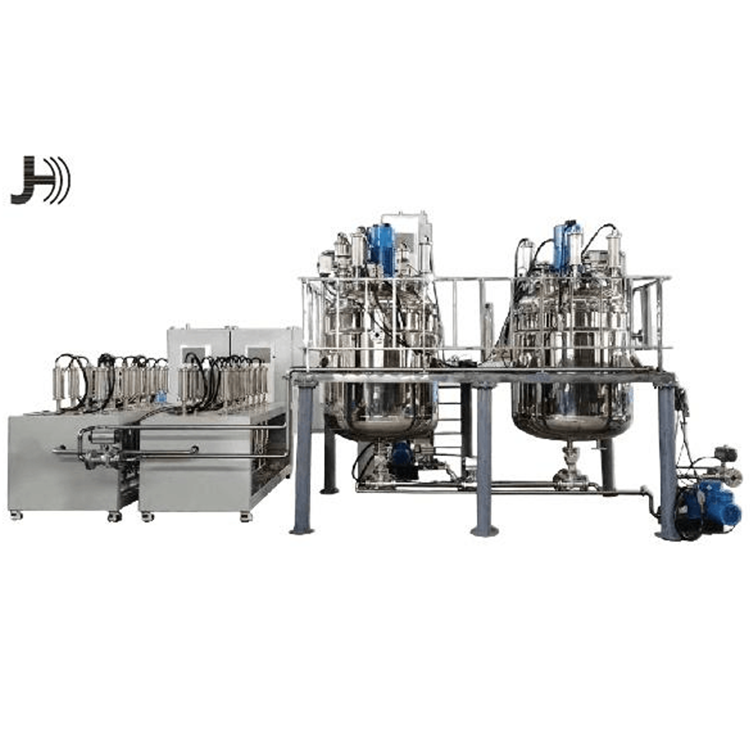
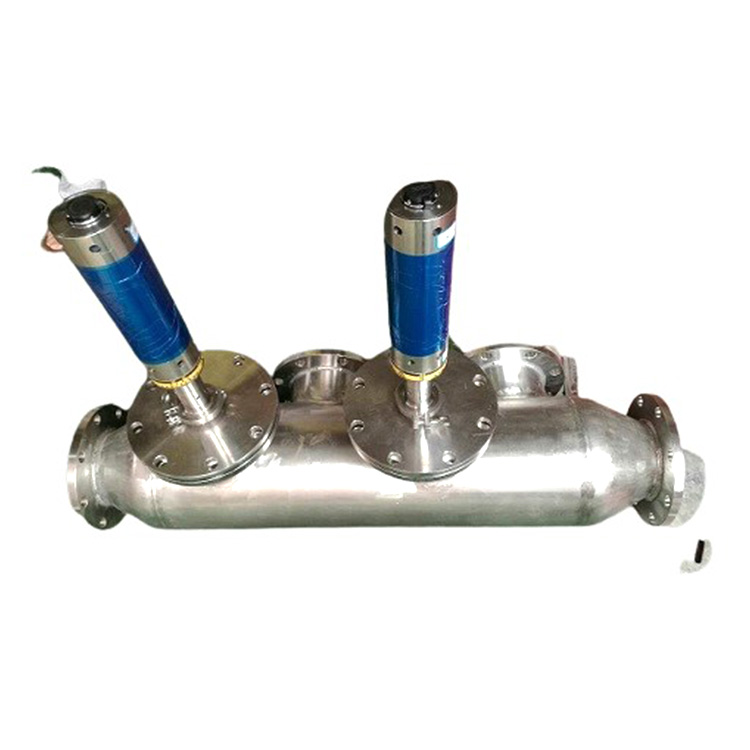
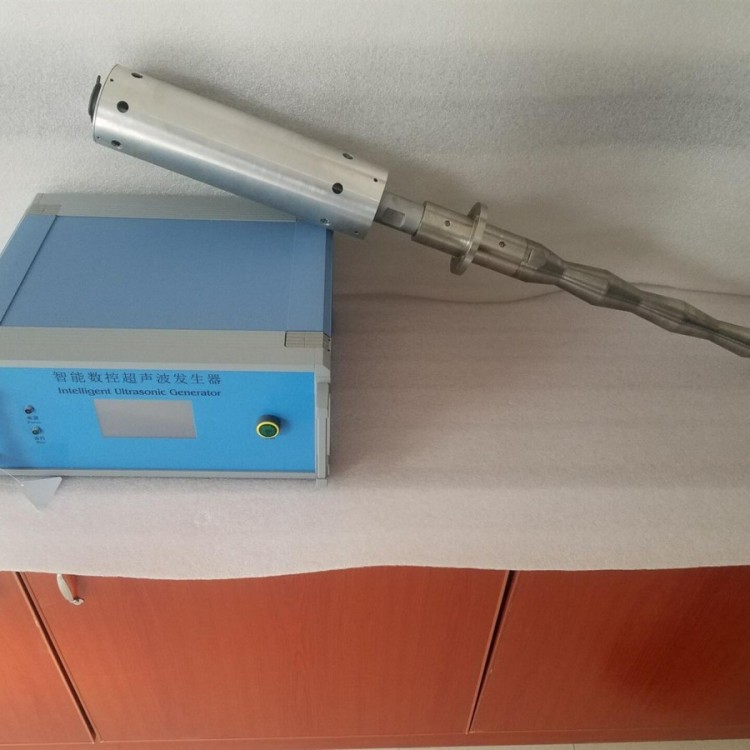
Large ultrasonic dispersers and particle dispersion have emerged as a new interdisciplinary field in recent years. Particle dispersion refers to the engineering process of separating and evenly distributing powdered particles in a liquid medium, which mainly includes three stages: wetting, de-agglomeration, and stabilization of dispersed particles. Wetting is the process of slowly adding powders to a mixing system, creating vortices that displace air or other impurities adsorbed on the surface of the powder with liquid. De-agglomeration involves dispersing larger particle aggregates into smaller particles through mechanical or ultrasonic methods. Stabilization ensures the long-term uniform dispersion of powdered particles in a liquid. Depending on the dispersion method, it can be categorized into physical dispersion and chemical dispersion. Ultrasonic dispersion is one type of physical dispersion.
Ultrasonic waves are characterized by their short wavelengths, nearly straight propagation, and easy concentration of energy. They can increase the rate of chemical reactions, shorten reaction times, and enhance selectivity. Additionally, they can trigger chemical reactions that do not occur in the absence of ultrasonic waves. Ultrasonic dispersion involves placing the particle suspension to be treated directly in the ultrasonic field, processing it with appropriate frequencies and powers of ultrasonic waves, making it a highly intense dispersion method. The mechanism of ultrasonic dispersion is widely believed to be related to cavitation. The propagation of ultrasonic waves is medium-coupled, and during their transmission through the medium, there is an alternating cycle of positive and negative pressure. The medium is compressed and stretched under alternating positive and negative pressures. When a sufficient amplitude of ultrasonic waves is used to act on the liquid medium to maintain a constant critical molecular distance, the liquid medium will break, forming microscopic bubbles, which then grow into cavitation bubbles. These bubbles can either redissolve in the liquid medium, float and dissipate, or collapse if they脱离 the resonant phase of the ultrasonic field. Practical experience shows that there is an optimal ultrasonic frequency for the dispersion of suspensions, which depends on the particle size of the suspended particles. For this reason, after ultrasonic treatment for a period, a rest period is necessary, followed by continued ultrasonic treatment to avoid overheating. Using air or water for cooling during the ultrasonic process is also an excellent method.