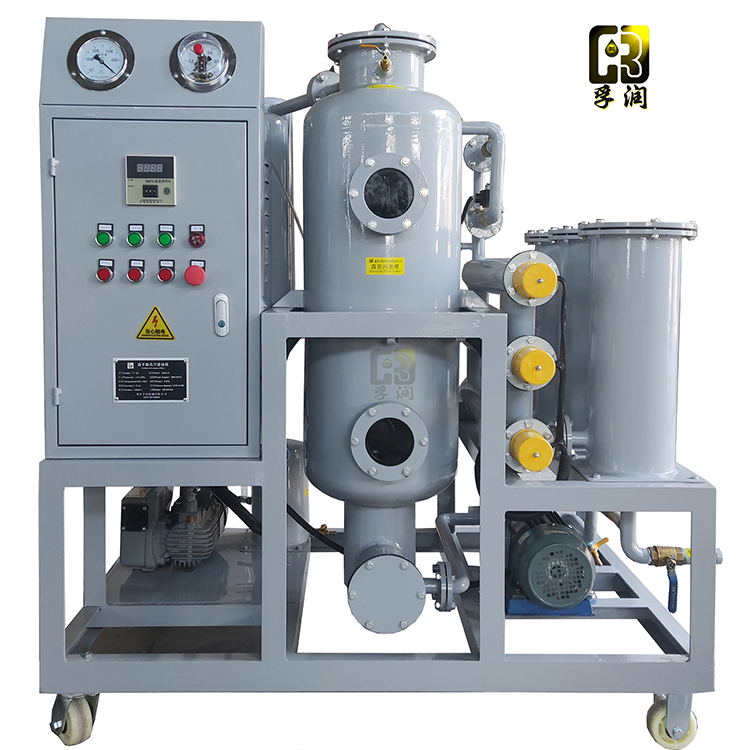

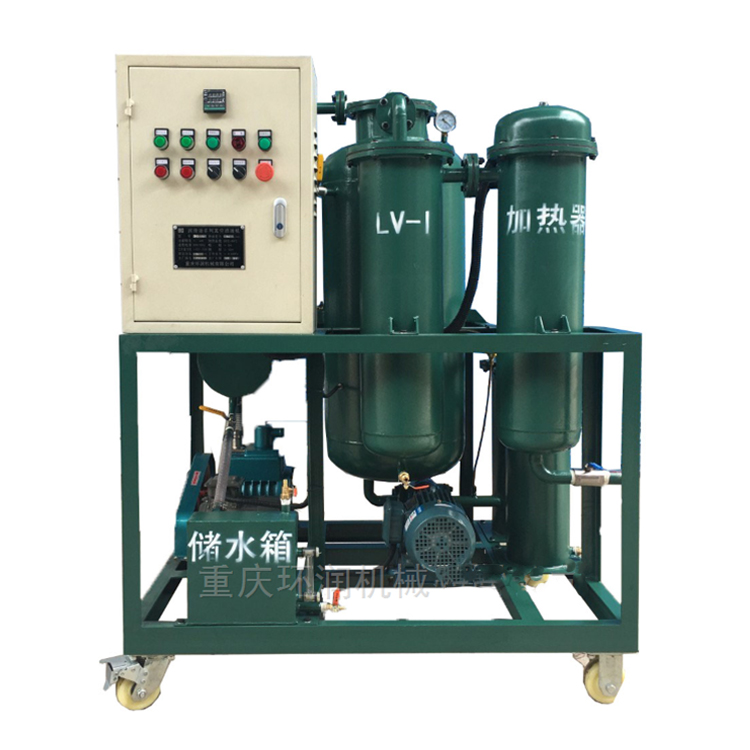


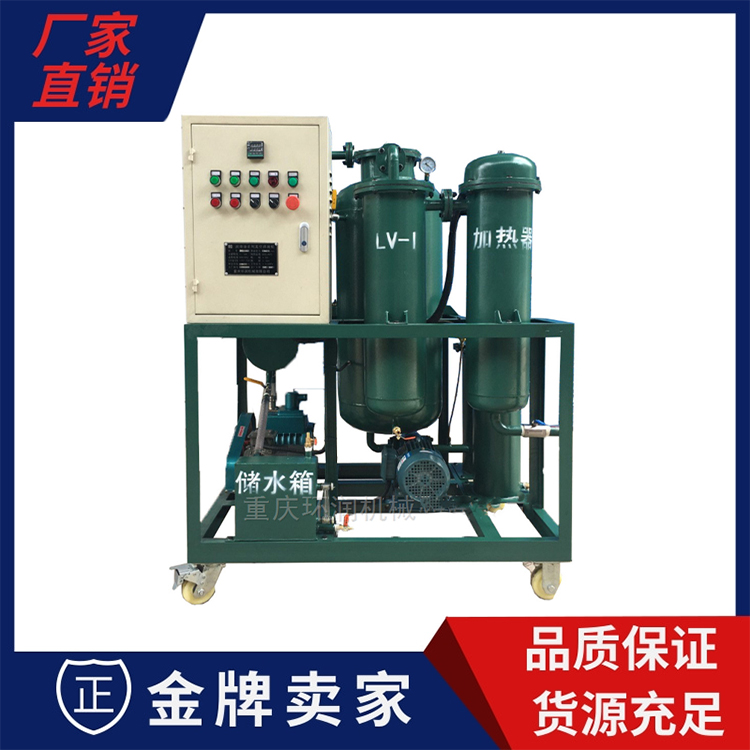


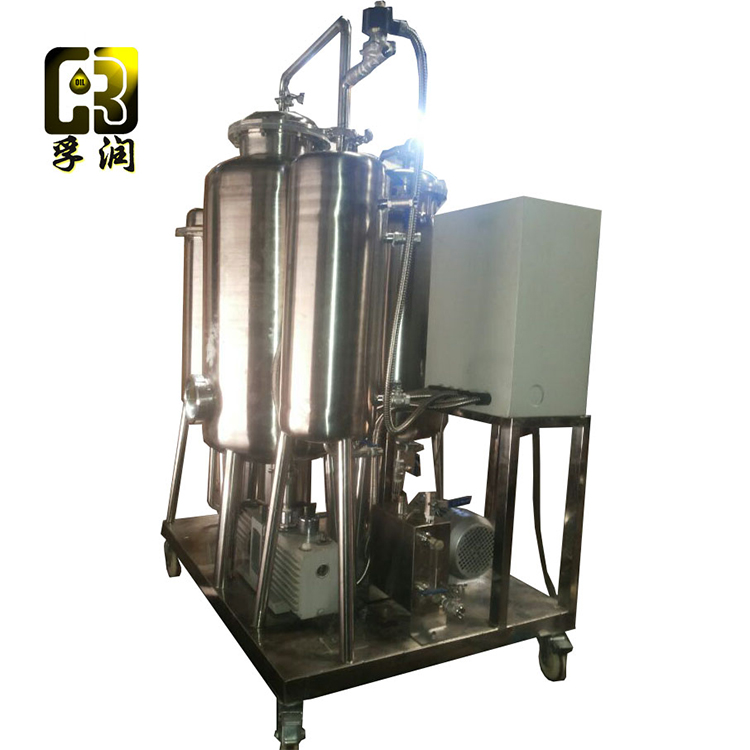
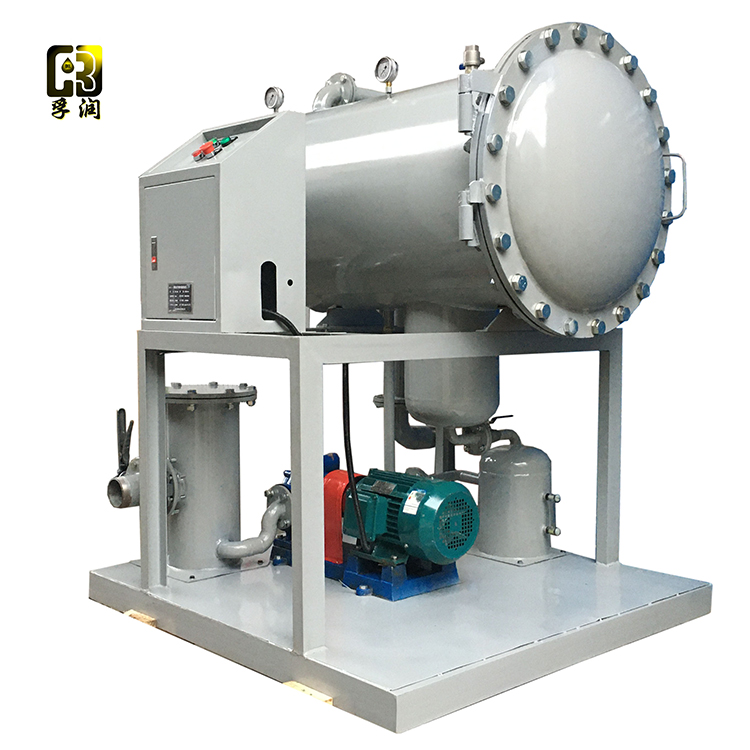
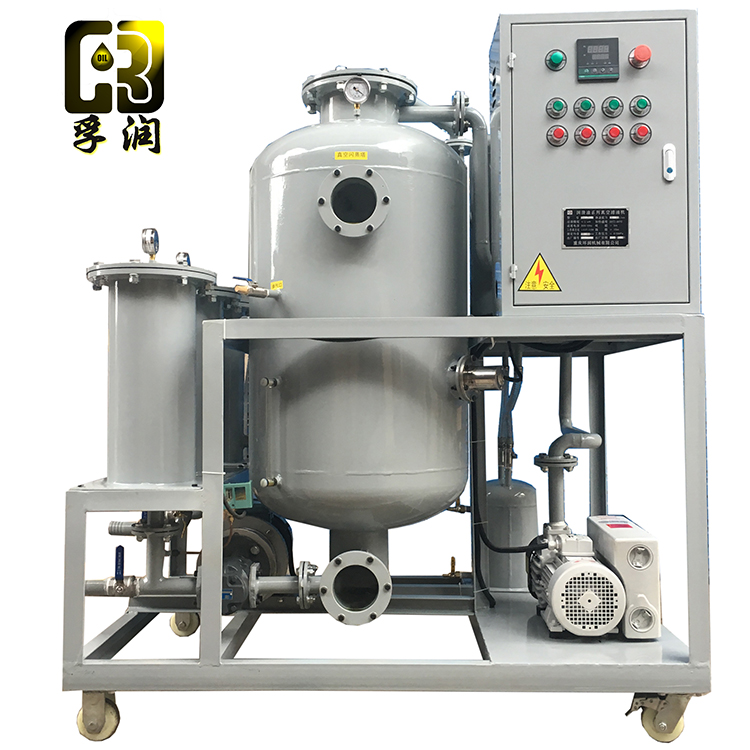
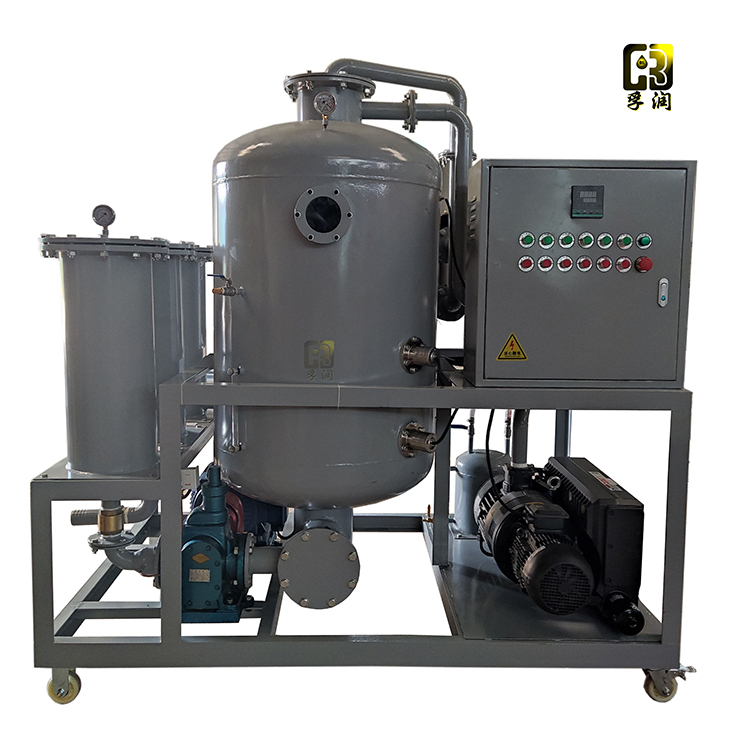
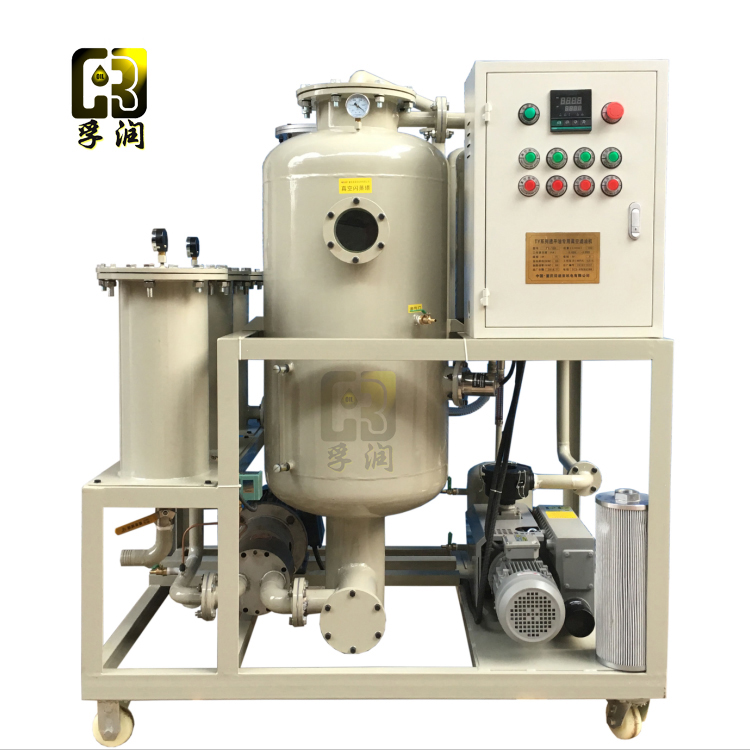





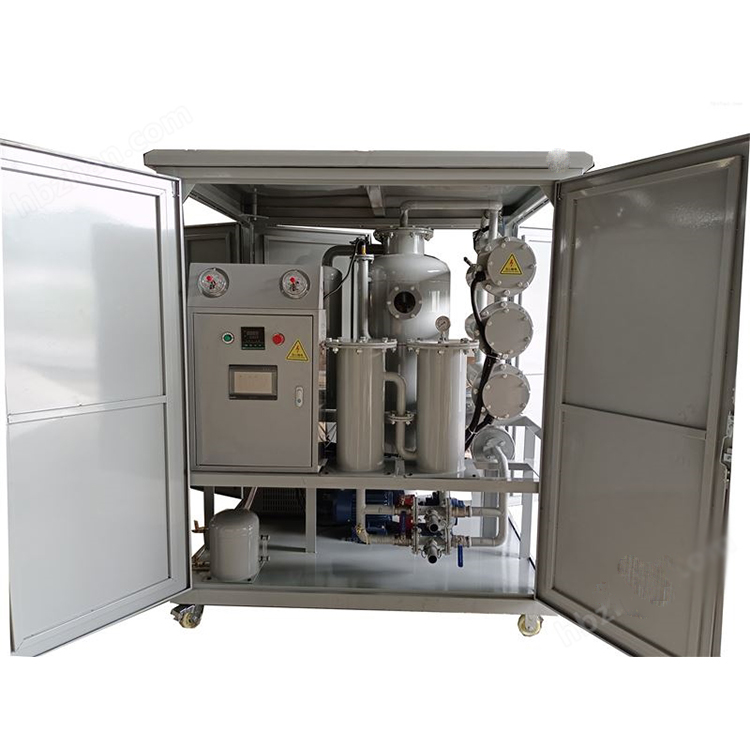
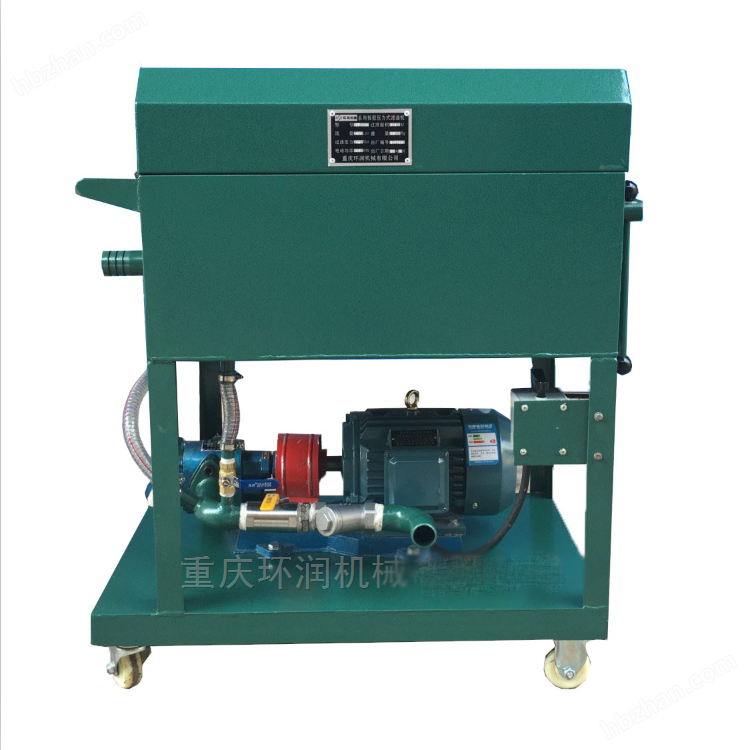
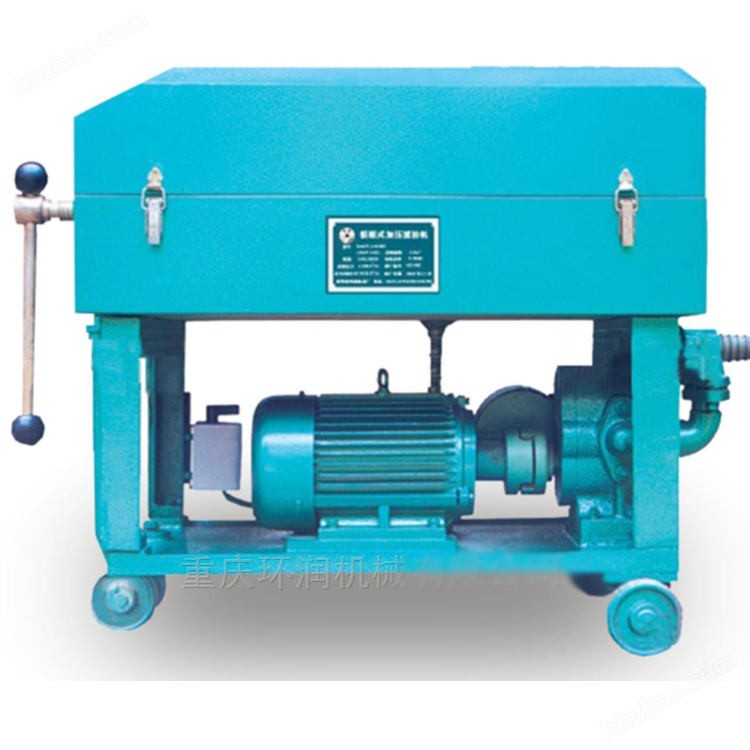
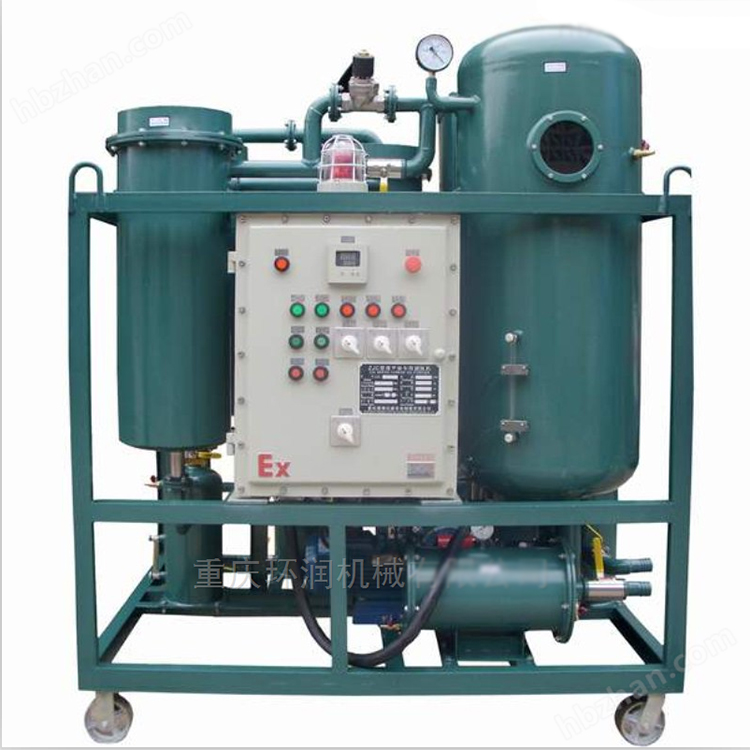
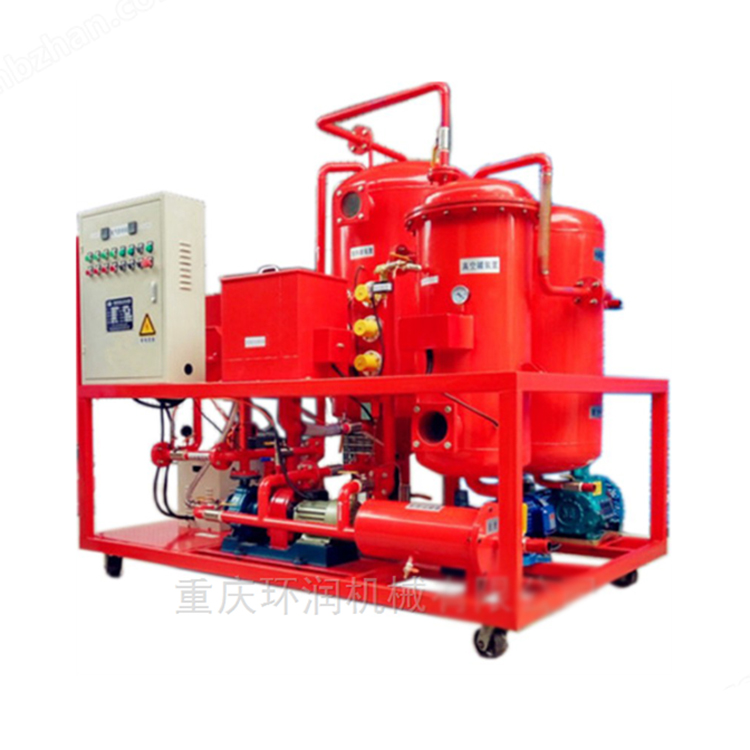
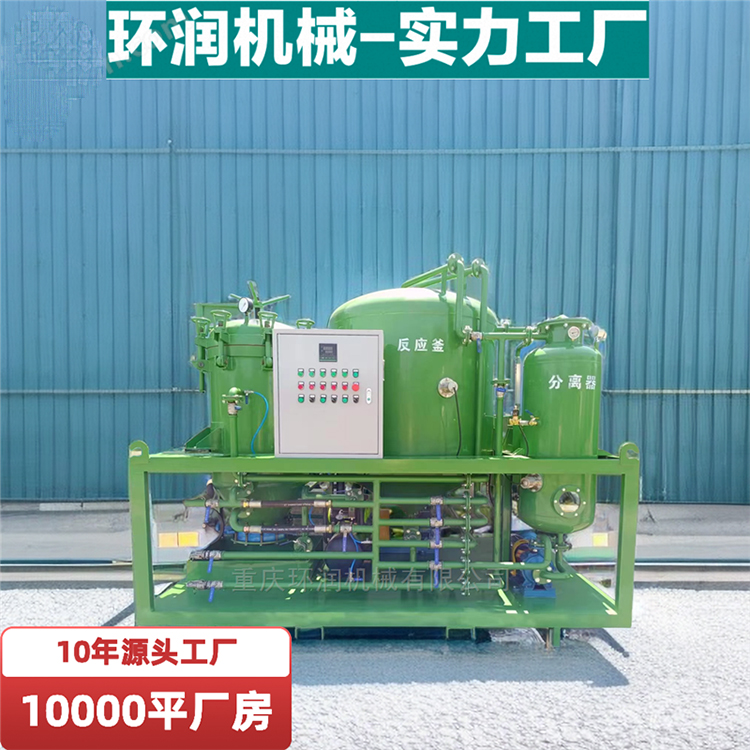
TYA Series Oil Filtration Machines
Installation and Commissioning:
1. Connect the vacuum oil filter's inlet pipe to the outlet of the oil-consuming equipment, storage tank, or the bottom drain of the oil tank; attach the outlet pipe to the inlet of the oil-consuming equipment or storage tank pipeline, and return it to the oil tank. Ensure the oil supply and return hoses are properly connected to prevent oil leakage.
2. The machine's power supply is a three-phase four-wire system. Connect the three-phase four-wire power supply according to the total power of the machine (a reliable grounding wire is required for the machine to operate).
3. Check if it's necessary to replace or replenish the vacuum pump oil.
4. The start button for the vacuum pump and oil pump should operate without jamming or eccentric vibration, and the rotation direction of the vacuum pump should be in alignment with the arrow marking *.
5. Ensure all oil, gas, and water pipelines are leak-free.
6. Start the vacuum pump, run for 5 minutes then stop the vacuum pump, close the oil inlet valve. At this point, the vacuum gauge reading should remain unchanged or decrease slowly; otherwise, the air leakage should be eliminated.
7. Through the heat exchanger opening, tap water is filled into the condenser until it reaches the high water level. When water source is available, connect the water supply to the inlet. During the winter in the north when temperatures fall below freezing, add antifreeze to prevent freezing and ensure normal operation.
8. Check if the temperature controller is functioning properly. First, disconnect the probe wire from the back of the temperature controller, turn on the temperature control switch, and momentarily short and disconnect both ends of the probe socket with a wire. The pointer should swing; otherwise, a repair is necessary. After the temperature controller is normal, reinsert the probe wire (this task is completed at the factory).
After completing the above debugging work, it is ready for operation.
Principle:
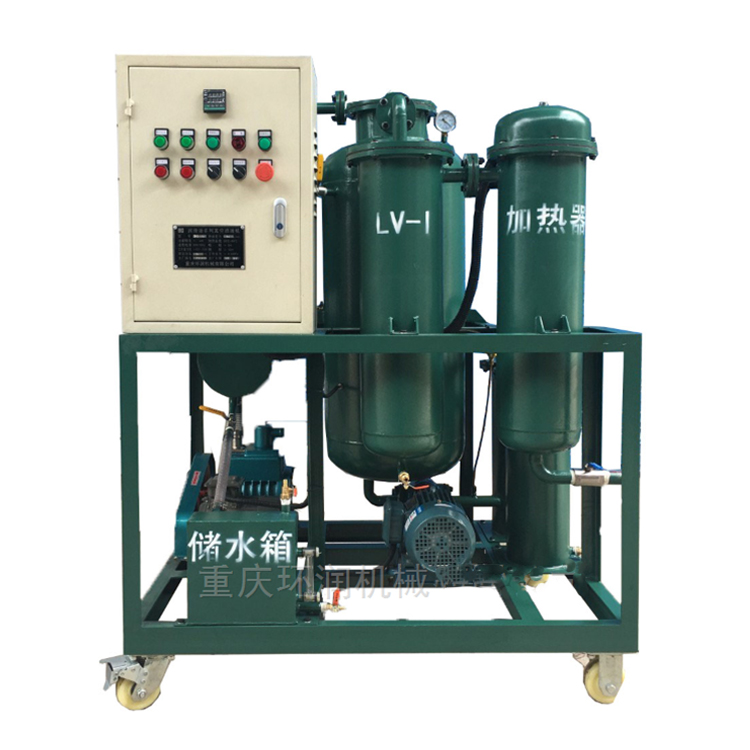
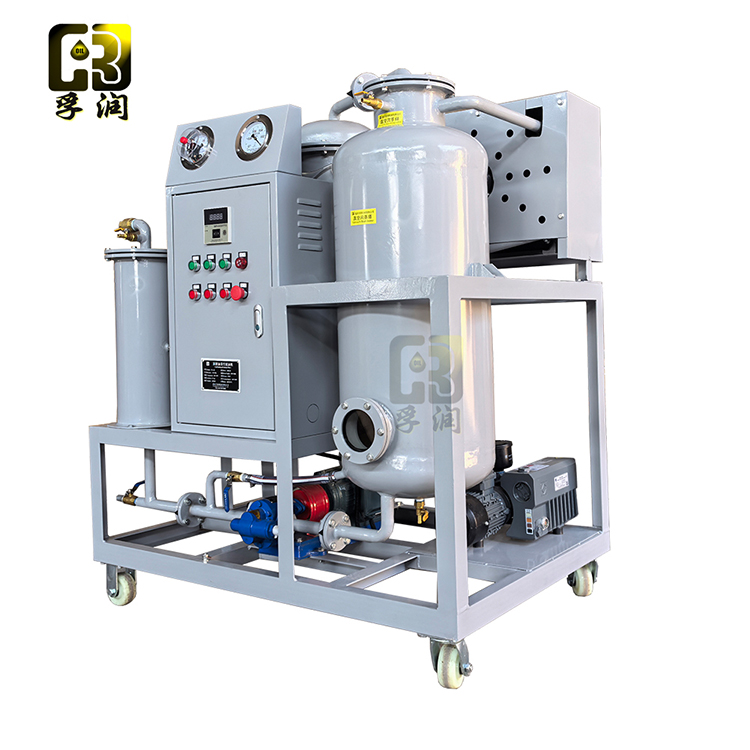
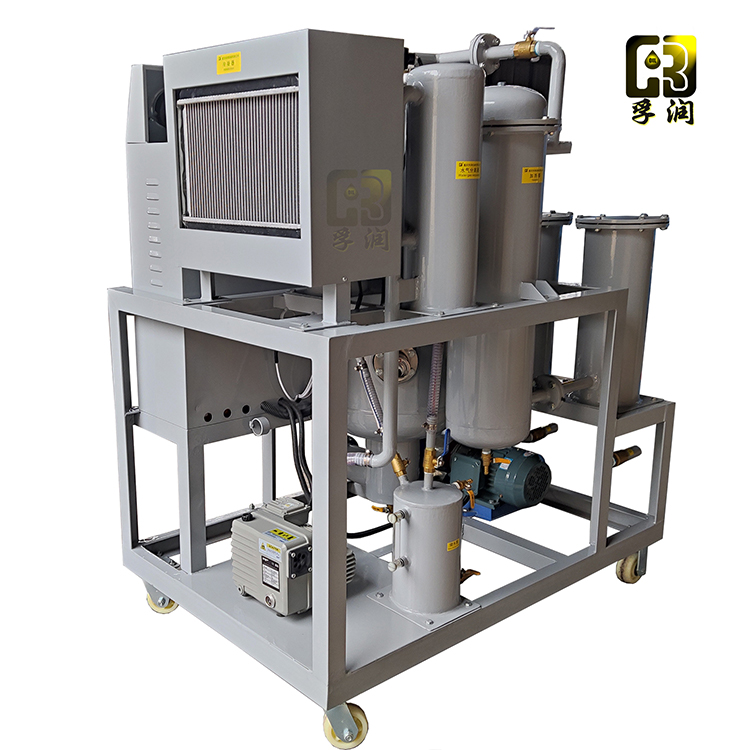
During operation, the contaminated oil is vacuum-suctioned into the heater through the inlet due to the effect of external atmospheric pressure. The heated oil then enters the primary filter, where large particles are removed. Subsequently, the oil flows into the vacuum separator and passes through a specially designed diffuser device. This diffuser increases the surface area of the oil per unit volume, exposing the contaminated oil to a low relative humidity atmosphere, thereby removing water, air, and gases from the oil. The evaporated water vapor and gases form a mixture that condenses into liquid through the water tank and cooler, and then enters the storage tank. The remaining gases are vacuumed out. The oil, free of moisture, is pumped into the fine filter by the oil discharge pump to remove particulate impurities, becoming purified oil and completing the purification process. Depending on the amount of water content, multiple cycles are required to remove all moisture.