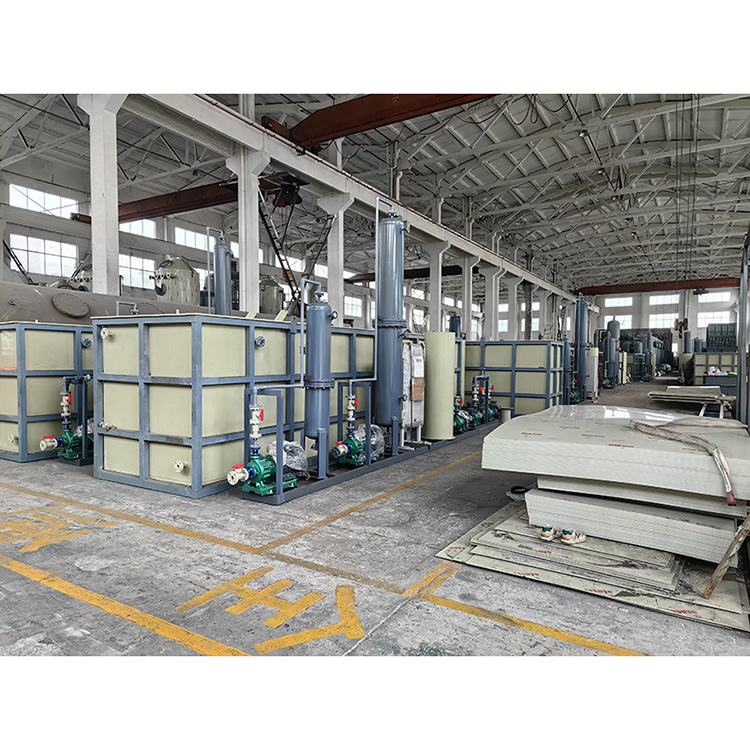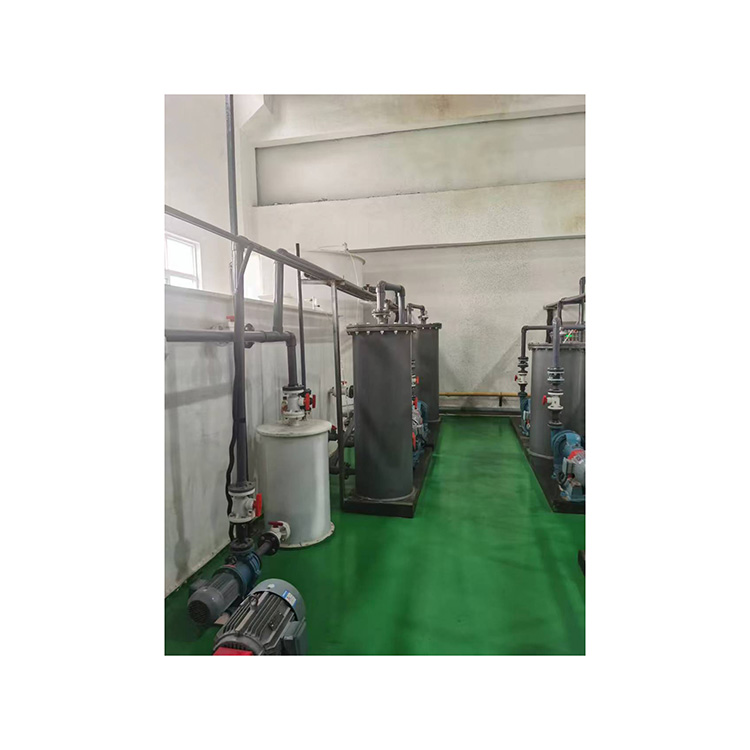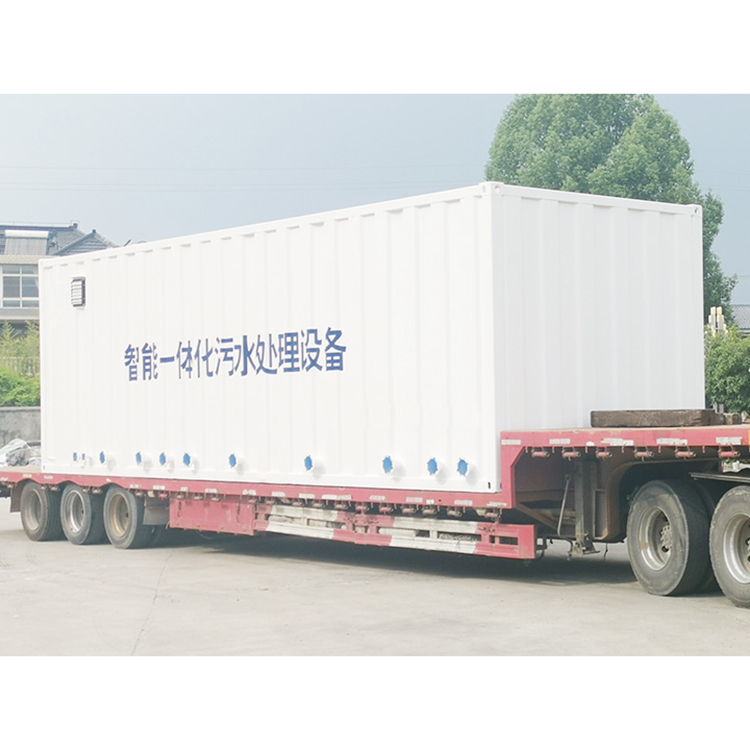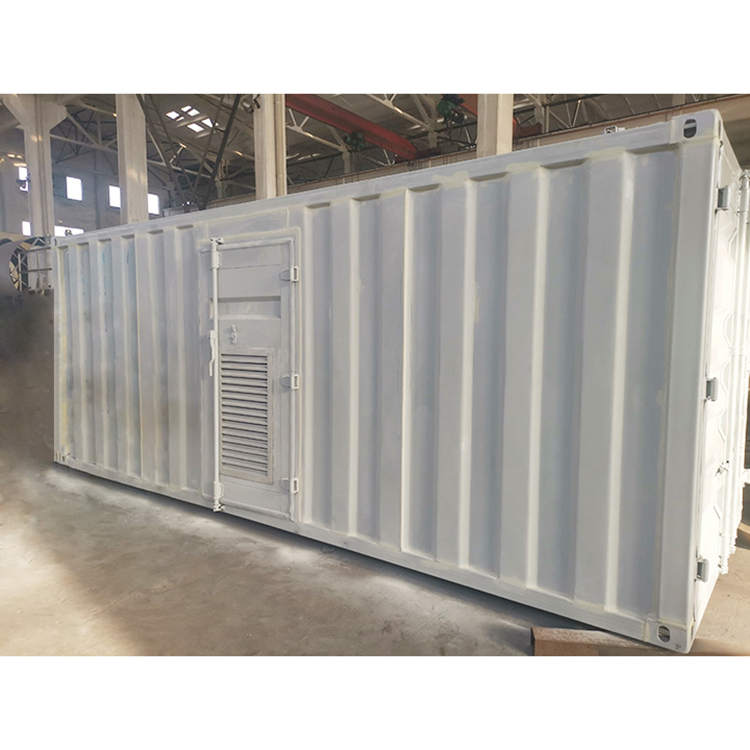





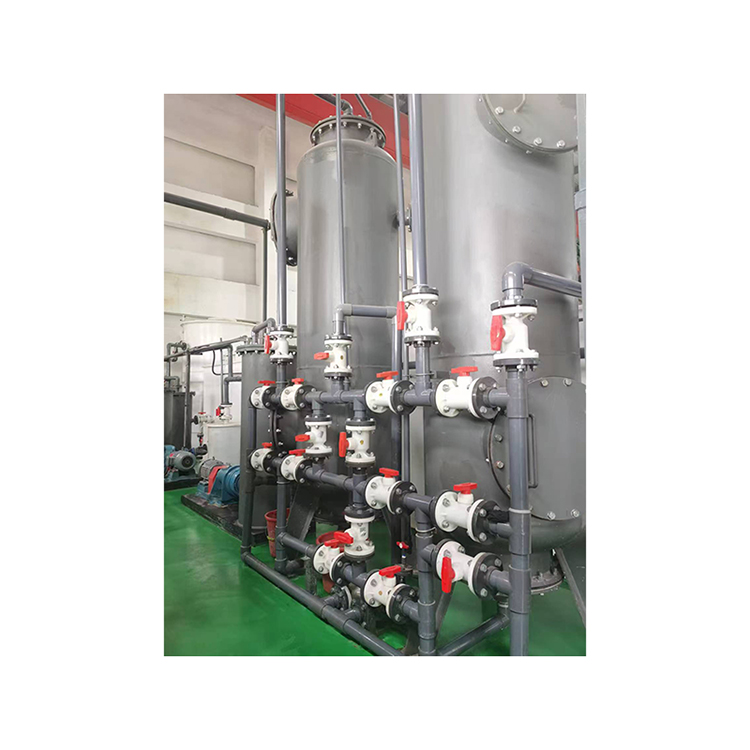
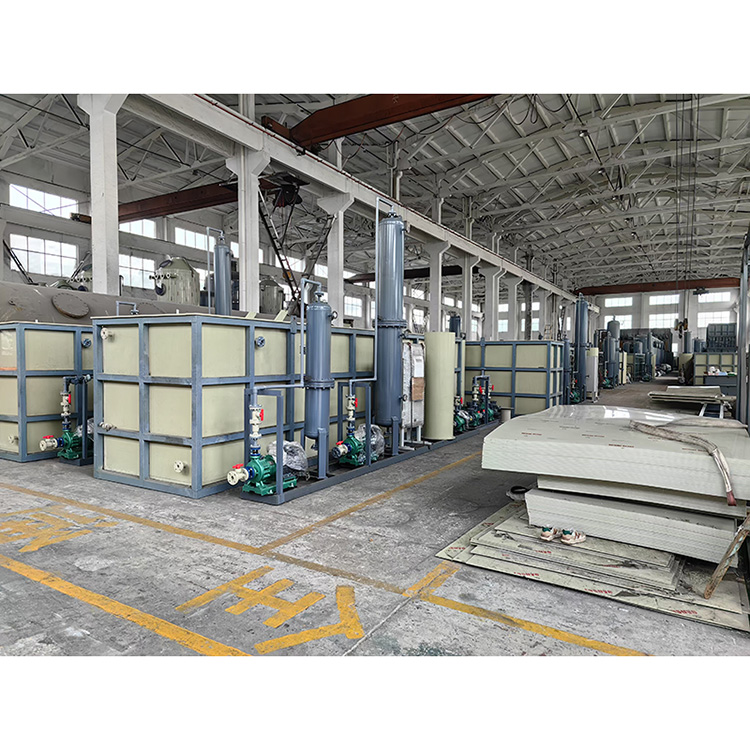
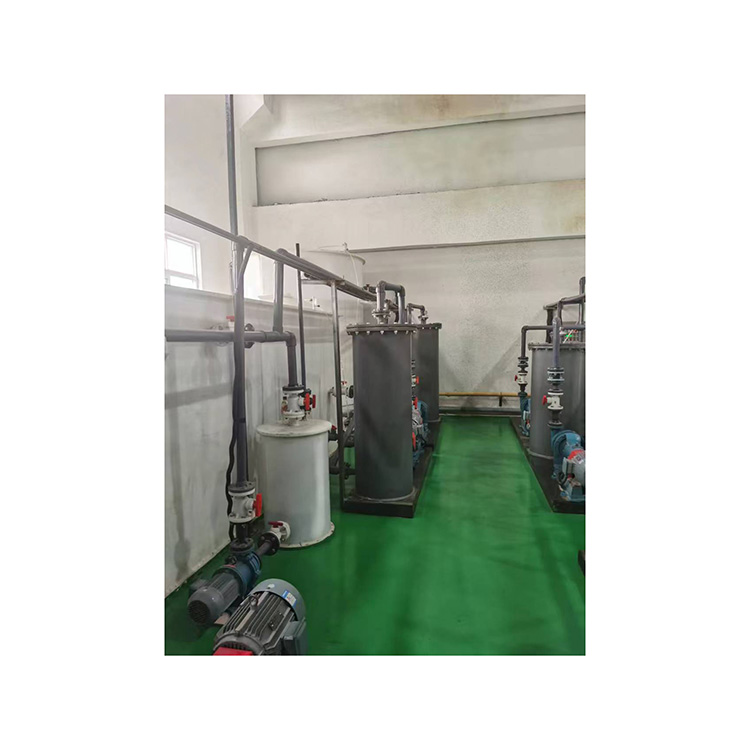
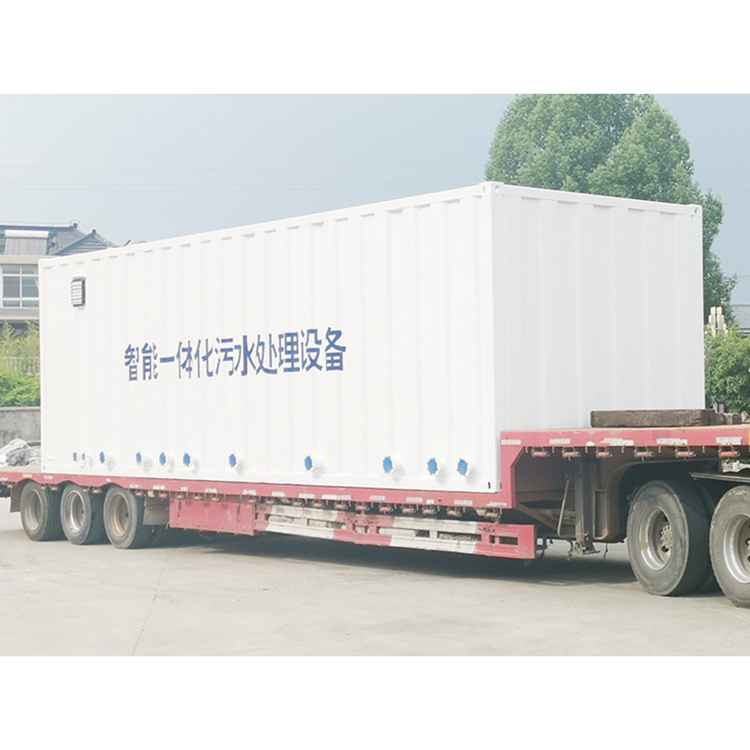
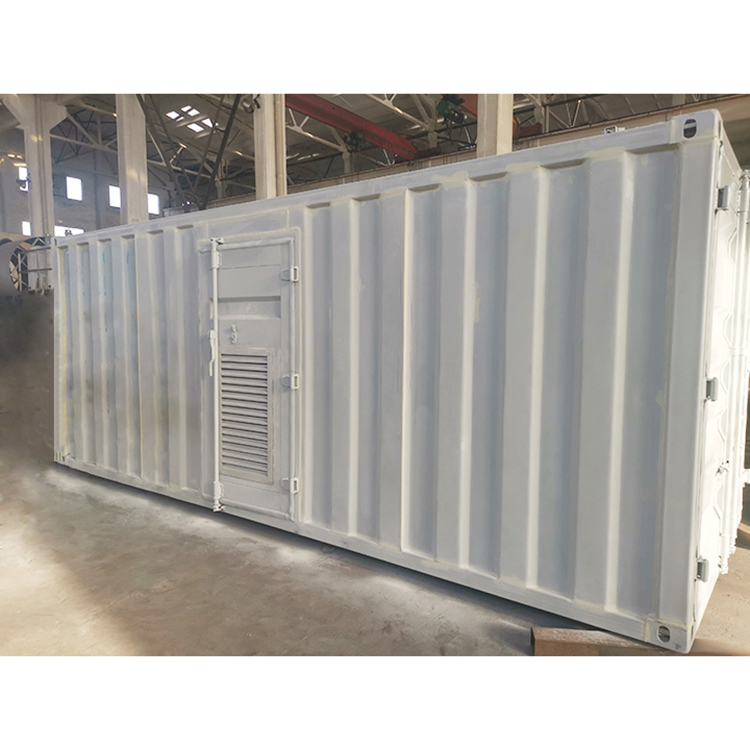





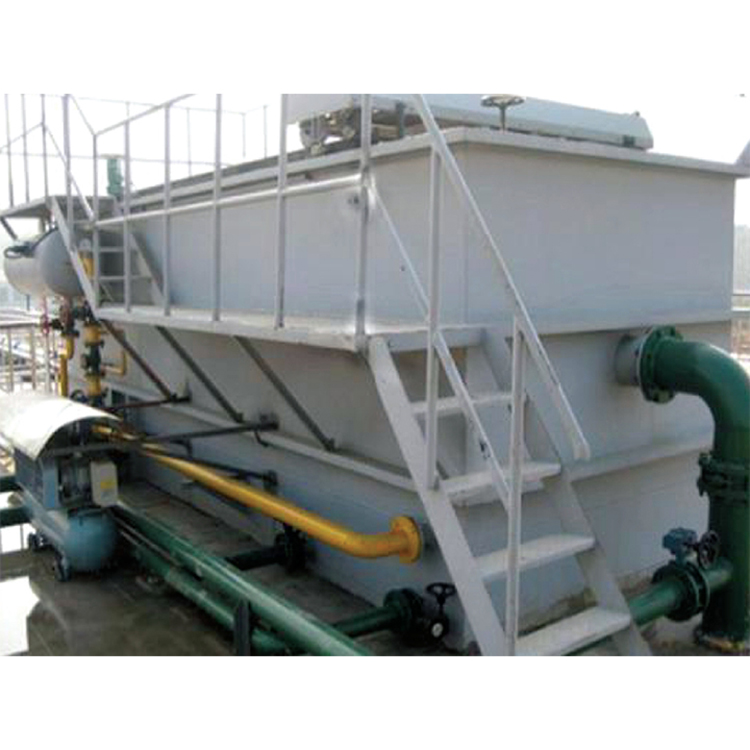
Denitrification Deep Bed Filter Tank
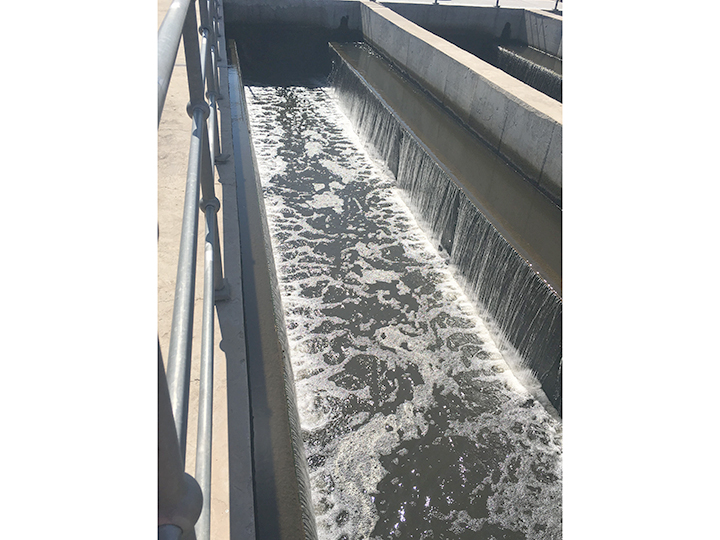
Denitrifying deep bed filter process
The denitrification deep bed filter process combines biological nitrogen removal and filtration into a single treatment unit, a dual-purpose treatment process. Most filter beds are prone to clogging or scaling on the surface, quickly losing head pressure. However, the uniform quartz sand in the denitrification deep bed filter allows solid impurities to pass through the surface of the filter bed and penetrate deep into the filter medium, meeting the requirement of retaining solid matter throughout the entire depth of the filter.
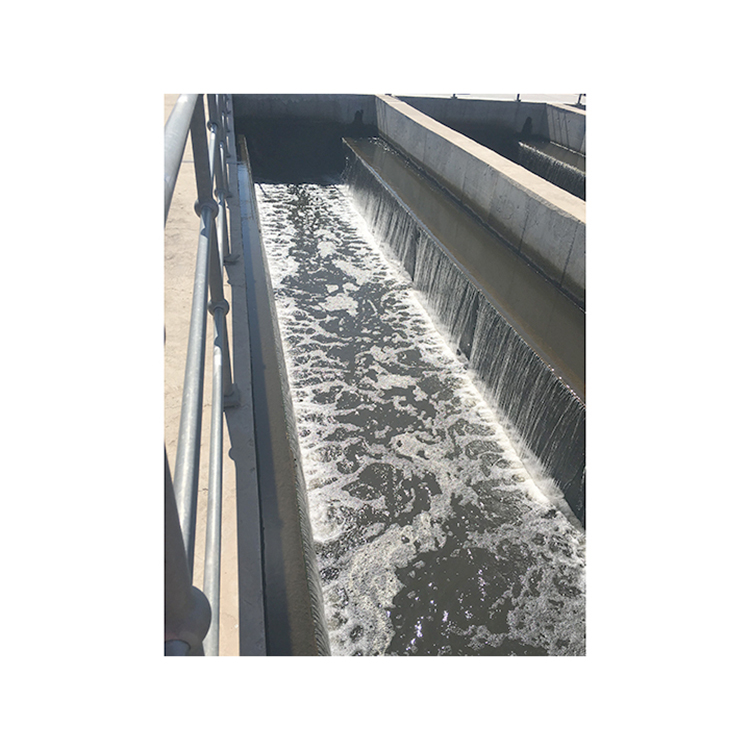
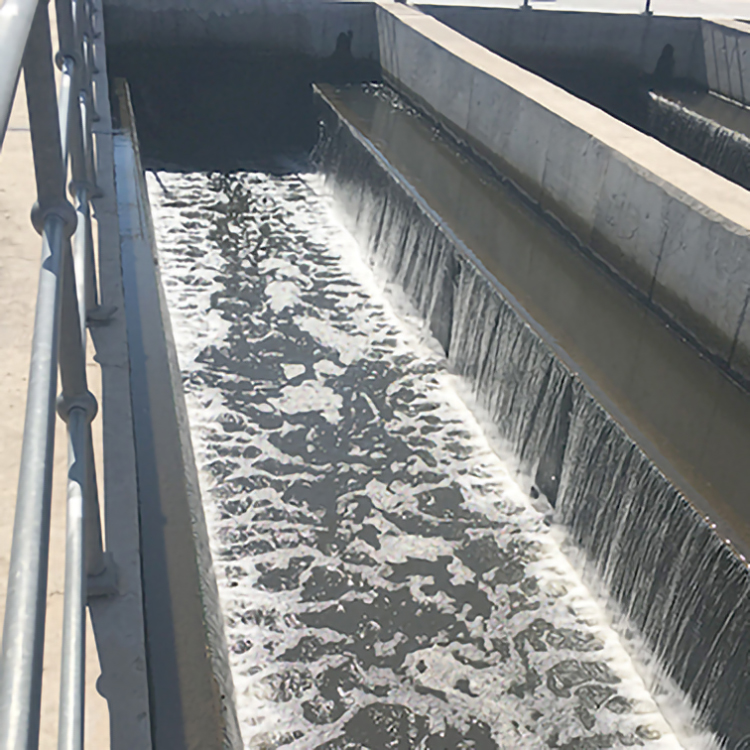
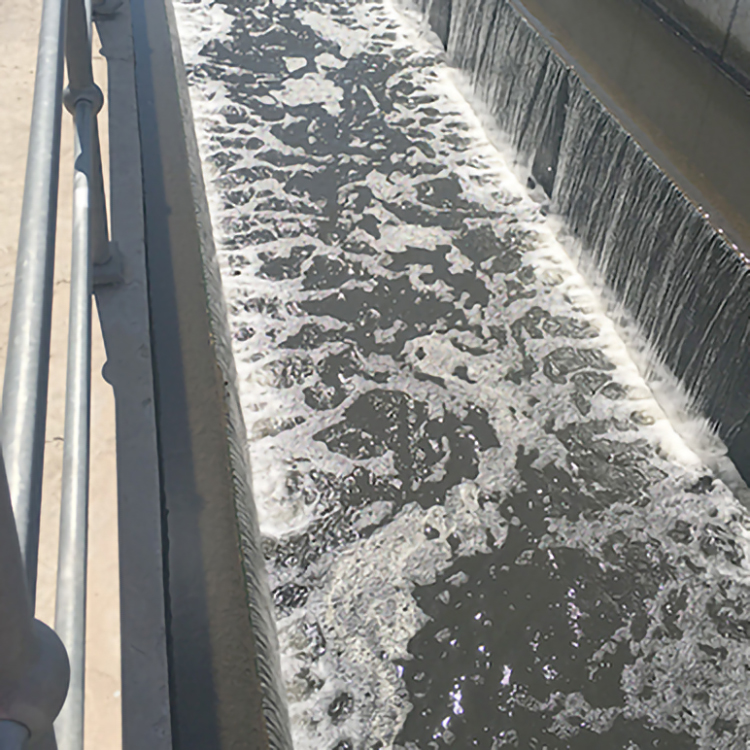
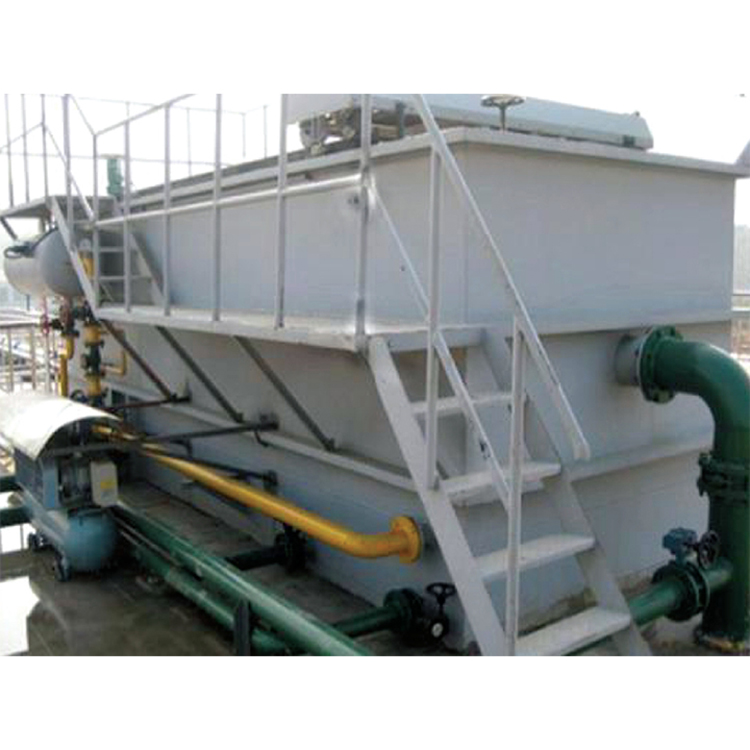
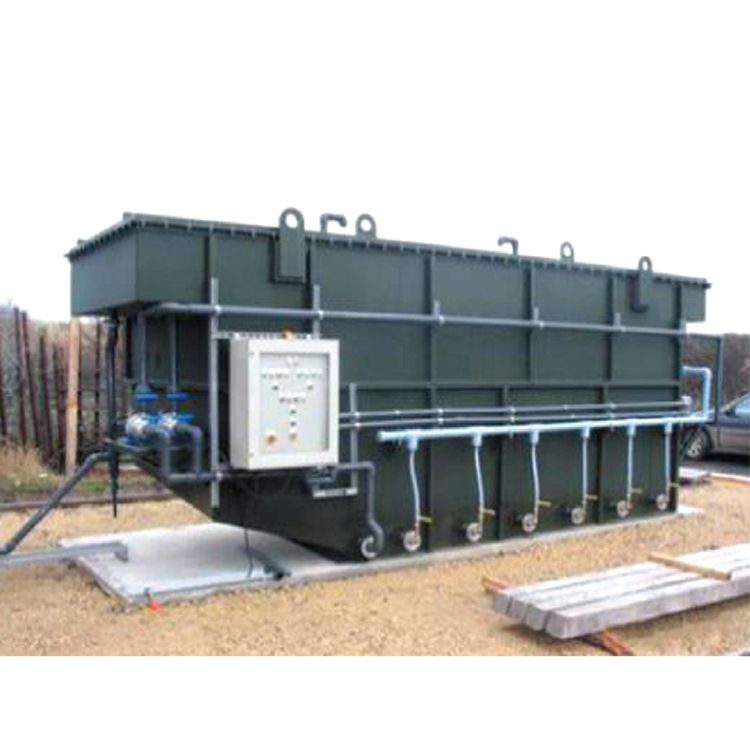
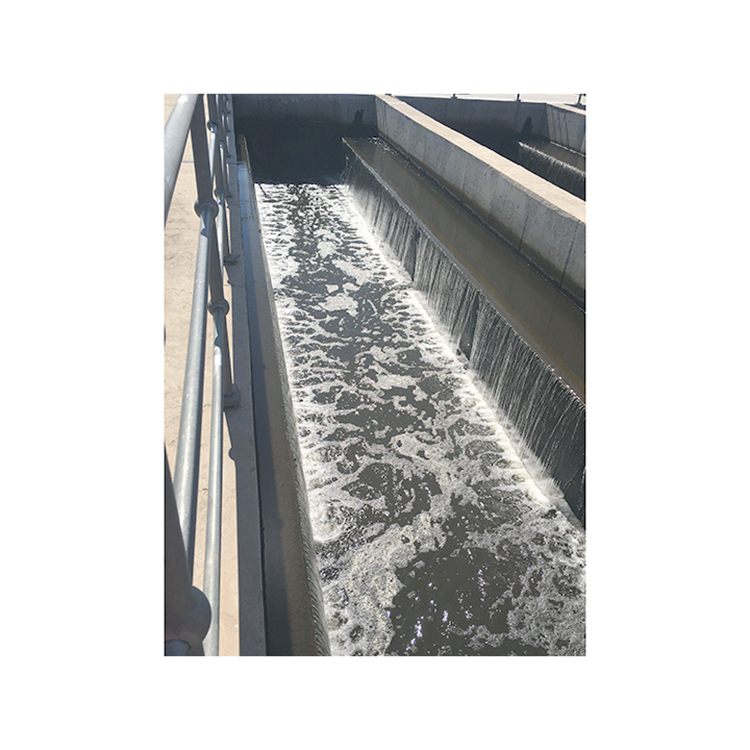
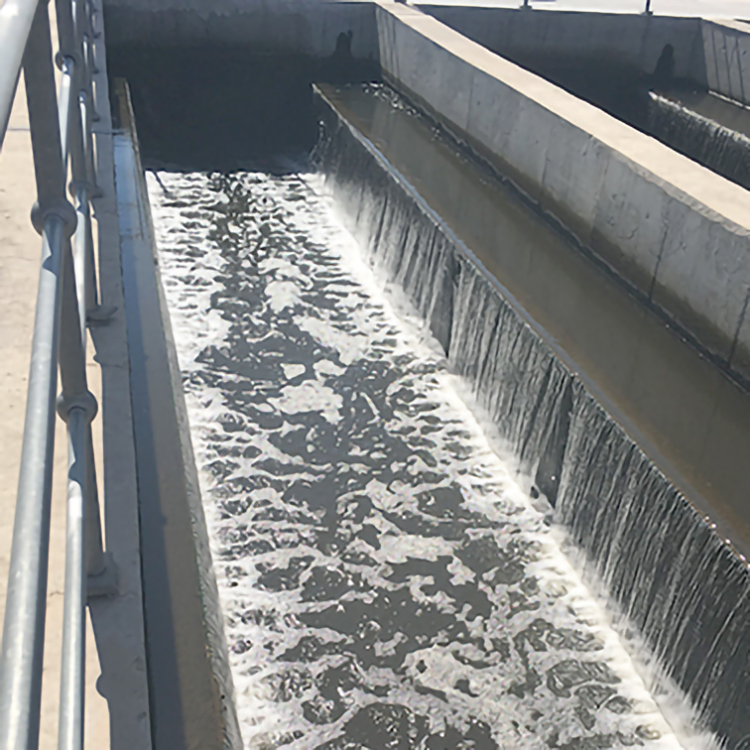
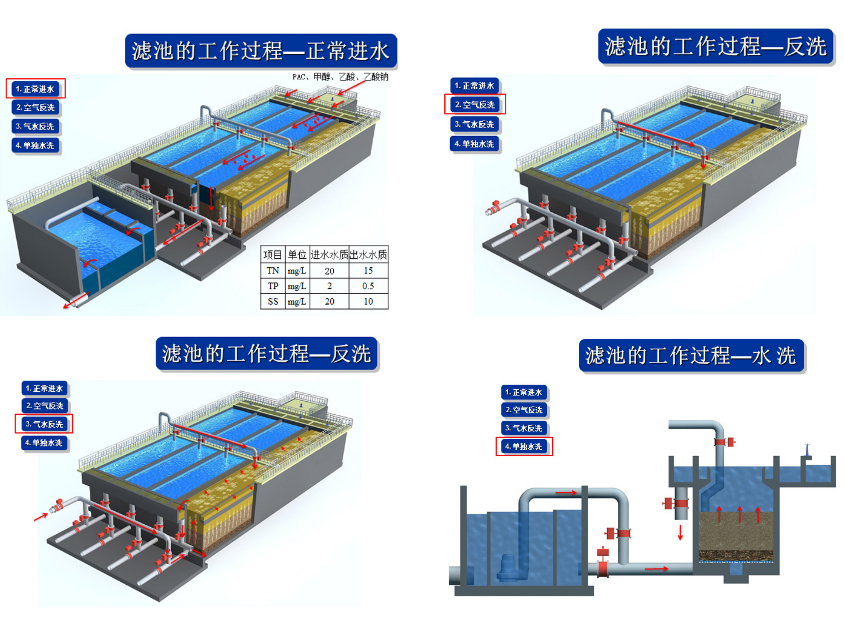
Denitrification deep bed filter tank, utilizes narrow and elongated channels for even water inflow; filter brick structure ensures good backwashing effect; nitrogen gas produced during denitrification can cause air blockage in filtration, thus expelling nitrogen gas to ensure optimal filter tank operation.
In operation with an added carbon source, it is a deep bed denitrification filter with denitrification capability, capable of removing TN, SS, and TP. Without the added carbon source, it becomes a deep bed filter, which can simultaneously remove SS and TP.
The denitrification deep bed filter is essentially a fixed film reactor in a packed form. It is a biological membrane process for wastewater treatment integrated with water filtration, categorized under biological filtration technology. Bacteria and other microorganisms grow as a film on a solid medium, and as the fluid passes over the solid filter material, it removes pollutants through the combined actions of the filter medium's interception and the biological degradation by the biofilm on the filter medium.
Filter Bed Structure
System Composition

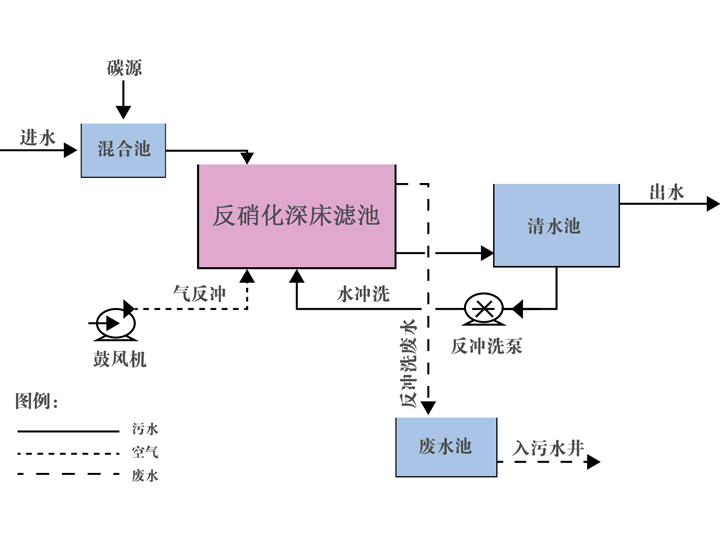
Filter Media: Natural Sea Sand, SiO2 content ≥95%, particle size: 1.7-3.35mm, filter media thickness ≥1.83m, K60<1.4, specific gravity ≥2.6 tons/m³>6.
The gravel support layer is made of natural cobblestones, with particle sizes ranging from 3-38mm and thicknesses of 380-420mm. It is layered in 5-6 layers to support the filter material.
Filter Bricks: Constructed with a concrete cast exterior HDPE (High-Density Polyethylene) shell, "T" type air-water distribution filter bricks, offering backwashing air-water distribution performance.
Anti-siphon pipe: Material SS304, the anti-siphon intake pipe provides uniform distribution of backflush gas.
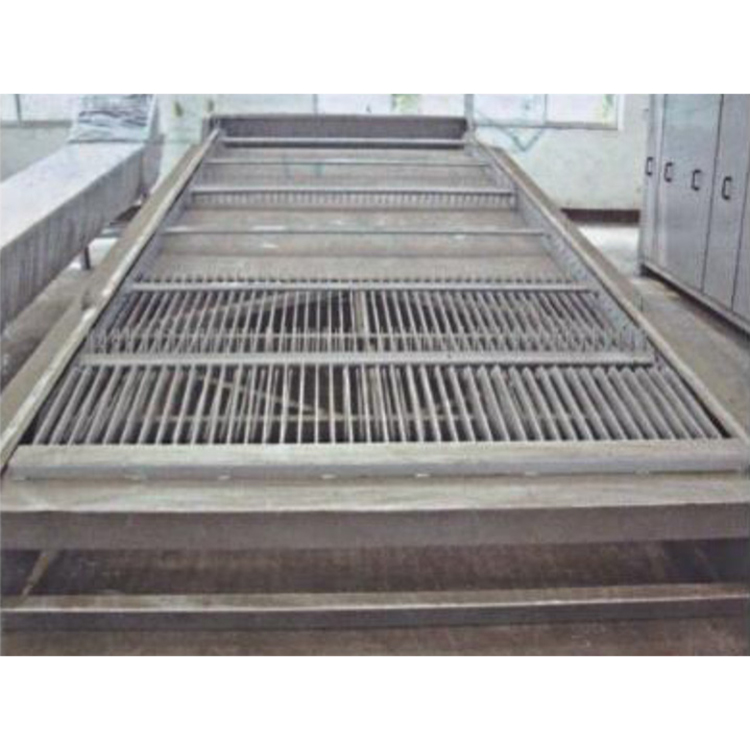
Inlet weir plate: Made of SS304 material with a thickness of ≥4mm, providing conditions for even distribution of water intake and backwash outflow.
Control System: Programmable Logic Controller (PLC) for system control of all operational equipment inside the filter pond.
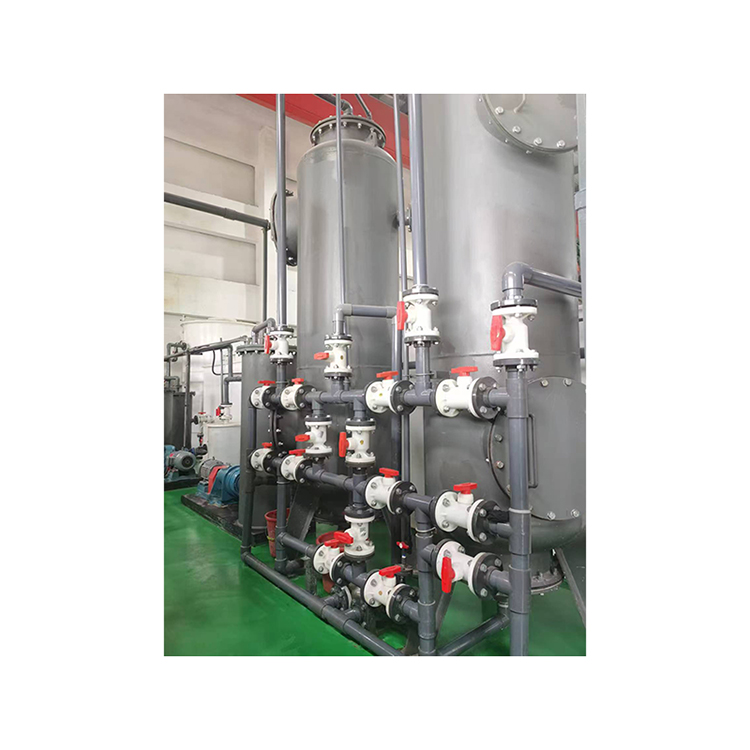
Valves: Manual and automatic valves control the inflow and outflow of water and gas.
Carbon Source Storage and Supply System: Typically sodium acetate, with the dosage of carbon source controlled based on the amount of nitrate nitrogen entering the filter pond.
Backwash Pump: Provides backwashing water for filter media backwashing and nitrogen release system.
Rinsing Fan: The Rotary Blower supplies air at the set volume, which is then introduced into the entire filter base for backwashing.
Other Equipment: Field instruments, valves, pipelines, and denitrogenation systems, etc.
Process Features
1. Integrated system technology for air-water combined backflushing units, aeration devices, and operational processes addresses issues such as direct filtration and biofilm detachment in biological filtration pools causing filter clogging.
2. The denitrification deep bed filter continues to operate, removing NO3-N while producing nitrogen to form a "gas blockage." As it continues to run, the loss in filtration resistance increases continuously, potentially leading to short-circuiting in the filtration process and deteriorating the effluent water quality.
3. Complete, integrated automation systems and technologies, online monitoring equipment, computer program control, enabling long-term, stable, and reliable continuous operation of the entire process, including operations such as air-water backflushing and nitrogen purge, resolving process control issues that cannot be achieved through manual operation.
4. The water output quality meets water body standards.
Current conventional process: T-shaped filter brick air-water distribution system