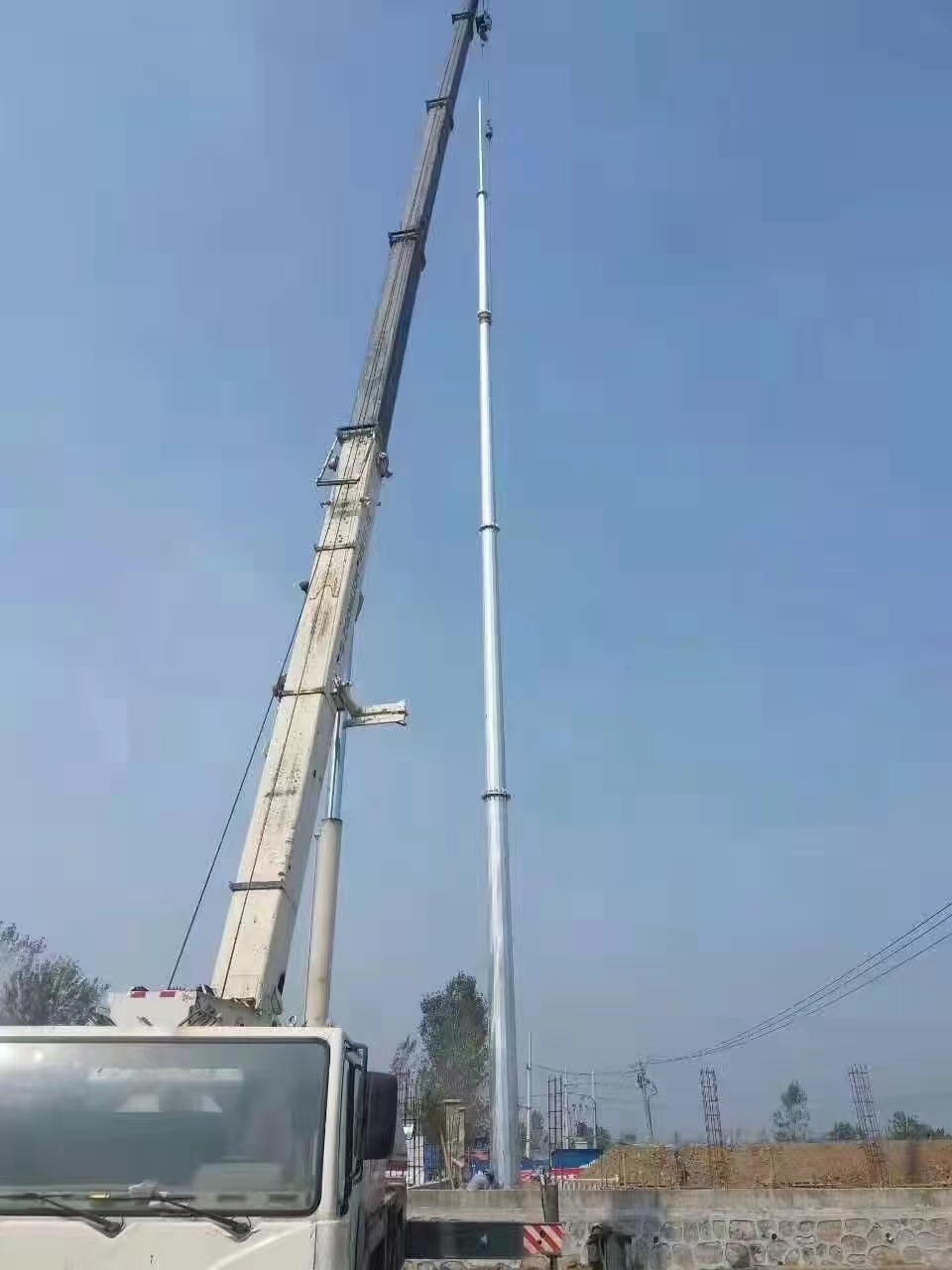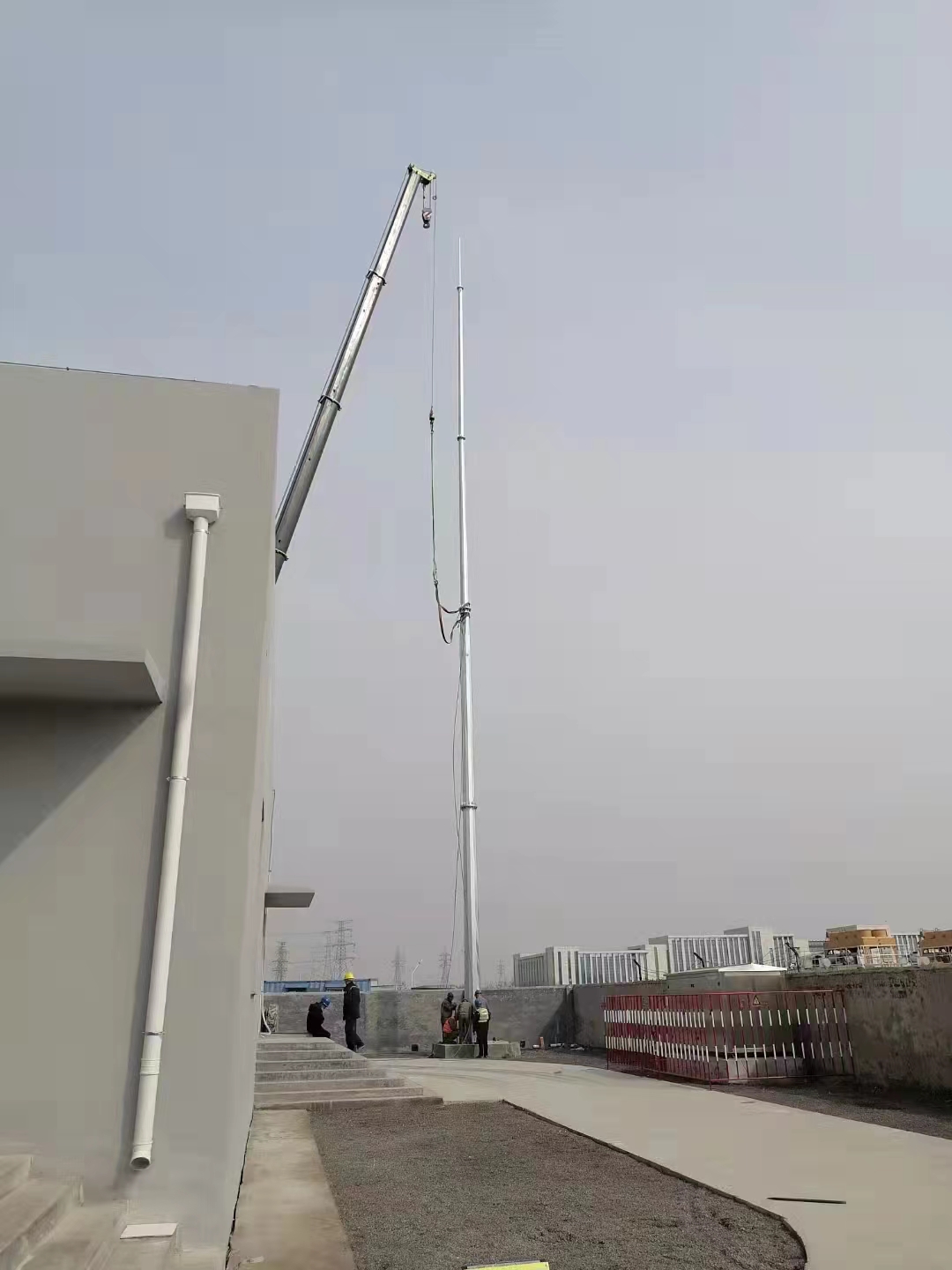











The lightning rod's lightning protection function is to redirect lightning from the protected object towards itself and safely discharge it into the earth. Therefore, its lightning attracting and current泄流 discharging capabilities are crucial. The lightning rod's lightning attracting properties have been experimentally and theoretically analyzed as follows:
A lightning rod standing on flat ground, with its simplified envelope being a parabola, which represents the 50% average boundary line of the rod's needle strikes on the ground under both positive and negative thunderclouds. The small circles indicate the experimental discharge statistics at various points in the air, showing the tip positions of the leading needles in simulated experiments. The black circles represent the needle strikes, the white circles represent the ground strikes, and the equal distribution of black and white indicates 50% needle strikes and ground strikes.
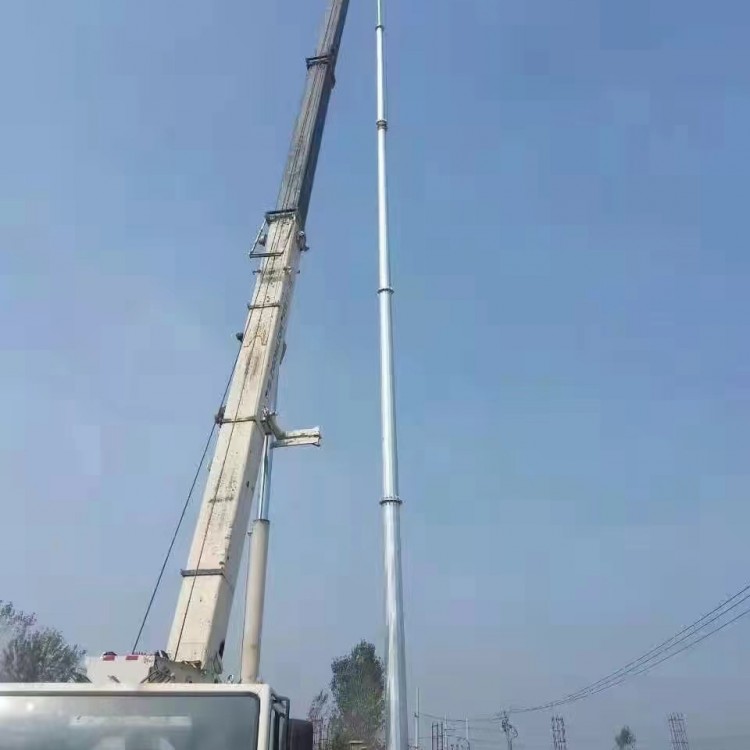
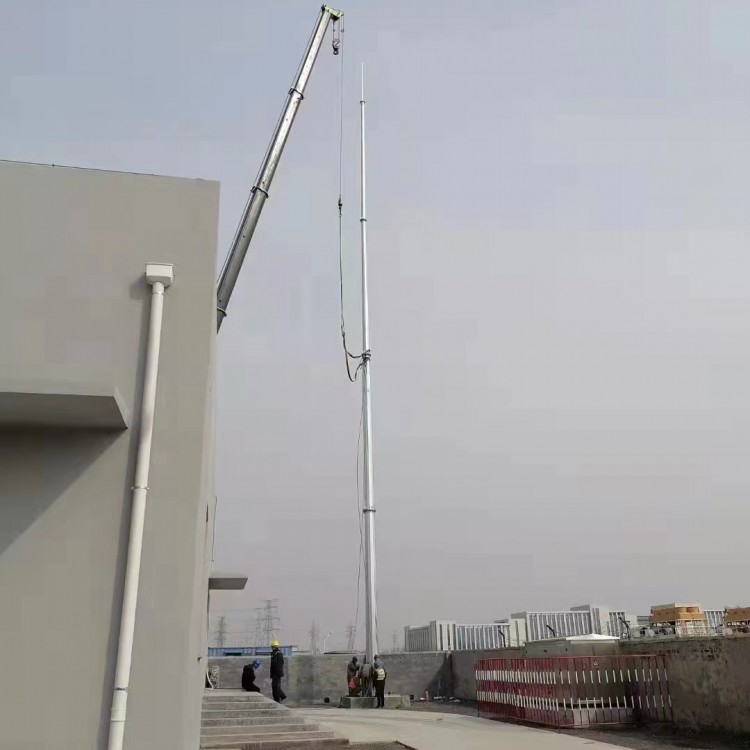
Lightning rod installation
(1) There should be a distance of not less than 5 meters between the lightning rod and the protected object to prevent反击 when the lightning rod is struck. The lightning rod should be installed with a grounding device, with a minimum distance of 3 meters between the grounding device and the grounding grid.
(2) It is not advisable to install lightning rods on the structures and rooftops of high-voltage distribution equipment rated 35kV and below. Lightning rods mounted on the structures should be connected to the grounding grid and equipped with a centralized grounding system.
(3) Lightning rods should not be installed on the door-type frame of the transformer.
(4) Lightning rods and grounding equipment should be more than 3 meters away from the road and exits; otherwise, pave with碎石 or asphalt 5 to 8 cm thick to ensure personal safety from step voltage hazards.
(5) Absolutely prohibited to install overhead lighting wires, telephone lines, broadcast lines, antennas, etc. on lightning rods or structures.
(6) If lighting fixtures are installed on lightning rods or structures, the power cables must be lead sheathed or run through steel pipes, and directly buried in the ground for a length of 10 meters or more.
The principle of lightning rod operation
During thunderstorms, when a charged cloud layer appears above high-rise buildings, both the lightning rod and the top of the building are induced with a large amount of electric charge. Since the lightning rod is pointed, and during static induction, conductors always accumulate more charge. Therefore, the lightning rod accumulates most of the charge. The lightning rod also forms a capacitor with these charged cloud layers, as its sharpness means the area of the capacitor's plates facing each other is small, resulting in a low capacitance. In other words, it can hold a minimal amount of charge.
As it accumulates most of the charge, when there is a high concentration of charge in the cloud layer, the air between the lightning rod and the cloud layer can easily be ionized, becoming a conductor. This forms a path between the charged cloud and the lightning rod, which is grounded. The lightning rod can then conduct the charge from the cloud to the ground, ensuring it doesn't pose a threat to high-rise buildings and guarantees their safety.
Lightning Rod Basics
1. Lightning rods do not attract lightning.
2. Lightning rods do not guarantee the prevention of lightning strikes.
3. Lightning rods do not discharge an electric field within the clouds.
4. Lightning rods are directly connected to the ground, and when installed correctly, they help protect the structures of buildings and other objects. Essentially, lightning rods increase the likelihood of the rod coming into contact with lightning, attempting to direct the massive current to the ground.
5. There are many different styles of lightning rods, including hollow, solid, pointed, round, and flat ones, some resembling a brush. All lightning rods are made from conductive materials, such as copper and aluminum. Among them, stainless steel and galvanized steel are commonly used as lightning protection materials.
WeChat Official Account

Scan to follow Official Account