




The fabric feeder automatically transports bed linens, duvet covers, and other fabrics into the pressing machine before they are smoothed, ensuring they are in an ideal state for pressing and then folding. Widely used in hotels, restaurants, railways, and large social laundry factories.
Operation Features of the Fabric Conveying Machine:
1. Centrifugal fans and an optimized air duct structure generate a powerful airflow to ensure even and smooth fabric feeding without creases.
2. Suitable for large-size textiles like duvet covers and sheets, enhancing the quality and production efficiency of finished products.
3. Reduce manual operation time, enhance work efficiency, and decrease workload intensity.
4. Enhance the safety factor for operators;
5. Speed Auto Mode, compatible with synchronization control for different flat iron models.
6. The adjustable knob controller offers more convenient operation.
7. Downward air guide structure, lower noise level.
8. Variable frequency control of fan blades, suitable for various fabrics.
9. The lower door structure allows for easy removal of felt and extraction of scattered linens. The drawer-style fan felt cleaning mechanism facilitates the removal of exhaust air felt.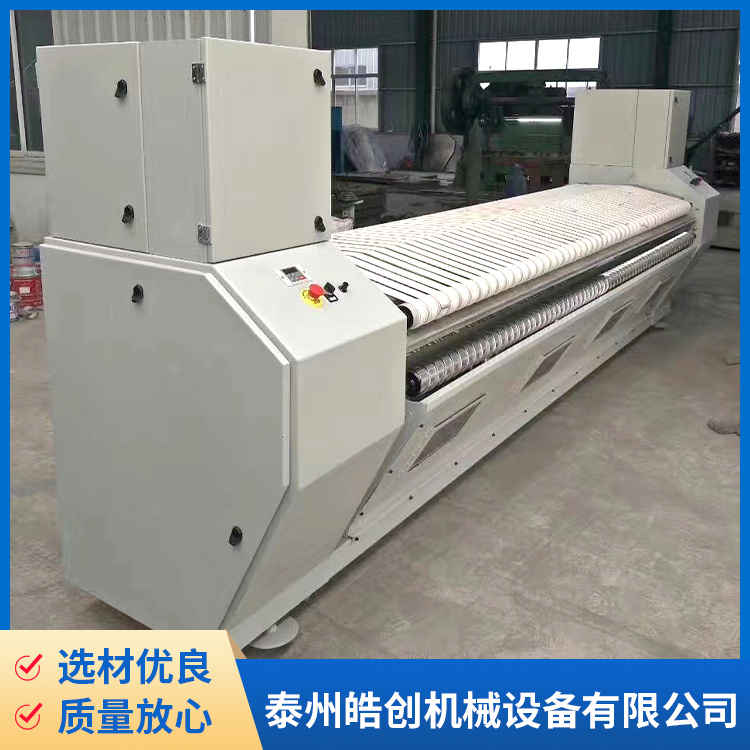
Important Precautions for Operating the Textile Machine:
1. The four legs of the loom should be securely anchored to a stable road surface or building structure (and must be securely guyed if necessary).
2. The plumb line deviation of the cloth machine housing should be less than one thousandth of the tolerance. In the event of imminent collapse, immediately cease the fabric production.
3. Ensure that all connecting foot bolts, support rods, etc., are securely tightened.
4. Partial rotation should not interfere with any distinct part of the building.
5. Minimize the presence of high-voltage transmission lines and other equipment that may generate static electricity.
6. Fabric poles must not be arbitrarily spliced.
7. At high-rise residential construction sites, wind speed must not exceed 6 levels.
8. After the concrete pouring work is completed, it is essential to clean the hose of the material pump, ensuring that the interior is cleared of any remaining concrete.
9. When transferring fabric on a loom, first lift the balancing block, then hoist the fabric body to the next process. Once installed, hang the balancing block back on and it's ready for operation.
10. Any alterations, modifications, or replacements to the original design of the loom must not be made by any means unless the manufacturer agrees.
11. Conduct on-site inspections and system tests immediately upon installation, and subsequent checks and tests can be carried out at the construction site on schedule or after each arrival. Safety inspections must eliminate potential risk areas as much as possible, with a level and solid surface, adequate compressive strength support points, the feeding machine should be adjusted moderately, support points should be stable, sealing should be proper, and all rotating components should rotate smoothly without any hindrance.
12. Ensure that loom parking points minimize empty frames or switch power supply, maintaining a minimum distance of 6 meters between any part of the loom and the switch power supply.
13. Ensure no unauthorized personnel are present below and around the immediate working area of the fabric machine.
14. When operating the loom controller, the operator must be focused (safety is in their hands).
15. Ensure the arm is fully rotated (a full circle) during the transition, otherwise it may cause the cable to twist and lead to the fabric mechanism's power supply being cut off, preventing normal operation.
16. Ensure that the upper arm is stationary before pressing the controller to rotate it; otherwise, it may cause the motor or reducer to overheat.
17. Before and after using the cloth feeding machine, it is essential to check thoroughly (the check ensures safety). In general, the cloth feeding machine should be regularly maintained. Before using the machine, first inspect whether the high-pressure bands on the inner vertical tube of the upright post and the rotating body can rotate. If they can rotate, it indicates the machine is functioning normally; if not, it is necessary to repair, clean, and oil the machine.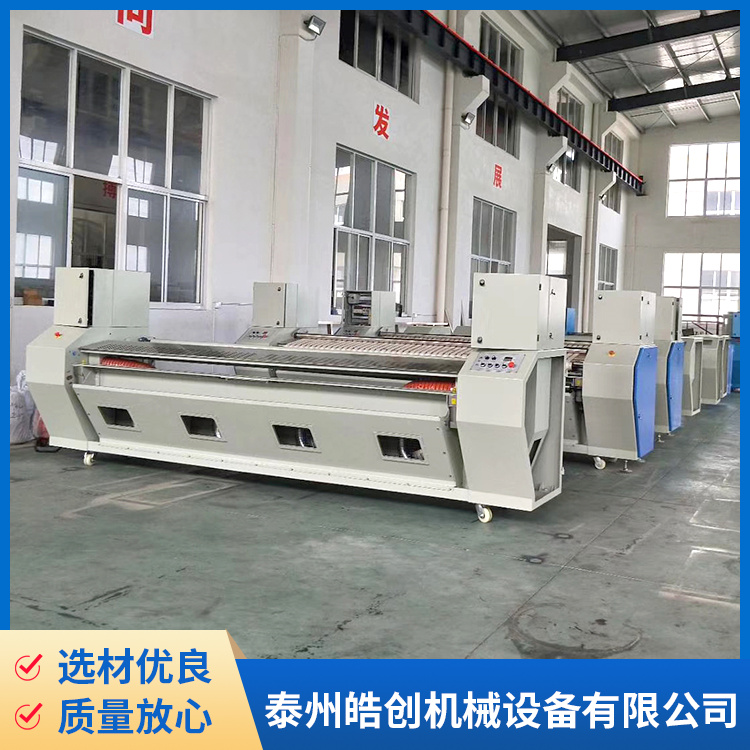
What are the benefits of a fabric conveyor?
1. The fabric feeding machine can effectively transport sheets, duvets, and pillowcases, boosting efficiency by 30-50%.
2. Automated fluffing and flattening for enhanced flat sheet and pillowcase ironing quality. The machine utilizes a centrifugal fan and an optimized air duct structure to ensure the evenness of fabrics and rapid conveyance.
3. Equipped with conveying rollers featuring an expansion function at the feeding port, which enhances feeding speed and provides a smoothing function for the fabrics being fed.
4. Two sets of bristles, rotating on both sides, feature an automatic smoothing function for sheets and duvet covers, enhancing the quality of the ironing.
5. The feeding roller at the inlet is equipped with a safety protection feature. When external force is increased, the roller can automatically stop, effectively protecting it. It also reduces the labor intensity for employees, preventing accidents caused by fatigue.
6. Delivery of fabric feeders, ironers, and folders with synchronized linkage functionality.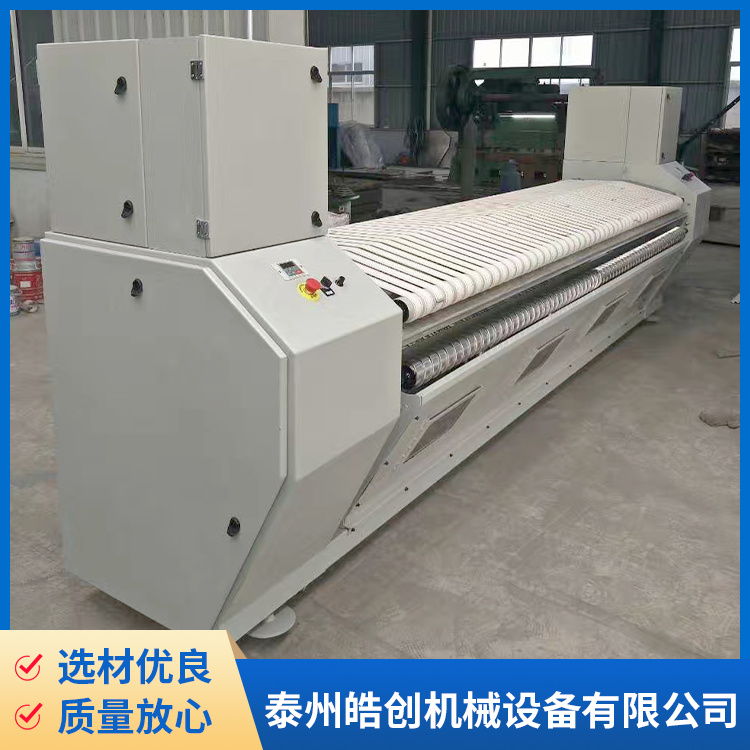
Features of the fabric sending machine:
1. Centrifugal fans and optimally designed air duct structures ensure a powerful airflow for smooth, even, and effortless fabric feeding.
2. High-quality arrangement effects for pillowcases, napkins, and tablecloths.
3. Suitable for large bedding items such as duvet covers and sheets to enhance product quality and production efficiency.
4. Significantly reduces manual operation time, improving work efficiency and easing workload intensity.
5. Enhanced flattening effect, improving ironing quality.
6. Speed Auto Mode, synchronized with ironing machine control.
7. Optional highlight lighting for checking linen cleanliness, dirty linen reject feature, effectively detecting soiled linens.
8. Configure discharge grates to enhance conveying efficiency.
9. Adjustable knob controller for easier operation.
10. Lower air guide structure, with lower noise.
11. Reasonable countertop height for fabric delivery, accommodating the fabric trough cart.
12. The fan's air volume is adjustable, suitable for various fabrics.
13. The lower cleaning door structure allows for easy removal of lint and retrieval of dropped linens.
14. Drawer-type blower fluffy cleaning structure, for easy removal of exhaust fluffy.
15. The articulated discharge machine structure facilitates easy alignment with the laying machine and ironing machine, better accommodating various client layout requirements.
Our company will uphold the principle of "surviving through quality and developing through credibility" in the years to come. We will offer higher levels of corporate service in return for our friends' support and affection, and sincerely welcome your patronage.
WeChat Official Account

Scan to follow Official Account