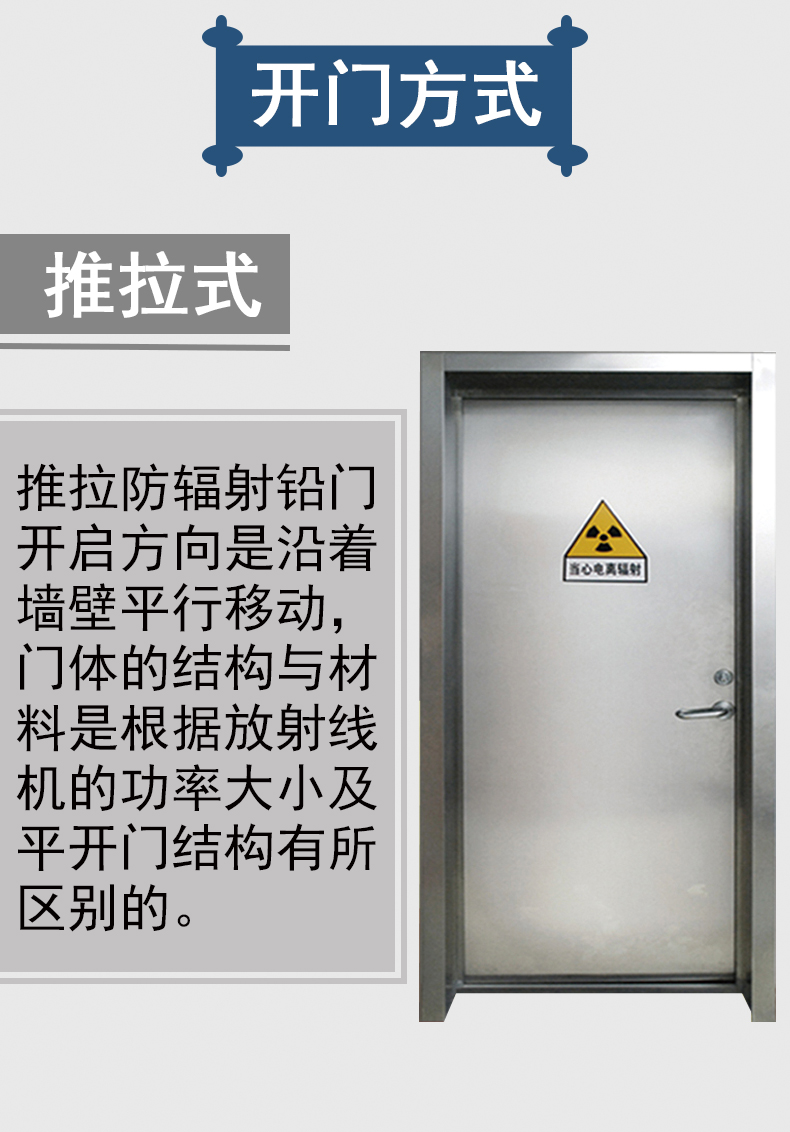
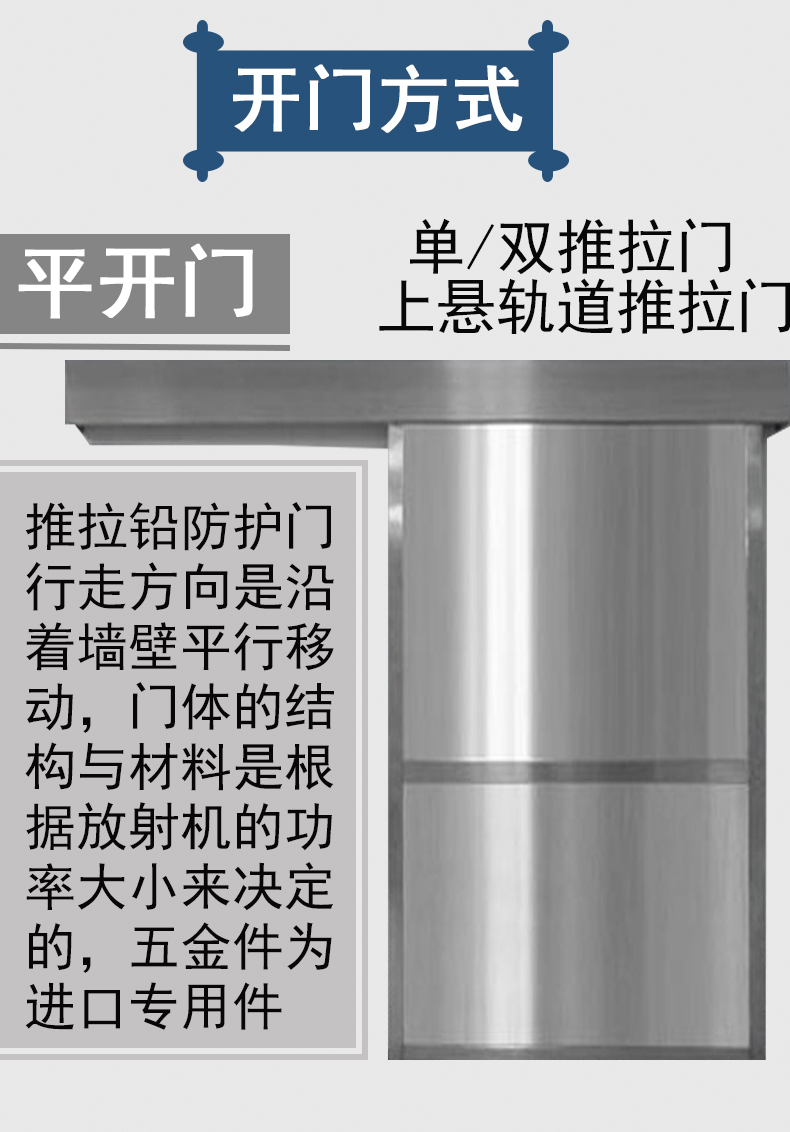
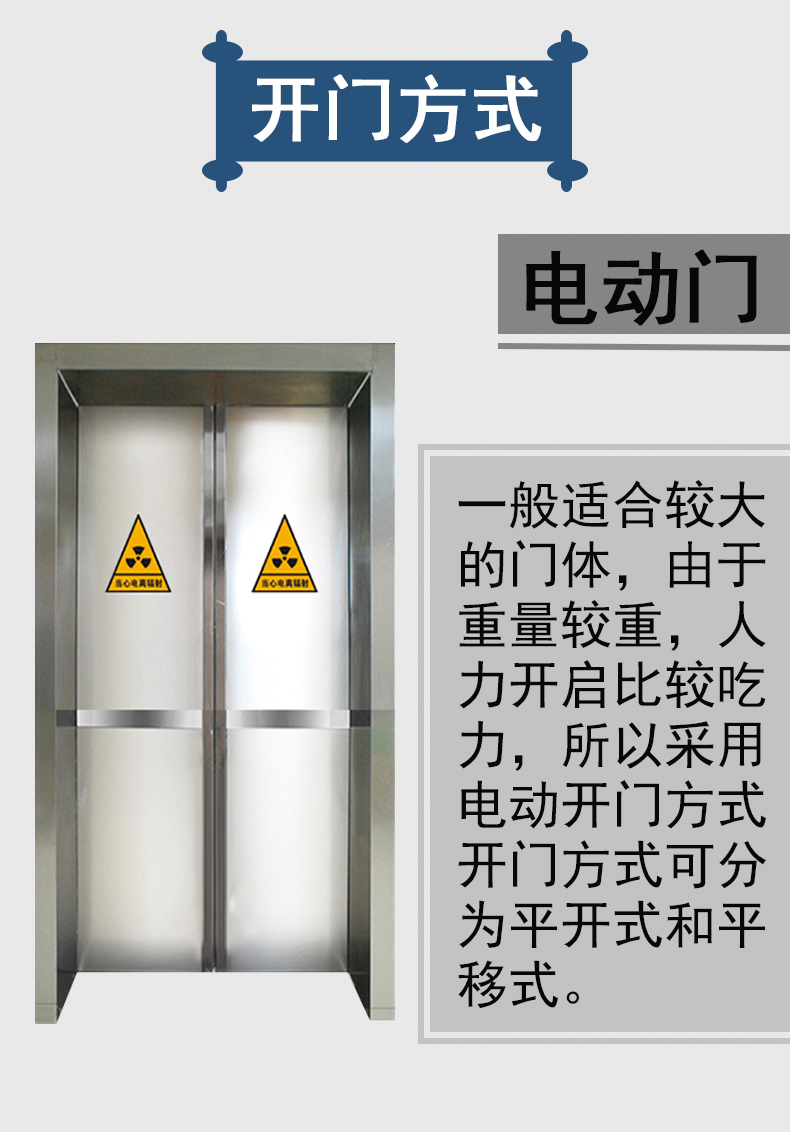
Lead doors are primarily used in the medical field for radiation protection. They effectively block and absorb various types of radiation, thereby safeguarding the health of medical staff and patients.
Ray protectionThe primary function of lead doors is to provide radiation protection. For instance, in hospital radiology departments, X-ray rooms, DR rooms, CT rooms, and other such areas, lead doors are used to block and absorb X-rays and other harmful radiations. Additionally, lead doors are commonly used in machine rooms and mining areas to prevent radiation leakage from harming people.
2. Structural Design and Material Selection
The structural design and material selection of lead doors are also crucial. Typically, lead doors are constructed with a steel frame, featuring stainless steel panels and sandwiched with radiation shielding lead plates. This design not only ensures excellent radiation protection but also guarantees the door's stability and durability.
3. Power Beam Assembly
The power beam assembly of our medical lead doors is made of aluminum alloy profiles, featuring a rational and reliable transmission structure with a lifespan of up to 1 million cycles. This design ensures smooth operation of the swing door, providing a more comfortable user experience.
4. Safety Inspection
Lead doors used in medical applications must undergo rigorous protective testing and can only be put into use after passing the test and complying with relevant regulations. Protective testing is typically conducted on the basis of routine inspections, focusing on local areas and gaps of concern.
5. Application Environment
The usage environment of lead doors is also a factor to consider. For instance, lead doors should not be installed or stored in acidic or humid conditions, as these environments may negatively affect their performance.
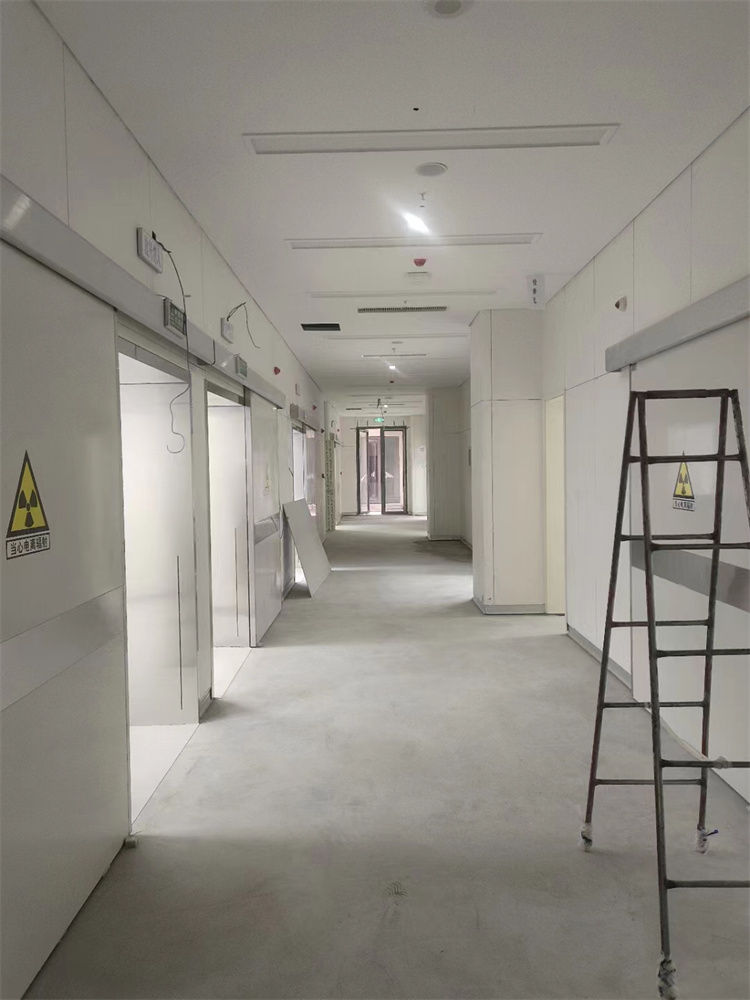
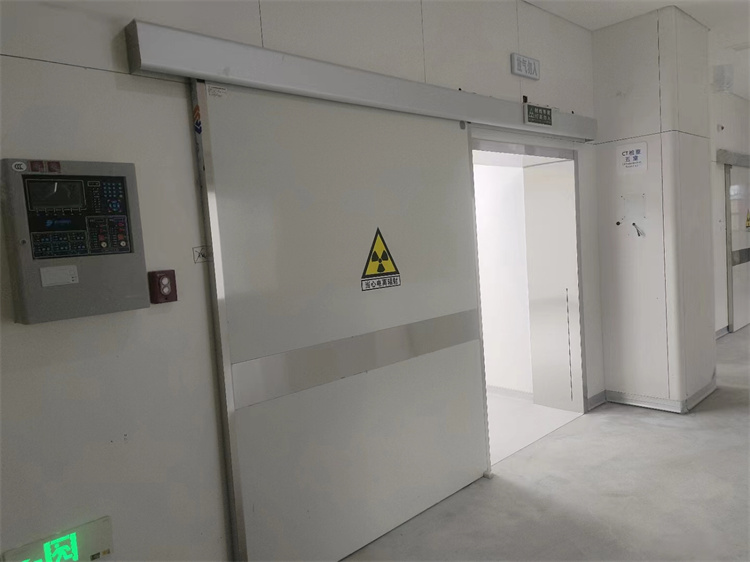
Applications for Lead Doors
Lead doors are primarily used in entry and exit points where radiation needs to be blocked, with the main feature being their radiation protection function. The specific application scenarios of lead doors include:
Hospital Radiology Department
Lead doors are widely used in hospitals, particularly in radiology departments such as medical imaging rooms, radiation therapy rooms, and X-ray machine rooms. These departments generate radiation during examinations or treatments, and lead doors are necessary for protection to shield healthcare professionals and patients from radiation exposure.
Medical ward
Medical wards often utilize lead doors, particularly in high-protection scenarios such as ICU departments, DR departments, and CT rooms. These departments typically have strong radiation sources, necessitating the use of lead doors to block the spread of radiation.
Other Special Occasions
Lead doors are also used in other special occasions, such as in server rooms and mining areas, as well as in locations requiring airtightness, such as personnel entry and exit passages. Moreover, lead doors are suitable for environments where neutrons or high-dose gamma radiation is present, such as neutron or high-dose gamma radiation shielding facilities 79.
Conclusion
In summary, lead doors are primarily used in hospitals, server rooms, mining areas, and other locations requiring radiation protection or specific airtightness. Their main function is to block the transmission of radiation, safeguarding people from radiation hazards.