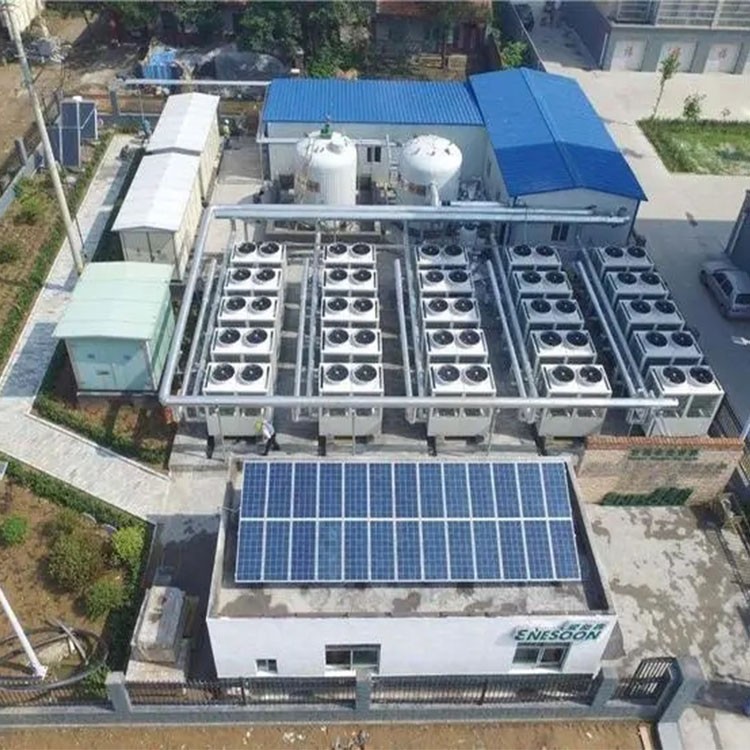



Geothermal heating systems refer to heating systems that primarily use geothermal energy as their heat source. Geothermal energy is the inherent energy of the Earth and is classified as a renewable energy source. Geothermal heating systems can be divided into direct and indirect heating based on how the geothermal flow enters the system. Direct heating involves directly introducing the geothermal flow into the heating system, while indirect heating transfers the heat energy to the circulating water in the heating system via a heat exchanger, without the geothermal flow entering the system directly. When formulating a geothermal heating plan, it is necessary to consider both the comprehensive utilization of geothermal energy (using geothermal energy for heating, hot water supply, and industrial, agricultural, and pastoral activities) and the stepped utilization of geothermal energy (maximizing the geothermal flow temperature difference to make the most of the geothermal energy).
There are three common heating methods for geothermal heating: direct geothermal water heat exchange heating, geothermal water heat exchange + compression heat pump heating, and geothermal water heat exchange + absorption heat pump heating.
Pure Geothermal Heat Exchange Heating: The 70℃ high-temperature water from the production well, after being treated by the steam-water separator and the vortex desander, enters the heat exchanger for heat exchange with the secondary network hot water. After heat exchange, the temperature drops to 38℃, and after being pressurized by the injection pump, it is injected into the injection well. The secondary network hot water (heating hot water) is heated by the heat exchange, with the temperature rising from 35℃ to 45℃ to supply heat to the thermal users. The amount of heat exchanged in this heating method is closely related to the water output, water temperature from the production well, and the supply and return water temperatures of the secondary network. Referring to the geothermal well parameters in use at the Shengli Oilfield, assuming the water output of the newly constructed production well is 66 m³/h, the water temperature is 70℃, and the drainage temperature is 38℃. After calculation, the heat exchange supply amount per well is 2.46 MW. In the case that the heat load demand of a newly constructed residential area is 2.46 MW, the pure geothermal water direct heat exchange method can meet the heating requirements.
Geothermal Heat Exchange + Compressed Heat Pump Heating: When the heating capacity of the extraction well exceeds the thermal load demand of the heating unit, the geothermal water is directly exchanged with the secondary network hot water through an exchanger, and the geothermal water exiting the exchanger is injected directly back into the injection well. When the heating capacity of the extraction well is less than the thermal load demand of the heating unit, the geothermal water first exchanges heat with the secondary network hot water through the exchanger, then its temperature is reduced to 38°C, and it is subsequently passed through a compressed heat pump to transfer heat to the secondary network hot water, with the geothermal water being reduced to about 18°C before being reinjected into the formation. The secondary network hot water, which has been heat-exchanged via plate exchangers and heat pumps, is collected and supplied to the heat users for heating. The performance coefficient of the compressed heat pump is typically between 4 and 6.
Ground Source Heat Exchange + Absorption Heat Pumps for Heating: This heating method is similar to Ground Source Heat Exchange + Compressed Heat Pumps, with the difference being that it employs the first-generation absorption heat pump to supplement the heating capacity.