








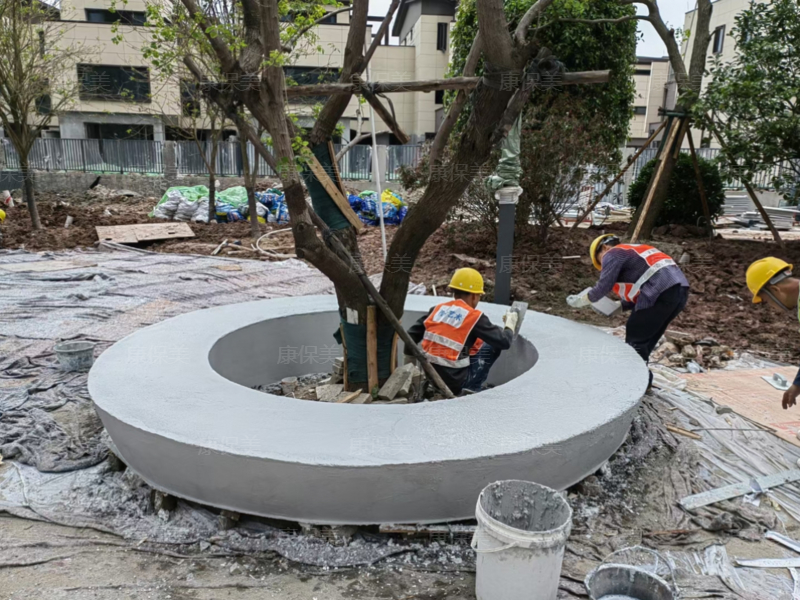
Actually, one can roughly determine the classification of grindstone products by their names. For instance, terrazzo is a traditional term, named after the processing technique. As the name implies, it is a grindstone product made by grinding with water, a more traditional method involving the mixture of white cement or slag cement with aggregates like quartz stone and then cured before grinding. It is divided into precast and on-site grinding types, but on-site grinding is not favored due to the significant environmental pollution from sludge and its poor strength that leads to cracking. Epoxy grindstone and cement grindstone are named based on different types of binding materials. Epoxy grindstone uses epoxy resin as the binding material, mixed with various stones, glass, shells, metals, etc., and then cured. It is polished using professional grinding and polishing equipment, primarily employing dry grinding without water (water grinding is also possible in non-polluting environments) and equipped with high-power vacuum cleaners to ensure a dust-free environment. Cement grindstone, also known as cement-based grindstone, uses special cement (non-slag cement) as the binding material, mixed with various stones, glass, shells, metal blocks, etc., and then cured and polished using professional grinding and polishing equipment. It also uses dry grinding technology (water grinding is possible in non-polluting areas) and is equipped with high-power vacuum cleaning equipment to ensure a clean construction environment. There are also organic grindstone and inorganic grindstone in the market, named based on the binding materials. Epoxy resin and polyurethane resin are organic resins, and grindstone products using them as binding materials are called organic grindstones. Water grindstone, terrazzo, and cement grindstone are all named after using cement as the binding material.