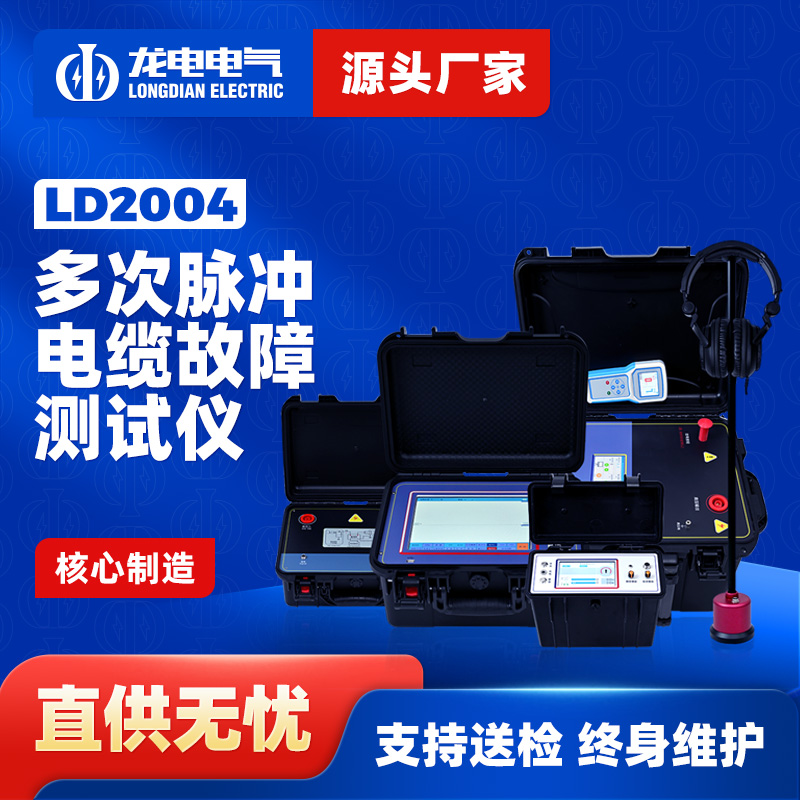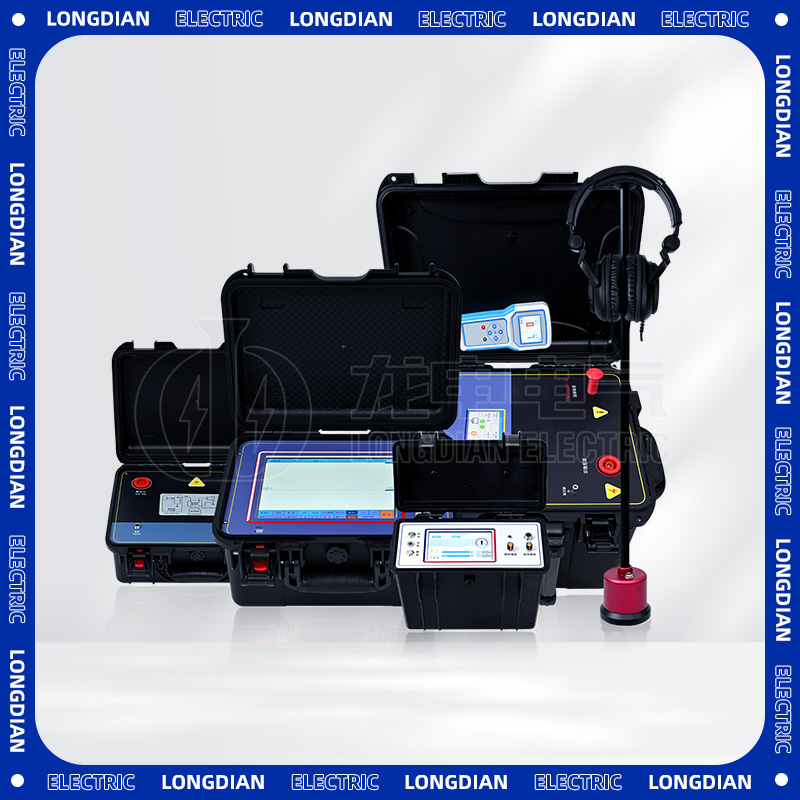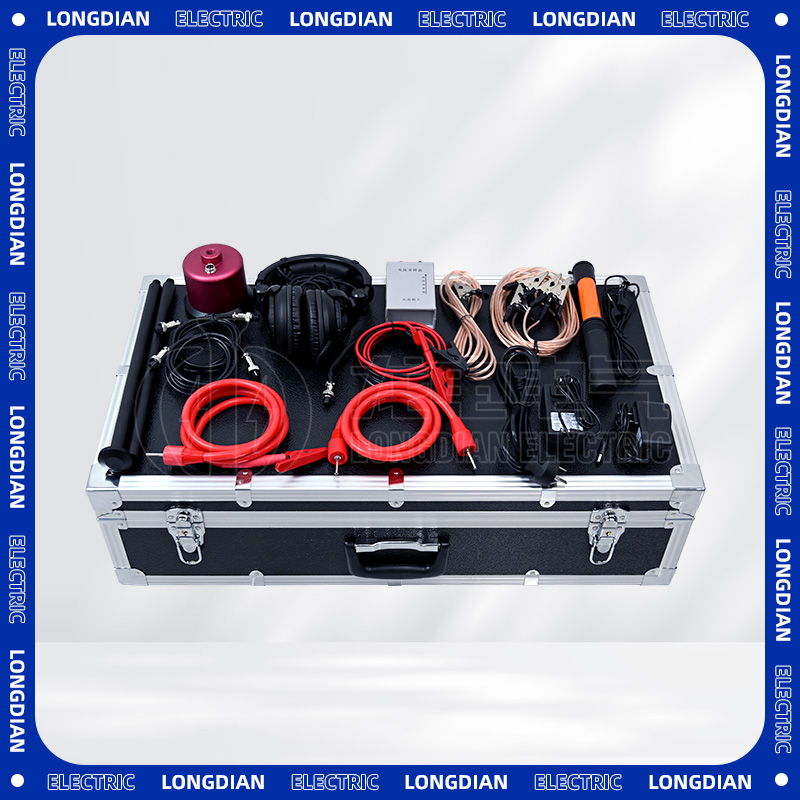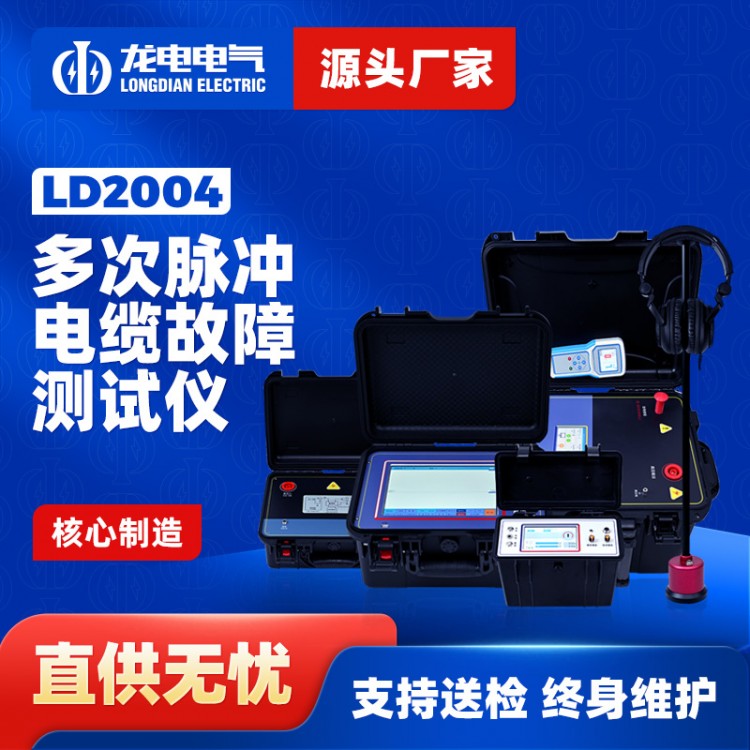

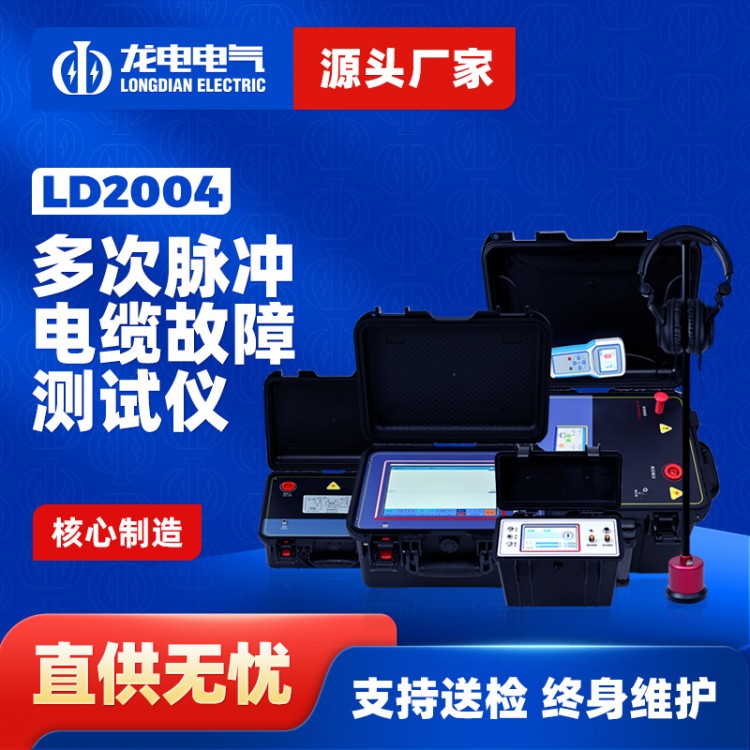










LD-2004 Multipulse Cable Fault Tester, in accordance with the People's Republic of China's electrical industry standard "DL/T849.1-3-2004" for General Technical Specifications of Special Test Instruments for Power Equipment, and considering market demands, developed over a decade of field experience. It employs new technologies such as multiple arc reflection, low-voltage pulse, pulse current, and attenuation methods. The LD-2004 Multipulse Cable Fault Tester integrates distance measurement and path tracing, housed in a compact and delicate PP plastic case, easy to carry. The user interface is friendly, allowing even non-specialists to quickly become familiar with and use it, efficiently and accurately completing cable fault testing tasks.
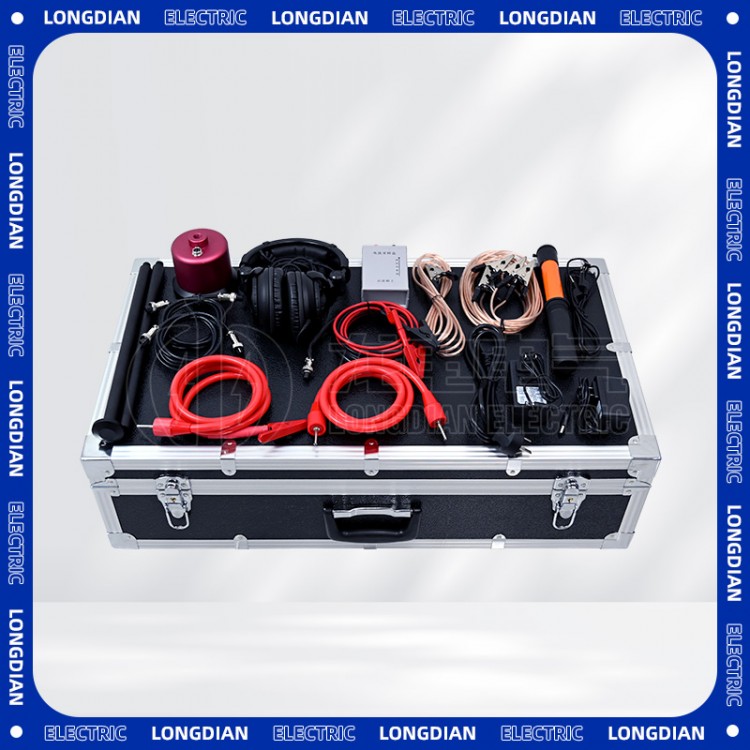
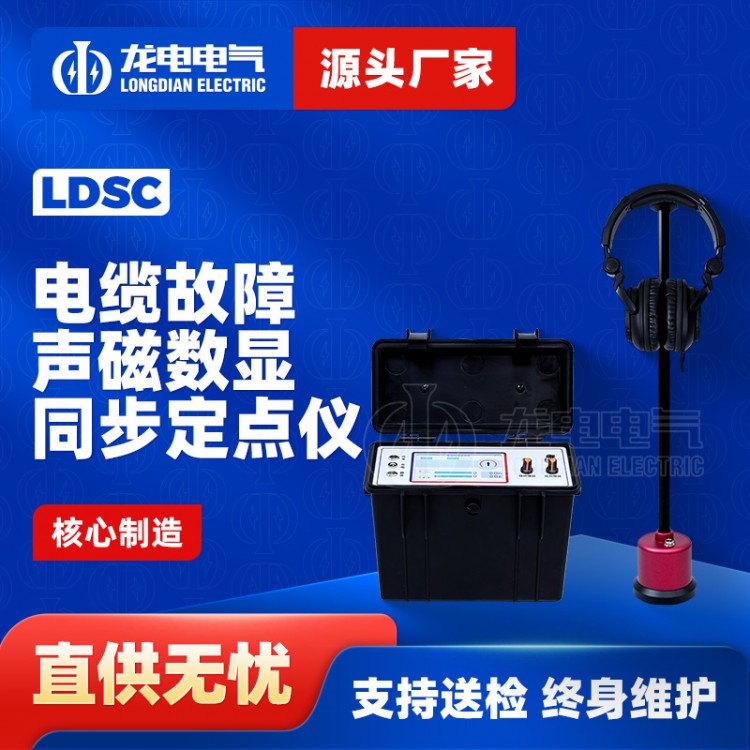
The Multi-Pulse Cable Fault Tester System consists of three parts: the system host, fault locator, and cable path locator. It is designed for testing various faults in power cables, including cable paths, burial depths, and precise testing of faults in railway, airport signal control cables, and streetlight cables.
Product Synonyms: Cable Fault Indicator, Power Cable Fault Tester, Street Light Cable Fault Tester, Cable Fault Tracer, Cable Fault Locator, Portable Cable Fault Locating System, Cable Fault Flash Test Instrument, Geographical Cable Fault Tester, Cable Path Tester, Cable Fault Testing Equipment
Product Features
Faults for various power cables used for different grades, cross-sections, mediums, and materials below 35kV, including: open circuit, short circuit, low resistance, high resistance leakage, and high resistance arc-over faults.
2. Accommodates low-voltage pulse method, impulse flashover method, triple-pulse method, multiple-pulse method, and velocity measurement for traditional cable fault testing in conjunction with high-voltage equipment.
3. Full Chinese operational software and user interface, featuring sub-menu style and text prompts for human-machine interaction.
4. Industrial-grade 10.4-inch color touch LCD display, with full Chinese operating software and interface, achieving human-machine interaction through sub-menu style and text prompts.
5. Global and local waveforms are displayed simultaneously, facilitating comprehensive analysis and detailed adjustments.
6. Any high resistance fault exhibits a simple waveform characteristic similar to a low-voltage pulse short circuit, making it easy to interpret.
7. During multiple-pulse testing, the interface simultaneously collects 8 actual waveforms, which facilitates interpretation and reduces testing errors, enhancing precision.
8. Built-in power supply ensures long-lasting operation in environments without access to power.
9. Compact, lightweight, and easy to use; high success rate in detecting faults and high testing accuracy.
10. Stable performance under any environment, no system crashes, and safe high-voltage protection measures for signal collection.
11. Built-in storage/recall feature for convenient saving and recalling of data and waveforms for further analysis.
12. The test signal offers various pulse widths with no blind spots in testing.