








Product Introduction
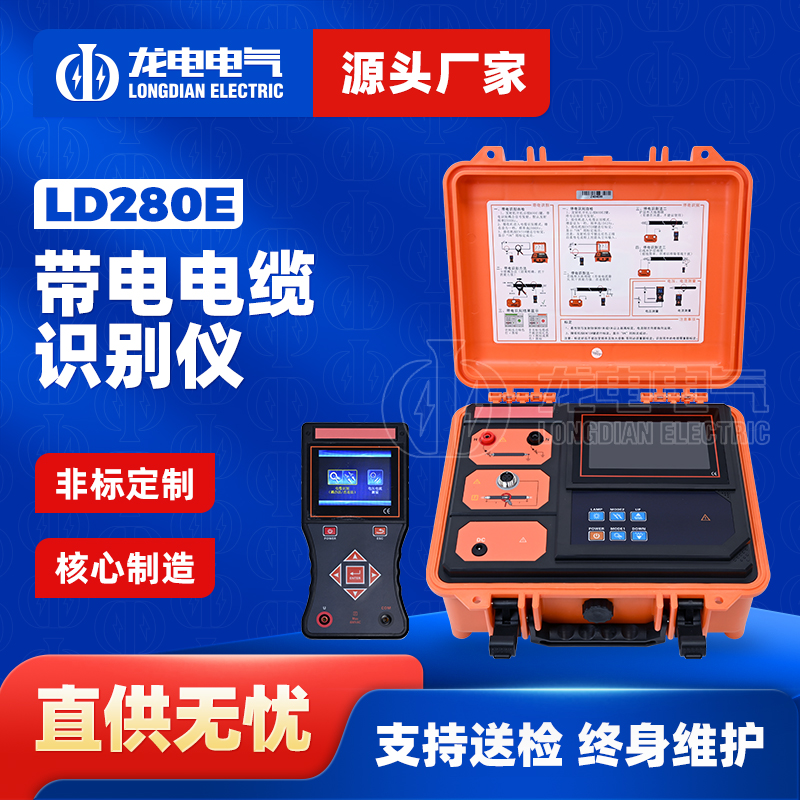
LD280E Live Cable Identifier, also known as Cable Identifier, Multi-functional Cable Identifier, and Intelligent Cable Identifier, is designed to address the technical challenges of cable identification for electrical cable engineers and electricians. Users can accurately identify a specific target cable from multiple cables using the instrument, preventing serious accidents caused by mistakenly cutting live cables. Cable identification starts from the ends of the cable, ensuring the double numbering at both ends is accurate. This instrument is designed with PSK technology and precise algorithms. No matter how reliable the memory of on-site staff may be, it cannot replace the identification capabilities of a professional instrument.
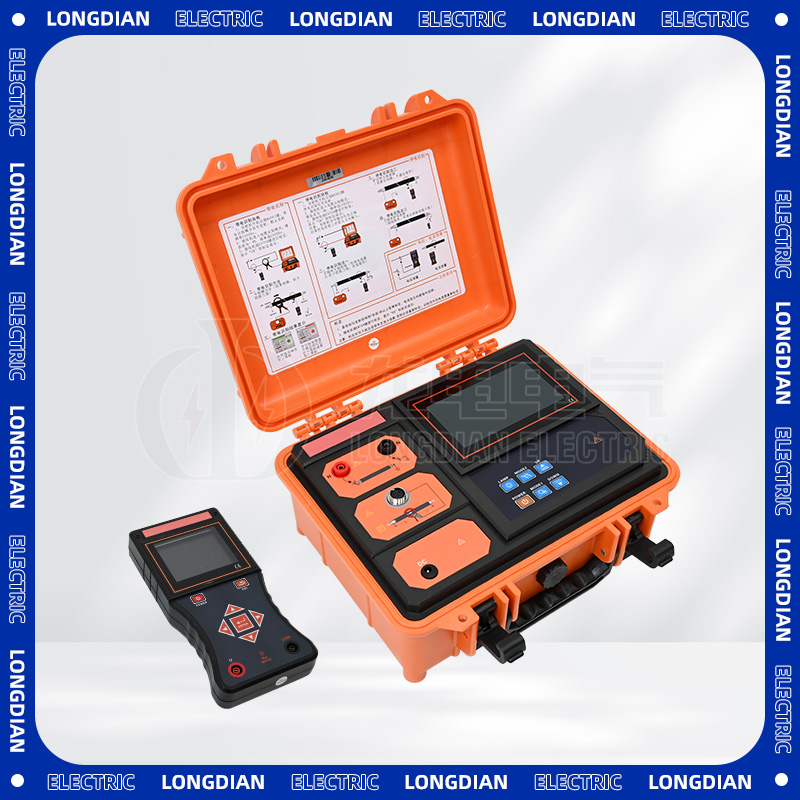
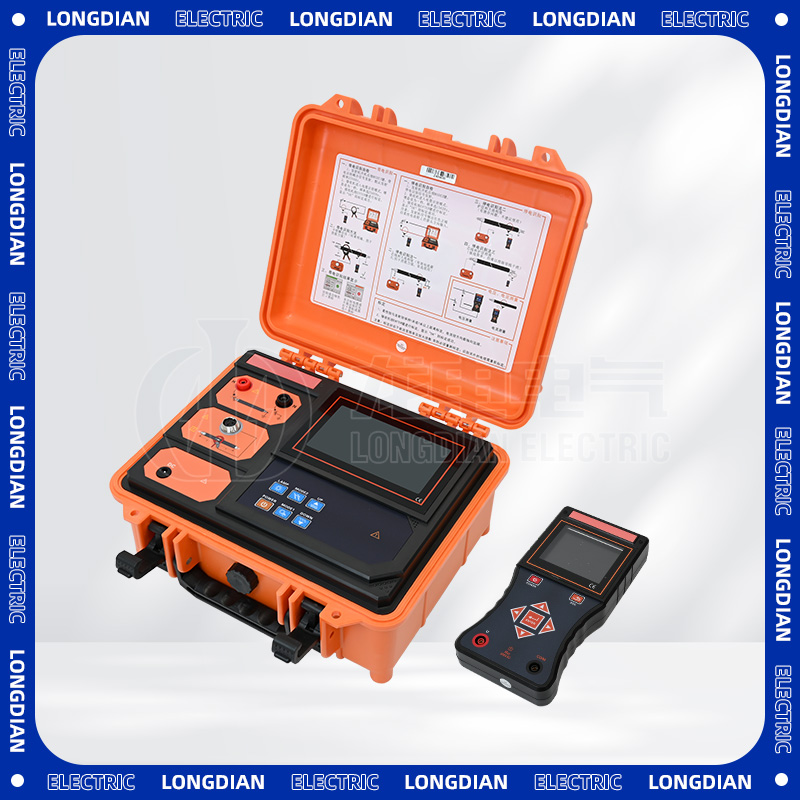
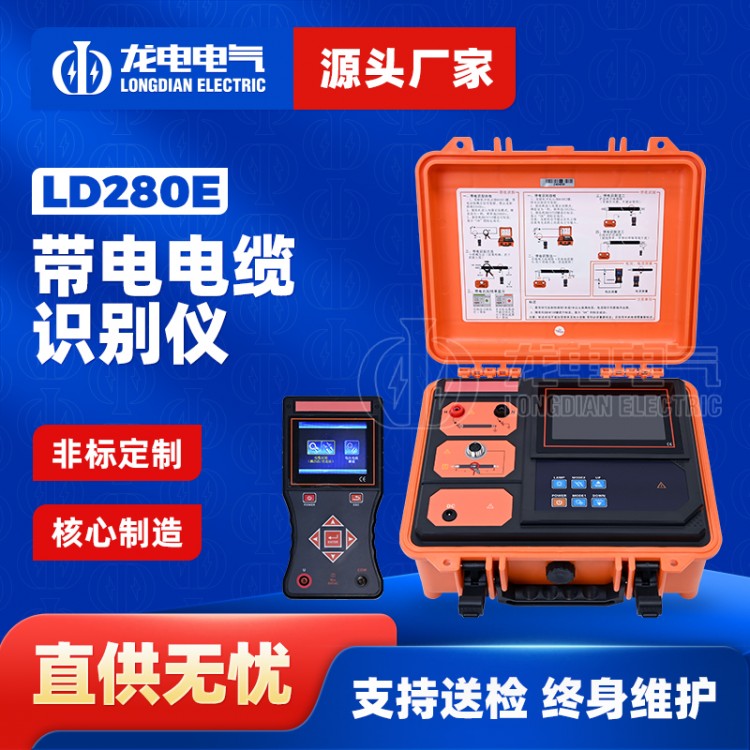
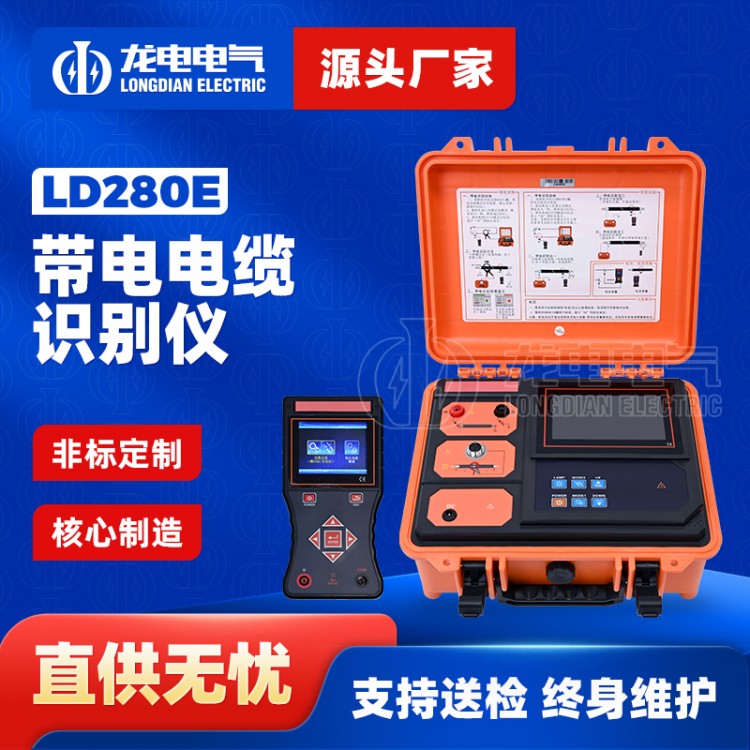
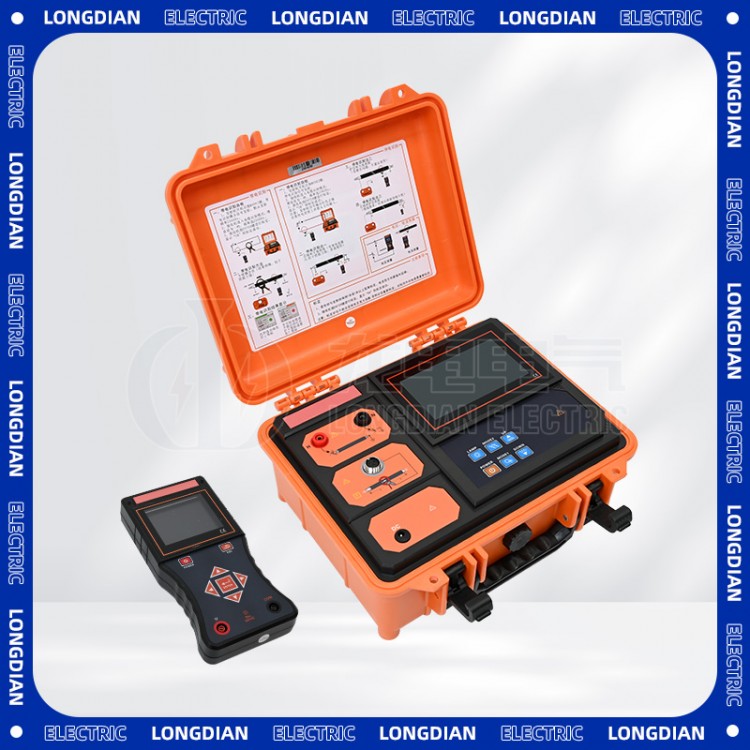
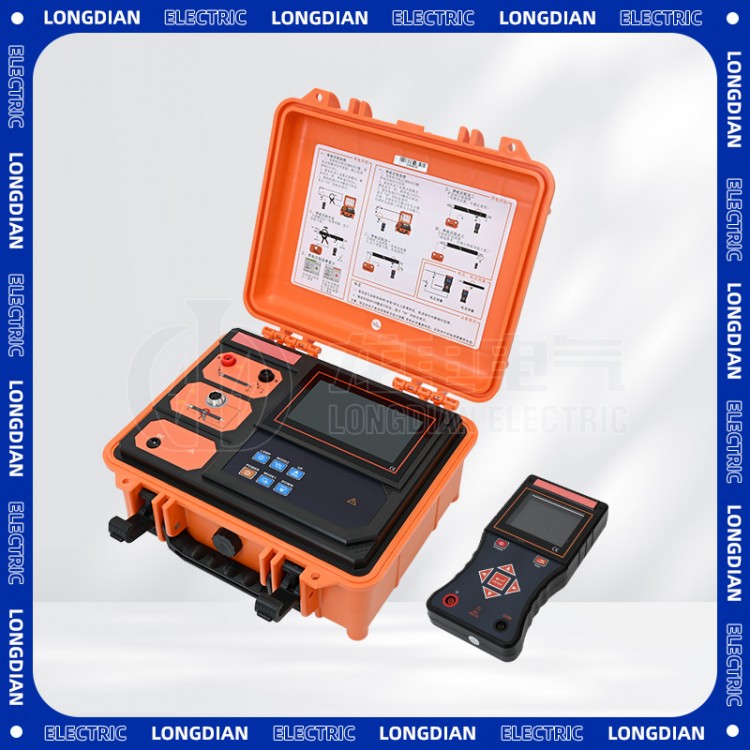
The LD280E live cable identifier features functions for live cable recognition, shutdown cable recognition, AC current testing, and AC voltage testing, and is composed of a transmitter, transmitter current clamp, receiver, and receiver flexible current clamp.
Product Synonyms: Cable Identification Device, Cable Identifier, Identifier, Cable Fault, Cable Fault Tester, Cable Fault Identifier.
Product Features
Transmitter: Sends signals to the target cable during live cable identification and power-off cable identification, featuring an internal high-rate rechargeable lithium battery, automatic impedance matching, and full automatic protection. The transmitter is designed in a one-piece, specialized tool box style, made from polypropylene plastic and incorporating a new composite filling material for one-time injection molding. It boasts low density, high strength, rigidity, hardness, wear resistance, heat resistance, and insulation properties. The housing can withstand up to 200kg of pressure. The main unit features a large LCD display that shows the remaining battery power in real-time, with white backlighting and dynamic signal transmission indicators for clear visibility.
Emitting Clamp: During cable identification with live cables, the emitting clamp couples the signal from the transmitter to the target cable. The clamp opening size is Φ105mm. The emitting clamp is directional, with the incoming signal flowing into it from the direction indicated by the arrow on the clamp.
During live wire identification: Utilize clamp coupling to output pulse width frequency signals, emitting four frequencies: 625Hz, 1562Hz, 2500Hz, and 10000Hz. These signals are transmitted through the clamp to the target cable (a three-core armored cable), injecting composite pulse width frequency signals into the cable cores. These signals generate an electromagnetic field around the target cable, which is detected and identified by the receiver and flexible current clamp; due to the directional nature of the pulse width frequency signals, the detection is also directional.
During power outage detection: Utilize directly connected output pulse width frequency signals, emitting two frequencies: 1562Hz and 2500Hz. Inject pulse-coded current signals into the cable cores, generating an electromagnetic field around the target cable for detection, decoding, and identification by the receiver and flexible current clamp; as the current has a directional property, the detection is also directional.
Receiver: Handheld device with a 3.5-inch color LCD screen, featuring an internal high-speed microprocessor and precise algorithms to identify and decode the pulse-coded current signal from the transmitter. It also has signal strength calibration capabilities, displaying signal strength and detection results in a beautiful and intuitive manner; color scale bars are dynamically displayed for easy recognition. Successful cable identification is marked with a checkmark (√), while non-target cables are marked with an X, enabling quick and automatic identification of target cables. Additionally, it can test voltage ranges from AC 0.00V to 600V (50Hz/60Hz), AC current ranges from 0.00A to 5000A (50Hz/60Hz), and current frequencies from 45Hz to 70Hz.
Flexible Current Clamp: Designed for R-core coils, it boasts efficient transient tracking capabilities, quickly identifying pulse-coded currents generated by transmitters, suitable for thick cables or irregular conductors. The jaw inner diameter is approximately 200mm, capable of clamping cables with a diameter of Φ200mm or less, without the need to disconnect the circuit under test. Non-contact measurement ensures safety and speed.