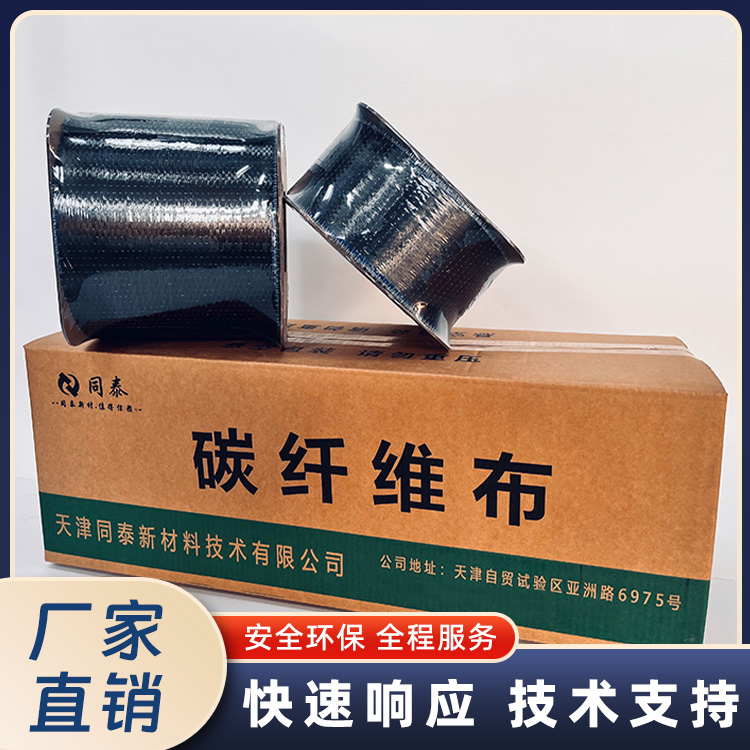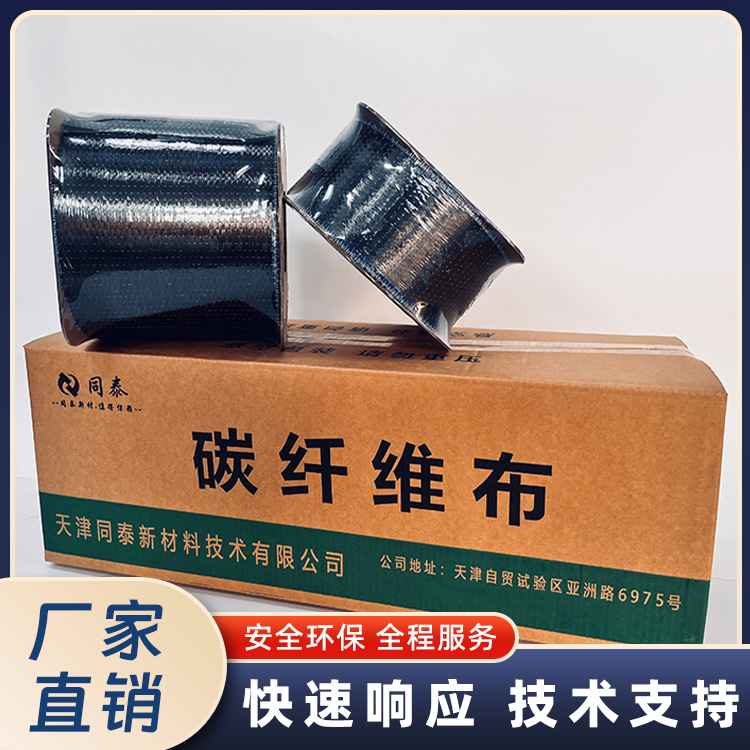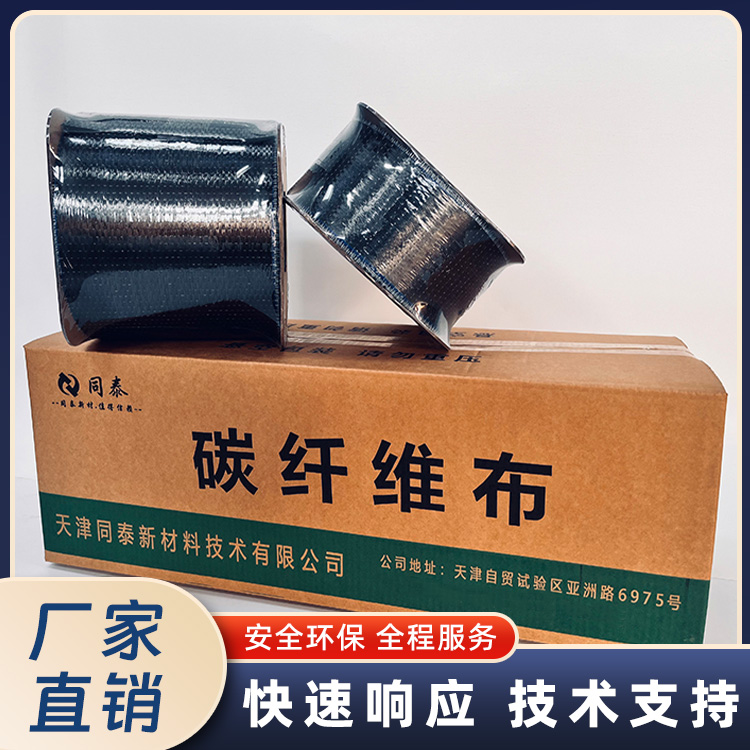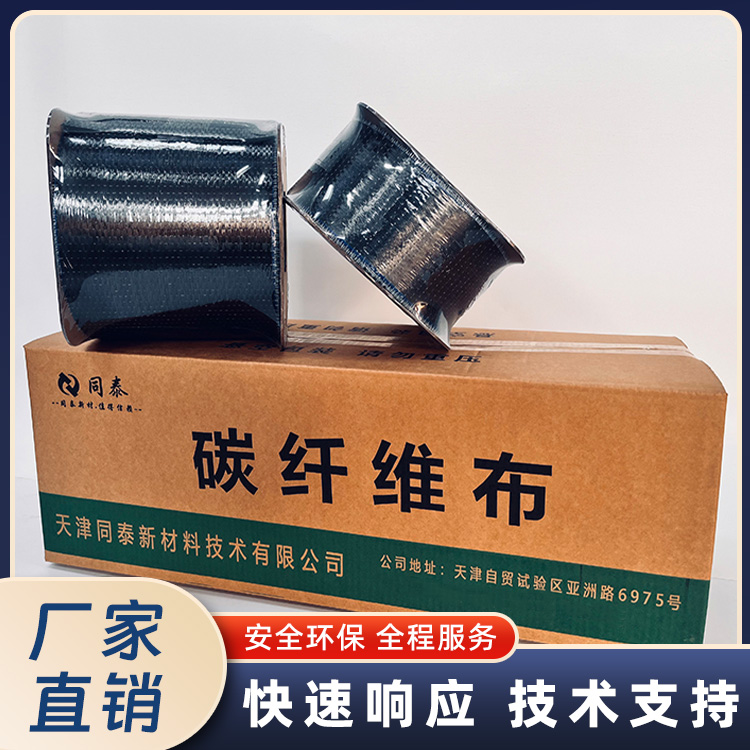

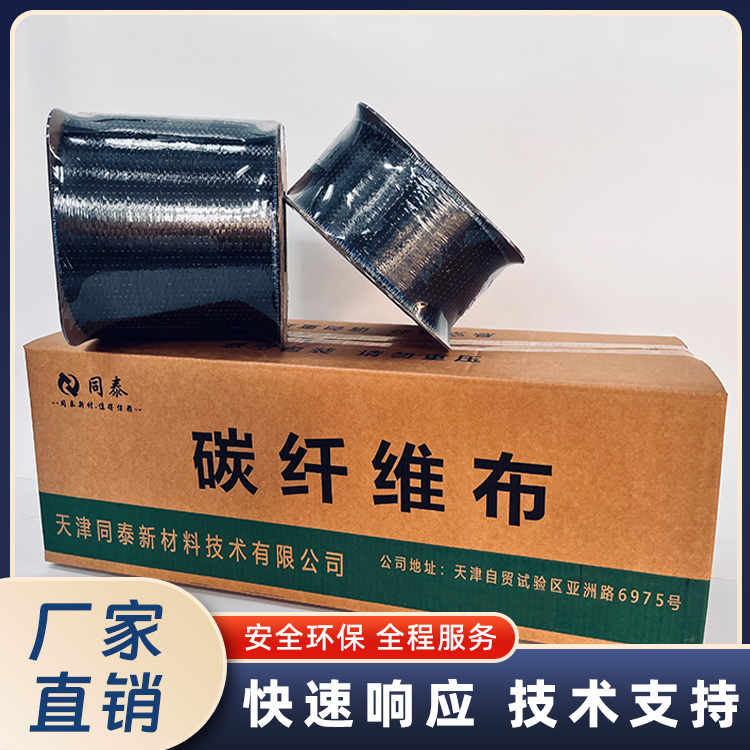

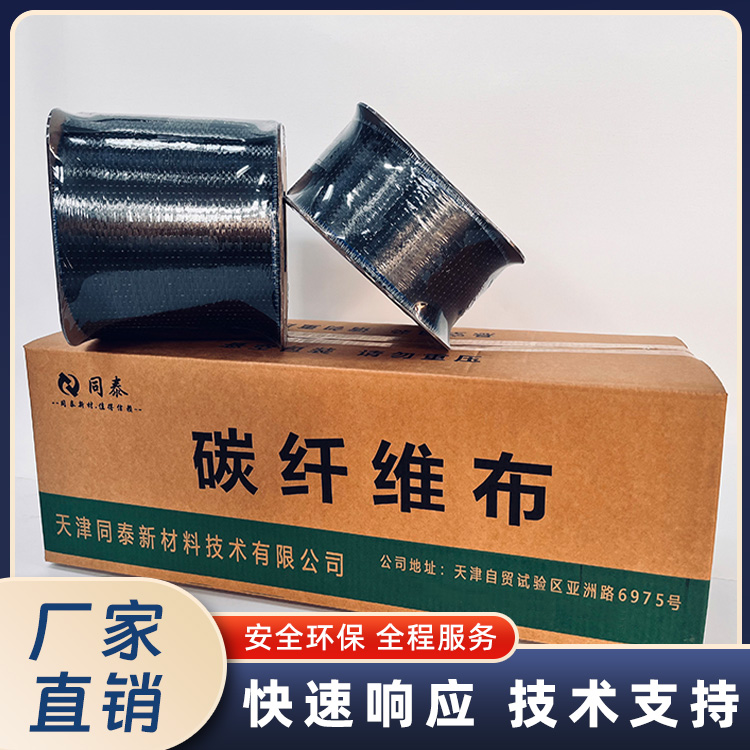
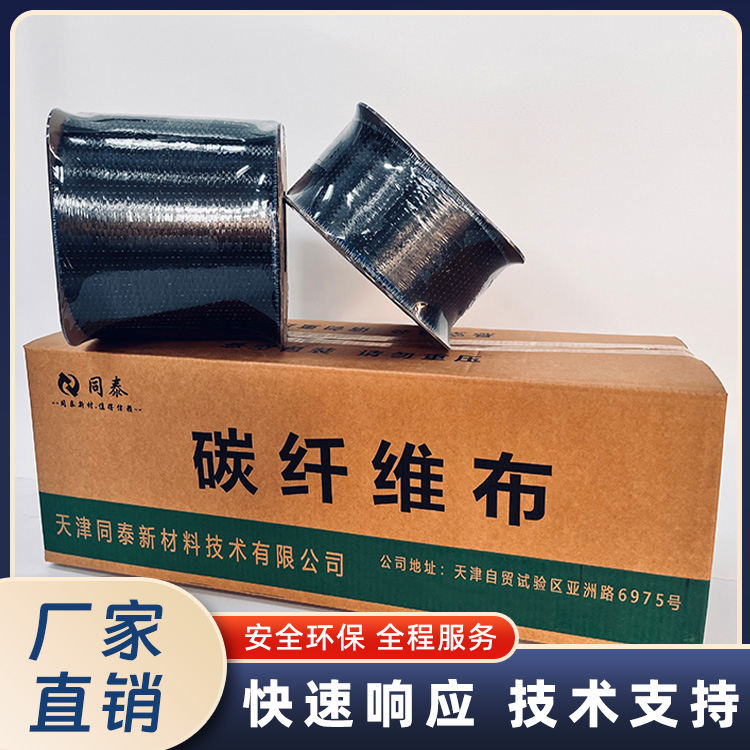
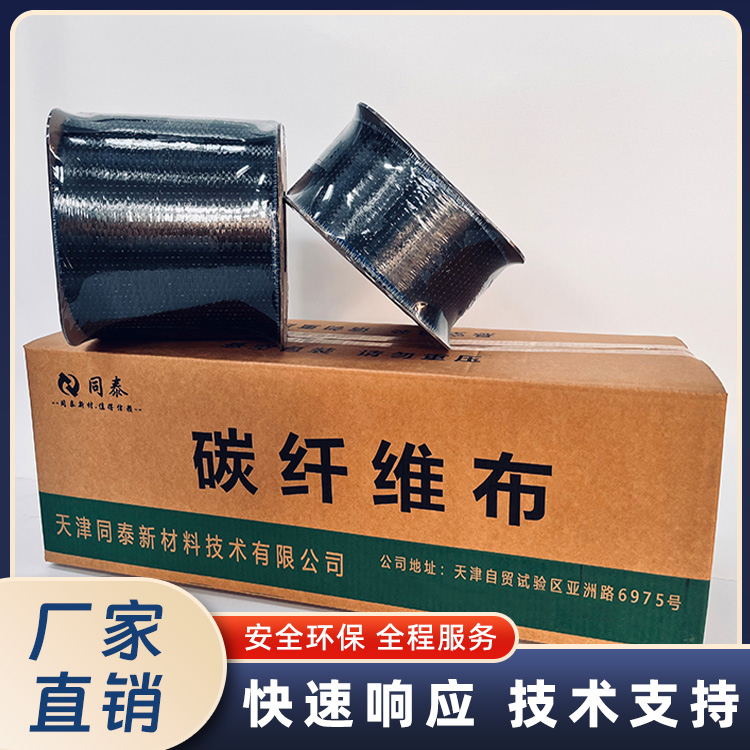










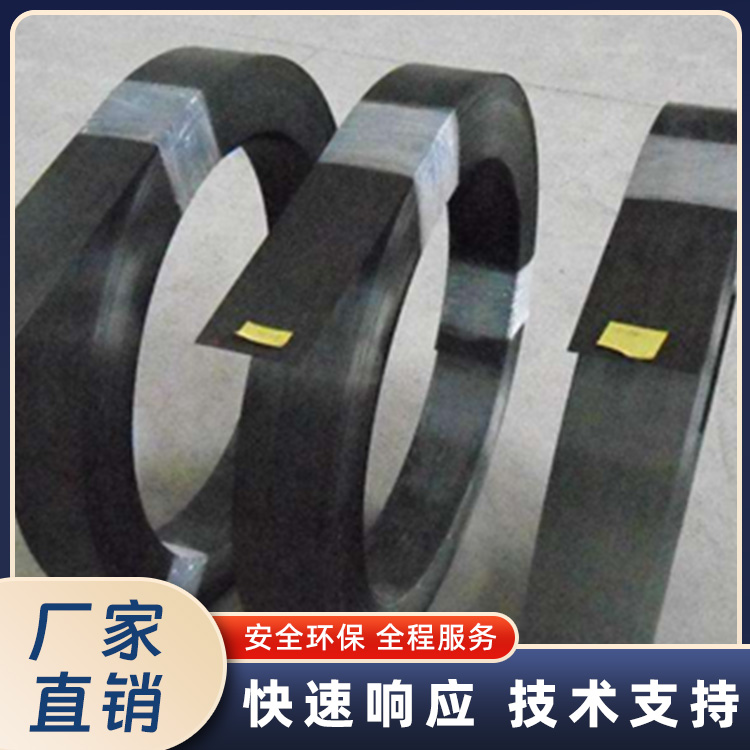
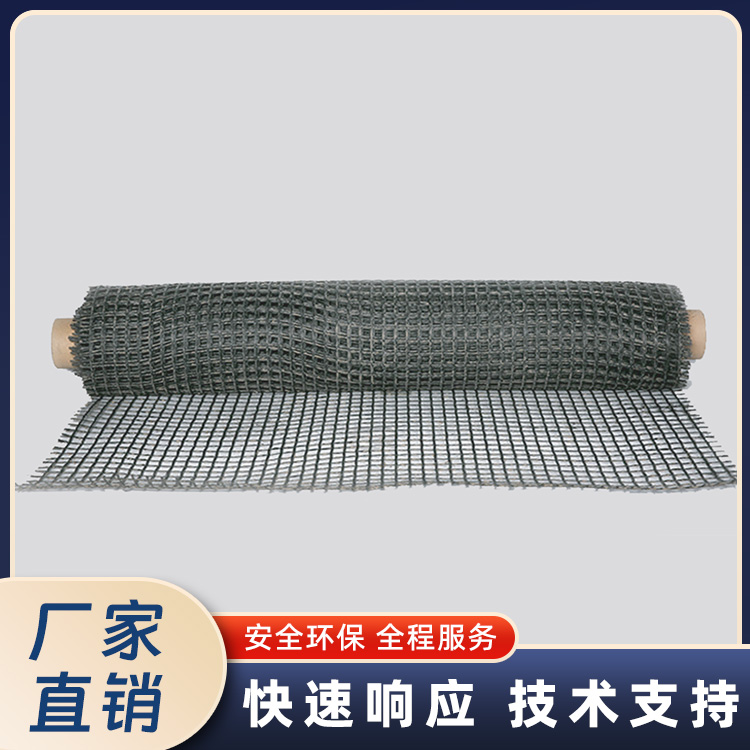
Product Advantages
Low own weight: Essentially does not add to the structural weight
High strength: 8 to 10 times the strength of steel bars of the same volume
Corrosion-resistant: Resistant to acids, alkalis, and aging
Easy to cut and install
Easy to store: Compact, space-saving
I. Construction Process Flow
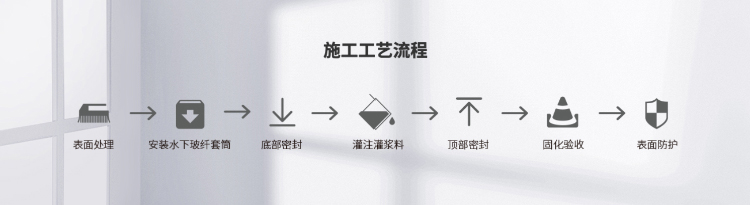
Installation Instructions:
1. Surface Treatment
(1) Clean off any missing or damaged parts from the concrete components' surfaces.
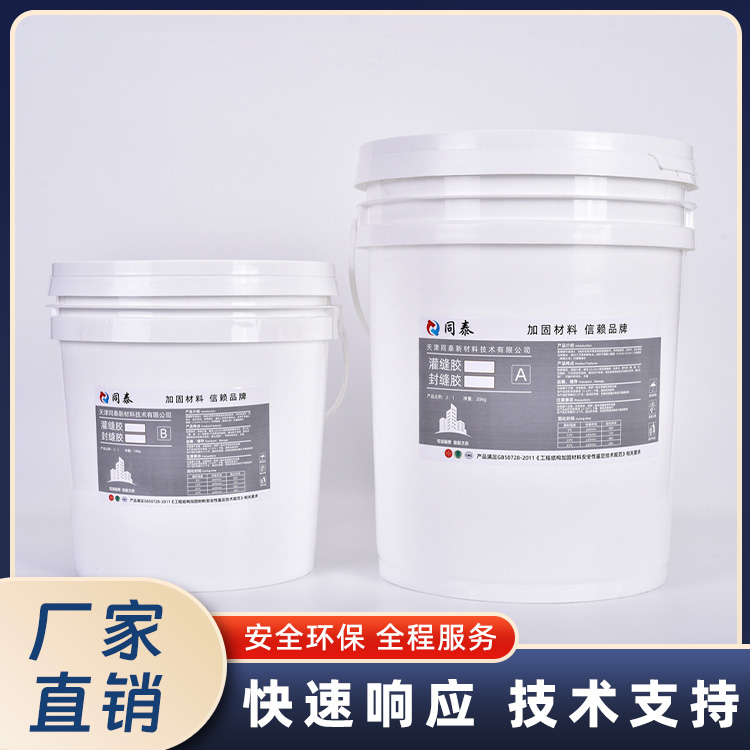
(2) For cracks less than 0.15mm wide, use Tong Tai crack sealant for surface coating and sealing; for cracks wider than 0.15mm, use the same crack filling sealant.
2. Patch and Flatten
For missing parts of components that have been de-burred, cleaned, and exposed, use Tai repair adhesive for patching and leveling.
Coating and immersion adhesive
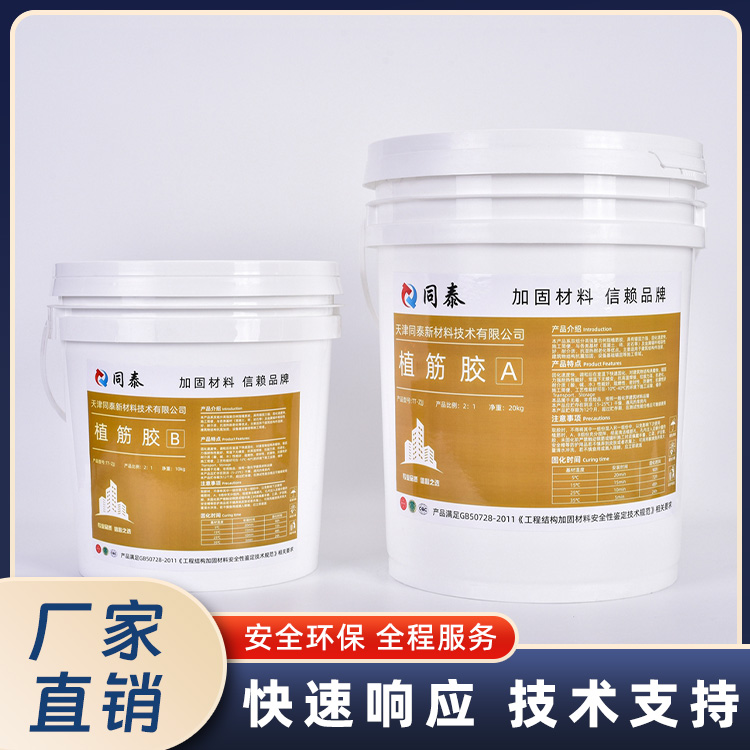
After mixing the adhesive in a ratio of quality A:B=2:1/3:1, apply it evenly. Use a roller to evenly coat the prepared adhesive on the concrete surface where bonding is required.
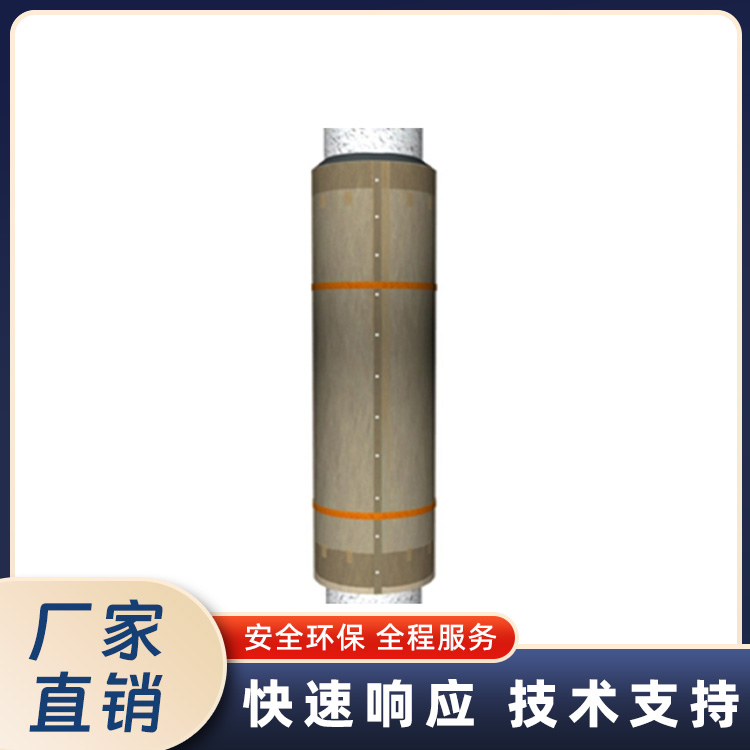
4. Carbon Fiber Tape
(1) During application, try to minimize air between the carbon fiber fabric and the impregnating resin. Use a roller to roll the fabric multiple times along the fiber direction, allowing the resin to渗透 into the carbon fabric.
(2) The longitudinal joints of carbon fiber must overlap more than 20 cm, while transverse joints are not required for carbon fiber.
5. Coating and Immersion Adhesive
After the carbon fiber is粘贴完毕, apply one coat of Tongtai impregnating varnish to the carbon fiber surface to ensure the varnish is fully impregnated into the carbon fiber.
6. Surface Protection
After applying the carbon fiber cloth, it requires natural curing for 1 to 2 hours to achieve initial curing. It is essential to ensure that there is no external interference or impact during the curing period.
(2) Apply fire-retardant coatings or similar measures based on the site environment or design requirements.
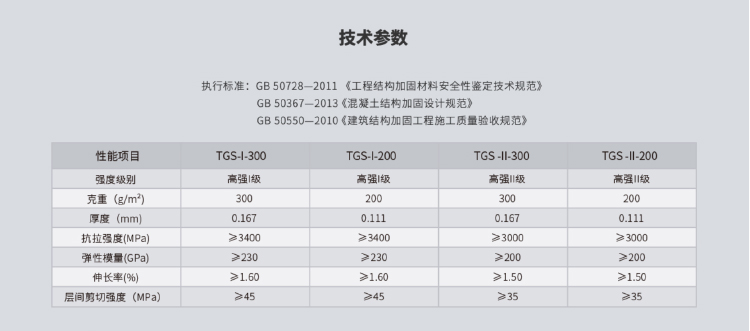
II. Performance Parameters
III. Precautions:
1. Use as needed; it is recommended to use 20-30 minutes' worth of adhesive per person each time to prevent waste.
2. Environmental temperature affects curing speed; the higher the temperature, the faster the curing speed, and vice versa.
3. During winter construction, when the colloidal temperature is low, the colloidal material can be heated, but the heating temperature should not exceed 50℃.
Do not allow children to touch. Do not ingest.
5. Wear gloves, masks, goggles, and other protective gear during construction. If the gel accidentally contacts skin or clothing, wash it off immediately with water. If accidentally ingested or gets into eyes, seek medical attention promptly.