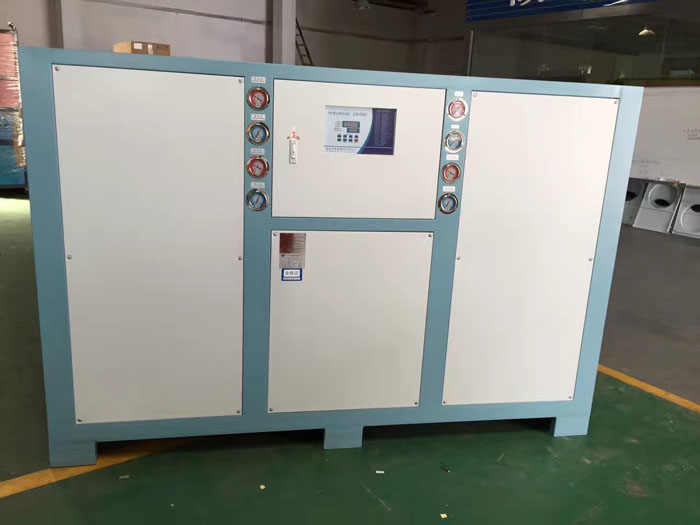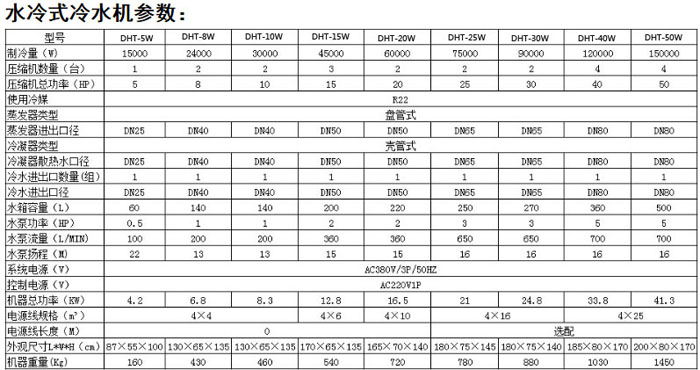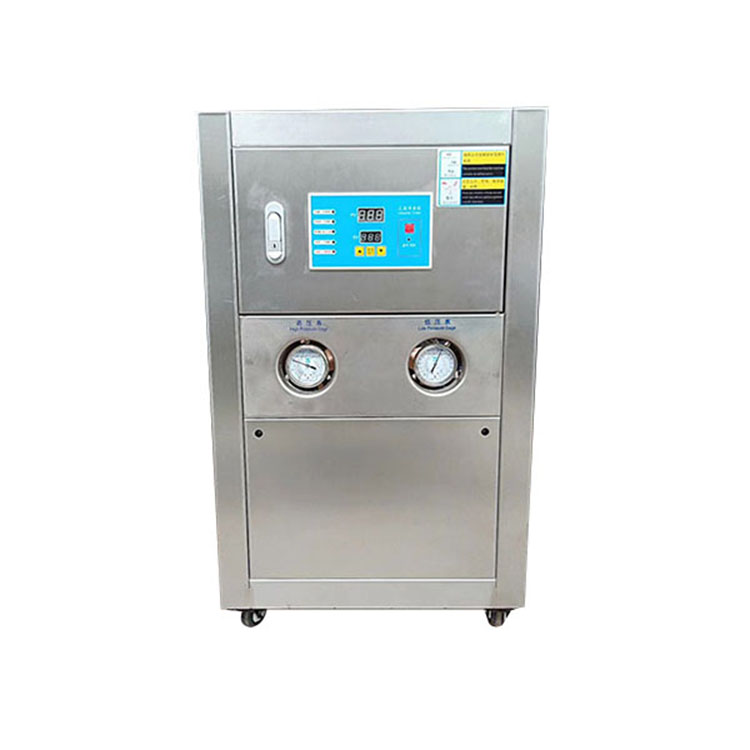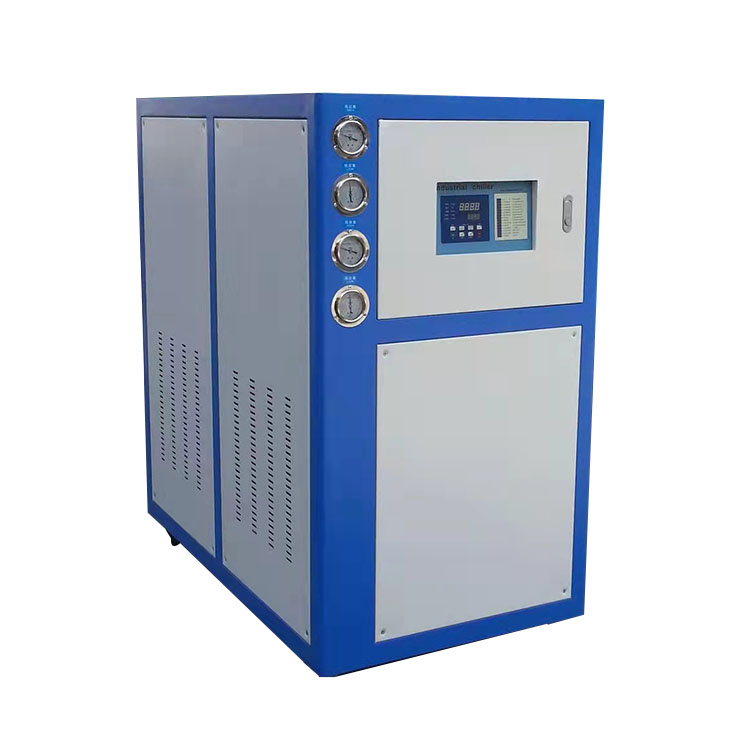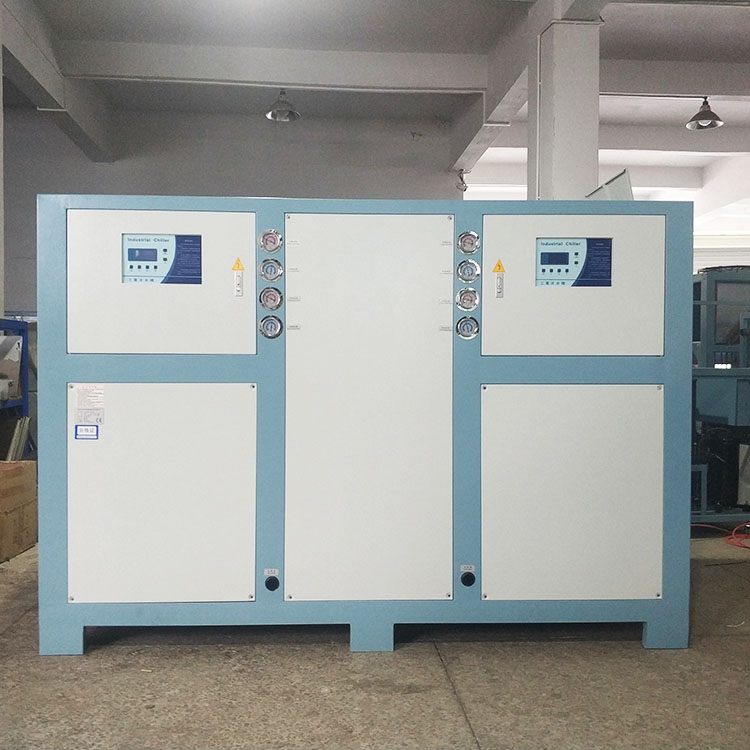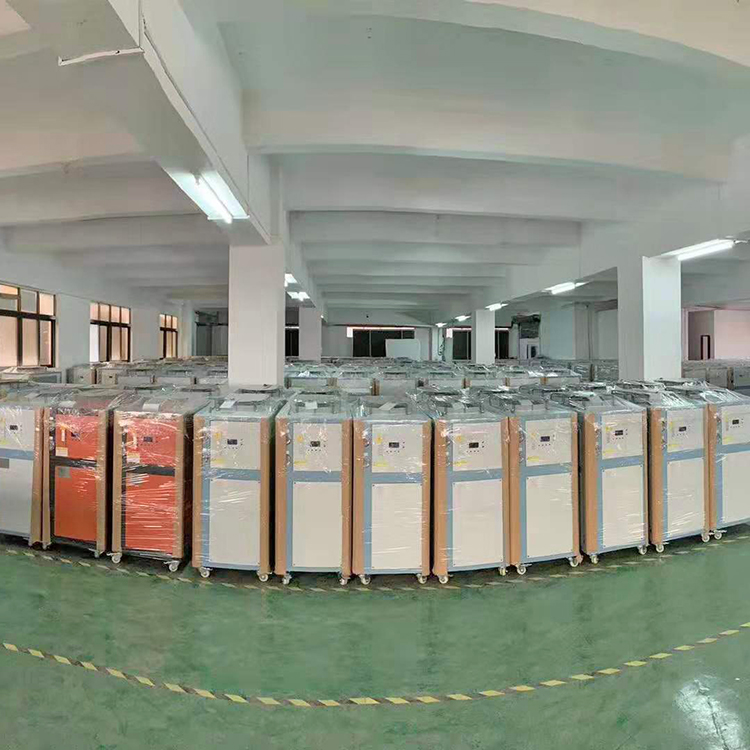

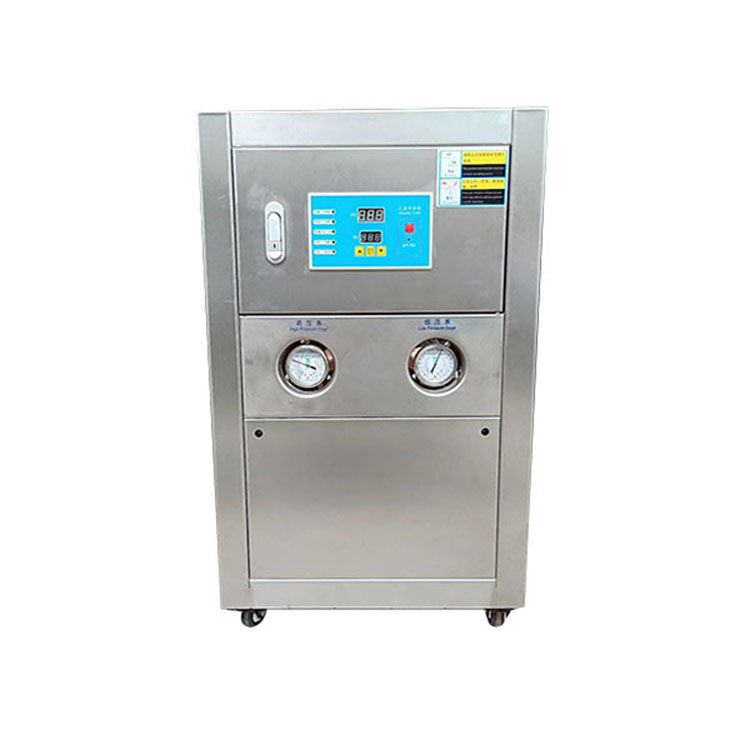

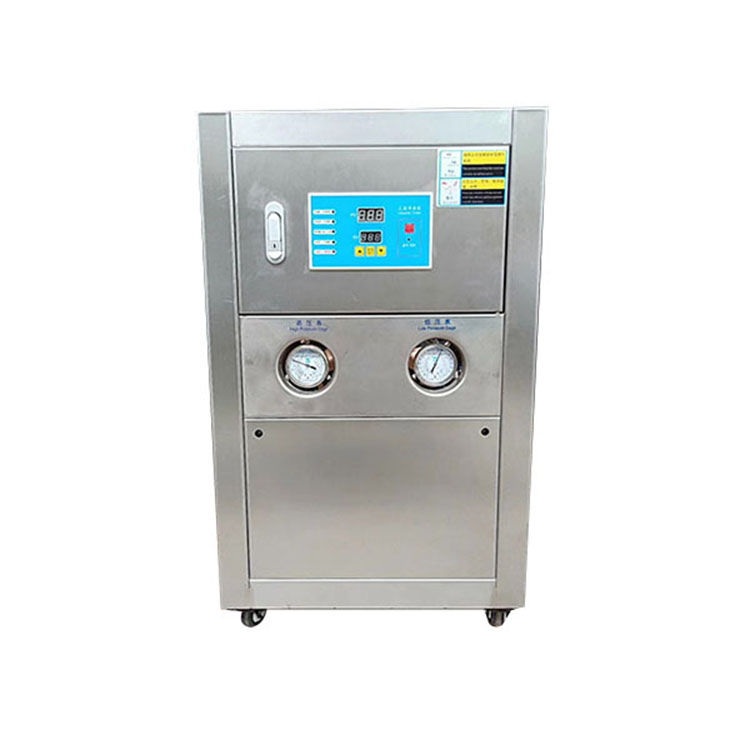
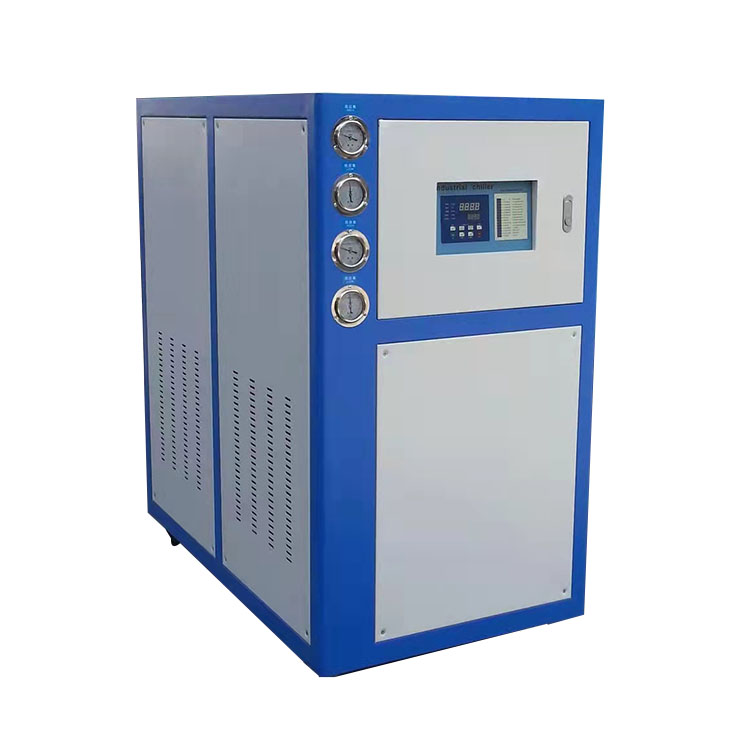
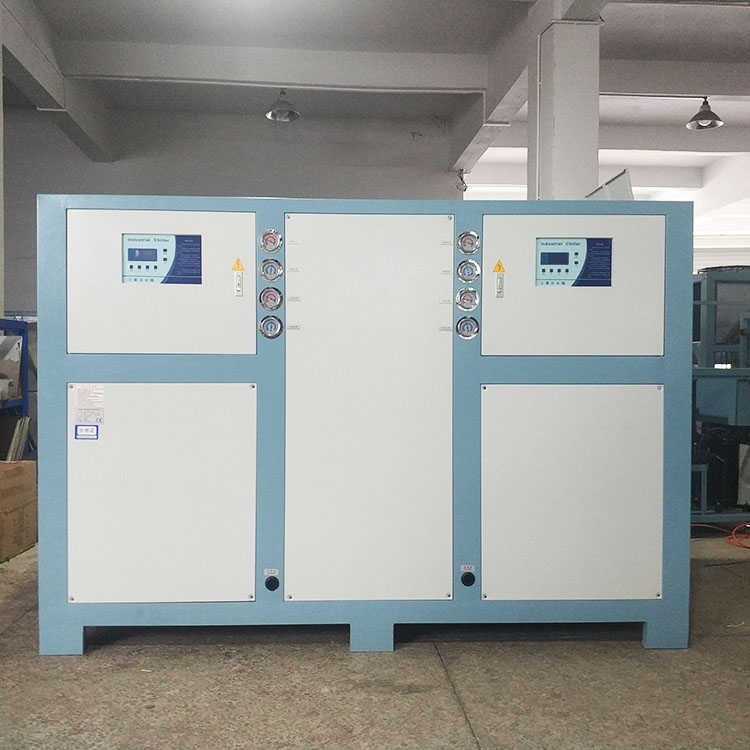











Chiller units are categorized into water-cooled and air-cooled types. The water-cooled chiller is an industrial cooling equipment equipped with a compressional refrigeration circuit, using water as the cooling medium for the condenser. It is typically referred to as a water-cooled ice water chiller or water-cooled chilled water chiller. Featuring a scroll compressor and shell-and-tube condenser, it boasts high energy efficiency, low cost, and large cooling capacity.
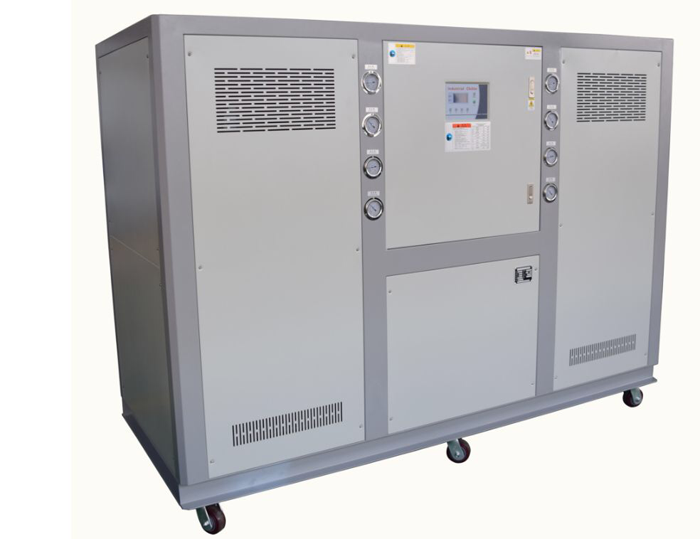
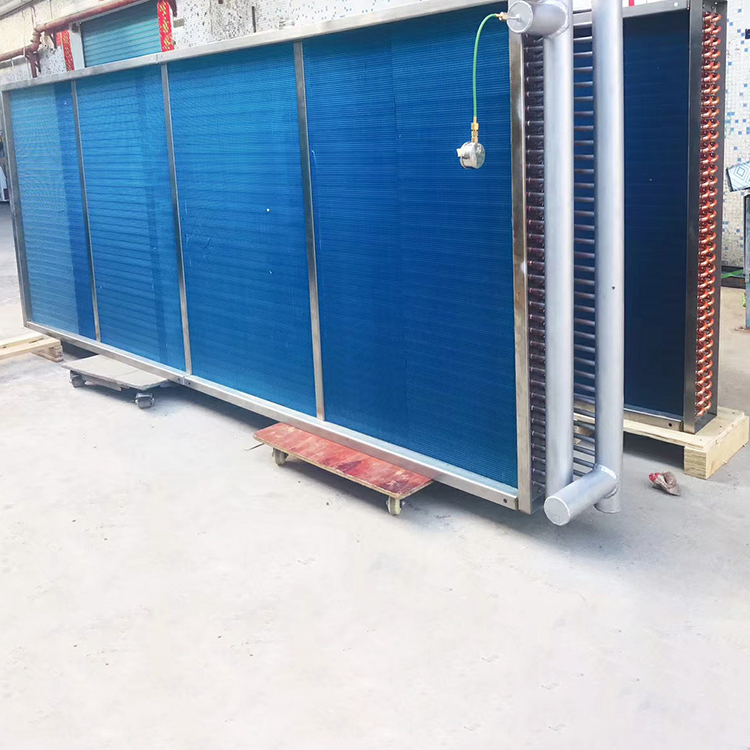
A forced-air cooler is an industrial cooling unit equipped with a compressor refrigeration circuit, utilizing air as the condenser medium and water as the refrigerant. It is commonly referred to as an air-cooled water chiller or air-cooled freezing water unit. It features a scroll compressor and finned condenser, offering compact size, ease of mobility, and the ability to be installed and used without a cooling water tower.
Chiller configuration:
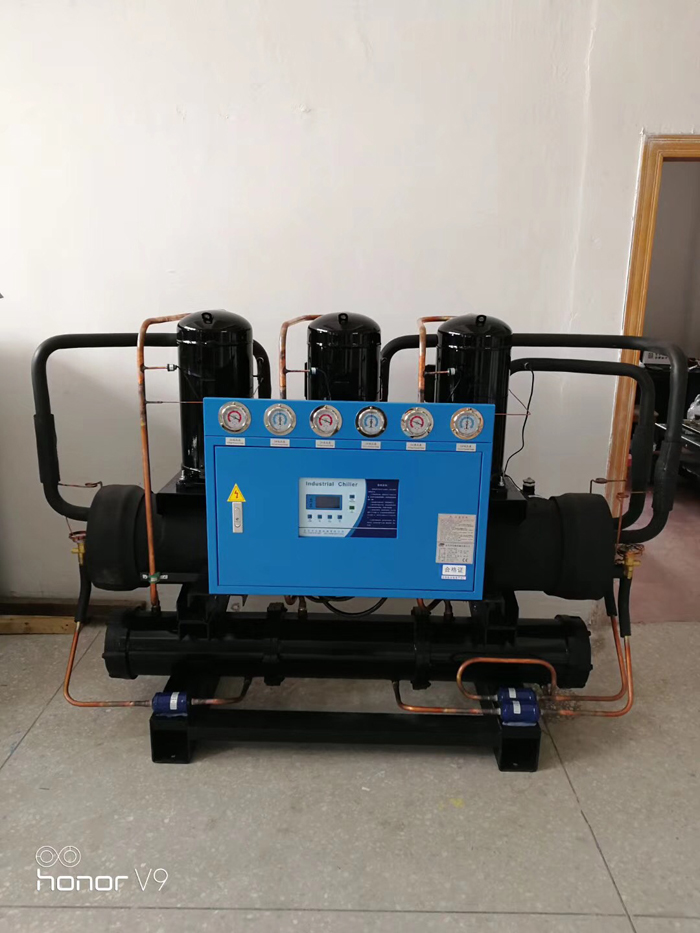
Compressors: Equipped with high-quality scroll compressors from USA Gushire or Danish Danfoss, ensuring safety, quiet operation, energy-saving, and durability.
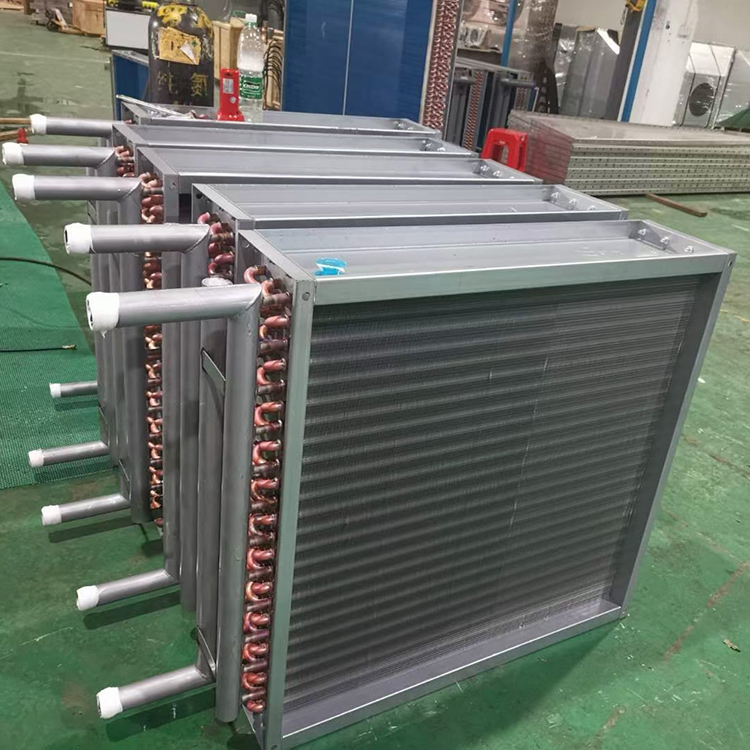
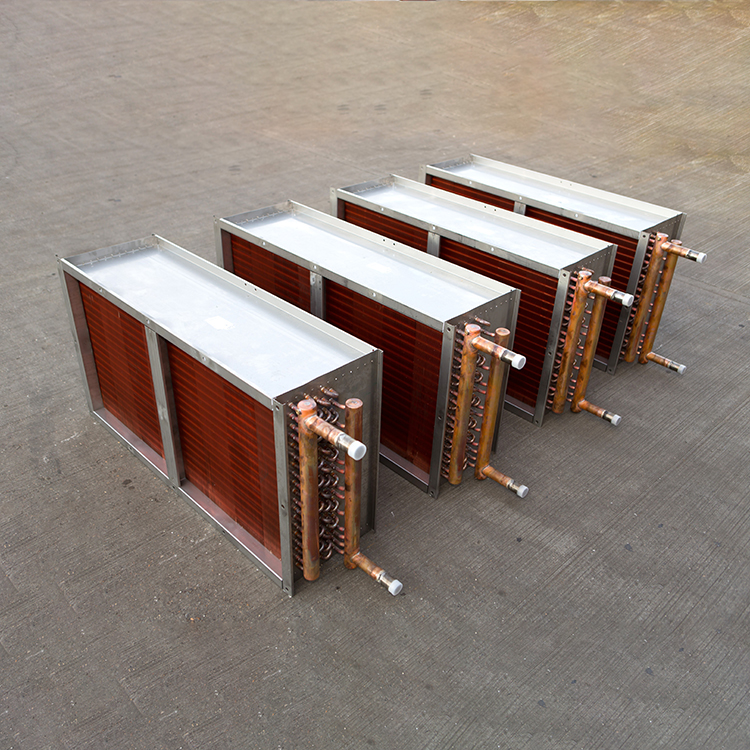
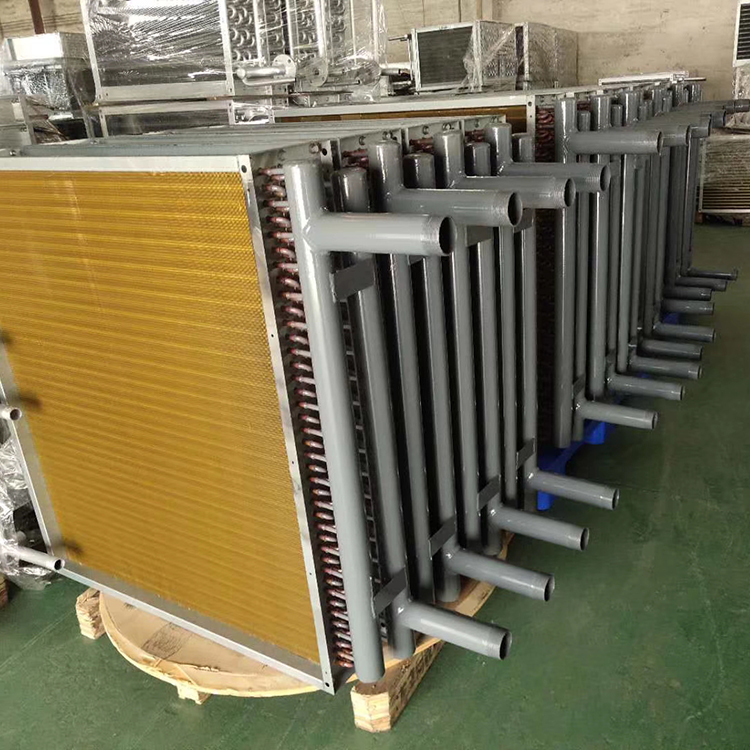
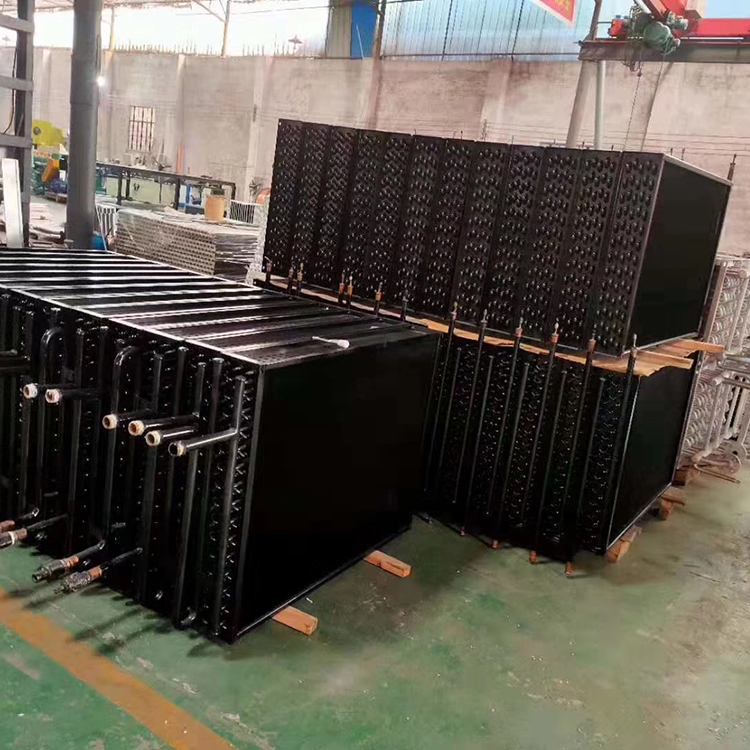
Condenser: Uses an upward-blowing cooling system, double-sided air intake, excellent condensation effect.
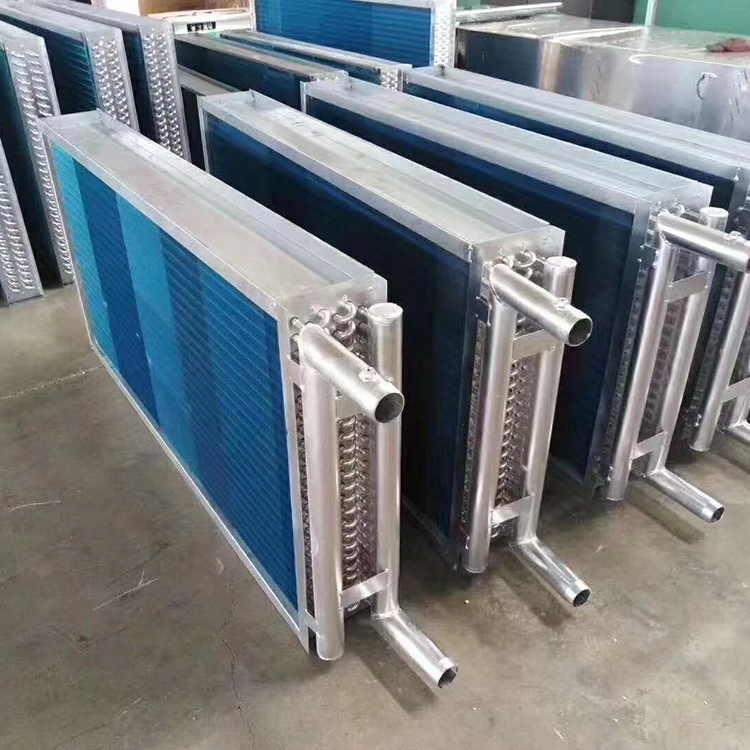
Evaporator: Utilizes a coil-type (optional shell-and-tube type) high-efficiency reinforced copper tube design, capable of rapidly evaporating the refrigerant to produce low-temperature chilled water
Ice Water Pump: High flow ice water pump, operates smoothly, no leakage, low noise
Control System: Utilizes Schneider and other electrical components, along with branded microcomputer control systems, capable of remote control and alarm information output.
Innovative Design: Fresh look, sturdy structure, stable center of gravity, leak-proof, keeping the factory floor dry at all times.
Thermal Control Feature: Capable of maintaining temperature within ±1°C; explosion-proof device
Operation Principle of Chiller:
The operation of the chilled water system is through three interrelated systems: the refrigerant circulation system, the water circulation system, and the electrical self-control system.
The refrigerant (i.e., refrigerating fluid) absorbs the heat of the cooled object and vaporizes into steam within the evaporator. The compressor continuously extracts the generated steam from the evaporator, compresses it, and the high-temperature, high-pressure steam is then sent to the condenser, where it releases heat to the cooling medium (such as water, air, etc.) and condenses into a high-pressure liquid. After passing through a throttling device to reduce pressure, it enters the evaporator again, vaporizes once more, absorbs the heat of the cooled object, and the cycle repeats.