












A trailer helix is a special track shape commonly used in specialized motion or engineering designs. Here are some examples of trailer helix applications:
Basic Scientific Research: Trailer helical lines are widely used in studying the rotation, mechanical properties, and related phenomena of objects. By observing the formation of trailer helical lines through experiments, scientists can gain a deeper understanding of the laws of motion of objects and can apply this knowledge to other practical issues.
2. Trailer Spiral Path Planning: The unique spiral shape of trailers can be utilized for vehicle path planning. For instance, in autonomous vehicles, trailer spirals can be used to guide the turning radius and angle, achieving smoother and safer driving.
3. Propeller Design: The trailer helix design can also be applied to propeller design. The propeller design requires a balance between propulsion efficiency and resistance, and the unique shape of the trailer helix can enhance the performance of the propeller and improve propulsion efficiency.
4. Heat Dissipation Design for Electronic Devices: In some electronic devices, the shape of a trailer helix is also applied to the heat dissipation design. By using heat sinks or heat pipes with the trailer helix shape, the heat dissipation surface area and heat transfer efficiency can be increased, thereby improving the heat dissipation performance of the device.
In summary, the application of trailer helices is extensive, covering multiple fields such as scientific research, engineering design, and technological improvement. By fully utilizing the unique shape of trailer helices, more stable and safer motion and engineering designs can be achieved.
Flexible spiral cable is a cable product with high elasticity and anti-torsion capability, primarily featuring:
Flexible spiral cables can be used for transmitting electrical energy and signals in the forms of AC, DC, and signals.
2. Connectivity Equipment: Flexible spiral cables can connect various devices such as machinery, electronics, and instruments, facilitating power and signal transmission between them.
3. Space-saving: With its high elasticity and free伸缩ability, flexible spiral cables can be flexibly routed in limited spaces, thereby saving space.
4. Protective Cable: Flexible spiral cables can be used to protect other cables, reducing the impact and compression of external faults on the cables.
5. Offer Durability: Flexible spiral cables are made from wear-resistant rubber or plastic materials, featuring strong abrasion and weather resistance, ensuring stable operation for extended periods in harsh environments.
Overall, flexible spiral cables feature flexibility, reliability, and durability, making them suitable for power and signal transmission needs in industrial and commercial settings.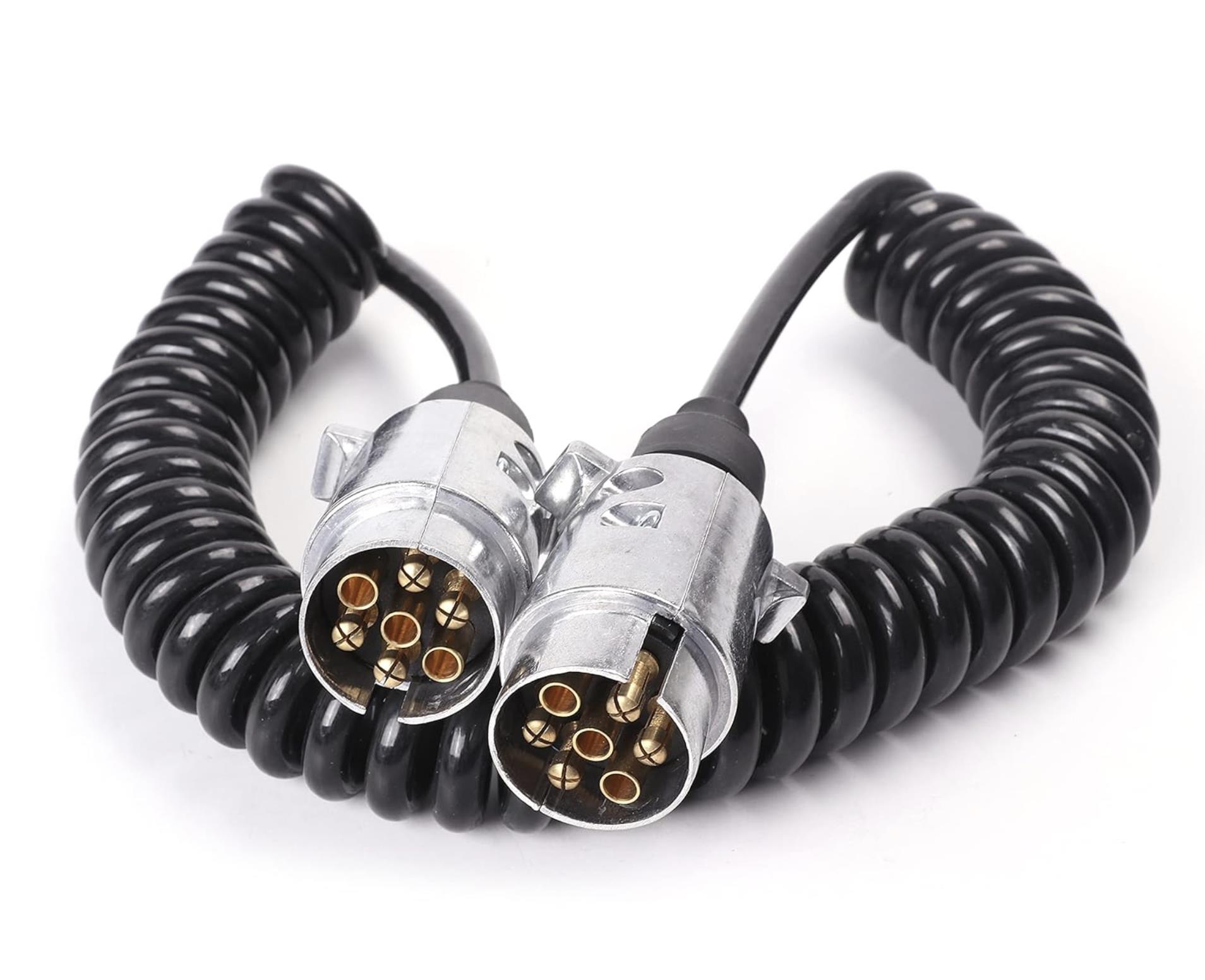
A trailer helix is a special spiral-shaped tool used during the construction or repair of trailers. Its features include:
1. Simple Structure: Trailer spiral is usually formed by bending a long, thin metal rod into a spiral shape, with only one opening.
2. Durable and Robust: Trailer spiral lines are typically made of sturdy metal materials, capable of withstanding certain tension and pressure. It is an organism with great strength.
3. Multi-functional: The trailer spiral can be used for various tasks, such as trailer towing and object retrieval. Its shape can also be adjusted as needed to fit different scenarios.
4. Portable: Trailer spiral lines are typically lightweight and easy to carry and use. Their length can also be adjusted to suit your needs.
5. Safe and User-Friendly: The trailer helix is relatively safe to operate and unlikely to cause injury. Users can simply complete tasks by manually rotating the helix, with an intuitive and straightforward process.
In summary, the features of the trailer helix are simple structure, sturdy durability, versatility, easy portability, and safety in use. It plays a crucial role in the construction and repair of trailers.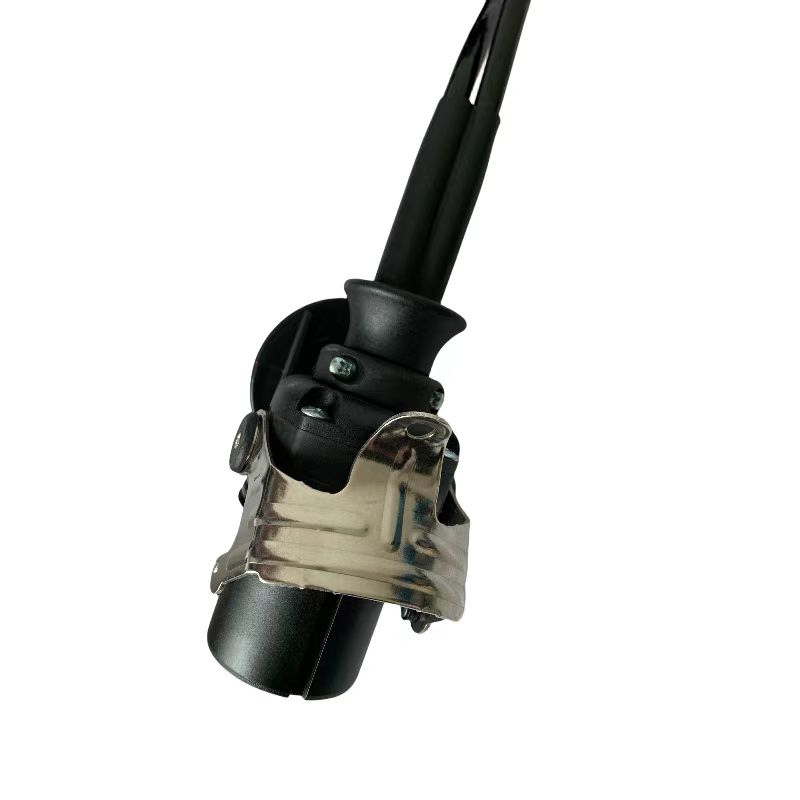
The functions of the cable helix include the following aspects:
Prevent cable tangles: Cable spirals can bundle multiple cables together and arrange them in a spiral pattern, effectively preventing the cables from tangling with each other. This not only helps maintain the cables in a neat and orderly arrangement but also reduces the hassle during maintenance and wiring.
2. Cable Protection: The cable spiral provides a degree of protection for the cable. It can block collisions and abrasions from external objects, reducing the risk of cable damage. Additionally, the cable spiral serves as an insulator and water-resistant barrier, safeguarding the cable against temperature fluctuations and moisture.
3. Easy Wiring and Maintenance: The cable spiral allows for neat arrangement of cables, facilitating wiring and maintenance. It reduces cable clutter and enhances cable identification, making wiring and tuning easier. Additionally, when a cable needs to be replaced or repaired, it's simply a matter of loosening the spiral, without having to dismantle the entire cable assembly.
4. Enhanced Safety: The cable spiral reduces cable exposure, lowering the risk of malicious damage or accidental contact. It also prevents tripping over or pulling the cable, thereby avoiding injury to personnel and equipment.
In summary, the role of the cable spiral is to protect, organize, and facilitate the use and maintenance of the cable, enhancing its reliability and safety.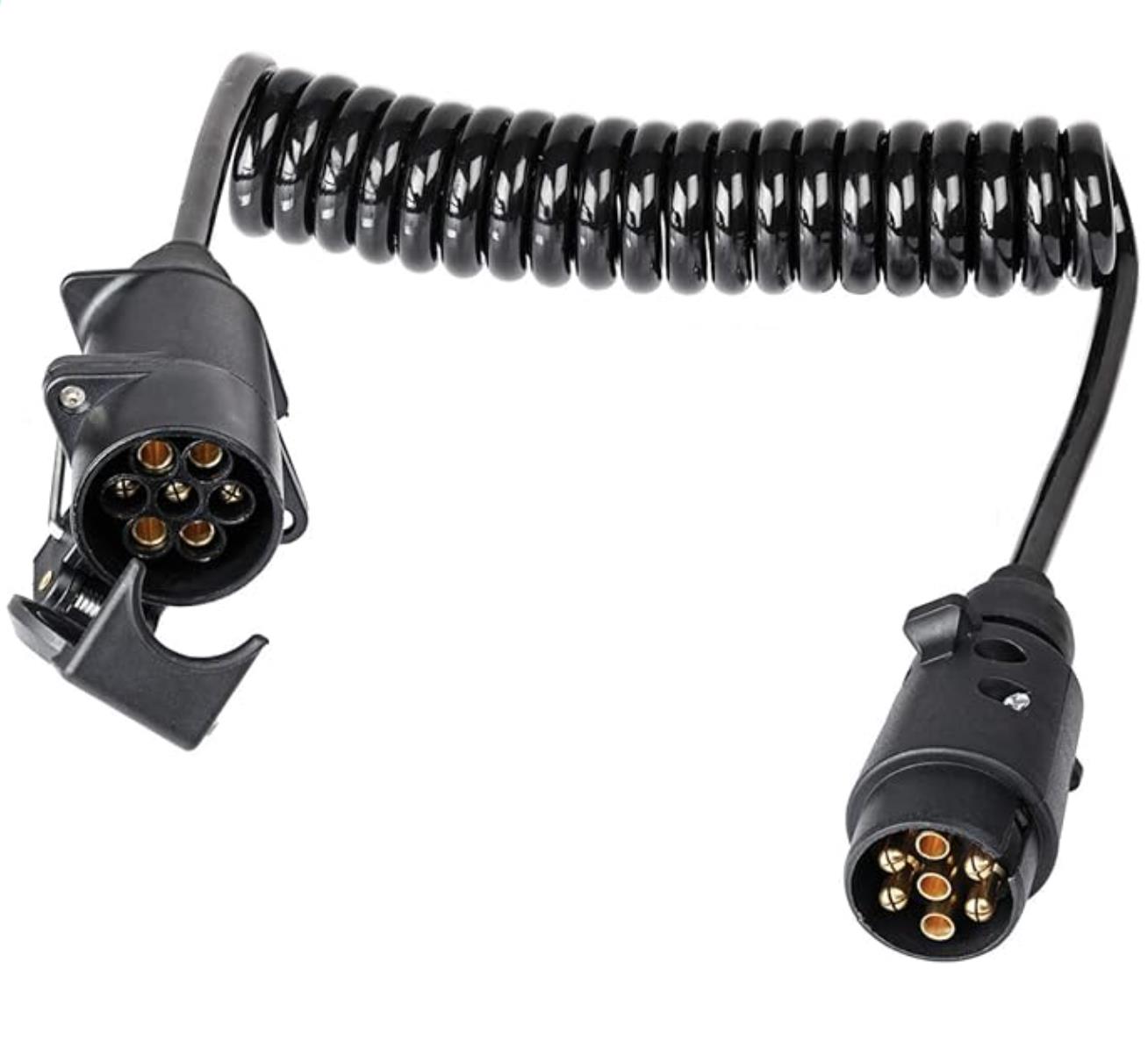
A cable spiral is a device used for controlling and organizing cables. It serves the following functions:
Prevent Cable Interweaving: Cable spiral wires can wrap multiple cables together, preventing them from intertwining and tangling. This helps to minimize friction and movement between cables, reducing the risk of damage and malfunctions.
2. Cable Protection: The spiral wire of the cable provides an additional protective layer, reducing the impact of external pressure, abrasion, and impact on the cable. It prevents the cable from being twisted, pulled apart, or cut.
3. Organize cables: The cable spiral can bundle multiple cables together, arranging them neatly to reduce clutter. This aids in improving work efficiency and ensuring cable reliability.
4. Aesthetically Enhanced Appearance: The cable spiral provides an external wrapping for the cable, making its appearance neater and more attractive. This is particularly important in situations where the cable needs to be showcased, such as exhibitions and demonstrations.
In summary, cable spiral lines are primarily used for protecting, organizing, and beautifying cables, enhancing their reliability and safety.
Flexible spiral cables are widely applicable in the following industries:
1. The machinery manufacturing industry commonly utilizes flexible spiral cables in the moving parts of machine tools, automation equipment, and robots, to facilitate power supply, control signals, and data communication.
2. Automotive Industry: Flexible spiral cables are commonly used for power supply and control signal transmission within vehicles, such as in-car batteries, engine control systems, dashboards, door, and window controls, etc.
3. Industry: Flexible spiral cables are widely used in the field for power and signal transmission in aircraft, satellites, and instruments, as well as for navigation, communication, and control systems.
4. Electronic Industry: Flexible spiral cables are used in connection components of electronic devices, computer systems, and communication equipment, such as monitors, routers, switches, etc.
5. Equipment Industry: Flexible spiral cables are commonly used for power and signal transmission in equipment such as operating tables, imaging devices, and life monitors.
6. Port and Logistics Industry: Flexible spiral cables are commonly used for power and control systems in lifting machinery, conveyor belts, and logistics equipment.
7. Building and Municipal Engineering: Flexible spiral cables are used for indoor and outdoor power transmission and control systems in building and municipal engineering, such as elevators, lighting systems, and fire protection systems.
In summary, flexible helical cables are suitable for a wide range of industries, including a vast array of mechanical, electronic, automotive, and manufacturing sectors.
WeChat Official Account

Scan to follow Official Account