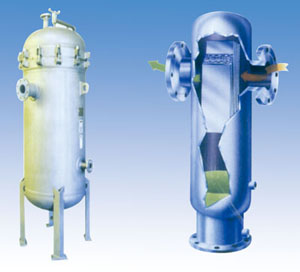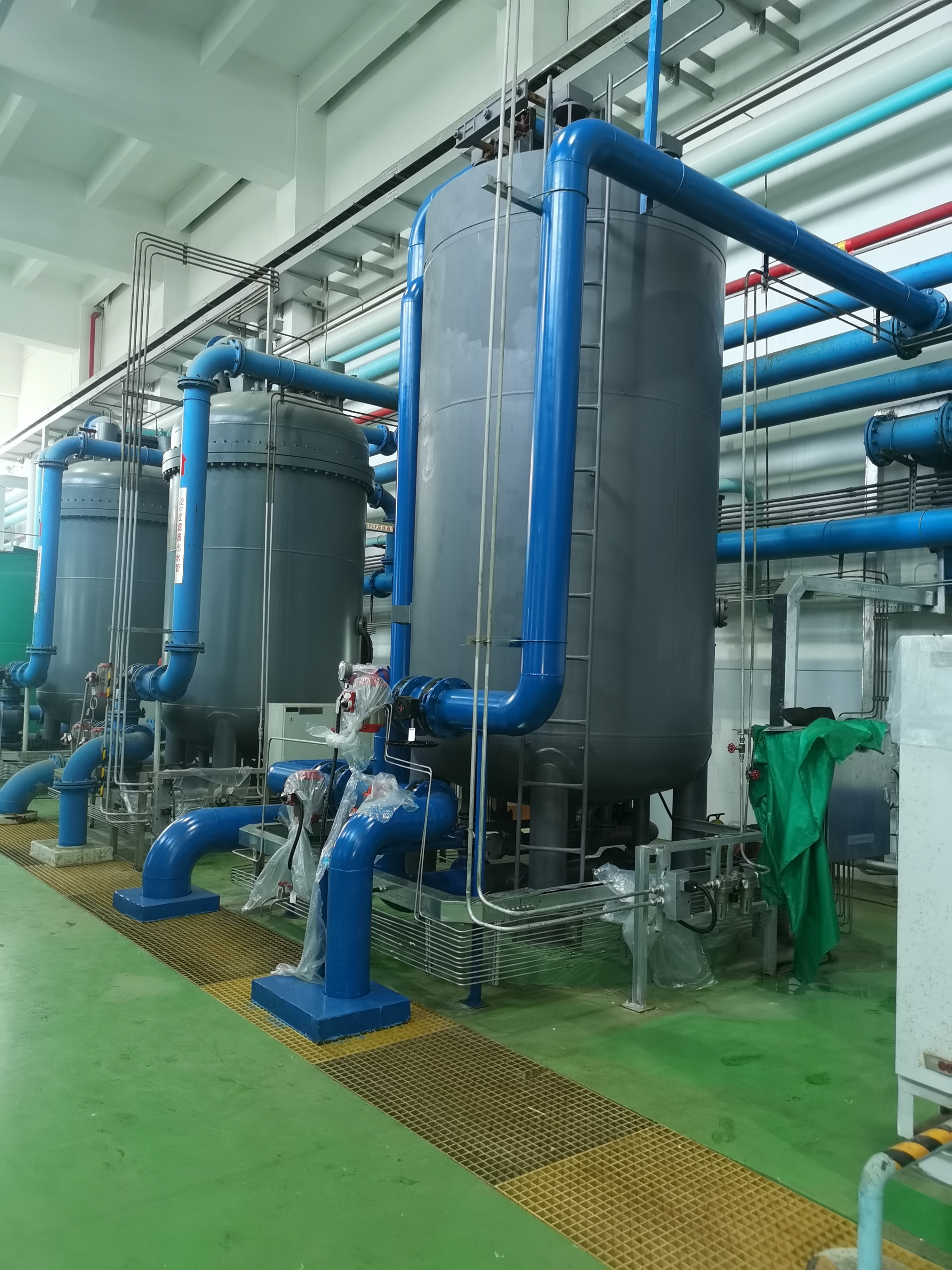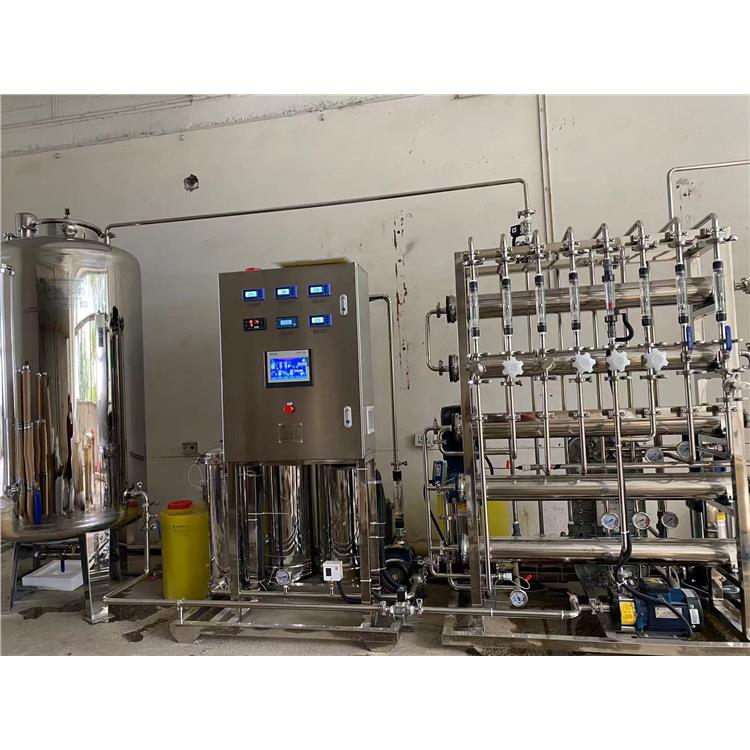
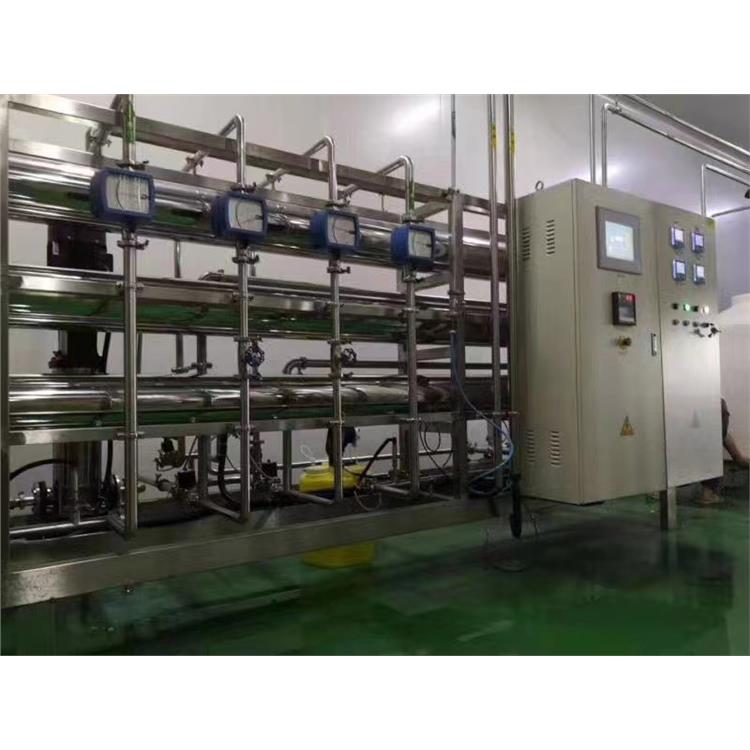











An industrial pure water machine is a device used for producing and processing pure water for industrial applications. It purifies water by removing impurities and contaminants, resulting in pure water. This equipment is commonly used in industries such as electronics, chemicals, and food, as these sectors have high water quality requirements. Industrial pure water machines typically employ filtration and membrane separation technologies to eliminate microorganisms, heavy metals, suspended particles, soluble solids, and organic compounds. They can provide stable water quality and adjust purity and flow rate as needed. These machines ensure water safety and product quality during the production process.
Key features of the pharmaceutical purified water equipment include:
High Purity: Medicinal purified water equipment, through filtration, purification, and disinfection processes, removes suspended matter, organic matter, inorganic salts, heavy metals, and other impurities from tap water to produce purified water with a purity of over 98%.
2. Stability: The reverse osmosis technology and ion exchange resins used in our pharmaceutical purified water equipment ensure a stable supply of purified water, guaranteeing the quality and safety of pharmaceutical production and experiments.
3. Automatic Control: Our pharmaceutical purified water equipment is equipped with an automatic control system, which can monitor and adjust process parameters at all stages, achieving automated operation, enhancing work efficiency, and reducing errors from manual operation.
4. Safe and Reliable: Our pharmaceutical purified water equipment utilizes dual-stage reverse osmosis membranes and UV sterilization technology, effectively eliminating bacteria and viruses in the water, ensuring the safety and hygiene of the purified water and meeting the relevant regulatory requirements for pharmaceutical production.
5. Energy-Efficient: Pharmaceutical purification water equipment features low energy consumption and high recovery rates, effectively utilizing water resources and reducing waste water discharge, achieving the goal of energy conservation and environmental protection.
The primary functions of the GMP purified water equipment are as follows:
Water Purification: GMP purified water equipment can remove impurities, particles, suspended matter, organic matter, microorganisms, etc. from water through various process steps (such as filtration, reverse osmosis, ion exchange, ultrafiltration, etc.), enhancing the purity and quality of the water.
2. Stable Water Pressure: The GMP purified water equipment can maintain stable water pressure within the system by adjusting the pressure control system, ensuring consistent water flow and quality.
3. Maintain Water Flow Rate: GMP purified water equipment can maintain an appropriate water flow rate through the design of a suitable pipeline system, preventing adverse effects on water quality due to either too fast or too slow flow rates.
4. Water Temperature Control: The GMP purified water equipment can regulate water temperature through heating or cooling devices to ensure it meets the required specifications.
5. Automation Control: GMP purified water equipment is typically equipped with an automatic control system, enabling automated operation and control, including monitoring water quality, controlling pressure, and adjusting flow rates.
6. Pipeline Cleaning: GMP purified water systems typically feature automatic or manual cleaning capabilities, allowing for regular pipeline cleaning to ensure stable and safe water quality.
7. Fault Alarm: GMP purified water equipment is usually equipped with a fault alarm system, which can promptly issue alarms and take corresponding measures to ensure the safe operation of the equipment.
GMP purified water equipment is primarily used in biotechnology, medical devices, food and beverage industries, for water purification and treatment during the production process, ensuring that water quality meets GMP standards and relevant regulations.
The functions of the pharmaceutical pure water equipment include the following aspects:
1. Removing Impurities: Purification water equipment can remove suspended particles, sediments, organics, heavy metals, bacteria, and other impurities from water, ensuring the purity of the water.
2. Microbial Removal: Purified water systems typically include filtration systems and other components, which effectively remove various bacteria, viruses, and other microorganisms from the water, ensuring water quality safety.
3. Remove Dissolved Substances: Purified water equipment can remove dissolved organic matter, inorganic salts, heavy metals, and other substances from water, ensuring pure water quality.
4. Water Quality Adjustment: Purification equipment can adjust parameters such as pH, hardness, and conductivity of water according to specific needs, meeting the varying water quality requirements during the pharmaceutical manufacturing process.
5. Air Purification: Some purification water equipment is equipped with an air purification system, which can remove dissolved gases and bubbles from the water, ensuring that the supply process is free from the influence of oxygen and other gases.
6. Monitoring and Control: Purified water systems are typically equipped with water quality monitoring and control systems, enabling real-time monitoring of water quality parameters and adjustment of equipment operating parameters to ensure water quality meets requirements.
In summary, the primary function of the pharmaceutical pure water equipment is to ensure the purity and safety of water quality, meeting the requirements of water for pharmaceutical production and manufacturing processes.
The functions of the small purified water equipment are as follows:
1. Purify Water Quality: Mini purification systems can remove suspended solids, particles, bacteria, viruses, heavy metals, and organic matter from water using filters and membrane separation technology, providing clean and pure water sources.
2. Eliminate Odors and Taste: Mini purification water systems can remove odors and tastes from water using activated carbon and other materials, providing refreshing drinking water.
3. Remove Harmful Substances: Small purified water systems can eliminate contaminants from water, such as chlorine, chemicals, and pesticide residues, providing healthy and safe drinking water.
4. Retain Beneficial Components: Mini-purification water systems can remove pollutants from water while preserving minerals and trace elements, providing healthy drinking water.
5. User-friendly: Small purification water systems typically feature a compact design and simple operation, making them convenient for use in homes and offices.
In summary, small-scale purification equipment can purify tap water, providing safe, healthy, and clean drinking water to meet people's requirements for water quality.
WeChat Official Account

Scan to follow Official Account