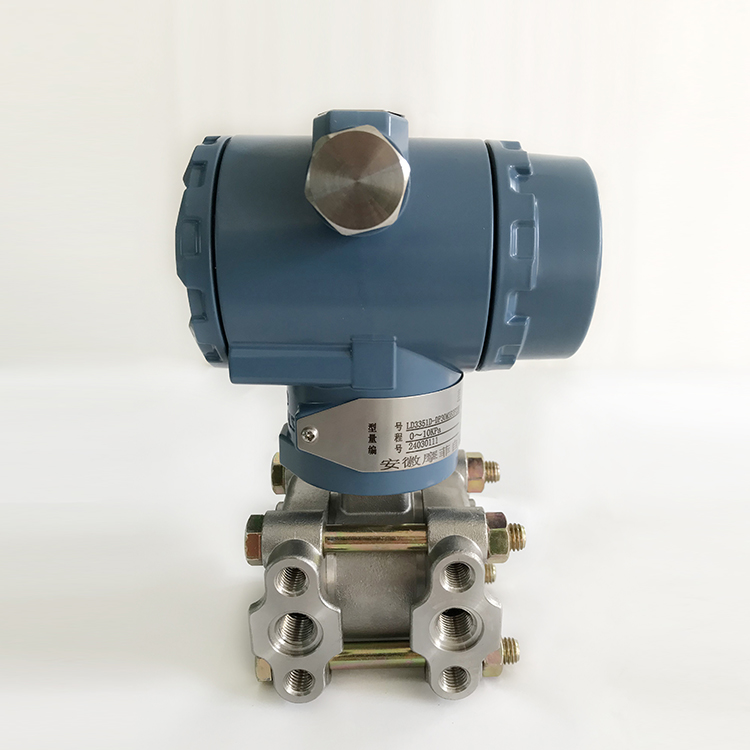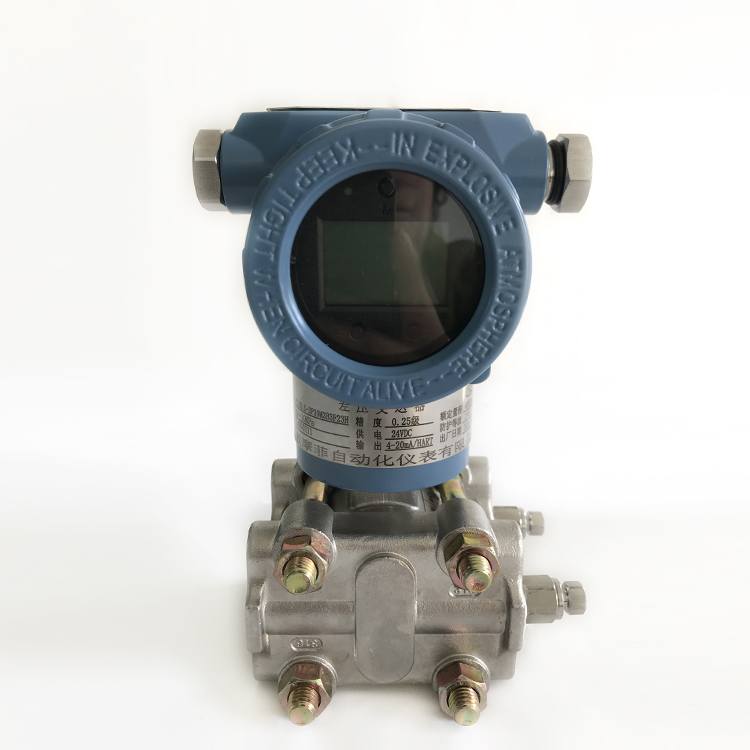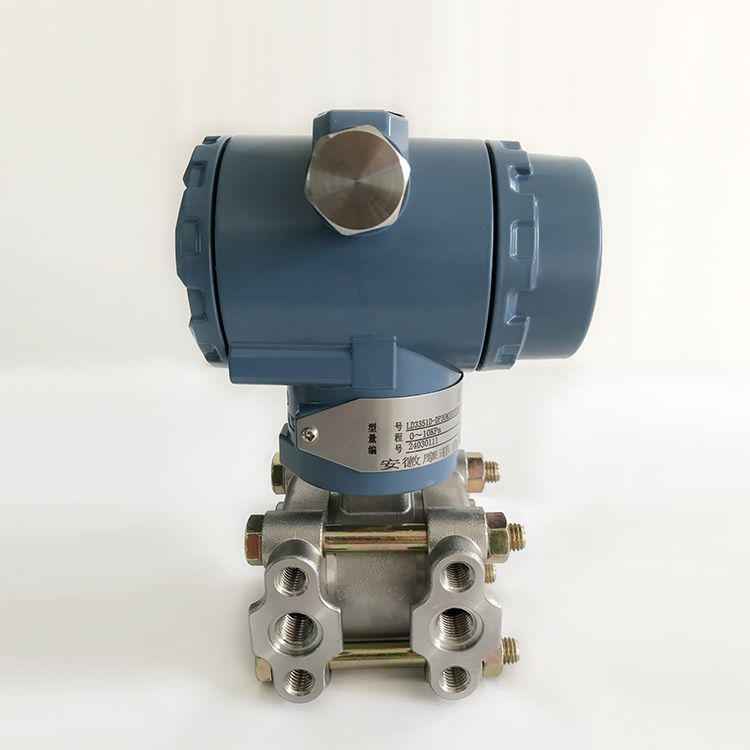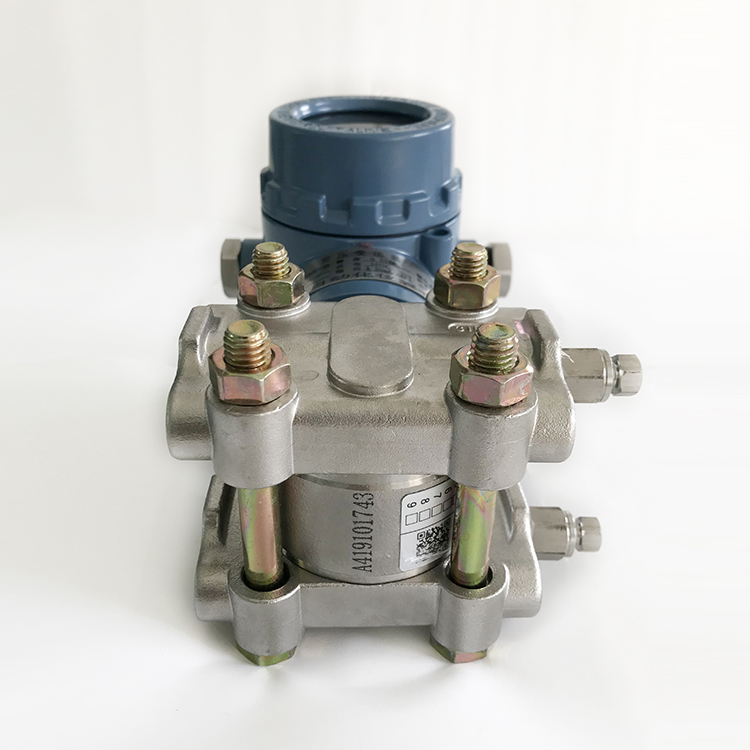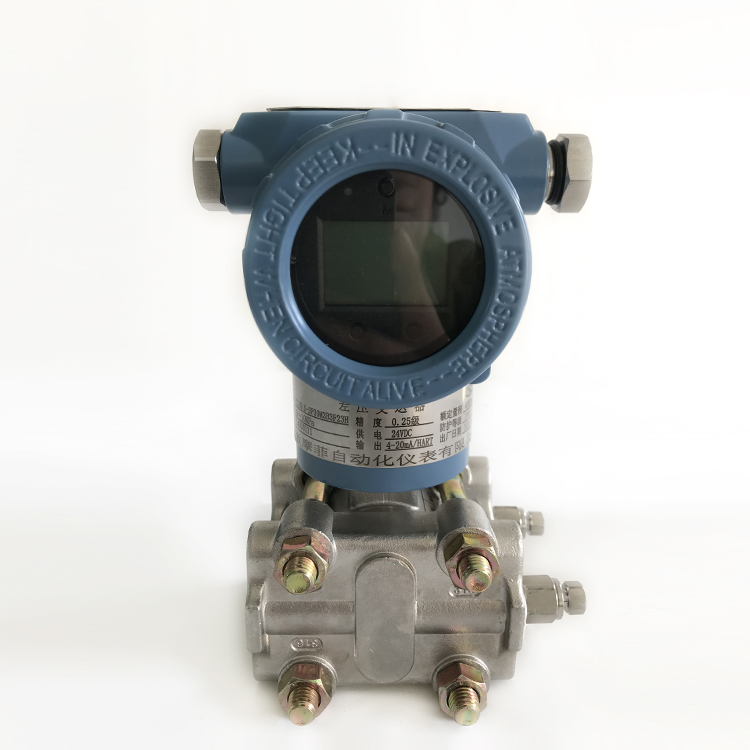
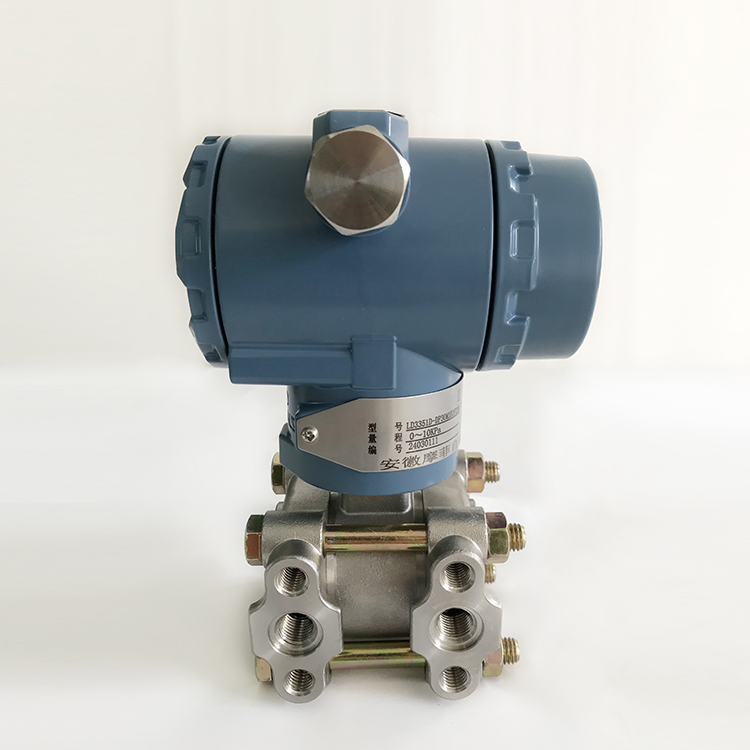
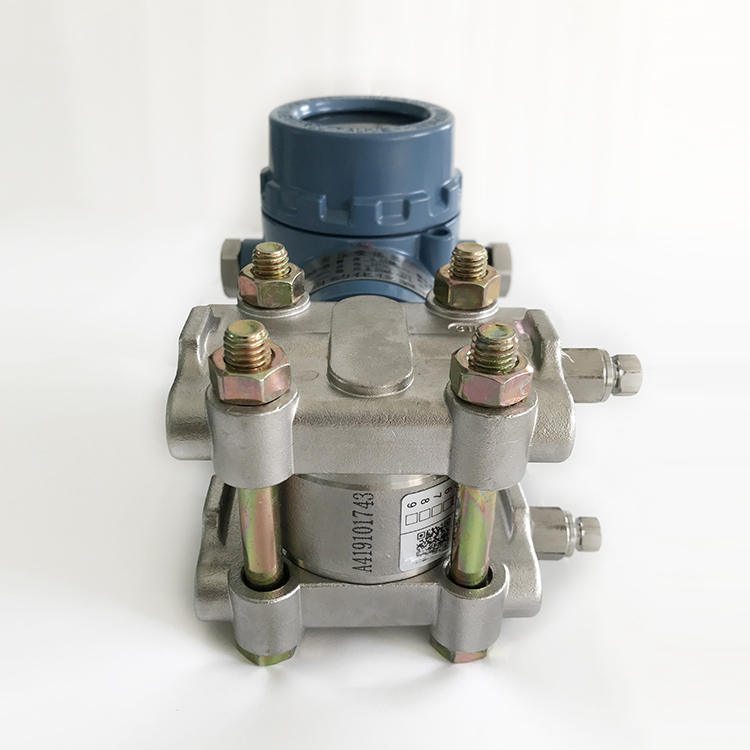







The main function of a pressure transmitter is to transmit pressure signals to electronic devices, and then display pressure on a computer. The principle is roughly to convert the mechanical signal of water pressure into electronic signals such as current (4-20mA). The pressure and voltage or current are linearly related, generally proportional. Therefore, the voltage or current output by the transmitter increases with the increase of pressure, resulting in a relationship between pressure and voltage or current. The two pressures of the measured medium of the pressure transmitter are introduced into the high and low pressure chambers, and the pressure in the low pressure chamber is atmospheric pressure or vacuum, acting on the isolation diaphragms on both sides of the δ element (i.e. sensitive element), and transmitted to both sides of the measuring diaphragm through the isolation diaphragms and the filling liquid inside the element.
A pressure transmitter is composed of a measuring diaphragm and electrodes on both sides of the insulating film, each forming a capacitor. When the pressure on both sides is not consistent, it causes displacement of the measuring diaphragm, and the displacement is proportional to the pressure difference. Therefore, the capacitance on both sides is unequal, which is achieved through oscillation and demodulation.
main advantages
Pressure transmitters have the characteristics of reliable operation and stable performance;
Specialized V/I integrated circuit, with few peripheral components, high reliability, simple and easy maintenance, small size, light weight, and extremely convenient installation and debugging;
Aluminum alloy die-casting shell, three end isolation, electrostatic spray protection layer, sturdy and durable; 4-20mA DC two-wire signal transmission, strong anti-interference ability, long transmission distance; LED、LCD、 The pointer has three types of indicator heads, making on-site reading very convenient. Can be used to measure viscous, crystalline, and corrosive media;
High accuracy and stability. In addition to the imported original sensors that have been laser corrected, fine compensation is provided for the comprehensive temperature drift and nonlinearity of the entire machine within the operating temperature range.
Main Categories
Ordinary pressure transmitter
Explosion proof pressure transmitter
Differential pressure transmitter
Medium and high temperature pressure transmitters
Remote pressure transmitter
working principle
When pressure is directly applied to the surface of the measuring diaphragm, causing slight deformation, the high-precision circuit on the measuring diaphragm converts this slight deformation into a highly linear voltage signal proportional to the pressure and the excitation voltage. Then, a dedicated chip is used to convert this voltage signal into an industrial standard 4-20mA current signal or 1-5V voltage signal.
Due to the use of standard integrated circuits for measuring membranes, which include linear and temperature compensation circuits, high precision and stability can be achieved. The transmission circuit adopts a dedicated two-wire chip, which can ensure the output of a two-wire 4-20mA current signal.
Main performance
Widely used as the tested medium, it can measure oil, water, and paste materials compatible with 316 stainless steel and 304 stainless steel, and has a certain degree of anti-corrosion ability;
High accuracy, high stability, using imported original sensors, good linearity, and high temperature stability;
Small size, light weight, easy installation, debugging, and use;
Stainless steel fully enclosed shell, with good waterproofing;
The pressure sensor directly senses the pressure of the measured liquid level, without being affected by the foaming or deposition of the medium.
Related models: LD3351D-GP30M3B3F22 LD3351D-GP60M3B3F22 LD3351D-DP40M3B3F22 LD3351D-DP40M3B3F22 LD3351D-DP30M3B3/F22