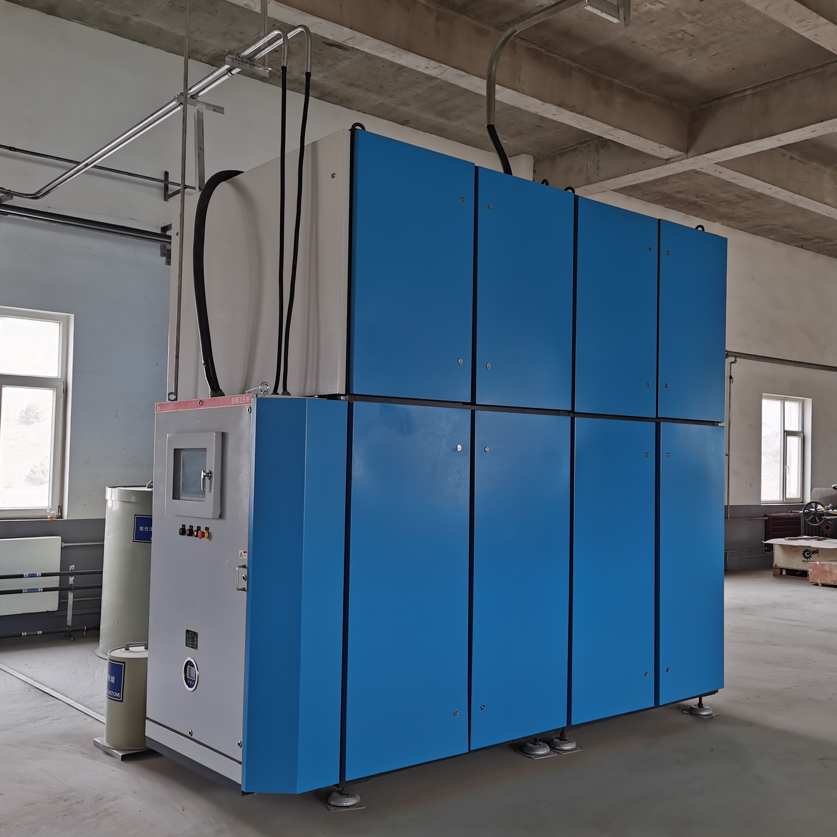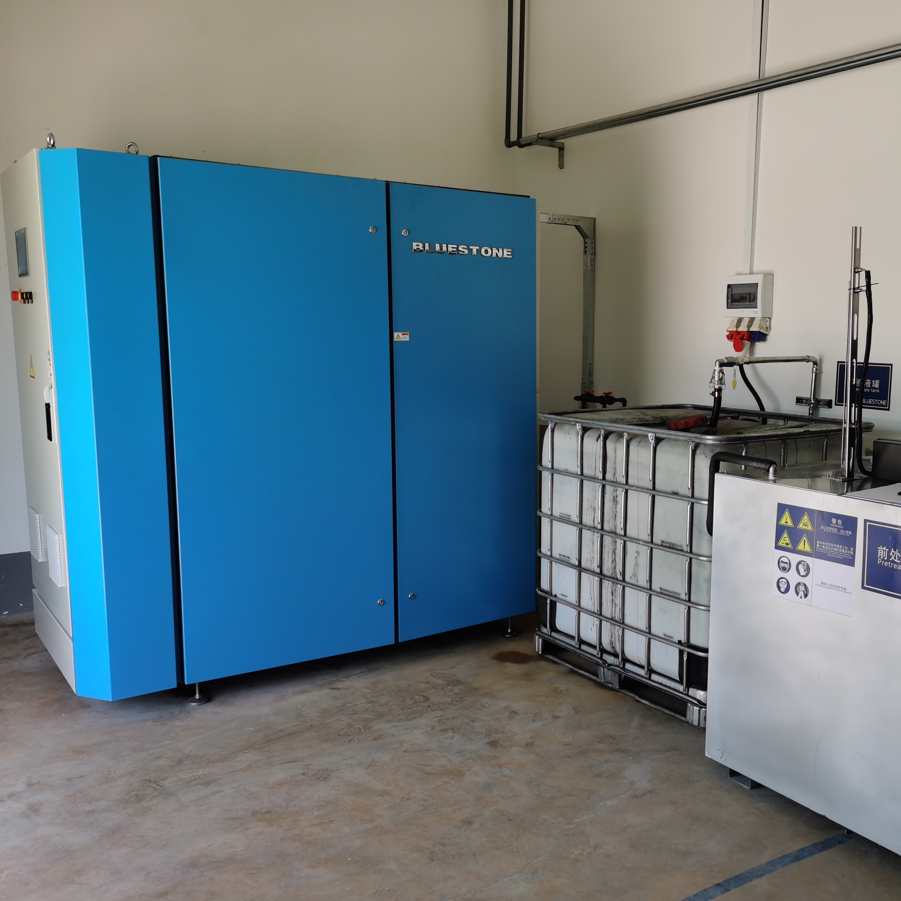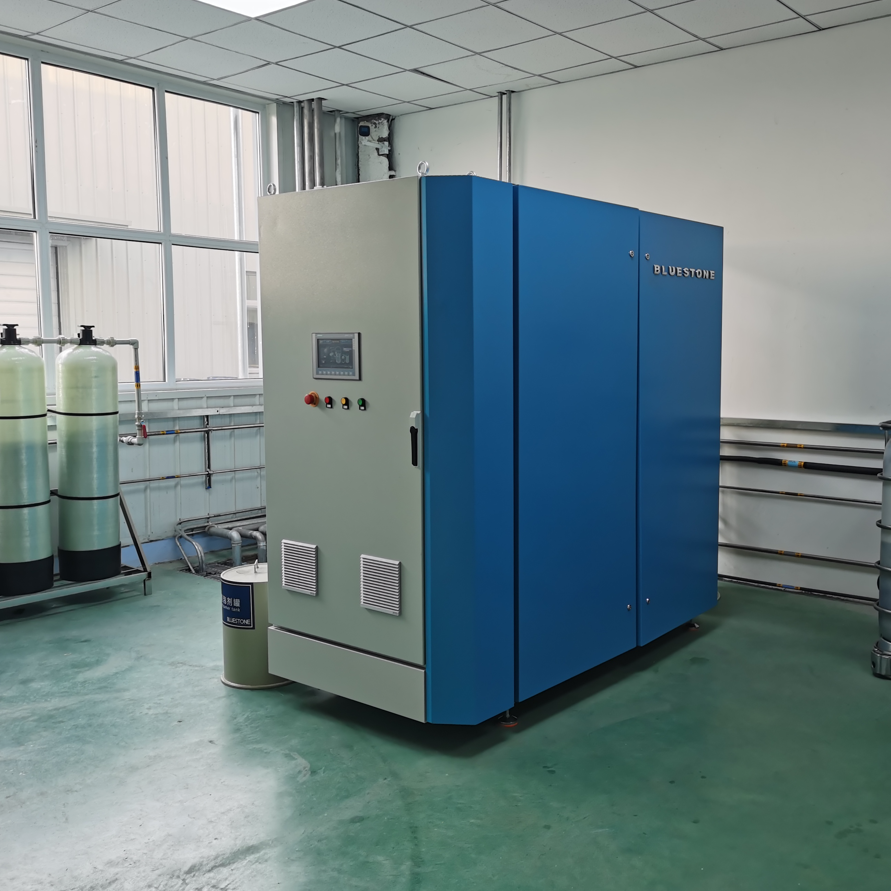










· Technical Specifications:
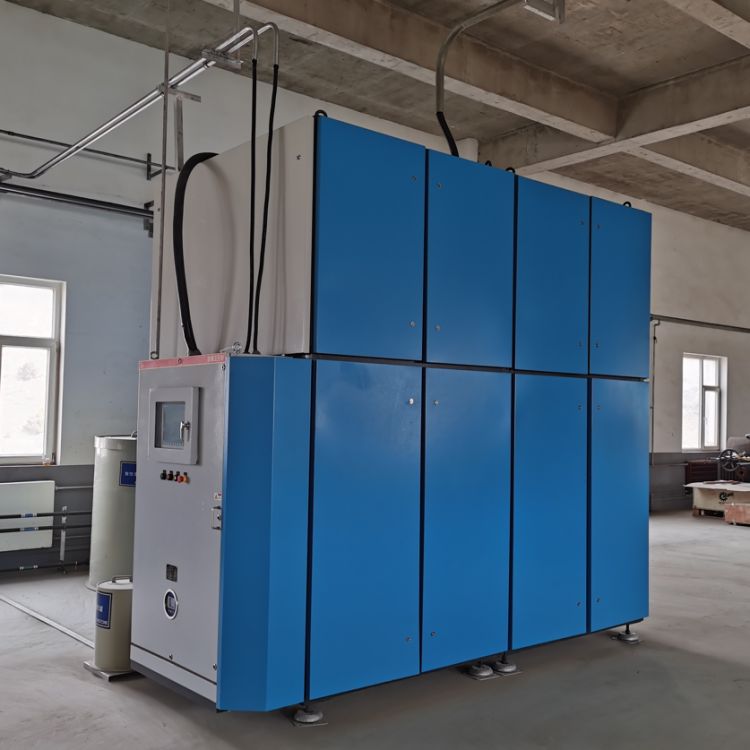
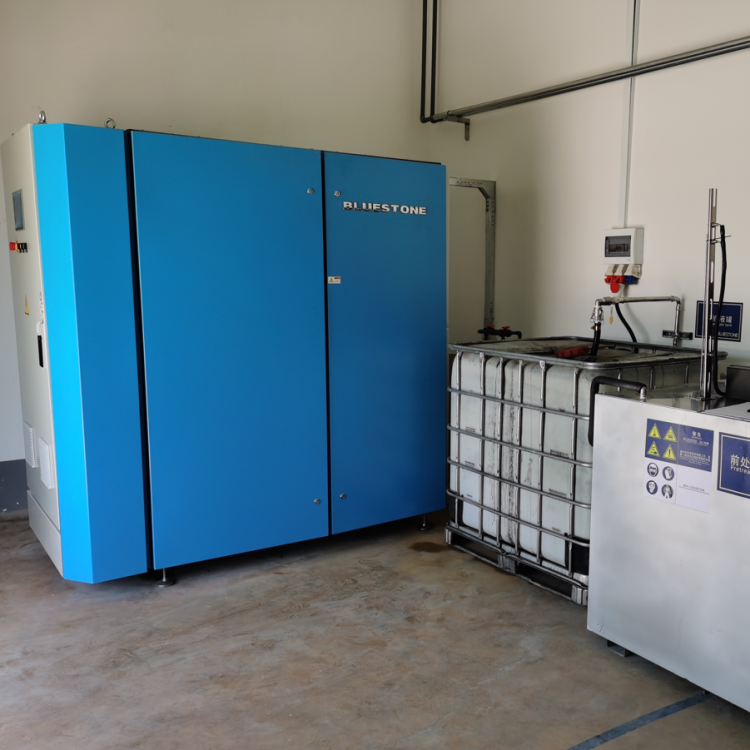
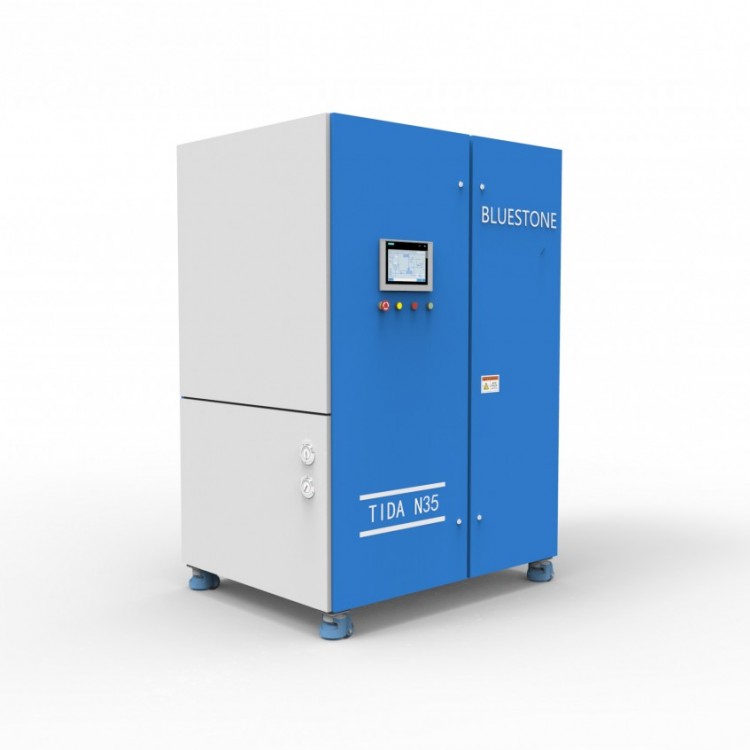
Model: NOVA 1000
Processing Capacity: 1,000L/h (per hour), 6,000m³/y (per year)
Unit Energy Consumption: 50 kWh/m³
Dimensions (L*W*H): 3808*1568*2924 (Unit: mm)
Installation Area: 50 sqm
· Product Features:
Mechanical vapor recompression (MVR) involves compressing steam to a certain pressure using a steam compressor and then introducing it into an evaporator. In the evaporator, the steam releases latent heat to heat and distill the raw water. After part of the wastewater evaporates, it exchanges heat with the raw water and condenses into pure water. Wastewater containing high concentrations of salts and solids is collected at the bottom of the evaporator in a sump, then recirculated and treated again by being pressurized with a pump. The liquid phase, concentrated to a certain degree, is discharged as concentrated water. The steam is then recompressed by the steam compressor, reheated, and the process is repeated. This process utilizes mechanical compressors to convert electrical energy into heat, eliminating the need for external steam supply and ensuring strong system independence. MVR evaporators are used for surface treatment of wastewater and oil-containing wastewater, producing water that meets the quality requirements for reinjection.
For example, in concentrated industrial wastewater treatment: First, the industrial wastewater is piped into a preheater, where it is preheated. Then, the preheated wastewater is introduced into an evaporator, where it is heated, evaporated, and concentrated. The condensed distillate from the heated steam flows into the distillate collection tank, while the secondary steam and concentrated liquid are sent together to a vapor-liquid separator. In the separator, the concentrated liquid and secondary steam are separated; the concentrated liquid is collected in a tank, and the separated secondary steam is directed into a mechanical compressor. Inside the mechanical steam compressor, the secondary steam is compressed, heated, and pressurized before being reintroduced into the evaporator to heat, concentrate, evaporate, and distill the industrial wastewater. By repeatedly recycling the secondary steam, the entire industrial wastewater treatment process is completed, achieving both wastewater treatment and energy conservation objectives.
1) Vacuum Distillation Principle
Wastewater enters the MVR evaporator, where it is gradually heated to boiling point under vacuum. Steam evaporates from the wastewater, leaving substances above the boiling point in the residue, which includes heavy metals, salts, oils, surfactants, etc. The compressor inputs mechanical energy, increasing the pressure and temperature of the steam. The steam condenses into water in the exchanger, transferring its heat to the wastewater to sustain evaporation. After vacuum distillation through the wastewater treatment system, the residue is reduced to 5% of the original wastewater volume. The condensed steam, nearly free of impurities, can be recycled as process water back into the production process.
2) Product Advantages
The MVR evaporator equipment is compact, with a small footprint and requires minimal space. It also eliminates the need for a cooling system. It has low unit energy consumption, low maintenance costs, and overall low operation costs. For existing factories that need to expand their evaporation equipment but lack sufficient steam, water supply, or space, especially in cases requiring chilled water condensation for low-temperature evaporation, it can achieve both cost savings and better energy-saving effects.