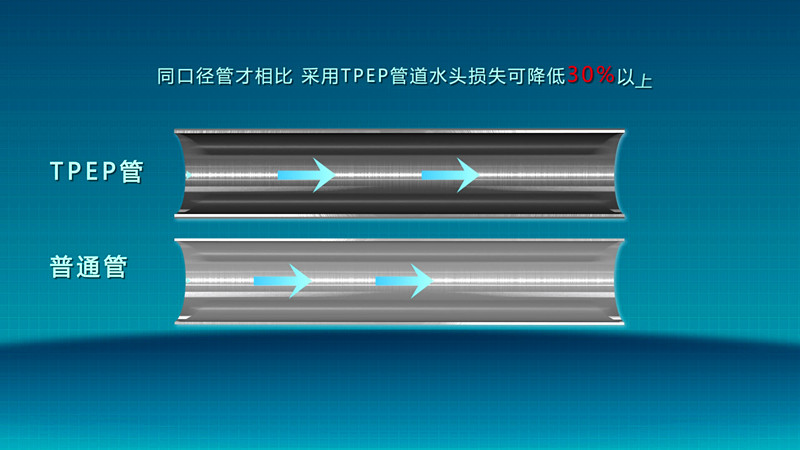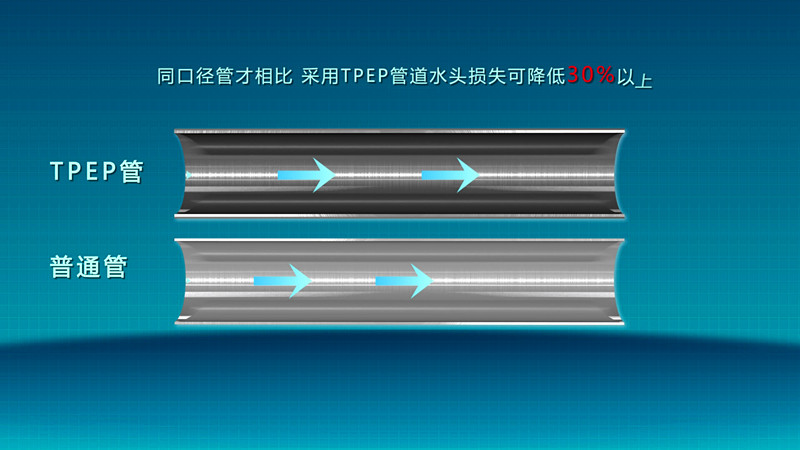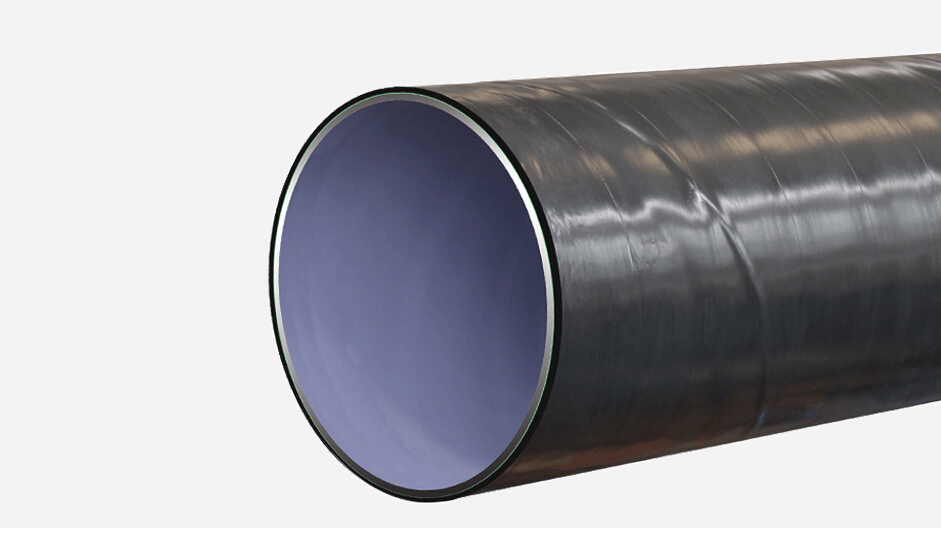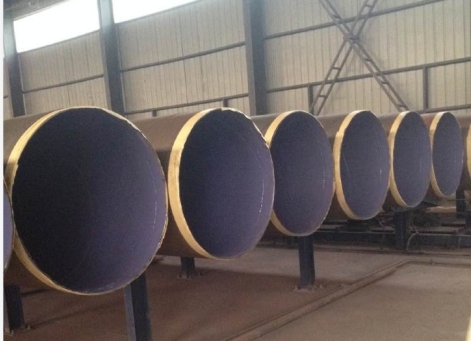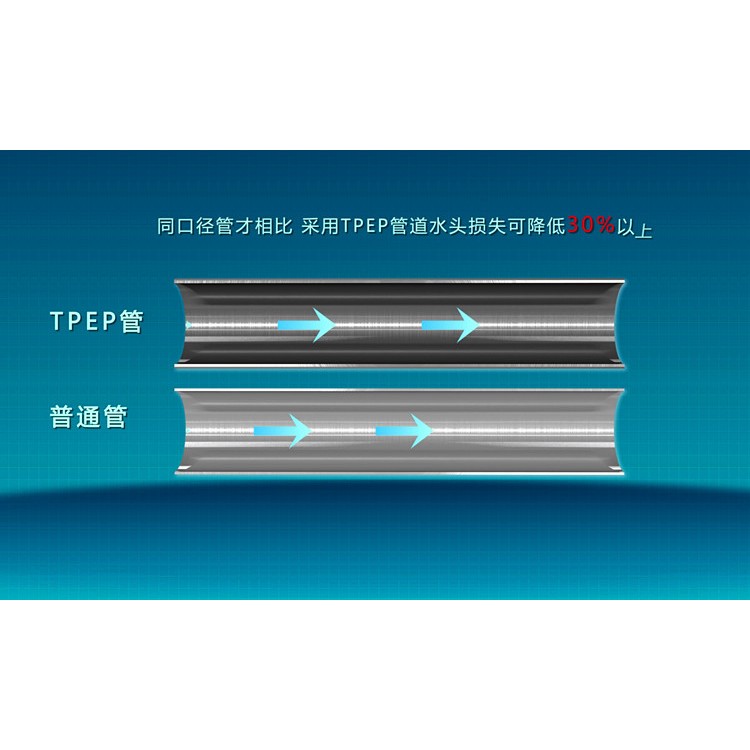
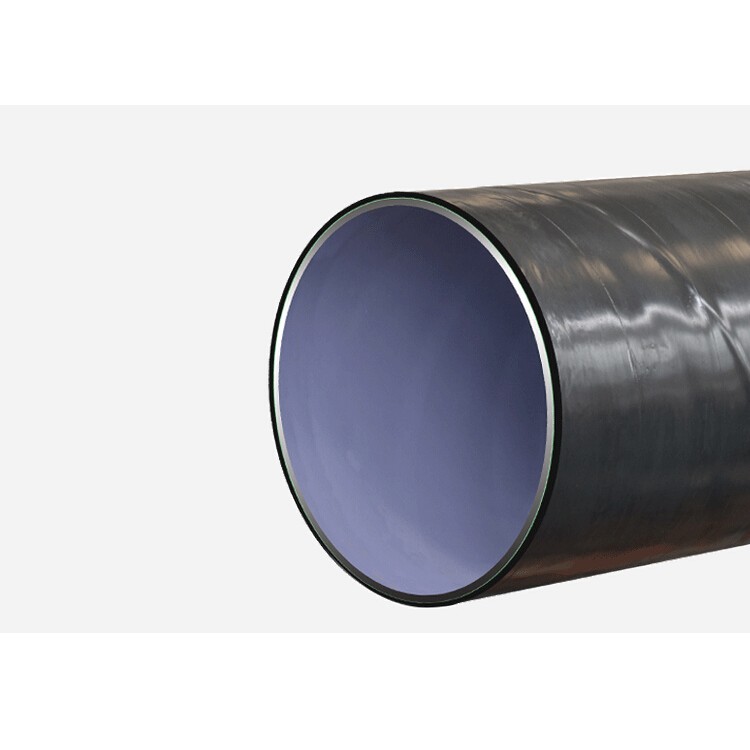












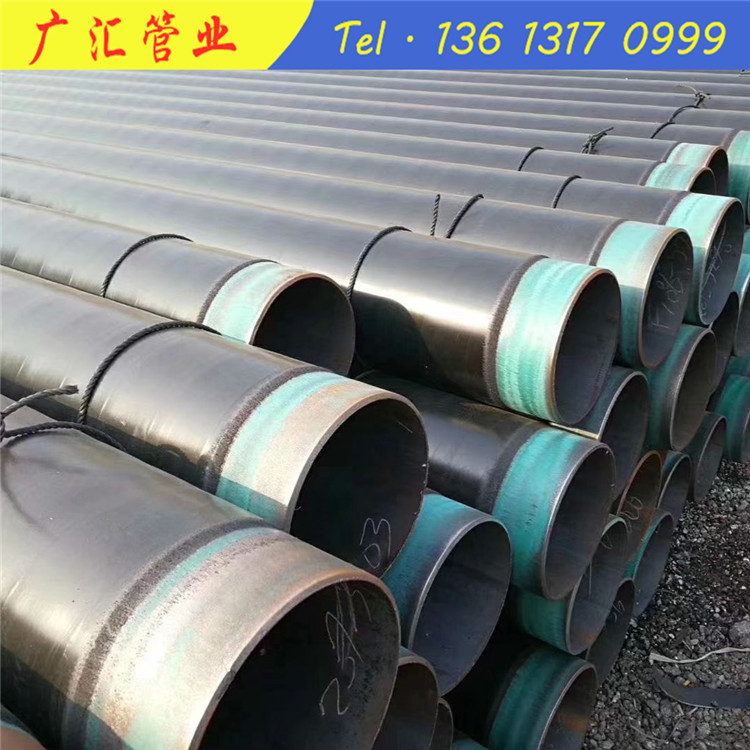
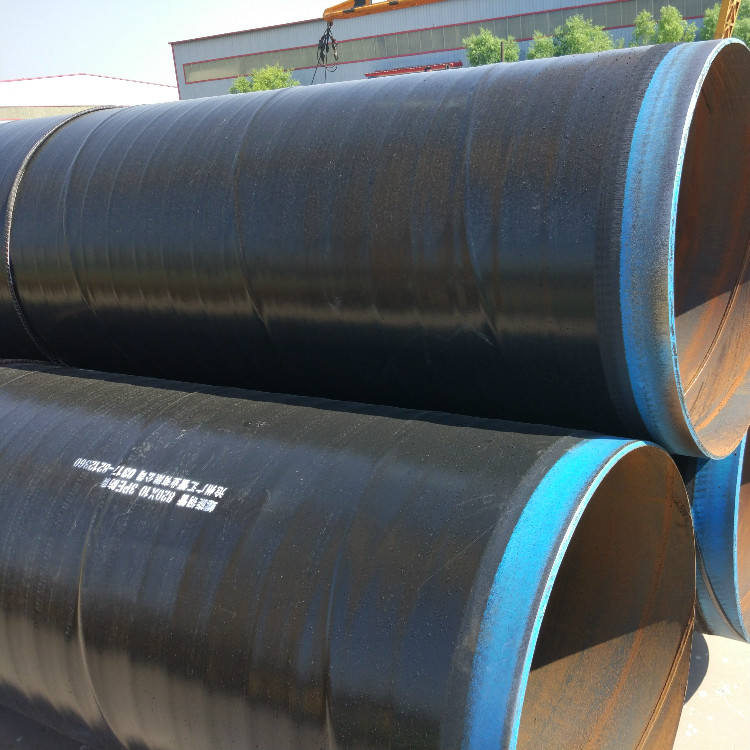
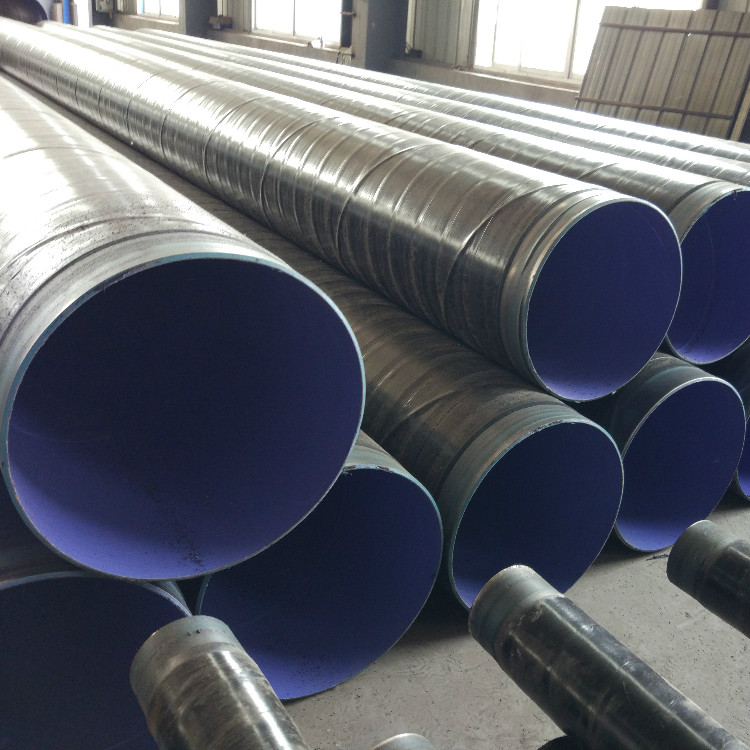
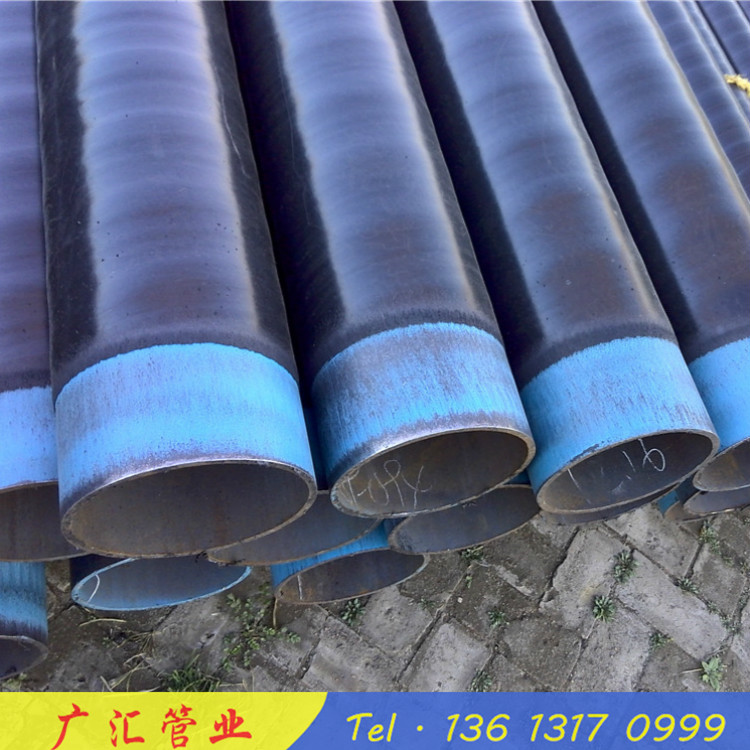

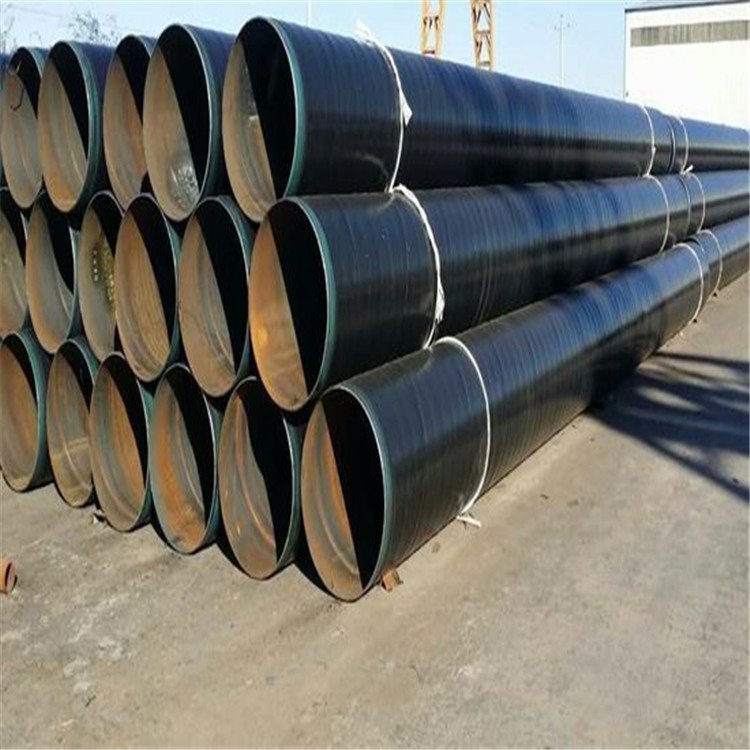
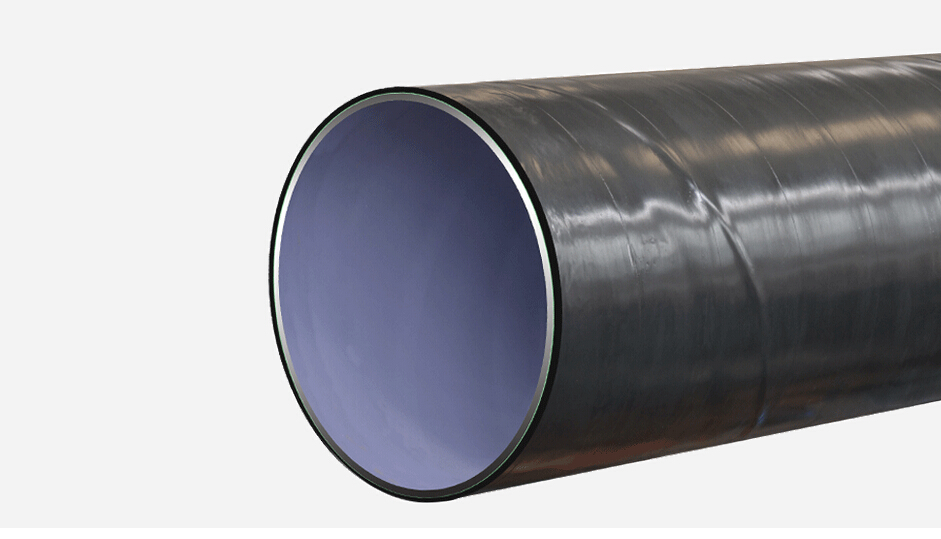
TPEP Corrosion-Resistant Steel Pipe—— External wrap polyethylene, internal fused epoxy coated steel pipes are the fourth-generation pipeline anticorrosion form, a specific anticorrosion process. The anticorrosion materials used for pipeline anticorrosion are custom-made according to the production process, exclusively for pipeline anticorrosion.
Interior Wall Corrosion Protection: Hot Melt Epoxy Powder
Epoxy powder is a thermosetting powder coating characterized by corrosion resistance and toughness. It is evenly coated onto the surface of steel pipe substrates by heating, with the specially formulated epoxy powder adhering to the preheated steel pipe surface. Upon heating, the epoxy powder cures and flattens, and with further heating, it fully solidifies to form a continuous film. It provides excellent adhesion through bonding and curing with the steel pipe surface, boasting great chemical resistance and anti-cathodic disbonding capabilities; it is currently the preferred coating for large-scale pipeline projects in China.
Wall Coating: 3-layer structure of polyethylene wrapping
·Outer 3PE Coating
The base layer is fused epoxy; the intermediate layer is adhesive; and the surface layer is extruded polyethylene. In the three-layer structure, the epoxy base powder is a specialized powder specific to the production process, primarily serving to: form a continuous coating, directly bond with the surface of the steel pipe, and exhibit excellent chemical corrosion resistance and cathodic disbondment resistance; react with the active groups of the intermediate layer adhesive to form a chemical bond, ensuring the overall anti-corrosion coating maintains good adhesion at higher temperatures. The main function of the polyethylene surface layer is to provide mechanical protection and corrosion resistance, making it an excellent outer protective layer for buried pipelines. According to relevant information, three-layer PE can extend the lifespan of buried pipelines to 50 years, and is currently considered an advanced external pipeline corrosion protection technology internationally.
Potable Water TPEP Corrosion-Resistant Steel Pipe
Performance Comparison: External 3PE Coated, Internal Fusion Bonded Epoxy Composite PipeTPEP Corrosion-Resistant Steel PipeSingle-layer Polyethylene Lined with Epoxy Coating Steel Pipe for Foreign Orders
External Corrosion Protection Process:熔结缠绕, three-layer structure; curtain method; immersion coating, single layer
Corrosion-Resistant Structure Bottom: Epoxy Coating, Middle: Adhesive, Outer: Polyethylene Single Layer Polyethylene
External Corrosion Protection Layer Thickness: 2.5-4mm / 1-1.5mm
Adhesion - Strong, generally not resistant to boiling water
Performance: Corrosion-resistant, wear-resistant, impact-resistant; Moderate corrosion resistance, not scratch-resistant
Defects: None; Appearance: No pinholes, even surface finish
In summary: The three-layer polyethylene inner melt-bonded epoxy coated steel pipeTPEP Corrosion-Resistant Steel PipeClearly superior to the current single-layer polyethylene inner epoxy coating for foreign orders, and even better than the outer and inner coated epoxy resin composite steel pipes.
3PE/FOCuS Coating Steel Pipe(TPEP Corrosion-Resistant Steel Pipe)The application features of this product, compared to the traditional spray coating process, include the following advantages:
One, utilizing high-density polyethylene powder, which has finer particles and a higher melt index compared to low-density polyethylene powder. This ensures the uniformity of the coating, prevents pinholes, significantly enhances the adhesion of the coating, and prolongs the service life of the pipeline.
Secondly, the outer coating is applied using a high-pressure extrusion winding process, which enhances its density. The coating is robust and wear-resistant, with excellent shock and bend resistance. It effectively prevents mechanical damage during construction and damage from plant roots and soil environmental stresses during use.
Three, the internal heat-fused epoxy layer thickness is >0.4mm, and the external melt-bonded polyethylene coating thickness is >3mm, offering excellent resistance to chemicals and solvents. It can withstand chemical corrosion from substances such as H2S, CO2, O2, acids, bases, salts, and organic matter in the transmitted medium. Additionally, it can endure long-term contact with corrosive substances such as various organic acids produced by microorganisms in saltwater, seawater, and soil.
The outer wall is constructed with a three-layer corrosion-resistant coating using heat-fused spiral winding technology, with the base layer of epoxy resin, the middle layer of adhesive, and the outer layer of polyethylene. The inner wall is coated with heat-sprayed epoxy powder for corrosion resistance, where the powder is melted and applied evenly to the surface of the tube after high-temperature heating. This improves the adhesion and thickness of the coating, enhancing its resistance to impacts and corrosion. It is capable of producing products such as 2PE, 3PE, internally and externally coated heat-fused epoxy, and internally coated epoxy with externally coated PE/2PE/3PE. Both internally and externally coated products can be applied and cured simultaneously, forming a film in one application. This product was granted a national utility model patent in 2009.
Technical Specifications
Product Specifications: DN100 - DN1800
Steel Material: 20#, Q235, or Q345
Coating Materials: High-Density Polyethylene, Food-Grade Epoxy Powder
Universal Colors: Exterior - Black, Interior - Grey
Coating Thickness: Outer wall 2.0-4.0mm, inner wall 0.35-0.5mm
Coating Method: Synchronous melt-wound and thermal spraying for one-time film formation.
Product Length: 12 meters
Standard Pressure: 0.1 Mpa - 5.0 Mpa
Welding method: Welded.
Method of patching: Lining with stainless steel, no repair required
Application Fields: Long-distance Water Transmission Pipelines, Water Conservancy Industry, Water Supply Industry?