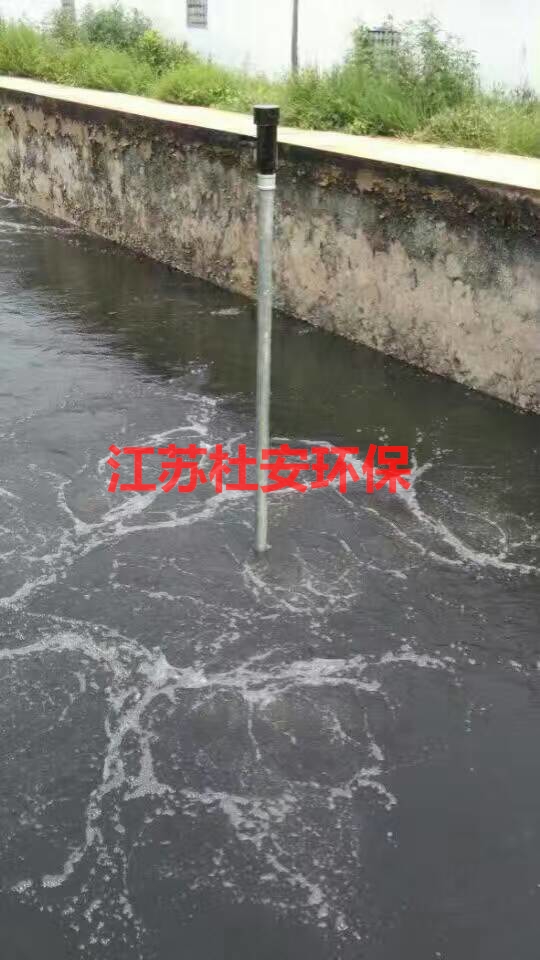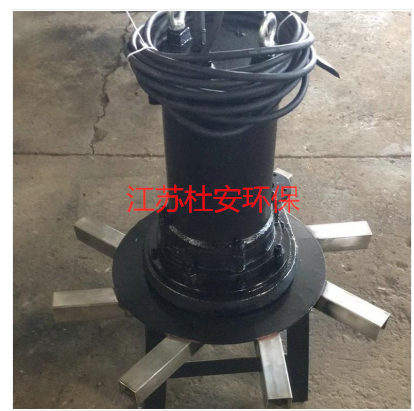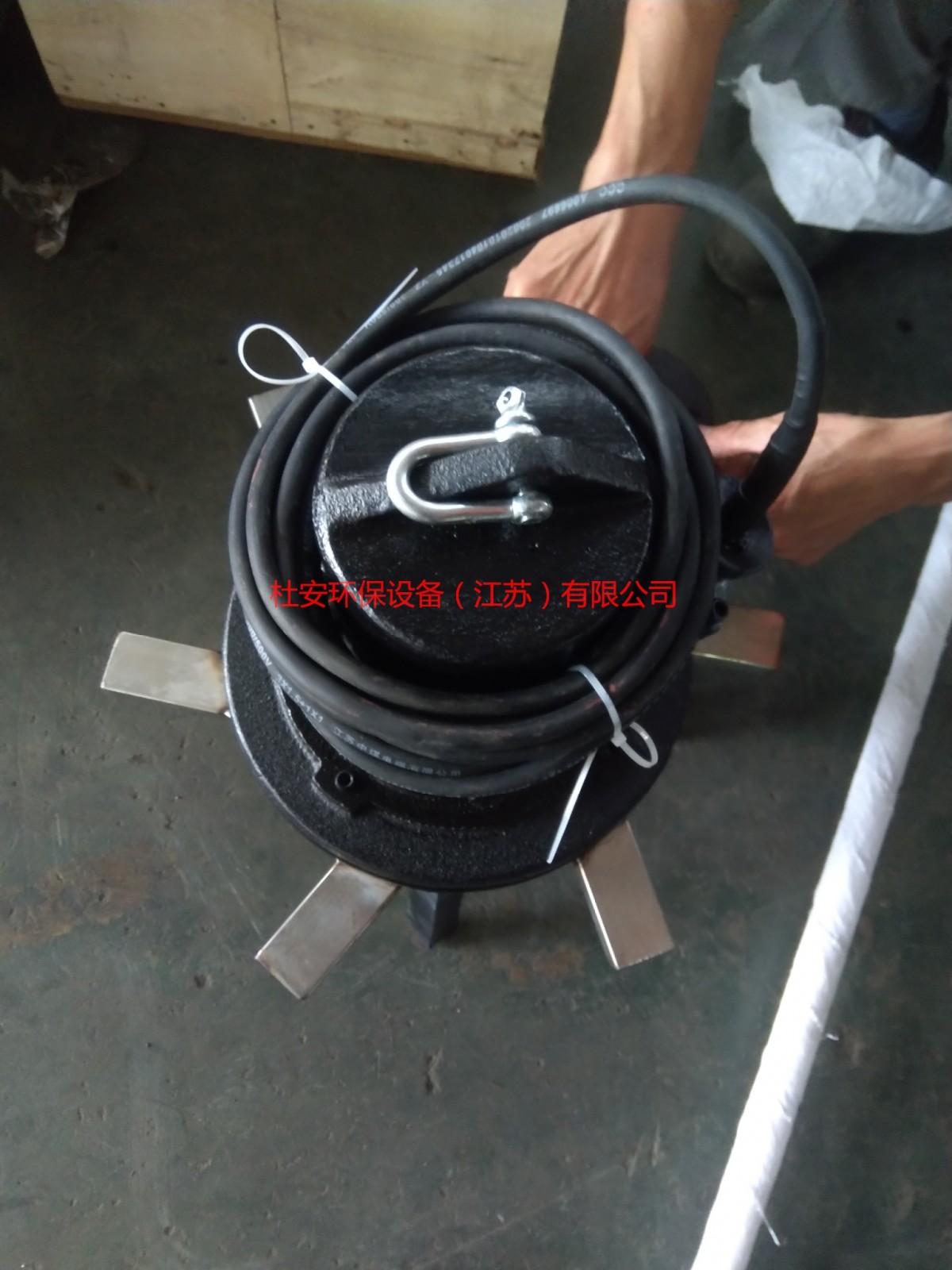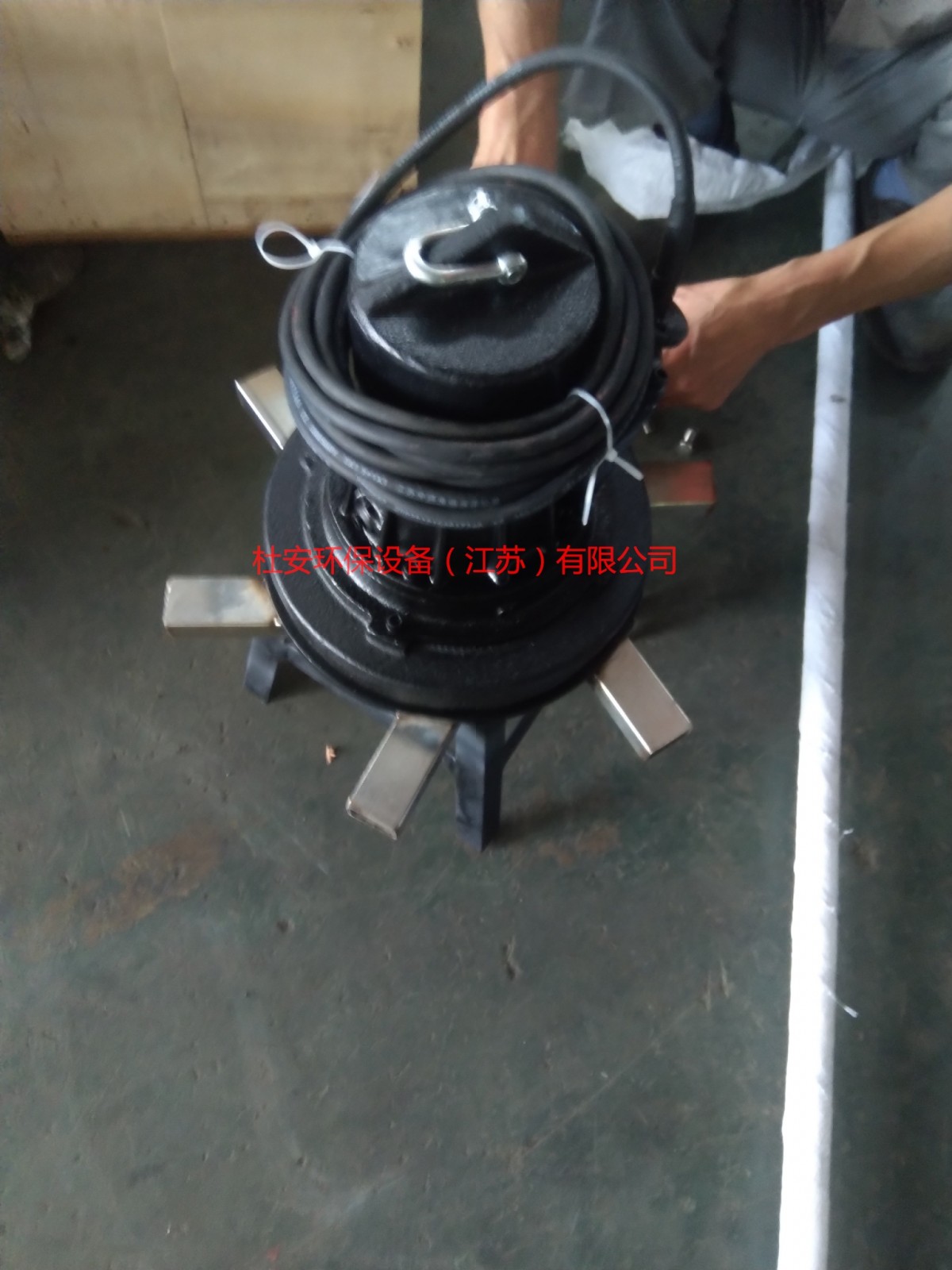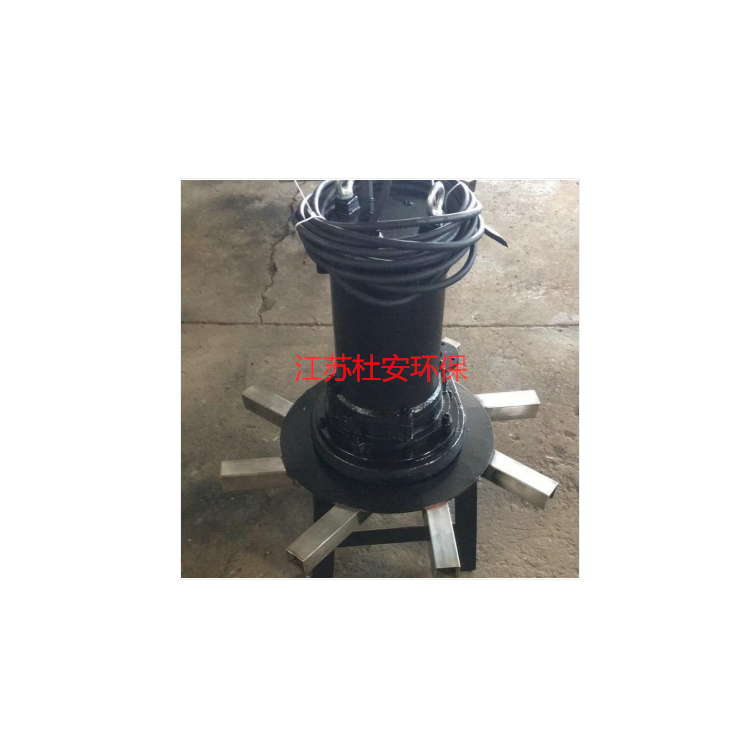

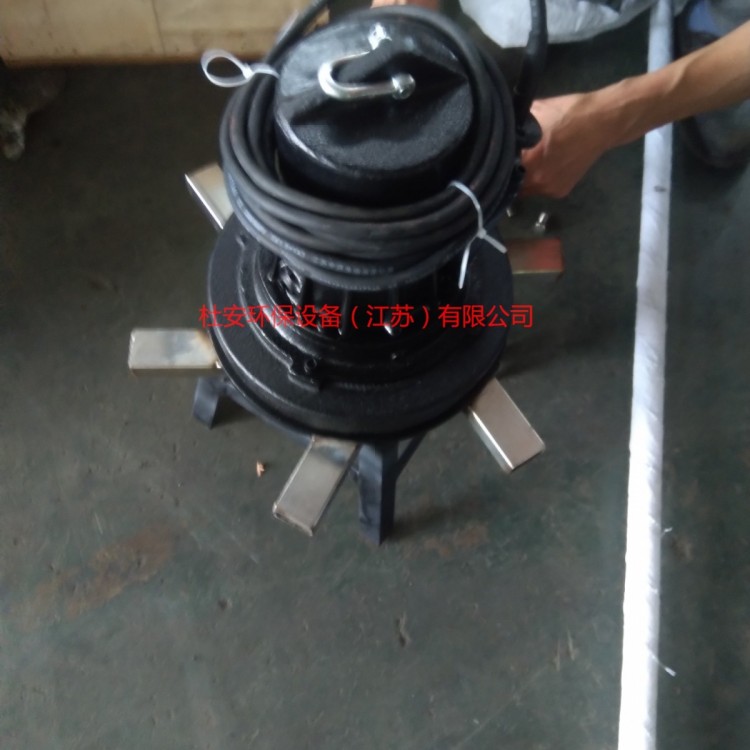







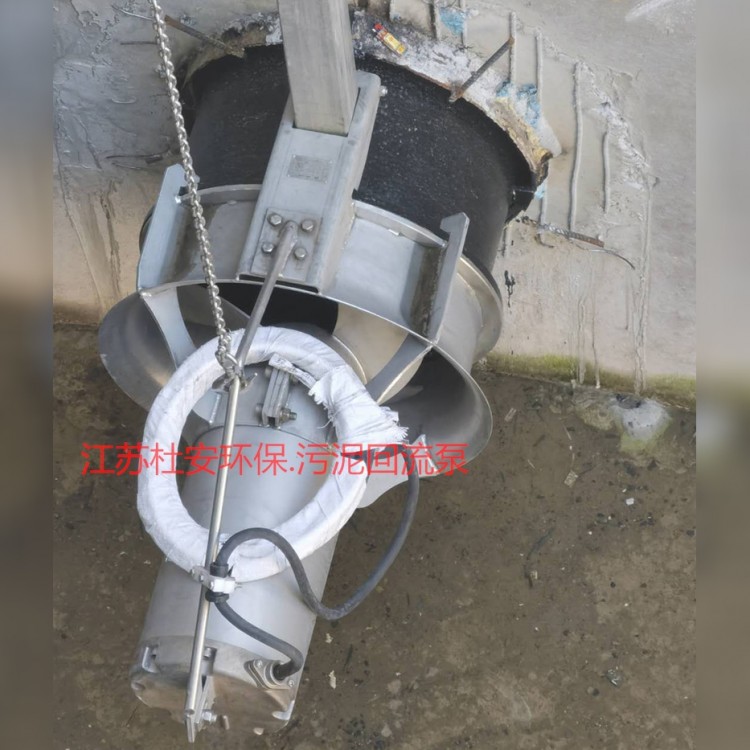
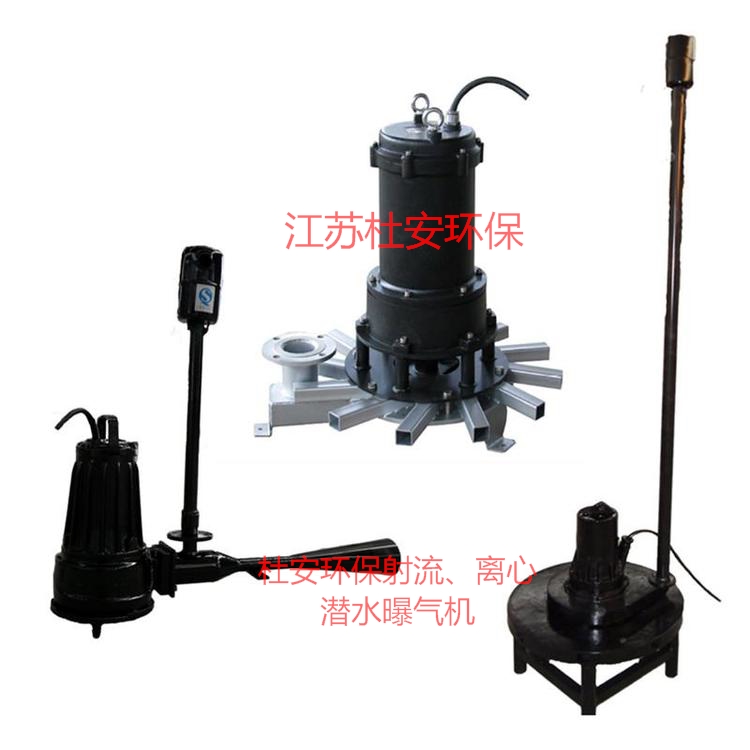
Duwan Environmental ProtectionQXBDiving CentrifugeAeration Mechanism Operation Principle:
Centrifugal Aeration Machine AerationAn aeration technique that intensifies the mixing of air and water, its purpose is to dissolve oxygen in the water or prevent gases and volatile substances from being introduced into the air. In other words, it is a method that promotes the exchange of gases and liquid substances.
Significant functionality, blending andOxygenationThe mass transfer operation and principles of dispersion mass transfer, where air containing oxygen is aerated to convert into water and oxygen from the gas phase to the liquid phase, are primarily based on the Lewis and Whitman dual-membrane theory.
The two-membrane theory posits that there are gas and liquid films at the gas-water interface, as well as between air and liquid films, which fall under turbulent flow conditions.;Gas and liquid films are in a laminar flow condition, with no convection. Under certain conditions, pressure gradients and concentration gradients can occur. If the oxygen concentration in the liquid film is lower than that in water, oxygen in the air will continue to disperse into the water through the liquid film. Clearly,DirectMethods to overcome the liquid membrane barrier include alteringGas-"Liquid" interface.
Aeration mixing is such, with the detailed method being: to reduce the size of bubbles, increase the foam volume, improve the level of liquid turbulence, elevate the depth of the aeration equipment, and prolong the contact time between bubbles and the liquid. Aeration equipment is a widely used treatment method in wastewater treatment.
Duwan Environmental ProtectionQXBCentrifugalDiving AeratorPrior to shipment,Will conduct several underwaterInspection to ensure reliable operation of the diving aeration machine products. To guaranteeDiving centrifugal aerationThe lifespan of the gas engine is recommended to be regularly inspected and maintained.
Washing
1、To prevent the accumulation of impurities in the submersible aeration pump over different periods, clean water can be drawn from the pump to clean it. If the submersible aeration pump is not used for a long time, it should be stored in a dry place and precautions should be taken against freezing.
2、Lubricating and oil changes The oil chamber of the submersible aeration pump is pre-filled with an adequate amount of lubricating oil before shipment. This oil should be changed annually. The oil change should be performed as follows: Place the submersible aeration pump properly, ensuring the oil chamber plug is facing down, loosen the plug, drain the lubricating oil, then clean the oil chamber with cleaning oil, refill with an appropriate amount of lubricating oil, replace with a new O-ring, and tighten the plug. If water is found in the oil, flush the oil chamber according to regulations and refill it, tighten the plug.OO-Ring plug. A re-inspection must be conducted after three weeks; if the oil has turned milky again, inspect the mechanical seals. Replacement is necessary if required.(Please contact our Maintenance Department.)Note::Oil is transformer oil.
3、Operation failure In the event of a malfunction, if the cause cannot be determined and the troubleshooting methods provided later fail to resolve the issue, do not resort to makeshift solutions or attempt to repair or disassemble the equipment on your own.
Fault Phenomenon | Please provide the Chinese content to be translated. Due to | Cleaning Method |
Power equipment overloading | 1The influent sump does not meet the requirements. 2Propellers of the diving aeration machine are entangled with debris. 3Propeller blades of the submersible aeration pump are rubbing against guide vanes. 4The rotational speed of the submersible aeration pump exceeds the specified value. | 1Improve water intake conditions 2Clear away debris; wash with water 3Inspect blade wear and re-adjust installation 4Adjust the original motor to match the rated speed. |
Airflow reduction or no aeration | 1The immersion depth of the water aeration pump is too deep. 2Impeller blade outer diameter wear, or partial blade damage 3Dive aeration direction is incorrect 4Propeller loose 5Submersible aeration pumps have impurities causing blockages. | 1Enhance Dive Aeration Pump 2Replace Impeller 3Correct the direction of rotation 4Tightening screw 5Clear away debris, wash with water |
Operation with noise or vibration
| 1The installation foundation of the diving aeration pump is not sufficiently solid, or the nuts are loose. 2Blade and guide vane friction 3Propeller screw loose or blade partial damage 4Inconsistent water inflow state 5Diving aeration pumps have impurities causing blockage | 1Strengthen foundations, tighten screws 2Inspect impeller and guide vane gaps 3Tighten screws or replace impellers 4Adjust water intake state 5Clear debris; wash with water |
Dive aeration pump fails to start or fuse blows | 1Winding, joint, or cable breakage 2Dive Aerator Clog 3Leakage of electricity or water 4Short circuit | 1Check with an ohmmeter 2Cut power and clear debris. 3Inspect insulation; below the specified value, must be dried. 4Inspected and repaired for use |
Diving aeration pump starts, circuit breaker and overload protector trip. | 1Low voltage 2High voltage 3Electrical motor wiring incorrect or connectors mixed up 4Electrical Fault in Control Cabinet | 1If not in use or due to excessive length causing voltage drop, the power cable should be reinforced. 2Install transformer and adjust voltage to the specified level. 3Adjust wiring and connectors 4Inspect and replace electrical components |
QXBType Submerged Centrifugal Aerator Transportation and Usage Precautions:
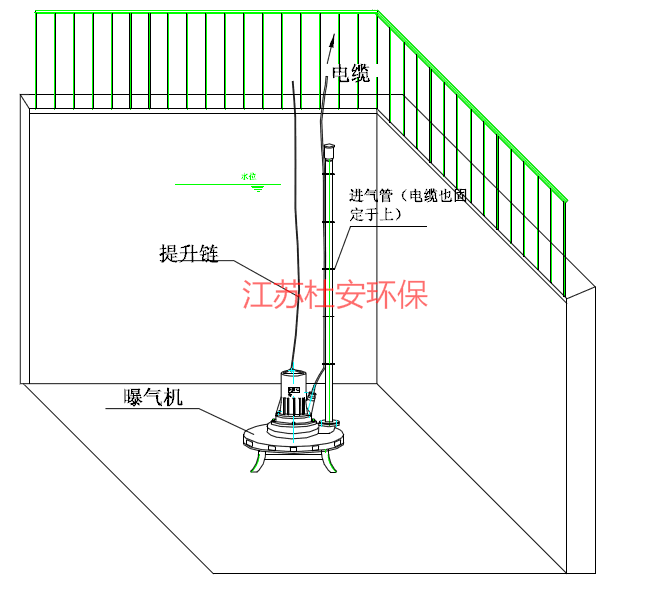
1.Absolutely no lifting or hanging of the aeration machine using the cable of the aeration pump. For handling or hanging the aeration machine, use a chain with a hook to attach to the handle or the top cover's lifting ring.
2.If the aeration pump is still in use or submerged in water, in0At temperatures below °C, it can still be used.
3.Submersible aeration pumps are lubricated with grease or oil. Due to seal wear, the grease or oil may leak out. In this case, please promptly send the aeration pump to our factory's repair department or an authorized repair point to replace the seal, to prevent damaging the motor.
4.Do not move the aeration machine or enter the water if the power is not turned off.
5.After the潜水曝气机is installed, it should not be submerged in water for long periods without use. It is recommended to operate it at least every two weeks.4Inspect hourly for functionality and suitability, or store for backup in a dry location.
6.The submersible aerator should not be placed at the wastewater inlet. When the base is placed on muddy ground or floating sand, the submersible aerator may sink due to vibration. In this case, it is recommended to suspend the aerator or place it on a larger base plate.
7.Submersible aeration pumps, due to their working principle, should not be submerged to a depth exceeding3Meters.
8The潜水aeration pump must be properly grounded for safety.